

Executive Overview
In an era defined by hustle culture and relentless self-optimization, the prevailing narrative surrounding endurance sports often leans toward the austere: pre-dawn alarms, agonizing interval sessions, rigid dietary restrictions, and a "no pain, no gain" ethos that alienates more people than it inspires. However, a quiet revolution is taking place on the asphalt, dirt paths, and running tracks of Berlin. It is spearheaded by everyday athletes who are dismantling the myth that serious long-distance training requires sacrificing comfort, joy, and a balanced lifestyle.
Enter Hong, a Berlin-based graphic designer, international flight attendant, and soon-to-be seven-time marathoner. Hong’s journey from a self-proclaimed "non-runner" who valued the snooze button above all else to a resilient endurance athlete offers a masterclass in modern sports psychology and lifestyle integration. Her philosophy—that high-performance training and personal comfort are not mutually exclusive—provides a refreshing blueprint for modern fitness.
This in-depth feature explores Hong’s weekly training regime, dissecting how she balances an unpredictable aviation career, a vibrant social life, and rigorous athletic goals. By examining her holistic approach to physical conditioning, community building, and mental resilience, we uncover how amateur athletes can achieve elite-level milestones without losing their sanity—or their morning coffee.
Detailed Chronology: A Week in the Life of a Marathoner
To understand how an amateur athlete manages the demanding physical toll of preparing for a marathon alongside a high-stress, mobile career, one must look at the micro-level of daily execution. Hong’s weekly schedule is a carefully orchestrated balance of exertion, recovery, socialization, and joy.
Monday: Combating Fatigue and Finding Rhythm
Mondays are notoriously challenging for the workforce at large, but for someone juggling the demanding visual demands of graphic design with the circadian disruptions of long-haul flights, the start of the week can feel insurmountable.
- The Mindset: Hong acknowledges that consistency is her primary hurdle. To prevent burnout, she relies heavily on auditory stimulation. Her "life-saver" running playlist—curated with energetic rhythms ranging from disco and house to driving techno—serves as an external engine when internal motivation flags.
- The Technique: When breathlessness threatens to derail a Monday run, Hong employs a unique behavioral hack: she drops her pace and begins to sing. This forces her respiratory system to regulate, turning a potential struggle into a joyful, lighthearted experience that frequently elicits smiles from passersby.
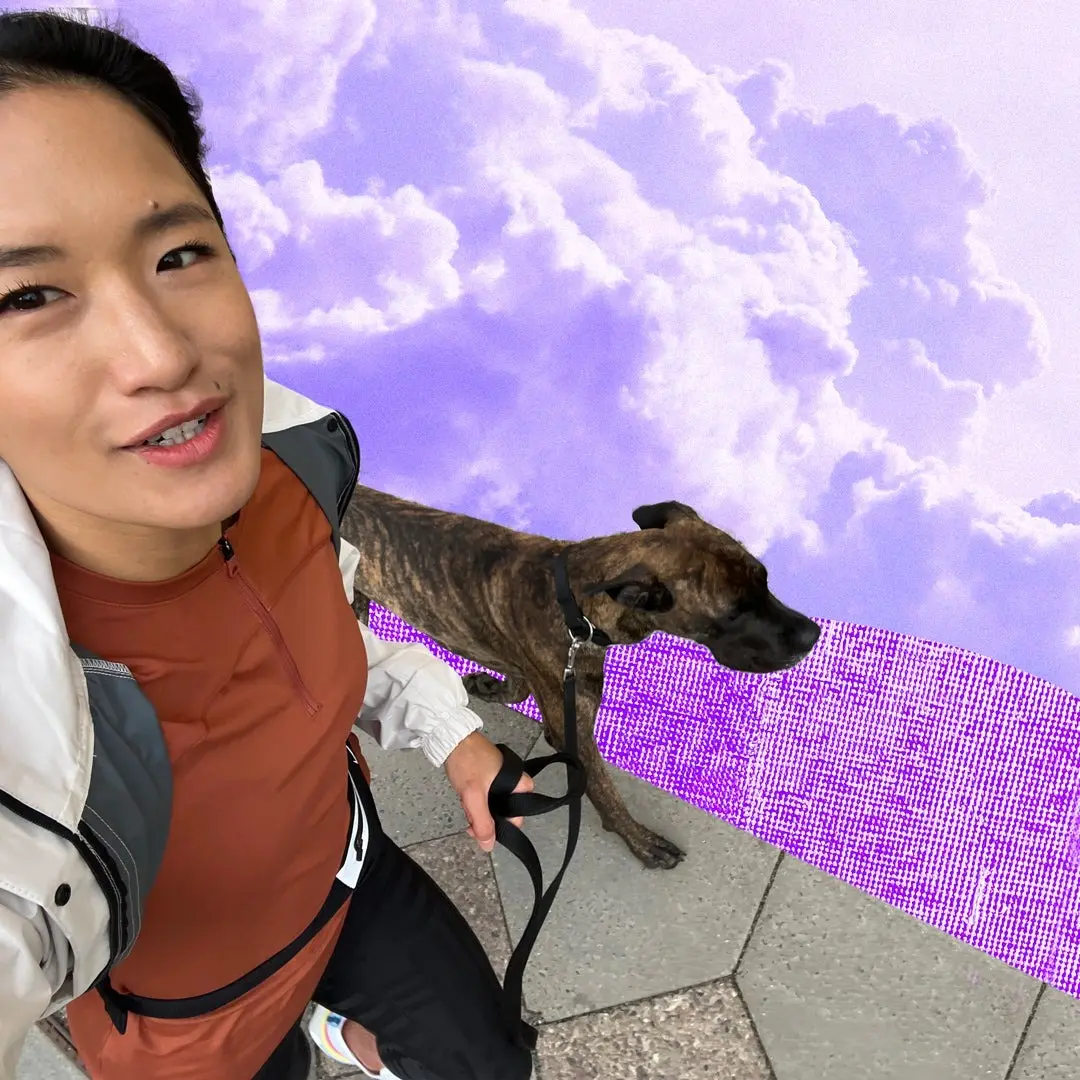
- The Companion: To inject novelty into her routine, Monday’s run often includes a canine co-pilot—a friend’s high-energy dog named Mia. The dynamic is symbiotic: Mia provides the initial propulsion, while Hong’s steady endurance takes over in the latter miles. It highlights an essential tenet of her training philosophy: movement is social, playful, and adaptable.
Tuesday: Cross-Training and Injury Prevention
A common pitfall for developing runners is the temptation to run every single day, inevitably leading to overuse injuries like shin splints, plantar fasciitis, or runner’s knee. Hong’s Tuesday routine directly counters this risk.
- The Regimen: Tuesdays are strictly non-running days dedicated to holistic physical maintenance. Hong combines yoga for mobility and flexibility with targeted strength training designed to reinforce stabilizing muscles.
- The Professional Support: Regular physiotherapy sessions form a cornerstone of this regimen. By proactively addressing muscle imbalances and tightness, Hong builds a robust biomechanical foundation. This meticulous preparation allows her to step out of her comfort zone during intense runs without fearing catastrophic structural breakdown.
Wednesday: Professional Realities and Recovery
With a career that spans continents, Hong’s weeks are dictated by global time zones as much as training schedules.
- The Balance: Recovery is not merely physical; it is psychological and social. Wednesdays are utilized to reconnect with her local Berlin community. Rather than squeezing in a junk-mile run out of guilt, Hong treats herself to a cultural excursion, visiting local art exhibitions and catching up with friends. This downtime is recognized as an active component of her training cycle, lowering cortisol levels and preparing her nervous system for the high-intensity work ahead.
Thursday: Pushing Boundaries on the Track
If Monday is about finding rhythm and Wednesday is about recovery, Thursday is where raw performance is forged.
- The Workout: Training for a marathon requires structured speed work to improve running economy and VO2 max. Thursday is track day—a high-stakes session focused on velocity and sustained pacing.
- The Gear: Because performance at high thresholds requires absolute trust in one’s equipment, Thursday is when Hong laces up her preferred high-mileage trainers, the Nike Invincible 3. Valued for their plush, responsive cushioning and stability across varied track surfaces, these shoes mitigate the impact shock of high-speed repetitions, ensuring her joints remain protected while she chases personal bests.
Friday: Social Integration and Active Rest
Following the neuromuscular taxation of Thursday’s track session, Friday is designed for recuperation.
- The Schedule: A gentle restorative yoga flow anchors the morning, followed by more social engagement. Because her flight attendant duties frequently pull her away from the German capital, Hong treats her days in Berlin as precious commodities, maximizing her engagement with the city’s vibrant cultural fabric alongside her peers.
Saturday: The Meditative Long-ish Run
The weekend brings a return to mileage, but executed with an ethos of mental unwinding rather than strict pacing obsession.
- The Route: Hong’s standard testing ground is the picturesque route along Berlin’s Landwehrkanal. Transitioning dynamically between asphalt, packed dirt, and grass, this terrain challenges ankle stability in a low-risk environment.
- The Sensory Experience: Depending on her mental bandwidth, Saturday runs alternate between informative true-crime or cultural podcasts and complete sensory immersion in the ambient urban soundscape of Berlin.
- The Ritual: No Saturday run is complete without a post-run reward. Ending her route at a local market stall in Kreuzberg for a specialty coffee and a light snack anchors the workout in positive reinforcement, cementing the psychological loop between effort and reward.
Sunday: Community and the Long Run
Sunday is the crown jewel of the weekly running calendar: the long, slow distance (LSD) run, performed in collaboration with a structured support system.
- The Collective: Hong is a proud member of the Joy Run Collective, a local Berlin running group that emphasizes inclusivity, shared effort, and community over elitist time-chasing.
- The Execution: Braving the elements in Berlin’s sprawling Tiergarten park, the group tackles extended mileage together. The shared burden of distance in cold weather transforms an otherwise grueling physical test into a team-building exercise.
- The Culmination: True to her philosophy of joyful integration, the run always concludes with a communal meal. Sunday’s session features a hard-earned culinary payoff: homemade dumplings prepared by a host, providing both the necessary glycogen replenishment and a powerful psychological incentive that motivates her through the final miles.
Supporting Context and Metrics: The Evolution of the Everyday Athlete
Hong’s personal narrative is reflective of broader, shifting demographics within the global running community. According to recent sports industry analytics, the profile of the modern endurance runner has shifted dramatically over the past decade. The stereotypical image of the lean, hyper-competitive club runner has been augmented—and in many cases replaced—by lifestyle-driven athletes who prioritize mental health, holistic wellness, and community connection.
The Physiology of Consistency
Sports scientists and exercise physiologists continually emphasize that long-term athletic development is governed by the principle of supercompensation and consistency, rather than sporadic bouts of heroic overexertion.
- The 80/20 Rule: Elite and sub-elite distance runners typically spend roughly 80% of their weekly mileage at an easy, conversational pace, reserving only 20% for high-intensity stress (such as Thursday’s track workouts). Hong’s routine intuitively mirrors this physiological best practice. By keeping her recovery days genuinely slow and her social runs conversational, she avoids the chronic systemic fatigue that sidelines amateur runners.
- The Role of Cross-Training: Incorporating yoga, strength training, and physical therapy directly addresses the repetitive impact nature of running. Running imposes forces up to three times an individual’s body weight with every single stride. Without the muscular scaffolding built through Tuesday’s cross-training, sustaining a seventh marathon buildup would present an unacceptable injury risk.
The Psychology of Comfort in Endurance
For decades, the dominant cultural subtext of marathon training was one of self-flagellation. Slogans implying that athletes must "hurt" to improve created psychological barriers for entry, particularly among women and individuals with demanding professional lives.
- Lowering the Barrier to Entry: Hong started her running journey at age 26, eventually noting that at 30, she is healthier and fitter than she was throughout her entire twenties. This underscores a vital public health reality: endurance sports are accessible across the lifespan, provided the athlete rejects the puritanical notion that training must be miserable.
- Intrinsic Motivation through Joy: Behavioral psychology indicates that habits maintained through intrinsic rewards (such as the taste of a post-run dumpling, the comfort of bouncy shoes, or the social connection of a running collective) demonstrate significantly higher long-term adherence rates than habits driven purely by extrinsic pressure or guilt.
Expert Perspectives and Community Voices
To contextualize Hong’s approach within the broader athletic ecosystem, we examine the philosophies driving modern urban run clubs and sports medicine practitioners.
"The democratization of running is one of the most significant fitness trends of the 21st century," notes Dr. Marcus Leitner, a sports science researcher based in Munich. "Athletes like Hong represent a new paradigm. They refuse to compartmentalize their lives. They are professionals, artists, and travelers first; runners second. By integrating their training seamlessly into their social and cultural identities, they achieve remarkable physical longevity."
Run collectives across major European hubs like Berlin, London, and Paris have likewise shifted away from the stopwatch-obsessed culture of traditional athletic federations. Instead, they champion inclusivity, mental health advocacy, and post-run socialization.
As a representative of the Joy Run Collective notes:
"Running is fundamentally an individual act, but it becomes a collective art form when shared. When you finish a 20-kilometer endurance slog through the winter chill of the Tiergarten, the conversation instantly shifts from splits and heart rates to food, art, and life. That human connection is what keeps people lacing up their shoes week after week, year after year."
Furthermore, footwear manufacturers have recognized this cultural shift. The emphasis on high-tech cushioning—exemplified by models like the Nike Invincible 3 utilized in Hong’s heavy training blocks—reflects an industry-wide pivot toward injury mitigation and comfort optimization. Brands no longer design exclusively for elite speed demons shaving seconds off an Olympic trial; they engineer solutions for the everyday professional who needs their knees to feel fresh for Monday morning flights and graphic design deadlines alike.
Future Outlook: The Next Frontier for Everyday Endurance
As Hong sets her sights firmly on her upcoming seventh marathon, her trajectory offers a compelling lens through which to view the future of recreational endurance sports.
The Death of the "All-or-Nothing" Mindset
The cultural obsession with extreme, monastic fitness regimes is slowly giving way to a more sustainable, nuanced understanding of wellness. As work-life boundaries blur and professional schedules grow increasingly complex, rigid training models are failing modern athletes. The future belongs to those who can master the art of micro-scheduling—fitting mobility work between international flights, utilizing music and community as psychological crutches on low-energy days, and treating rest as sacredly as intervals.
Accessibility and Empowerment
Perhaps the most enduring takeaway from Hong’s journey is the democratization of self-efficacy. Beginning her running journey believing she was "not a runner," she transformed her self-image through small, consistent concessions to comfort and joy.
For aspiring runners intimidated by the daunting distance of 42.195 kilometers, Hong’s philosophy provides a liberating roadmap:
- Prioritize ergonomic and psychological comfort (invest in supportive footwear, curate a motivating playlist, map out scenic routes).
- Embrace community (find a collective that values connection just as much as pacing).
- Never underestimate the power of a post-run reward (whether it is a Kreuzberg coffee or a basket of warm dumplings).
Consistency and comfort do not have to be enemies. By proving that one can pursue elite-level endurance milestones while still hitting the snooze button, enjoying art exhibitions, and singing out loud when the breath runs short, Hong is not just preparing for her seventh marathon—she is writing the manual for how modern humans can move through the world with strength, resilience, and unadulterated joy.




