Executive Overview
The modern endurance sports landscape is frequently dominated by an uncompromising narrative: early mornings, punishing workouts, rigid discipline, and an ethos of "no pain, no gain." For millions of aspiring athletes, this hyper-intensive archetype acts as a psychological barrier, alienating those who prefer a more balanced, enjoyable approach to physical fitness. However, a quiet revolution is taking place on the streets of Berlin, challenging the traditional dogma of marathon training.
Enter Hong, a Berlin-based designer, international flight attendant, and veteran endurance athlete currently preparing for her seventh marathon. Hong’s journey from a self-described "non-runner" who routinely abused the snooze button to a dedicated long-distance competitor offers a refreshing paradigm shift in contemporary sports culture. Her philosophy proves that high-performance training and personal comfort do not have to be mutually exclusive. By prioritizing mental well-being, community connection, holistic cross-training, and a sense of playfulness—ranging from singing mid-run to post-workout dumpling feasts—Hong has redefined what it means to train at an elite level.
This article examines Hong’s meticulously structured weekly training regimen, the psychological mechanisms behind her sustained motivation, the essential role of community in modern endurance sports, and the broader implications of her "comfort-first" approach for the future of urban running culture. Through an in-depth chronological breakdown of her week, expert contextualization of her training methods, and a look ahead at her athletic evolution, we explore how sustainable habits can yield extraordinary physical and mental transformations.
Detailed Chronology: A Week in the Life of a Marathon-Training Flight Attendant
Balancing an unpredictable international travel schedule with a rigorous athletic calendar requires exceptional time management and psychological resilience. Hong’s week is a masterclass in weaving high-intensity training into a bustling professional and social lifestyle without succumbing to burnout. Below is the day-by-day architectural blueprint of how she prepares her body and mind for the grueling demands of the 42.195-kilometer distance.
Monday: Rhythms, Playlists, and Canine Pacing
The professional week begins with the dual demands of design work and aviation duties. For Hong, the primary threat to her training consistency is psychological fatigue—the dreaded moment when motivation dips. To counteract this, she relies on auditory stimuli.
"I don’t always listen to music when I run, but when I feel sluggish, my running playlist is an absolute lifesaver," Hong explains. Her musical selections—spanning vibrant house, disco, and propulsive techno beats—serve as an external pacemaker, injecting energy directly into her stride.
However, mastery of endurance running involves listening to physiological feedback rather than blindly pushing forward. When breathlessness threatens to derail a Monday session, Hong employs an unconventional yet highly effective autoregulation technique: she starts singing.
"If I run out of breath, I shift down a gear and start singing," she notes. "This forces me to slow down to get my breathing back under control. The run immediately becomes much more fun, and I notice people smiling as I jog past them singing."
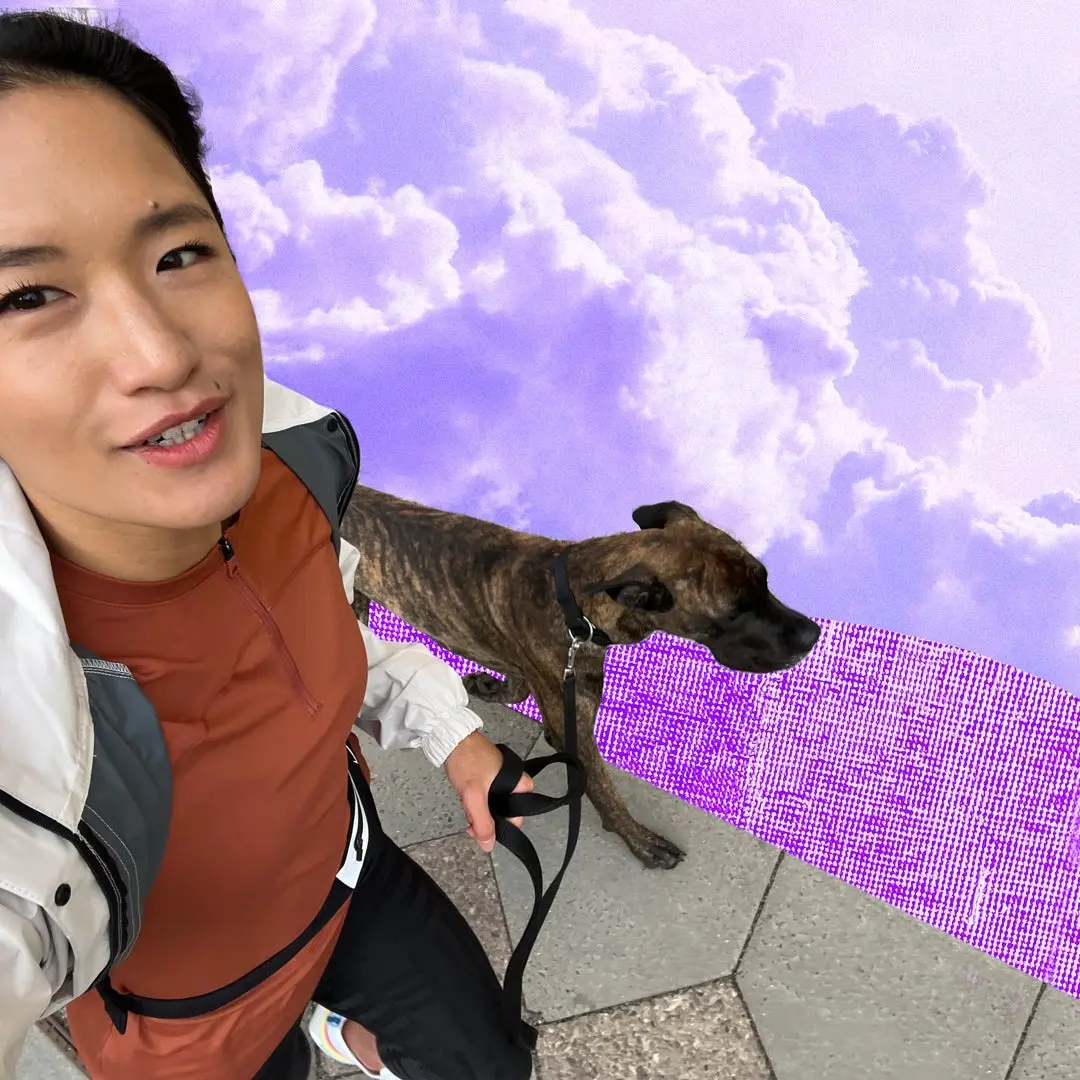
To inject further novelty and joy into her Monday miles, Hong frequently partners with a canine companion—borrowing a friend’s energetic dog, Mia. The dynamic changes the nature of the workout entirely.
- The Initial Phase: Mia pulls eagerly at the leash, acting as an external pacer that forces Hong out of her comfort zone.
- The Endurance Phase: As the kilometers accumulate and Mia’s initial sprint energy wanes, Hong’s superior aerobic base takes over. "At the beginning, she pulls me; at the end, I pull her," Hong laughs. "I might not be as fast as her over a sprint, but when it comes to endurance, I win."
Tuesday: The Holistic Foundation – Yoga, Strength, and Injury Prevention
A common pitfall among novice and intermediate runners is the myopic focus on running alone. Hong’s training philosophy rejects this linear approach, recognizing that structural integrity is the prerequisite for speed and volume. Tuesday is entirely dedicated to injury prevention and physiological balance.
Rather than hitting the pavement, Hong engages in a multidisciplinary cross-training regimen:
- Strength Training: Targeted resistance work fortifies the core, glutes, and stabilizing muscles, absorbing the high-impact forces generated during distance running.
- Yoga: Dedicated mobility sessions lengthen tight fascia, enhance range of motion, and promote active recovery.
- Physiotherapy: Regular physical therapy addresses micro-traumas before they manifest into chronic overuse injuries.
This holistic framework allows Hong to push the boundaries of her comfort zone during intense runs without catastrophic physical breakdowns. "This ensures I have a solid foundation," she emphasizes. "After particularly strenuous runs, I am not completely wiped out. Following a rest period, I can put my running shoes back on the next day or the day after and keep going."
Wednesday: Professional Realities and Social Recovery
Rest and recovery are active components of athletic development, not mere passive absences of work. As a flight attendant traversing time zones, Hong’s social capital is tied to her brief windows of time spent in Berlin. Wednesday serves as a crucial buffer day dedicated to social integration and mental decompression.
Instead of squeezing in a junk-mile run out of guilt, Hong prioritizes interpersonal connection. She immerses herself in Berlin’s vibrant cultural scene, frequently visiting local art exhibitions with friends. This deliberate decoupling of self-worth from daily mileage ensures that running remains a joyful pursuit rather than an oppressive obligation.
Thursday: Pushing the Limit on the Track
While comfort and playfulness anchor her routine, marathon preparation ultimately demands physiological adaptation through high-intensity stress. Thursday is designated for track workouts—sessions designed to test lactate thresholds, speed endurance, and psychological fortitude.
"Some people think marathon runners bounce out of bed at 5:00 AM and run 20 kilometers without a problem," Hong remarks. "In reality, I sometimes need an extra dose of motivation."
On track days, that motivation is fueled by high-performance gear and a competitive mindset. Equipping herself with the Nike Invincible 3, Hong targets specific pacing goals. The shoe’s signature bouncy foam and secure lockdown provide the necessary psychological and physical stability to handle high-velocity cornering and sustained efforts on synthetic tracks.
"I love competitions," Hong states. "It gives me an incredible amount of joy to challenge myself. During today’s track workout, I test how fast I can run and how long I can maintain my pace."
Friday: Intentional Decompression
The physiological debt incurred during Thursday’s track session demands repayment. Friday mirrors Wednesday in its emphasis on recovery and lifestyle integration.
Aside from a restorative yoga flow to flush out metabolic waste from the lower extremities, Hong rests. She uses her time in the German capital to reconnect with friends, explore galleries, and absorb the city’s creative energy. This cyclical rhythm—stress followed by adaptation, exertion followed by leisure—forms the bedrock of her longevity in the sport.
Saturday: The Meditative Urban Long Run
Saturday morning marks a ritualistic return to Hong’s standard training route along the picturesque Landwehrkanal. This multi-terrain corridor offers a dynamic sensory experience, transitioning seamlessly from hard asphalt to soft grass and muddy patches.
On these solo runs, Hong adopts a dual-mode approach to mental engagement:
- The Auditory Escape: Absorbing narrative-driven podcasts that transport her mind far away from the physical effort of running.
- The Mindful Observer: Turning off the audio entirely to immerse herself in the acoustic tapestry of the city. "I enjoy watching the people around me," she notes.
The ritual concludes with a mandatory cultural reward: a fresh coffee and a artisanal snack from a local market stall in Kreuzberg. This post-run routine reinforces positive neural associations with the act of running, ensuring the brain eagerly anticipates the next session.
Sunday: Community, Endurance, and Dumplings
The pinnacle of Hong’s training week occurs on Sunday, anchored by her involvement with the Joy Run Collective. Long-distance running, while often pursued as a solitary endeavor, thrives when supported by a cohesive collective.
Sunday’s session involves a long, steady-state run through the expansive, frost-kissed landscape of the Tiergarten. Training through changing weather conditions and accumulating high mileage requires both physical preparation—such as strategic thermal layering—and collective morale.
The culmination of the Sunday long run extends far beyond athletic metrics; it transforms into a social culinary event. The collective gathers for a post-run brunch, featuring a dish Hong has anticipated all week: homemade dumplings prepared by a fellow runner.
Supporting Context & Metrics: The Evolution of a Runner
The Shift from Novice to Veteran
Hong’s entry into the sport four years ago reflects a broader demographic shift in endurance athletics. At age 30, she reports feeling healthier, stronger, and more physically resilient than she was in her twenties. This phenomenon is supported by sports science: while raw maximal oxygen uptake (VO2 max) can peak in early adulthood, endurance capacity, structural durability, and psychological pacing strategies often continue to mature well into a runner’s thirties and forties.
| Training Parameter | Novice Phase (Year 1) | Current Elite-Amateur Phase (Year 4) |
|---|---|---|
| Weekly Mileage | Inconsistent (10–20 km) | Structured & Periodized (45–70 km) |
| Cross-Training | Minimal / Absent | Integral (Yoga, Strength, Physio) |
| Pacing Strategy | Erratic (Start-Stop) | Controlled (Autoregulated via singing/heart rate) |
| Recovery Philosophy | Viewed as "laziness" | Viewed as an essential biological requirement |
| Motivational Anchor | External pressure / Weight loss | Internal joy, community, and post-run rewards |
The Psychological Intersection of Comfort and Consistency
Sports psychologists have long studied the paradox of comfort in endurance sports. Traditional coaching models argue that mental toughness requires enduring constant discomfort. However, modern behavioral science suggests that sustainable behavior change relies heavily on positive reinforcement loops.
By removing unnecessary friction—such as agonizing over early morning wake-up calls or running in unsupportive footwear—Hong preserves her mental bandwidth for the essential moments of high discomfort, such as the final intervals of a Thursday track workout or the grueling peak kilometers of a 32-kilometer long run.
Official Statements and Personal Philosophy
Reflecting on her four-year evolution from a reluctant jogger to a seasoned marathoner preparing for her seventh 42K race, Hong encapsulates her core philosophy:
"I have gained a lot of self-confidence as a runner because I now know how much I can push myself, even when I feel a bit low. I have learned that consistency and comfort do not have to be mutually exclusive. I can set new limits for myself and feel good while doing it. Next stop: my 7th marathon."
This quote dismantles the puritanical notion that suffering is a mandatory currency for athletic achievement. Instead, Hong champions a sustainable, joyful, and body-literate approach to endurance training.
Future Outlook: The Next Horizon
As Hong finalizes her preparations for her seventh marathon, her trajectory offers a blueprint for the future of urban running culture. The rise of inclusive running collectives like the Joy Run Collective, combined with advancements in footwear technology (such as responsive foam compounds found in the Nike Invincible series) and a cultural pivot toward mental health, points toward an increasingly inclusive endurance landscape.
The archetype of the suffering, solitary runner is rapidly being replaced by the image of the balanced athlete—someone who values cross-training, listens to their body, sings when they lose their breath, and finishes a punishing long run with a basket of warm dumplings and good friends. For Hong, the finish line of her seventh marathon is not a final destination, but simply the next milestone in a lifelong journey defined by joy, resilience, and unyielding consistency.
Hong’s 3 Golden Rules for Maximum Running Enjoyment
For runners seeking to inject more sustainability and pleasure into their training schedules, Hong distills her philosophy into three actionable pillars:
- Invest in Footwear Comfort: Prioritize supportive, bouncy, and reliable running shoes that protect your joints and provide psychological security across varied urban terrains.
- Curate Your Auditory Environment: Build a dynamic, high-energy playlist (infused with house, disco, and techno beats) to elevate your mood during sluggish training blocks.
- Design Intentional Routes and Rewards: Combine scenic, engaging running routes (such as urban parks and waterfront paths) with a delicious post-run culinary reward to reinforce positive psychological loops.