Executive Overview
The global fashion landscape is currently navigating a period of profound restructuring, defined by unexpected pop-culture crossovers, radical commercial real estate transformations, and a high-stakes game of creative director musical chairs at legacy luxury houses. As the industry accelerates through the final quarter of the year, two distinct phenomena are running parallel: the hyper-democratization of archival and pop-culture-adjacent merchandise, and the corporate destabilization of historic European fashion houses.
At the vanguard of the pop-culture merchandising wave is the enduring, near-mythic marketability of actor Robert Pattinson. Nearly two decades after his breakout role in the cultural phenomenon Twilight, Pattinson’s visage continues to command immense commercial power. This trajectory has evolved from unofficial, fan-made memorabilia into high-concept streetwear capsules orchestrated by A24 and LA-based brand Farmer’s Daughter. The latest collaboration—a tightly curated collection tied to the upcoming film Primetime, in which Pattinson plays television host Chris Hansen—typifies a broader industry shift toward cinematic merchandising that treats movie promotion as luxury streetwear drops.
Simultaneously, the foundational architecture of the luxury sector is experiencing a seismic shift. In a matter of consecutive days, the upper echelons of European luxury lost several key leadership pillars: Anthony Vaccarello confirmed his departure from Saint Laurent, while Veronica Leoni and Seán McGirr exited their respective posts at Calvin Klein and Alexander McQueen. These high-profile departures signal a growing tension between creative vision and corporate performance metrics.
Outside the boardroom, brands are rewriting the rules of marketing through unexpected collaborations—from SZA’s maiden voyage into footwear with Vans to Moncler enlisting avant-garde icons Cher, Grace Jones, and BLACKPINK’s Jennie. This comprehensive report investigates these structural shifts, analyzing the intersection of cinema, streetwear, luxury leadership shake-ups, and the evolving retail models defining the modern fashion economy.
Detailed Chronology
The Cinematic Streetwear Pipeline: Primetime and the Robert Pattinson Phenomenon
The commercial viability of Robert Pattinson as a style icon and merchandising anchor is a case study in modern brand-consumer psychology. Since 2008, when the cinematic adaptation of Stephenie Meyer’s Twilight hit theatres, Pattinson’s face has been ubiquitous across youth culture apparel. What began as grassroots merchandising—unauthorized hoodies, tracksuits, and tote bags sold by fervent fans—has been systematically institutionalized by fast-fashion giants and indie film powerhouses alike.
Two years ago, high-street retailer Bershka launched a licensed Twilight collection that sold out almost instantly across digital platforms, inadvertently sparking a wider sartorial renaissance for the vampire franchise. This strategy of capitalizing on nostalgic cinematic IP reached a fever pitch earlier this spring when studio titan A24 quietly dropped a highly coveted zip-up hoodie featuring the combined faces of Pattinson and Zendaya to coincide with the release of The Drama.
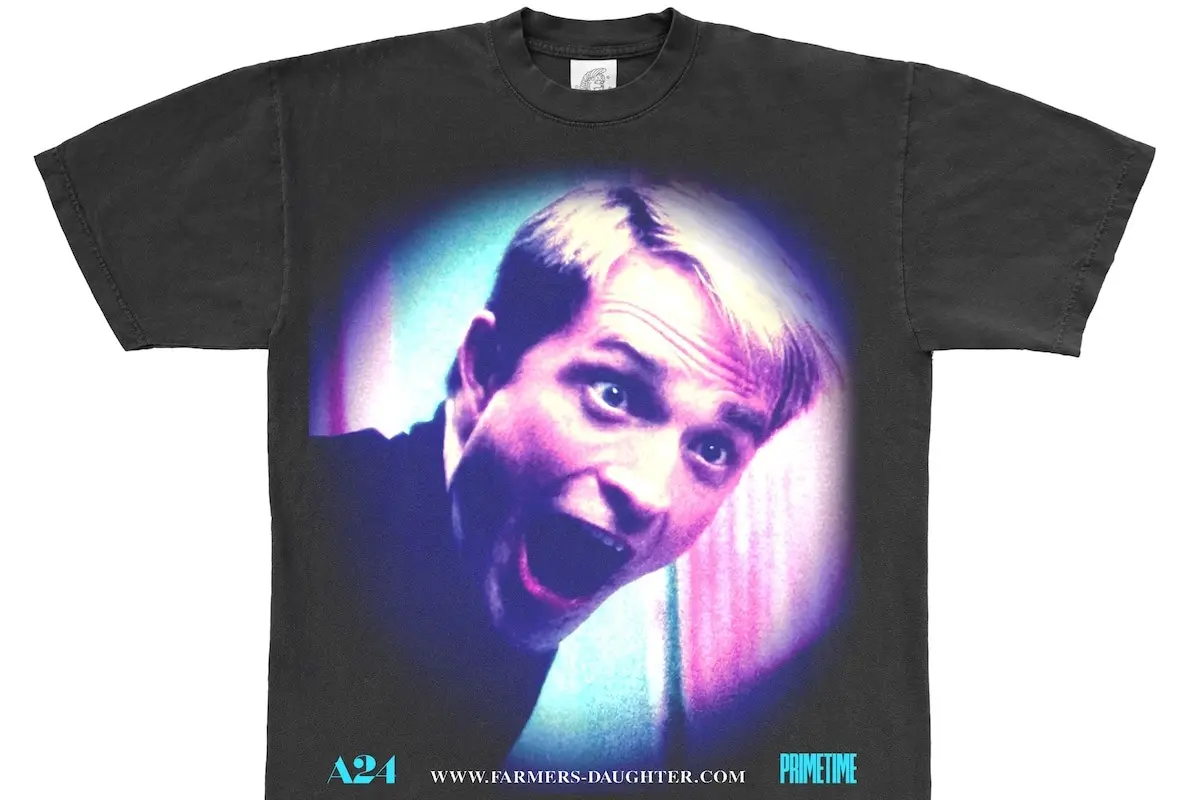
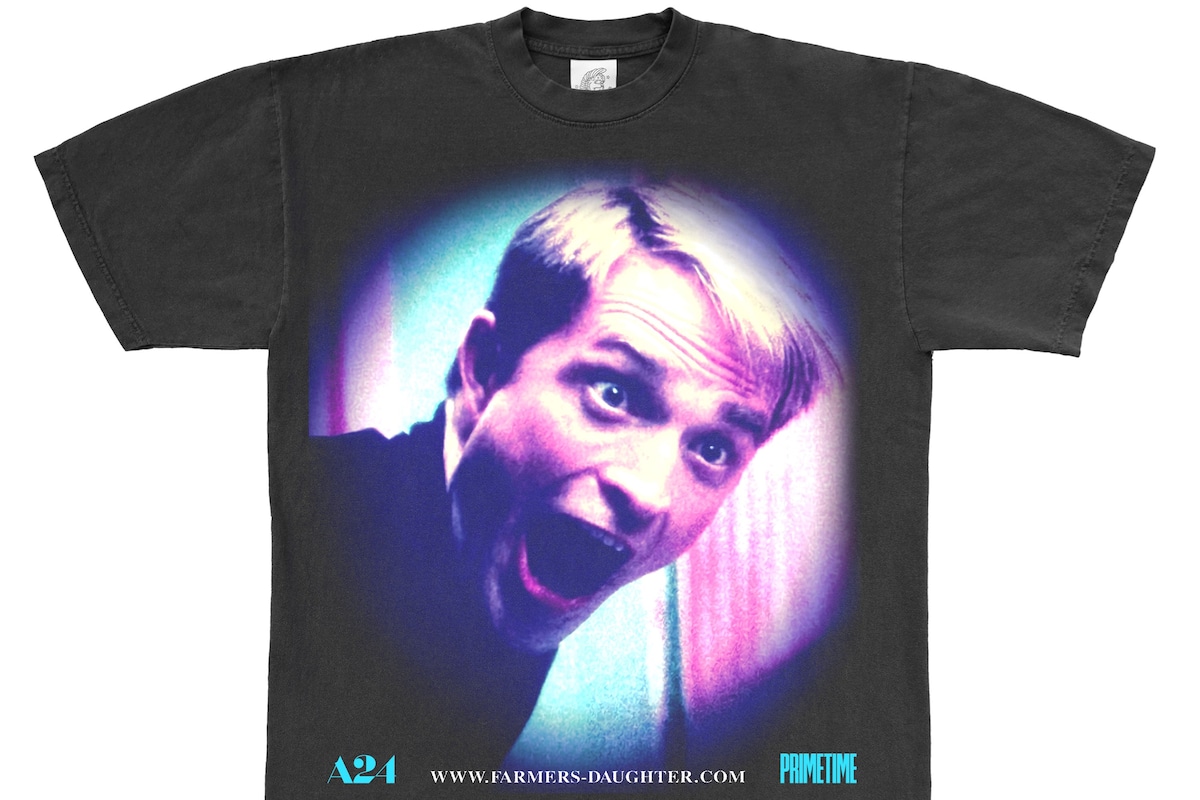
The momentum continues this autumn with Farmer’s Daughter. Continuing its ongoing collaborative partnership with A24, the Los Angeles-based streetwear label—which recently executed a capsule collection with Dazed—has engineered a dedicated drop for the upcoming film Primetime. Set for a UK cinema release at the end of October, Primetime is a harrowing dramatization of Chris Hansen’s 2006 investigative television series To Catch a Predator. Pattinson steps into the role of the moralistic American TV host, a casting choice that blends dark psychological drama with internet-era irony.
Farmer’s Daughter founder Alix Ross leaned directly into the unsettling nature of the source material when approaching the collection’s design language. The capsule comprises two distinct graphic T-shirts, a heavyweight hoodie, and a utilitarian raincoat, each emblazoned with raw quotes pulled directly from the film’s script. Most notably, the phrase "YOU KNOW HOW THIS LOOKS, RIGHT?" is printed boldly down the sleeves of the hoodie, transforming a line of dialogue into a self-aware piece of sartorial commentary.
Reflecting on the collaboration, Ross notes his initial visceral reaction to the film: "Actually, what the fuck?" He adds, "Lance [Oppenheim] is an amazing filmmaker. Rob [Pattinson] is my favorite actor. I love working with A24. They’re the best, they are always down to support my ideas." The collection dropped globally on October 15, instantly bridging the gap between independent arthouse cinema and youth streetwear culture.
The Great Executive Exodus: Creative Director Musical Chairs
While independent studios are successfully monetizing film merchandising, the heritage luxury sector is facing a profound institutional crisis. In a stunning sequence of departures that sent shockwaves through financial markets and design ateliers alike, three major luxury and contemporary houses lost their creative helms within a 48-hour window.

The structural realignment began with the confirmation that Anthony Vaccarello is stepping down from his role as Creative Director of Saint Laurent. Having helmed the Kering-owned house since 2016, Vaccarello was widely credited with modernizing the brand’s distinct Parisian sleekness, anchoring its commercial success in razor-sharp tailoring, latex evening wear, and high-octane rock-and-roll glamour. His departure marks the end of a stable, highly lucrative era for the house, leaving industry analysts speculating on who could possibly inherit one of fashion’s most coveted and commercially demanding seats.
The departure announcements continued the following day, striking two pivotal American and British heritage brands. Veronica Leoni officially parted ways with Calvin Klein, cutting short a tenure aimed at returning the American minimalist giant to its avant-garde roots. Simultaneously, Seán McGirr exited his position as Creative Director of Alexander McQueen. McGirr, who took over the reins following Sarah Burton’s emotional departure, faced the formidable task of steering the McQueen ship through a turbulent period of shifting consumer tastes and post-pandemic retail adjustments.
These simultaneous departures underscore an increasingly unsustainable pressure cooker environment within major luxury conglomerates. The demand for relentless collection cycles, combined with slowing global luxury consumption in key markets like China and the United States, has drastically shortened the grace period afforded to creative directors. The industry is witnessing the accelerated turnover of a generation of designers tasked with driving immediate double-digit growth in an increasingly volatile macroeconomic climate.
Archival Preservation and Retail Reinvention: Yang Li’s NOTHING EVER ENDS
Amidst the corporate instability of luxury houses, independent designers are finding innovative ways to bypass traditional wholesale models and connect directly with consumers through archival preservation. Beijing-born, London-based designer Yang Li has announced a major retrospective retail event to mark the ten-year anniversary of his eponymous label.
Titled NOTHING EVER ENDS, the project will see Li opening the doors of his Whitechapel studio for a massive, comprehensive archive sale. Spanning garments and footwear pulled from more than 30 distinct collections produced over the past decade, the sale serves as both a commercial venture and a cultural preservation exercise. In an era dominated by rapid trend cycles and disposable fast fashion, Li’s decision to open his physical archive offers collectors and fashion historians rare access to garments that defined the underground luxury and post-industrial streetwear movements of the 2010s.

The Modern Campaign Circuit: Vansza, Moncler, Ferragamo, and Louis Vuitton
Beyond corporate restructuring and archival sales, October has seen an unprecedented wave of high-profile marketing campaigns that cross-pollinate music, acting, and heritage luxury.
- SZA x Vans (Vansza): Grammy-winning artist SZA has officially cemented her status as a bona fide fashion heavyweight. Fresh off a front-row appearance at Celine’s SS27 presentation in Paris, SZA’s debut footwear and apparel campaign with Vans—aptly titled Vansza—has officially broken cover. Photographed by India Sleem, the campaign showcases a modernized, deeply personal interpretation of skate culture. The first drop is scheduled to hit shelves on October 22, bridging the gap between boundary-pushing R&B and heritage skatewear.
- Moncler’s Iconoclasts: Moncler continues to prove its mastery of experiential luxury marketing. On October 15, the outerwear giant dropped a blockbuster campaign photographed by Gabriel Moses. The imagery stars three towering cultural figures spanning generations: pop royalty Cher, avant-garde music icon Grace Jones, and BLACKPINK powerhouse Jennie. Designed to spotlight Moncler’s newly launched Re/Icons collection, the campaign leverages cross-generational star power to validate the timelessness of the brand’s outerwear engineering.
- Ferragamo’s Festive Launch: Despite the calendar still sitting firmly in October, Ferragamo has officially initiated the holiday retail sprint. The Italian luxury house launched its comprehensive holiday campaign, titled The Joy of Loving, early in the week. Eschewing traditional seasonal tropes, the campaign centers on famous modern families, fronted by matriarch Kris Jenner alongside sibling models Paloma and Sage Elsesser. The campaign signals an aggressive strategy to capture early fourth-quarter holiday spending.
- Louis Vuitton’s Trunk Campaign: Louis Vuitton tapped British actor Callum Turner to front its latest trunk campaign, photographed alongside an unexpected co-star: a majestic Rhodesian Ridgeback. Turner, sporting Pharrell Williams’ latest contemporary collections for the French house, engages in a playful dialogue with the canine model (though off-set, Turner shares a rescue mix with partner Dua Lipa). The campaign highlights Louis Vuitton’s ongoing efforts to infuse its historic luggage craftsmanship with contemporary cinematic charm.
- Margaret Howell’s London Workroom: In a nod to domestic manufacturing and uncompromising craftsmanship, Margaret Howell has officially opened its new London Workroom. Designed as a modern production facility, the space houses a specialist team dedicated to preserving and executing the brand’s legendary shirtmaking heritage. The first shirts produced entirely within the new London facility are slated to debut this autumn, offering a quiet counterpoint to the high-volume, globalized nature of modern luxury production.
Supporting Context & Metrics
To fully understand the current shifts in the global fashion economy, one must analyze the underlying metrics driving these commercial decisions.
| Metric / Indicator | Data Point / Context | Market Implication |
|---|---|---|
| Pattinson / A24 Collab Velocity | Sell-out within hours of drop (Farmer’s Daughter x A24) | Cinematic IP combined with indie streetwear yields negligible inventory risk and high secondary market value. |
| Luxury Creative Turnover | 3 major departures within 48 hours (Saint Laurent, Calvin Klein, Alexander McQueen) | Heightened board-level anxiety regarding performance metrics; shortened runways for creative directors to prove commercial viability. |
| Archival Retail Demand | Yang Li’s 30-collection retrospective (NOTHING EVER ENDS) | Growing consumer fatigue with seasonal novelty driving demand for authentic, historical design archives over new collections. |
| Cross-Generational Campaign ROI | Moncler campaign featuring Cher, Grace Jones, and Jennie | Multi-generational casting significantly expands top-of-funnel brand awareness across disparate demographic cohorts (Boomers to Gen Alpha). |
The economic realities facing creative directors are stark. According to recent luxury retail analytics, consumer spending in the luxury apparel sector has bifurcated: shoppers are either investing in ultra-secure, timeless heritage items (such as Margaret Howell’s domestic shirtmaking or Ferragamo’s leather goods) or are driving speculative demand toward cultural artifacts and limited-edition collaborations (such as A24 film merchandise and artist-led footwear capsules like Vansza).
Middle-tier luxury brands caught in the crossfire—unable to command the pricing power of Chanel or Hermès, yet lacking the agile drop-culture mechanics of independent streetwear labels—are experiencing the leadership churn evidenced by the departures of Leoni and McGirr.
Official Statements
The intersection of art, commerce, and corporate strategy was highlighted by several key figures across the industry this week:

- Alix Ross, Founder of Farmer’s Daughter, on the Primetime collaboration:
"Actually, what the fuck was my first response to the movie. Lance [Oppenheim] is an amazing filmmaker. Rob [Pattinson] is my favorite actor. I love working with A24. They’re the best, they are always down to support my ideas."
- Industry Analysts on the Saint Laurent and McQueen Departures:
"The luxury sector is no longer affording creative directors the multi-year breathing room required to build a cultural dialogue. The demand for immediate, measurable sell-through in every global region has transformed the creative director role from an artistic visionary into a high-stakes corporate troubleshooter."
- Cultural Commentators on Cinematic Merchandise:
"We have moved past the era of generic movie promo t-shirts distributed at junkets. Studios like A24 understand that intellectual property is streetwear currency. When you pair a polarizing cinematic performance—like Robert Pattinson as Chris Hansen—with heavy-weight blanks and cryptic dialogue, you turn a film promotion into an essential collector’s item."
Future Outlook
As the industry pushes past the fourth-quarter threshold and looks toward the Spring/Summer 2026 planning cycles, several trajectory markers are becoming clear:
- The Institutionalization of Cinematic Merchandising: Expect film studios to increasingly bypass traditional licensing houses in favor of direct-to-consumer partnerships with independent streetwear and luxury labels. The success of A24’s apparel initiatives proves that intellectual property can be monetized with the same urgency and exclusivity as traditional fashion week collections.
- Stabilization and Search for New Leadership: The sudden vacancies at Saint Laurent, Calvin Klein, and Alexander McQueen will trigger an intense behind-the-scenes hunt for design talent. However, incoming creative directors will likely negotiate tighter contracts with clearer boundaries between creative autonomy and corporate sales targets, shifting the balance of power back toward the design studio.
- The Rise of Domestic Craft and Archivalism: Brands that double down on localized manufacturing—such as Margaret Howell’s new London Workroom—and circular archival models—such as Yang Li’s NOTHING EVER ENDS sale—will capture an increasingly sophisticated consumer base that values provenance, sustainability, and tangible history over algorithmically driven trend cycles.
- Cross-Sector Hybridization: The boundary between music, film, and fashion will continue to dissolve entirely. Projects like SZA’s Vansza campaign and Moncler’s generational casting prove that modern luxury marketing relies not on clothes alone, but on assembling cultural ecosystems that resonate across digital and physical spaces simultaneously.