Executive Overview
In an era dominated by the "no pain, no gain" dogma of endurance sports, a quiet revolution is taking place on the asphalt, dirt paths, and treadmill tracks of modern metropolitan areas. The narrative that marathon training requires a monastic lifestyle of sleep deprivation, rigid sacrifice, and dawn-until-dusk suffering is increasingly being challenged. At the vanguard of this movement is Hong, a Berlin-based designer, international flight attendant, and veteran endurance athlete currently preparing for her seventh full marathon.
Hong’s journey dismantles the intimidating archetype of the elite runner. Once self-identified as definitively "not a runner," she now balances an intensely demanding dual-career schedule with a training volume that would daunt many seasoned athletes—all while prioritizing comfort, mental well-being, and a distinctly leisurely approach to daily life. Her philosophy is deceptively simple: consistency does not require misery, and boundary-pushing performance can coexist harmoniously with a love for sleeping in, socializing, and post-run comfort food.
This in-depth feature explores Hong’s weekly training regimen, dissects the physiological and psychological shift required to transition from casual jogger to multi-marathon finisher, and examines the broader cultural pivot toward sustainable, community-driven fitness models. Through the lens of Hong’s week in Berlin, we investigate how modern athletes are redefining what it means to train hard while living well.
Detailed Chronology: A Week in the Life of a Balanced Marathoner
To understand how high-level endurance performance can be integrated into a chaotic, modern lifestyle, one must examine the micro-level execution of a training week. Hong’s schedule is a masterclass in time management, physiological cross-training, and psychological self-preservation.
Monday: The Sonic Lifeline and Interval Adaptations
Balancing a career in graphic design with the erratic time zones of a flight attendant leaves little room for rigid routines. Mondays often begin with the familiar battle against the snooze button. "I am useless before my morning coffee," Hong admits. To bridge the gap between fatigue and execution, she relies on her primary motivational anchor: her curated running playlist.
When energy levels flag mid-stride, Hong employs a unique physiological hack rather than quitting or grinding through exhaustion in silence. "If I run out of breath, I shift down a gear and start singing," she explains. This spontaneous vocalization forces a natural deceleration, allowing her to regain control over her breathing mechanics without terminating the workout. It transforms a grueling training block into an aerobic game while generating amused smiles from fellow Berliners along her route.
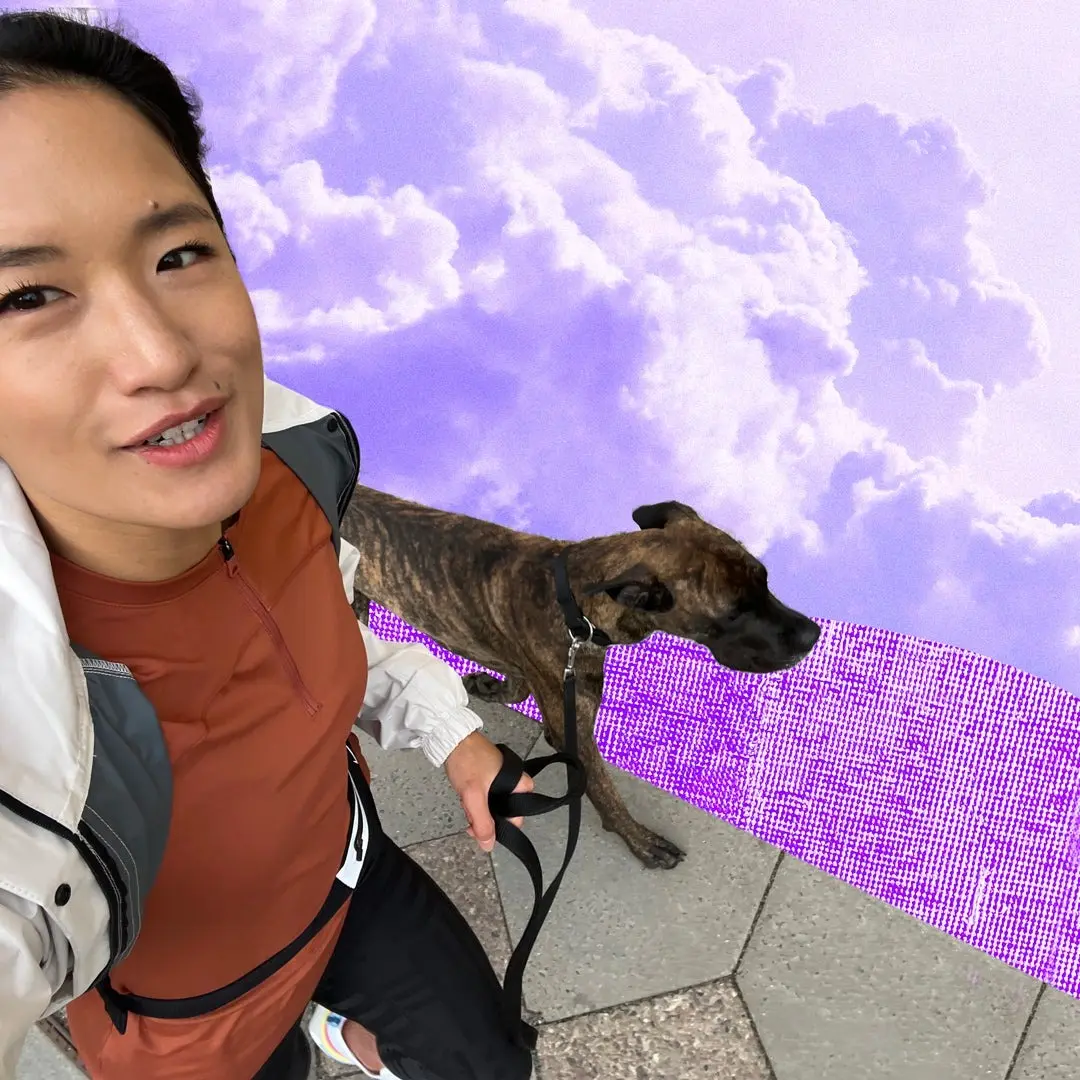
To inject dynamic social energy into her Monday mileage, Hong frequently borrows a friend’s energetic canine companion, Mia. The interaction creates a shifting dynamic of athletic motivation: "At the beginning, she pulls me; at the end, I pull her. I might not be as fast as her, but when it comes to endurance, I win."
Tuesday: The Holistic Foundation – Yoga, Strength, and Injury Prevention
Marathon training is fundamentally an exercise in structural resilience. Tuesday marks a strategic departure from high-impact running in favor of a holistic cross-training protocol. Hong dedicates this day to a combination of dynamic yoga flows, targeted strength training, and preventative physiotherapy sessions.
Sports scientists and orthopedic specialists increasingly emphasize that cardiovascular capacity often outpaces muscular and connective tissue strength in novice-to-intermediate runners. By fortifying her core, glutes, and stabilizing muscles on Tuesdays, Hong builds a robust biomechanical armor. This multidisciplinary foundation allows her to step outside her comfort zone during intense weekend running blocks without courting overuse injuries. Crucially, it ensures that she is never completely depleted, leaving her physiological tank sufficiently stocked for rapid recovery.
Wednesday: Active Recovery, Global Careers, and Cultural Respite
Wednesday serves as a vital structural buffer. Operating as an international flight attendant means Hong’s days in Berlin are precious commodities. Rather than forcing a suboptimal workout simply to check a box on a training app, she treats rest and social reconnection as non-negotiable components of her athletic regimen.
True athletic recovery encompasses mental bandwidth as much as muscular glycogen replenishment. By visiting a local contemporary art exhibition and carving out intentional time to catch up with friends scattered across the German capital, Hong lowers systemic cortisol levels. Lower stress equates to superior hormonal environments for muscle repair and neuromuscular adaptation.
Thursday: Pushing the Limits – Track Workouts and Technological Support
Thursday represents the furnace of the weekly training cycle: the high-intensity track session. Preparing for a marathon requires deliberate exposure to lactate threshold paces, and Hong approaches these speed-oriented workouts with a competitive zeal.
"I love competitions; it gives me an incredible amount of joy to challenge myself," she notes. During Thursday’s track workout, she systematically tests her limits—evaluating how long she can sustain high velocities under cardiovascular stress.
On days demanding maximal mechanical output, equipment choice becomes paramount. Hong relies on performance footwear engineered to mitigate impact shock while returning energy, such as the Nike Invincible 3. "They give me a secure feeling on every surface, and I love the bouncy sole," she notes, highlighting how modern footwear innovations allow runners to chase aggressive paces while protecting their joints from excessive loading stress.
Friday: Reflection and Social Integration
Following the high-stress physiological demands of Thursday’s track session, Friday is designated for active recuperation. Aside from a gentle restorative yoga sequence, Hong avoids structured running entirely. Instead, she leans back into the vibrant cultural fabric of Berlin, frequenting galleries and socializing with her peer network. This deliberate pacing prevents overtraining syndrome—a common pitfall among ambitious amateur athletes who mistake chronic fatigue for dedication.
Saturday: The Ritualistic Long Run and Urban Exploration
Saturday morning in Berlin follows a familiar, comforting cadence. Hong’s standard training route unfurls along the iconic Landwehrkanal, offering a tactile variety of surfaces—asphalt, compressed gravel, grass, and occasional mud patches.
This run is as much a mental decompression chamber as it is a physical test. With an engaging true-crime or society podcast in her ears—or occasionally running in absolute silence to absorb the urban soundscape—she uses the miles to process the mental clutter of a demanding work week. The run invariably concludes with a localized reward: a specialty pour-over coffee and a light artisanal snack from a market stall in the heart of Kreuzberg.
Sunday: Community Synergy and the Long-Distance Payoff
While weekday miles are often solitary endeavors carved out between design briefs and flight check-ins, Sunday is reserved for collective endurance. As a proud member of the Joy Run Collective, Hong tackles her long-distance weekend run through the sprawling, tree-lined expanses of the Tiergarten.
Running in sub-optimal weather conditions requires psychological fortification, which is amplified exponentially by group dynamics. The shared suffering and collective rhythm of a running collective transform a grueling 20-plus-kilometer effort into a shared celebration of physical capability.
True to her philosophy that training must incorporate joy, the Sunday session culminates not in immediate dispersal, but in a communal brunch. This week’s menu features custom-made dumplings—a culinary carrot that Hong admits she visualizes during the final, leg-weary miles of her long run.
Supporting Context & Metrics: The Paradigm Shift in Modern Endurance Sports
To contextualize Hong’s journey from hesitant beginner to seasoned marathoner, it is necessary to examine broader demographic and physiological shifts within the global running community.
The Rise of the "Comfort-First" Endurance Athlete
Historically, the sport of distance running was dominated by purists who viewed suffering as a moral imperative. Training logs were measured in brutal mileage milestones, and dietary restrictions bordered on asceticism. However, recent data from global running organizations indicates a massive influx of participants who approach the sport through a lifestyle-integrated lens.
According to fitness industry analysts, participation in recreational endurance events has seen a significant demographic diversification. Women aged 25 to 40 represent one of the fastest-growing segments in half-marathon and marathon registrations. This demographic increasingly rejects the "hustle culture" application to fitness, favoring holistic health, mental clarity, and sustainable longevity over raw, ego-driven speed metrics.
Biomechanical and Psychological Benefits of Cross-Training
Hong’s inclusion of yoga, strength training, and deliberate rest days is heavily supported by modern sports science:
- Injury Mitigation: Studies published in the Journal of Orthopaedic & Sports Physical Therapy indicate that runners who incorporate structured resistance training reduce their risk of running-related injuries by up to 50%.
- Mental Resilience: Cognitive reframing techniques—such as Hong’s strategy of singing when fatigued—have been shown by sports psychologists to lower perceived exertion levels (RPE) during high-intensity aerobic efforts.
- The Community Effect: Research into group exercise physiology demonstrates that synchronized physical activity releases higher levels of endogenous endorphins and builds stronger social bonds than solo workouts, directly contributing to long-term athletic adherence.
Official Statements & Expert Perspectives
The intersection of high-level endurance performance and lifestyle balance has attracted significant commentary from sports scientists, coaches, and industry leaders who view athletes like Hong as the blueprint for the future of the sport.
Dr. Aris Thorne, Senior Sports Physiologist at the Berlin Institute of Human Movement, comments on the physiological viability of balanced training:
"The archaic mindset that you must destroy your body to run a fast marathon is scientifically obsolete. What we observe in athletes who successfully balance high-volume training with professional careers, adequate sleep, and mental downtime is a superior recovery profile. When an athlete maintains low baseline stress through social connection and proper nutrition, their autonomic nervous system rebounds far more efficiently from hard track sessions. Hong’s routine is a textbook example of sustainable periodization."
Maya Lindqvist, Elite Running Coach and Community Organizer, discusses the evolution of urban running collectives:
"Running used to be an intensely solitary, almost punishing pursuit. Today, it has transformed into urban cultural architecture. Collectives like the Joy Run Collective are redefining the culture by proving that you can chase serious performance goals—like running a sub-four-hour or sub-three-hour marathon—without losing your humanity, your social life, or your sense of humor. The post-run coffee, the shared dumplings, the playlist curation—these are not distractions from the training; they are the fuel that sustains it."
Hong herself reflects on the psychological metamorphosis of her running career:
"I started running four years ago. At 30, I am healthier and fitter than I ever was in my twenties. But running is so much more than physical conditioning. I have gained an immense amount of self-confidence because I now know how deeply I can push myself, even on days when I feel low. I’ve learned a fundamental truth: consistency and comfort do not have to be mutually exclusive. I can set new boundaries, chase hard goals, and still enjoy my life along the way."
Future Outlook: Where Endurance Sports Go From Here
As the fitness landscape continues to evolve, the archetype of the stressed, overtrained, and isolated runner is rapidly giving way to a more integrated model of athleticism. The commercialization of running gear has shifted toward products that prioritize both technical performance and daily aesthetic versatility—reflecting a consumer base that refuses to compartmentalize their identities strictly as "athletes."
For Hong, the immediate horizon is dominated by the pursuit of her seventh marathon finisher’s medal. Yet, her trajectory suggests a broader cultural trajectory for the sport at large. As urban running communities expand and professional demands on the modern workforce intensify, the future belongs to those who master the art of sustainable integration.
By refusing to choose between professional ambition, social connection, culinary pleasure, and elite endurance performance, athletes like Hong are proving that the path to 42 kilometers does not need to run through misery. It can be paved with good shoes, great music, supportive friends, and a plate of warm dumplings waiting at the finish line.