Berlin, Germany — The modern narrative of endurance sports is frequently dominated by images of ascetic discipline: athletes waking up at 4:00 AM, enduring freezing temperatures in minimal gear, and strictly adhering to grueling, joyless mileage schedules. But a quiet paradigm shift is taking place on the pathways, tracks, and canals of Europe’s metropolitan centers.
At the forefront of this movement is Hong, a Berlin-based designer, international flight attendant, and veteran marathoner currently preparing for her seventh 42-kilometer race. Hong’s journey challenges the orthodoxies of high-performance athletics. She is not a lifelong runner; she started just four years ago in her late twenties. Today, at 30, she is fitter, healthier, and more resilient than she was a decade prior—all while prioritizing comfort, community, and the occasional snooze button.
This in-depth feature explores Hong’s weekly training regimen, dissects the physiological and psychological philosophy of "comfortable consistency," and examines how modern amateur athletes are redefining endurance training for the 21st century.
Executive Overview: The Rise of "Comfortable Consistency"
In the upper echelons of marathon training, burnout remains a silent epidemic. Amateurs and semi-professionals frequently attempt to emulate elite protocols, cutting corners on recovery, sleep, and mental well-being. The result is often chronic injury, psychological fatigue, and a high dropout rate among novice runners.
Hong’s methodology offers a compelling counter-narrative. By embedding comfort directly into her training philosophy—from footwear choices and curated playlists to social runs and post-workout culinary rewards—she has constructed a sustainable framework for high-level endurance.
"I used to be one of those people who thought I wasn’t a runner," Hong reflects. "Now I’m training for my seventh marathon. I work out almost daily, but it is total priority for me that I feel good while doing it. I like things cozy."
This executive overview explores the architecture of her week, illustrating how professional demands (such as long-haul aviation schedules and creative design deadlines) can coexist harmoniously with serious athletic ambition. Far from diluting performance, this holistic approach provides the psychological and physical foundation necessary to push boundaries safely.
Detailed Chronology: A Week in the Life of a Marathoner
To understand how a busy professional manages a high-mileage schedule without sacrificing quality of life, we must examine her week day by day. Hong’s routine is a masterclass in periodization, balancing high-intensity output with active recovery, cross-training, and rich social integration.
Monday: Rhythm, Playlists, and Pacing
The week begins under the weight of a dual career. Balancing the unpredictable time zones of a flight attendant with the precise spatial demands of graphic design leaves little room for friction. Monday is about establishing momentum without inducing panic.
- The Musical Lifeline: When motivation dips, Hong turns to her carefully curated running playlist—a dynamic mix of disco, house, and techno. "I don’t always listen to music when I run," she notes, "but when I feel sluggish, it’s an absolute lifesaver."
- Active Breath Control: On days when stamina wanes mid-run, Hong employs a unique self-regulation technique: she sings. By forcing herself to vocalize lyrics, she naturally curtails her pace, regains control over her breathing, and transforms a grueling struggle into an enjoyable moment. Passersby frequently smile as she coasts past, humming melodies.
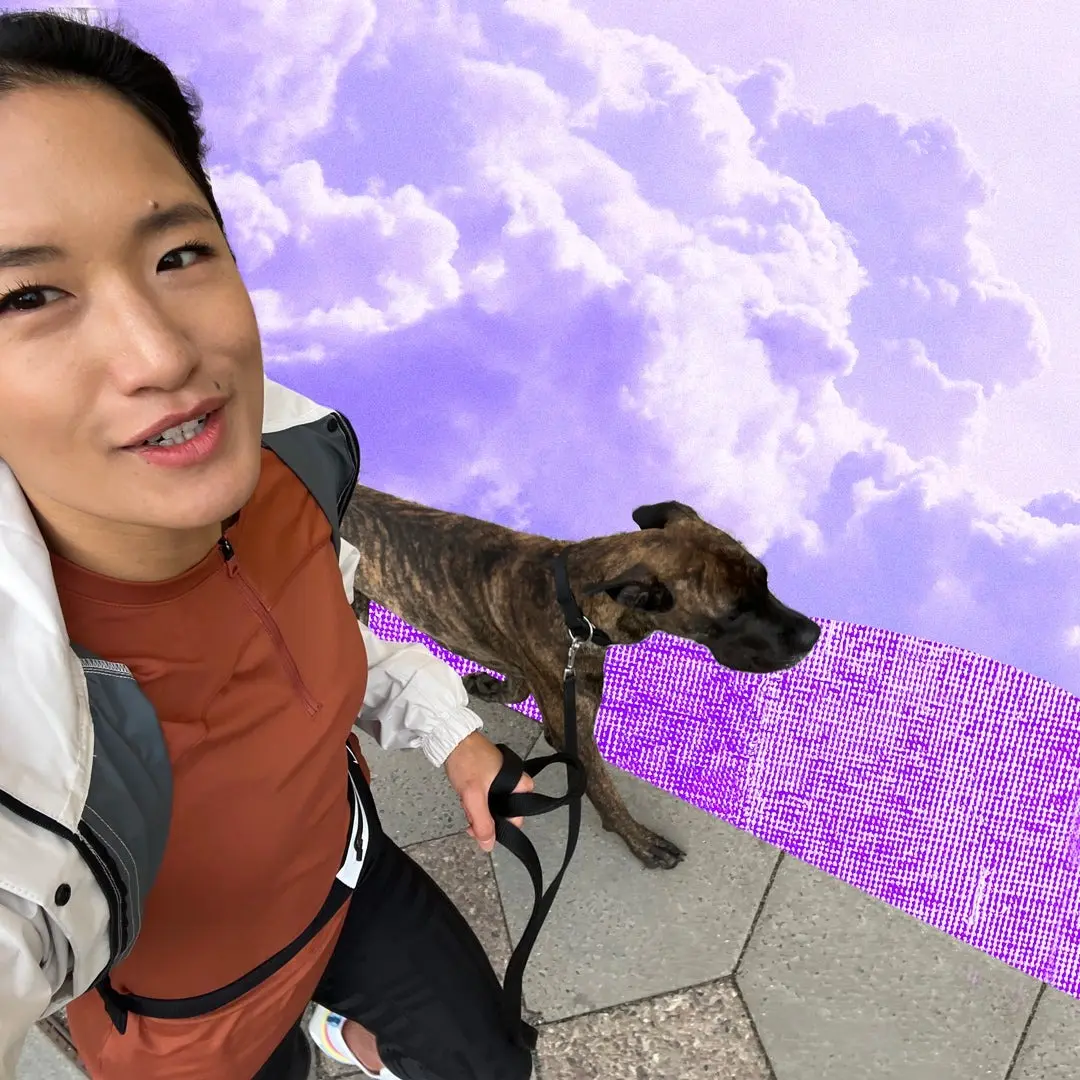
- Canine Companionship: Mondays also feature a borrowed variable—Mia, a friend’s energetic dog. Integrating canine pacing adds an element of play. "At the beginning, she pulls me; at the end, I pull her," Hong laughs. "I might not be as fast as her, but when it comes to endurance, I win."
Tuesday: The Pillars of Injury Prevention
True athletic longevity requires looking beyond the pavement. Tuesday is entirely devoid of running, substituted instead with a multi-disciplinary regimen designed to bulletproof the body.
- Yoga and Mobility: Flow-based yoga sessions maintain joint mobility and counteract the postural fatigue associated with long hours at a desk or in an aircraft cabin.
- Targeted Strength Work: Lifting weights is non-negotiable in Hong’s schedule. Strength training fortifies connective tissues, stabilizing the knees, hips, and core to absorb the repetitive impact of marathon training.
- Physiotherapy Integration: Regular check-ins with a physical therapist ensure that minor imbalances are addressed before they manifest into chronic overuse injuries.
This holistic triangle—yoga, strength, and clinical oversight—acts as a shock absorber. It enables Hong to step outside her comfort zone during peak running days without courting disaster.
Wednesday: The Art of the Strategic Pause
Recovery is not merely the absence of training; it is an active component of athletic adaptation. As a long-haul flight attendant constantly traversing continents, Hong’s social capital is precious.
Wednesday is dedicated to professional decompression and cultural nourishment. Rather than forcing a recovery jog, she frequently opts to visit local art exhibitions in Berlin. This mental shift lowers cortisol levels, ensuring that physical rest is matched by psychological rejuvenation.
Thursday: Pushing Limits on the Track
If Monday and Wednesday are about rhythm and recovery, Thursday is where the physiological envelope is pushed. Training for a marathon requires high-intensity intervals and speed work to improve running economy and VO2 max.
- The Track Session: Operating on a local running track, Hong tests her speed thresholds and pace-maintenance capabilities. "I love competitions," she says. "It gives me an incredible amount of joy to challenge myself."
- Equipment Selection: To protect her joints during high-stress speed work, footwear choice is critical. Hong relies on the Nike Invincible 3, citing its bouncy sole geometry and secure, stable platform across varying track surfaces. "They give me a secure feeling no matter the terrain," she notes.
Friday: Social Integration and Cultural Battery Recharge
Following Thursday’s punishing track workout, Friday demands restorative measures. The physical toll is met with a light yoga session, followed by socializing. Because her profession keeps her away from Berlin for days at a stretch, maximizing local community engagement when she returns home is essential to her mental health. Gallery visits and dinners with friends serve to refill her emotional reservoir.
Saturday: The Long Urban Route and Sensory Immersion
Saturday is consecrated to the classic long, slow distance (LSD) run, utilizing Berlin’s iconic urban geography.
- The Landwehrkanal Loop: Her standard route winds along the Landwehrkanal, transitioning seamlessly between asphalt, grass, and mud. This variable terrain naturally engages stabilizing muscles in the ankles and feet.
- Sensory Engagement: Equipped with an immersive podcast—or sometimes running entirely in silence—Hong absorbs the ambient soundscape of the city. "It’s fun to watch the people around me," she reflects.
- The Culinary Reward: Every successful long run concludes with a ritualistic reward: specialty coffee and a light snack from a vibrant market stall in Kreuzberg.
Sunday: Community and the Joy Run Collective
The culmination of the training week takes place on Sunday through collective effort. As a member of the Joy Run Collective, Hong joins fellow endurance enthusiasts for a long-haul run through the sprawling expanse of the Tiergarten.
- Weather Management: Winter runs require tactical layering. Preparing for extended exposure to cold ambient temperatures demands precise thermal management before stepping out the door.
- The Post-Run Feast: The psychological anchor of the Sunday long run is the communal brunch. This week features homemade dumplings prepared by a group host—a culinary goal that provides subtle, joyful motivation throughout the final miles of the route.
Supporting Context & Metrics: The Science of Sustainable Endurance
Hong’s transition from a reluctant runner to a sub-elite amateur encapsulates broader trends documented by sports scientists and sociologists alike.
The Psychology of Sustainable Performance
According to recent studies in exercise psychology, intrinsic motivation—driven by autonomy, competence, and relatedness—significantly outperforms extrinsic motivation (such as strict aesthetic goals or fear of failure) in long-term athletic adherence. By incorporating community (the Joy Run Collective), sensory engagement (podcasts, music), and culinary rewards (market snacks, dumplings), Hong has gamified her preparation, drastically lowering the cognitive friction of lacing up her shoes.
Physiological Load Management
Sports medicine data consistently shows that the leading cause of marathon dropout is not cardiovascular failure, but musculoskeletal overuse injury—specifically iliotibial band syndrome, plantar fasciitis, and patellofemoral pain.
Hong’s weekly integration of:
- Strength training (improving tendon stiffness and force production),
- Physiotherapy (addressing muscular asymmetries), and
- Dedicated rest days (allowing micro-tear repair and glycogen supercompensation)
…creates an optimal envelope of adaptation. Her protocol mirrors modern periodization theories championed by elite endurance coaches, proving that amateur runners can reap the benefits of professional-grade load management without living a monk-like existence.
Official Statements and Personal Philosophy
Reflecting on her journey across four years of continuous running, Hong offers a powerful perspective on how physical endurance reshapes internal identity.
"I started running four years ago. At 30, I am healthier and fitter than I ever was in my twenties," Hong states. "But running is so much more than physical training. As a runner, I’ve gained a tremendous amount of self-confidence because I now know how hard I can push myself, even when I feel a bit low."
Her philosophy dismantles the puritanical myth that suffering is a prerequisite for success.
"I’ve learned that consistency and comfort do not have to exclude one another. I can set new boundaries for myself and still feel completely at ease doing it. Next stop: my seventh marathon."
Future Outlook: The Evolution of the Everyday Athlete
As the endurance sports market continues to expand globally, the archetype of the marathoner is undergoing a permanent democratization. Rigid, militaristic training regimes are gradually giving way to flexible, lifestyle-integrated models pioneered by athletes like Hong.
For the running industry, this shift signals a profound transformation in consumer demand. Athletes are no longer searching merely for raw performance metrics; they are seeking holistic ecosystems—footwear that absorbs high impacts dynamically (such as the Nike Invincible 3), apparel that bridges urban commuting with athletic output, and communities that foster genuine social connection.
As Hong prepares to toe the starting line of her seventh marathon, her journey serves as an authoritative blueprint for the modern endurance athlete: ambition and comfort are not adversaries. When balanced correctly, they are the twin engines of lifelong athletic achievement.
Hong’s 3 Essential Rules for Maximizing Running Joy
For readers looking to inject more pleasure, longevity, and sustainability into their own running practices, Hong summarizes her philosophy into three foundational tenets:
- Prioritize Footwear Comfort: Never compromise on the engineering of your running shoes. Investing in supportive, high-rebound footwear (such as cushioned daily trainers) protects joints and transforms hard surfaces into forgiving terrain.
- Curate Your Auditory Environment: Build a versatile playlist spanning upbeat genres like disco, house, and techno to combat mental fatigue, or utilize long-form podcasts to mentally detach from physical exertion.
- Design Rewarding Routes and Rituals: Pair scenic, variable-terrain routes with a tangible post-run reward—whether it is artisanal coffee, a Kreuzberg pastry, or a communal weekend brunch with friends.