Executive Overview
In an era dominated by relentless hustle culture and the glorification of extreme athletic output—where waking up at 4:30 AM to log grueling double-digit mileage is often painted as the only path to endurance success—a quiet counter-movement is taking shape on the streets of Berlin. Meet Hong, a multifaceted professional balancing a career as a graphic designer and a flight attendant, who is currently gearing up for her seventh full marathon. Hong shatters the archaic, intimidating archetype of the ultra-disciplined runner. She is a self-proclaimed lover of comfort, an unapologetic user of the snooze button, and someone who refuses to function without her morning coffee.
Yet, beneath this relaxed, approachable exterior lies a remarkably resilient athlete. Hong’s journey offers a masterclass in modern sports psychology and physical conditioning, proving that rigorous endurance training does not require sacrificing personal comfort, a social life, or mental well-being. By seamlessly blending high-intensity track workouts, holistic cross-training, community engagement, and an unwavering commitment to recovery, Hong represents a new paradigm in amateur athletics: sustainable, joyful, and relentlessly consistent performance. This report explores her weekly training regimen, the philosophy behind her success, and the broader implications of balancing high-level endurance sports with a demanding, jet-setting lifestyle.
Detailed Chronology: A Week in the Life of a Balanced Marathoner
To understand how an amateur athlete can safely prepare for their seventh marathon while juggling two distinct careers, one must examine the granular architecture of their week. Hong’s schedule is a carefully orchestrated balance of exertion, recovery, community, and personal indulgence.
Monday: The Rhythm of the Streets and the Power of Playlists
The week begins with a logistical and mental challenge. As both a designer and a flight attendant, Hong’s professional life is inherently unpredictable, defined by changing time zones, irregular sleep schedules, and constant travel. Mondays are all about establishing rhythm without succumbing to burnout.
"I can’t lose the joy of running if I want to stay consistent," Hong explains. To combat the inevitable moments of low energy or creative fatigue, she relies on her proprietary running playlist—a curated sonic landscape spanning disco, house, and techno designed to elevate her heart rate and shift her mindset.
However, Hong’s approach to fatigue is remarkably forgiving. When her breath catches or a run feels unusually heavy, she employs a clever physiological hack: she slows her pace and begins to sing out loud. This forces her to regulate her breathing, turning a potential struggle into a joyful, lighthearted moment. Passersby often smile as she jogs past humming tunes, transforming a solitary workout into an interactive urban experience.
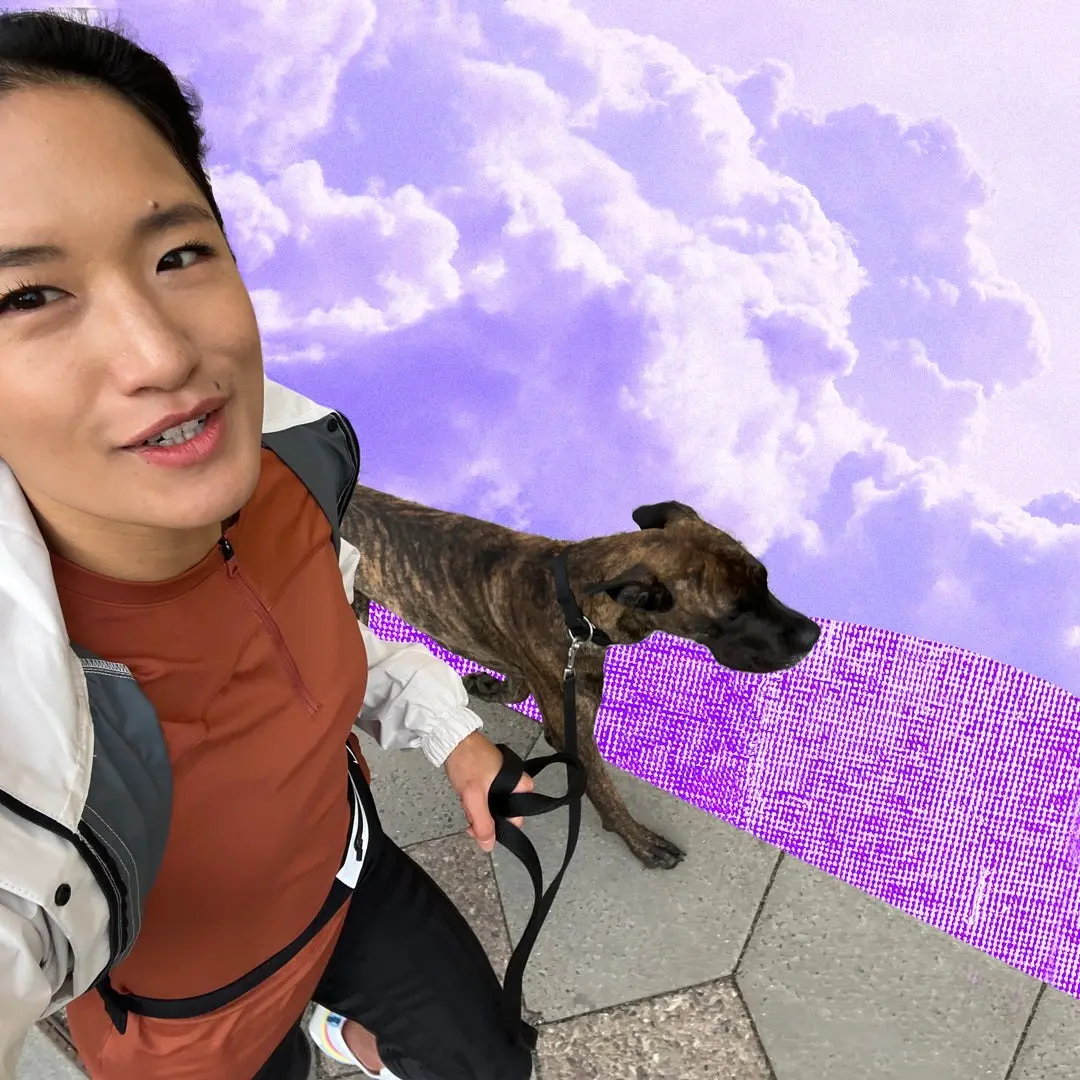
To add a layer of dynamic engagement to her Monday miles, Hong frequently enlists canine companionship, borrowing a friend’s high-energy dog named Mia. The partnership introduces an element of playful competition. "At the beginning, she pulls me; at the end, I pull her," Hong notes. While the dog may possess greater sprint speed, Hong’s superior aerobic endurance ultimately wins the day, turning a routine training run into an engaging shared adventure.
Tuesday: The Unsung Heroes of Endurance—Yoga, Strength, and Mobility
True marathon preparation extends far beyond logging miles on asphalt. On Tuesday, Hong steps away from running altogether to focus on injury prevention and structural integrity. Her routine incorporates targeted strength training, dedicated yoga sessions, and regular visits to a physiotherapist.
This holistic framework is the secret weapon that allows her to push her limits safely when she does run. By building a robust, resilient musculoskeletal base, Hong ensures that her body can absorb the high-impact stress of marathon training without breaking down. Crucially, these sessions are paired with mandatory rest periods, allowing her physiological systems to supercompensate and adapt before the next high-intensity bout.
Wednesday: The Art of the Pause and Social Integration
Wednesdays highlight the intersection of elite athletic goals and a rich personal life. Given her frequent absences due to her career as a flight attendant, Hong treats her time in Berlin as a precious commodity. Rather than grinding out a recovery jog, she often opts to rest completely, immersing herself in the city’s vibrant culture by visiting local art exhibitions and catching up with friends.
This philosophy challenges the purist mindset that missing a training run spells athletic disaster. For Hong, nourishing her social connections and feeding her creative mind are forms of mental recovery that are just as vital to her marathon readiness as physical downtime.
Thursday: Pushing Limits and the Psychology of Track Workouts
While comfort is a cornerstone of Hong’s philosophy, she is far from averse to hard work. Thursday is designated for track workouts—high-intensity sessions designed to test lactate thresholds, speed, and pacing control.
Preparing for these grueling sessions requires mental preparation, and Hong relies heavily on gear that bridges the gap between performance and comfort. During these intense speed trials, she favors the Nike Invincible 3. "They give me a secure feeling on any surface, and I love the bouncy sole," she notes.
The psychological shift required to move from a relaxed, social run to an all-out track effort is bridged by her love for self-competition. Hong views track days not as a punishment, but as an opportunity to discover her capabilities, measuring success in seconds shaved off her splits and the ability to maintain pace under physical duress.
Friday: Creative Recovery and Urban Exploration
Coming off the high-stress crucible of Thursday’s track session, Friday is intentionally dialed back. Aside from a gentle restorative yoga session, physical exertion is kept to a minimum.
True to her pattern of maximizing her time in her home city, Hong spends her Friday engaging with Berlin’s creative community, visiting galleries, and enjoying the company of her peers. This cyclical rhythm—push, recover, connect, repeat—ensures that she enters the weekend physically refreshed and mentally eager.
Saturday: Solitude, the Landwehrkanal, and Culinary Rewards
Saturday morning brings routine and reflection. Hong’s standard running route tracks along the iconic Landwehrkanal, offering a varied terrain of asphalt, grass, and occasional patches of mud.
Here, the run becomes a moving meditation. With an engaging podcast playing in her ears—or sometimes complete silence to absorb the ambient sounds of the city—she disconnects from the digital world. "I love watching the people around me," she says.
The run invariably culminates in a ritualistic reward: a hot coffee and a small, savory snack purchased from a local market stall in Kreuzberg. This intentional pairing of effort and indulgence reinforces positive neural pathways associated with running, making the discipline feel less like an obligation and more like a cherished weekend tradition.
Sunday: Community Synergy and the Long Run
The culmination of the training week takes place on Sunday, marked by the long run. Breaking away from solitary miles, Hong meets up with her running community, the Joy Run Collective, for an extended endurance session through the sprawling landscape of the Tiergarten.
Because winter temperatures and high mileage pose distinct physiological challenges, Sunday runs require careful preparation, from thermal layering to nutritional strategy. Yet, the physical demands are heavily offset by the collective energy of the group.
The grand finale of the week is not merely surviving the distance, but the post-run ritual: a communal brunch. For this particular session, the host prepared homemade dumplings—a culinary reward that Hong admits she anticipates throughout the entire training week.
Supporting Context and Metrics: The Evolution of Modern Running Culture
Hong’s trajectory from self-proclaimed non-runner to veteran marathoner mirrors a broader demographic shift in endurance sports over the past decade. According to recent sports science and industry data, the profile of the average marathon participant has shifted dramatically. The sport is no longer the exclusive domain of elite, hyper-lean specialists or stoic ascetics; it has been democratized by everyday individuals who prioritize holistic well-being over raw, unyielding suffering.
The Physiology of "Comfort-First" Training
Traditional training paradigms often relied on the "no pain, no gain" mantra, a philosophy that sports medicine researchers now recognize as a leading cause of overuse injuries, psychological burnout, and chronic fatigue syndrome among amateur athletes.
Hong’s approach aligns closely with polarized training models advocated by modern exercise physiologists. By keeping her easy days genuinely easy—incorporating social chat paces, dog-walking intervals, and singing—she builds mitochondrial density and capillary beds without overtaxing her central nervous system. Conversely, when she executes her Thursday track workouts, she can access peak physical output precisely because her system is not chronically inflamed from junk miles.
The Economic and Social Weight of Running Communities
The emergence of collectives like the Joy Run Collective underscores the social dimension of modern fitness. Studies in sports psychology consistently show that communal exercising increases adherence rates, lowers perceived exertion, and boosts psychological resilience. When running is anchored to social connection—such as post-run coffee in Kreuzberg or dumpling brunches—it ceases to be a solitary chore and transforms into an essential pillar of lifestyle design.
Expert Perspectives and Official Insights
To contextualize Hong’s journey within the wider athletic landscape, sports psychologists and running footwear developers emphasize the critical link between psychological comfort and physiological performance.
Dr. Elena Vance, a sports psychologist specializing in endurance athletes, notes that mental friction is often the primary barrier to entry for amateur runners.
"When people look at marathon training, they see an insurmountable wall of early mornings, pain, and deprivation," Dr. Vance explains. "Athletes like Hong dismantle that myth. By proving that you can prioritize sleep, enjoy social lives, eat comforting foods, and still cross the finish line of your seventh marathon, she redefines what sustainable athleticism looks like. Comfort and high performance are not mutually exclusive; in many ways, psychological comfort is the fuel for physical consistency."
Furthermore, product design teams within the athletic footwear industry have shifted their focus to accommodate this balanced demographic. Modern running shoes are engineered not just for elite biomechanical efficiency at breakneck speeds, but for adaptive cushioning, impact protection, and all-day wearability. The widespread adoption of high-stack, energy-return foams reflects a market that demands gear capable of protecting the body through varied urban terrains while maintaining a joyful, bouncy ride.
Future Outlook: The Next Horizon for Balanced Endurance Athletes
As Hong looks ahead to her seventh marathon, her journey serves as a powerful blueprint for the future of amateur sports. The archaic notion that athletic excellence requires a monastic, joyless existence is rapidly fading, replaced by a more nuanced, sustainable understanding of human potential.
The integration of professional demands, creative pursuits, social obligations, and rigorous athletic training demonstrates that modern individuals do not need to compartmentalize their lives to achieve ambitious goals. Instead, these diverse elements can reinforce one another. A well-rested designer is more creative; a socially fulfilled flight attendant is more resilient; a runner who sings on her recovery miles is better equipped to handle the grueling demands of a track workout.
For anyone sitting on the fence, hitting the snooze button, and wondering if they have what it takes to join the ranks of endurance runners, Hong’s philosophy offers a welcoming, authoritative answer. You do not need to change who you are to become a runner. You simply need to find your rhythm, invest in your comfort, surround yourself with a community that uplifts you, and remember to enjoy the snack at the finish line.
Next stop: the starting line of marathon number seven.