Executive Overview
The modern endurance sports landscape is undergoing a profound cultural paradigm shift. For decades, the dominant narrative surrounding marathon training was one of uncompromising asceticism—an unforgiving domain dominated by the "no pain, no gain" dogma, predawn alarm clocks, strict self-denial, and grueling regimens that often left participants depleted. However, a new wave of urban athletes is fundamentally rewriting this playbook. They are proving that peak physical performance and a relaxed, comfortable lifestyle do not have to be mutually exclusive.
At the vanguard of this movement is Hong, a Berlin-based designer and flight attendant who is currently deep into preparations for her seventh full marathon. Hong’s journey offers a fascinating case study in sustainable endurance athletics. Once firmly self-identified as a "non-runner," Hong has transformed her lifestyle to accommodate near-daily physical activity while fiercely guarding her comfort, social life, and mental well-being.
This in-depth feature explores Hong’s weekly training architecture, examining how she expertly balances an intense global career, a vibrant social calendar in Germany’s capital, and the rigorous physiological demands of marathon preparation. By prioritizing comfort, community, cross-training, and mental resilience, Hong’s philosophy challenges traditional coaching models and offers a blueprint for modern, balanced athleticism. Through an analysis of her weekly routine, her physiological strategies, and the broader cultural trends of contemporary running communities, this article investigates how everyday athletes can achieve extraordinary goals without sacrificing their quality of life.
Detailed Chronology: A Week in the Life of a Balanced Marathoner
To understand how Hong manages to train for her seventh marathon while maintaining a demanding dual career, one must look closely at how she structures her week. Her routine is a masterclass in dynamic time management, flexibility, and self-care.
Monday: The Sonic Lifeline and Pacing Through Song
Monday marks the official start of the work week, but for Hong, it is also an exercise in rhythm and mental adaptation. As a professional designer and flight attendant, her schedule is notoriously unpredictable. To ensure she does not lose her psychological momentum, Monday’s run serves as an antidote to potential sluggishness.
"I am not always listening to music when I run, but when I feel unmotivated, it is simply my lifesaver," Hong explains. Her running playlist—a carefully curated sonic landscape featuring disco, house, and techno beats—acts as an external motivator when internal drive runs low.
Yet, Hong’s approach to pacing is refreshingly unpretentious. When fatigue sets in mid-run and shortness of breath threatens to derail her rhythm, she employs a unique tactical adjustment: she begins to sing aloud. This forces her to naturally dial back her velocity and regain strict control over her respiratory rate. Not only does this technique successfully lower her heart rate and smooth out her breathing, but it also injects joy into the workout, often eliciting warm smiles and amused glances from fellow Berliners passing her on the street.
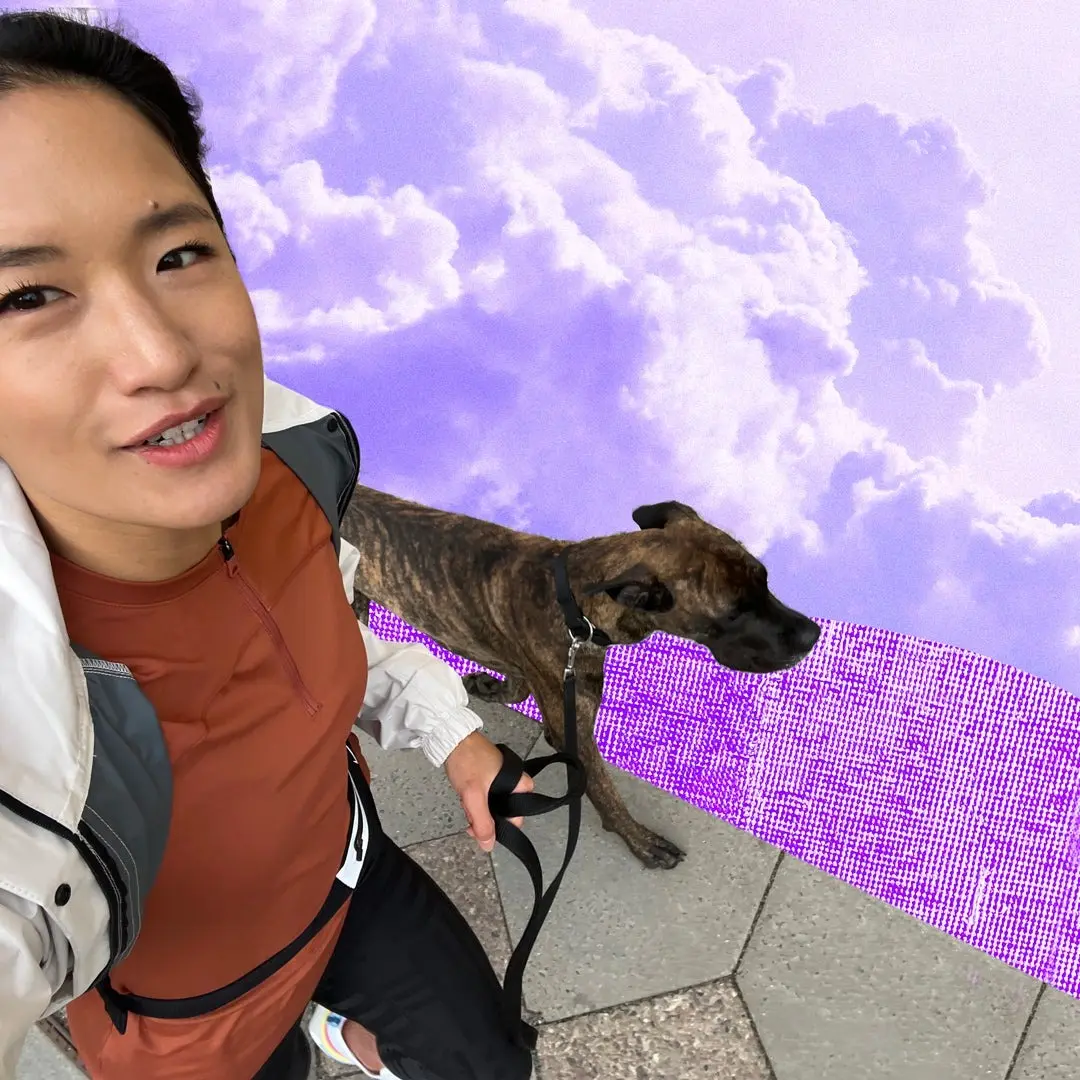
To add an element of dynamic unpredictability to Monday’s session, Hong often borrows a friend’s dog. Mia, an energetic canine companion, injects a dose of unpredictable pacing into the outing. "At the beginning, she pulls me; at the end, I pull her," Hong laughs. While she may not match the dog’s explosive sprint speeds, Hong’s superior cardiovascular endurance ensures she wins the long game of stamina.
Tuesday: The Holistic Foundation – Yoga, Strength, and Recovery
Tuesday represents a strategic departure from high-impact road running. Recognizing that structural integrity is the ultimate shield against injury, Hong shifts her focus to complementary modalities. Her Tuesday routine involves a dedicated yoga practice paired with targeted strength training and scheduled physiotherapy sessions.
This holistic triumvirate is non-negotiable for anyone looking to push their aerobic boundaries safely. By fortifying her core, stabilizer muscles, and joint health, Hong creates a robust physical foundation. This allows her when Thursday’s high-intensity track session arrives to step completely outside her comfort zone without fearing the breakdown of soft tissues. Crucially, Tuesday’s cross-training is followed by intentional rest—a physiological necessity that allows muscle fibers to repair and adapt before the next high-stress output.
Wednesday: Cultivating the Social Ecosystem
Wednesday serves as a vital psychological and social checkpoint. Given her frequent international travels as a flight attendant, Hong treats her downtime in Berlin as precious cargo. Rather than forcing a compromised workout into a packed social calendar, she intentionally carves out space for cultural enrichment and human connection.
Mid-week, Hong often hits pause on strenuous physical exertion to visit local art exhibitions and catch up with friends scattered across the city. This deliberate integration of art, culture, and friendship ensures that her athletic pursuits do not eclipse her personal life. In the ecosystem of modern endurance sports, mental burnout is often more dangerous than physical fatigue; Hong’s Wednesday routine acts as an effective bulwark against psychological exhaustion.
Thursday: Pushing Limits on the Track
If Monday is about rhythm and Tuesday is about recovery, Thursday is where the crucible of marathon preparation truly heats up. Dispelling the myth that elite-level endurance athletes wake up effortlessly at 5:00 a.m. ready to conquer 20 kilometers with a smile, Hong admits she frequently requires an extra dose of motivation.
"Comfort is so important to me, whether I am facing an easy recovery jog or a brutal track workout," she notes. Today is a day for the latter. Training for a marathon requires structured speed work—intervals designed to test lactate threshold, maximum velocity, and pacing endurance.
To mitigate the immense physical stress of these high-speed track sessions, Hong relies heavily on her gear. She opts for footwear designed to absorb shock while delivering responsive energy return, specifically citing models like the Nike Invincible 3. "They give me a secure feeling on every single surface, and I just love the bouncy sole," she explains. This psychological and physical cushioning allows her to chase personal records and embrace the competitive thrill of pushing her physical limits on the oval track.
Friday: Active Decompression and Cultural Reconnection
Following Thursday’s punishing track session, Friday is designated for active decompression. The physical cost of high-intensity interval training demands respect. Aside from a gentle, restorative yoga flow, Hong keeps her physical exertion to an absolute minimum.
She utilizes this reclaimed time to dive deeper into Berlin’s cultural offerings, meeting friends for gallery visits or neighborhood strolls. For someone who spends a significant portion of her month navigating international flight paths and foreign time zones, grounding herself in Berlin’s local cultural scene is an essential form of mental replenishment.
Saturday: The Landwehrkanal Ritual and Sensory Immersion
Saturday morning is sacred territory. Hong’s standard long-run route tracks along the scenic banks of the Landwehrkanal—a varied urban terrain featuring shifting surfaces of asphalt, packed dirt, gravel, and grass.
This run is as much a psychological meditation as it is physical conditioning. With an engaging true-crime or society podcast humming in her ears, Hong uses the miles to mentally disconnect from the complexities of her professional life. Alternatively, she frequently runs in absolute silence, absorbing the ambient acoustic tapestry of waking Berlin—the clinking of coffee cups, distant bicycle bells, and the rustle of plane trees.
Observing the diverse tapestry of urban life around her adds an extra layer of enjoyment to the excursion. True to her philosophy that the reward should match the effort, Saturday’s run concludes with a well-earned ritual: a steaming cup of artisan coffee and a savory local snack at a bustling market stall in Kreuzberg.
Sunday: Community Synergy at the Tiergarten
While weekday runs are often solitary affairs of rhythm and introspection, Sunday is defined by collective effervescence. As an active member of the Joy Run Collective—a vibrant local running community in Berlin—Hong participates in the group’s signature long-distance endurance run through the sprawling expanse of the historic Tiergarten park.
Navigating long distances in colder weather requires meticulous logistical preparation, from thermal layering to route planning. Yet, the collective energy of the pack transforms what could be a grueling endurance test into a shared celebration of movement.
The true highlight of Sunday, however, occurs off the pavement. Following the completion of their long-run mileage, the collective gathers for a communal brunch. On this particular Sunday, the host has prepared a spread of homemade dumplings—a culinary reward that Hong admits has been on her mind all week long. Here, the culture of running is inextricably linked to food, conversation, and deep interpersonal bonds.
Supporting Context & Metrics: The Evolution of Modern Running Culture
To contextualize Hong’s journey, one must examine the broader demographic and cultural shifts defining the global running boom. Over the past decade, running has shed its exclusive association with elite, hyper-competitive athletes and transformed into a democratic, lifestyle-driven movement.
The Rise of the Casual-Yet-Dedicated Athlete
Historically, sports science dictated that marathon preparation required absolute singular focus—sacrificing social engagements, sleep, and comfort in pursuit of marginal gains. However, contemporary sports psychologists increasingly recognize the "psychological safety valve" model. Athletes who integrate balance, leisure, and community into their training are significantly less prone to overuse injuries, burnout, and psychological drop-out rates.
Hong’s trajectory mirrors this macro trend. Having started her running journey just four years ago, she now finds herself—at age 30—physically healthier, more resilient, and possessing a higher degree of functional fitness than she did throughout her entire twenties.
Key Physiological Metrics in Balanced Training
- Cross-Training Ratio: Sports medicine guidelines suggest that endurance runners should allocate 15% to 20% of their weekly training volume to non-running modalities (yoga, strength conditioning, swimming, or cycling) to balance muscular development and protect joints from repetitive strain.
- Recovery Integration: Hong’s alternation between high-intensity track days (Thursday), long endurance efforts (Saturday/Sunday), and restorative rest/yoga days (Tuesday/Wednesday/Friday) aligns with optimal supercompensation cycles, allowing muscle glycogen stores to replenish and micro-tears in muscle tissue to heal fully.
- Community Engagement: Studies published in behavioral sports science journals consistently demonstrate that athletes embedded in supportive running communities exhibit higher long-term consistency, lower perceived exertion rates during long efforts, and significantly enhanced mental health outcomes compared to solitary trainers.
Official Statements & Expert Perspectives
The philosophy championed by athletes like Hong—where comfort, joy, and consistency intersect with high-level endurance goals—is increasingly validated by sports coaches and footwear designers alike.
"For too long, the endurance community treated discomfort as a mandatory badge of honor. We are now seeing a fundamental culture shift," notes Dr. Marcus Lindner, a leading sports physiologist based in Munich. "Athletes who prioritize biomechanical comfort, psychological joy, and holistic recovery are not compromising their performance; they are optimizing it. When the nervous system feels safe, relaxed, and supported—whether through the right footwear, a listening community, or music—the body is capable of sustaining much higher workloads over longer periods without entering a state of chronic cortisol-driven fatigue."
Furthermore, footwear development has evolved to cater directly to this philosophy. Modern running shoes are no longer designed merely to strip away weight at the expense of protection. Innovations in supercritical foam midsoles and rocker geometries—such as those found in the footwear Hong relies on during her intense track sessions—are engineered to deliver maximum impact absorption and energetic return, bridging the gap between elite performance technology and everyday wear comfort.
Future Outlook: The Next Horizon for Urban Endurance
As Hong sets her sights firmly on the horizon of her seventh marathon, her journey serves as a powerful indicator of where urban athletics is heading. The future of endurance sports does not belong to the tortured ascetic training in isolation before dawn; it belongs to the integrated athlete who weaves movement seamlessly into the tapestry of a rich, multi-faceted life.
By demonstrating that consistency does not require rigidity, and that high performance can coexist peacefully with cozy comforts, good playlists, dog walks, and homemade weekend dumplings, Hong and her contemporaries are opening the door for an entirely new generation of participants.
Hong’s 3 Golden Rules for Maximum Running Joy:
- Prioritize Biomechanical Comfort: Invest in footwear that supports your stride, cushions your joints, and provides psychological security across unpredictable urban surfaces.
- Curate Your Sonic Environment: Never underestimate the transformative power of a high-energy playlist (disco, house, and techno work wonders) to rescue your motivation when fatigue strikes.
- Celebrate the Ritual: Pair every challenging physical effort with a rewarding context—whether that is a scenic urban route, a supportive community, or a delicious post-run treat shared with friends.
As urban centers continue to invest in green spaces, running infrastructure, and community collectives like the Joy Run Collective, the barrier to entry for endurance sports will continue to lower. For Hong, the finish line of her seventh marathon is not an endpoint, but merely another milestone in a lifelong journey where running enhances life, rather than consuming it.