Executive Overview
The modern endurance landscape is frequently dominated by narratives of extreme deprivation, pre-dawn suffering, and relentless high-intensity output. Across social media and fitness platforms, the prevailing myth dictates that to become a serious marathon runner, one must abandon comfort, sleep, and social spontaneity in favor of a monastic, data-obsessed regimen.
Hong, a Berlin-based graphic designer, flight attendant, and veteran endurance athlete currently preparing for her seventh full marathon, stands as a compelling counter-narrative to this exhausting archetype. Her journey challenges the orthodoxies of modern endurance sports, demonstrating that high-level athletic achievement does not require sacrificing personal well-being, social connection, or the simple luxury of a morning snooze.
This feature explores Hong’s weekly training architecture, examining how she balances a demanding, multi-continental career with the rigorous physiological demands of marathon preparation. By integrating holistic cross-training, deliberate rest cycles, community engagement, and a steadfast commitment to comfort—ranging from optimized footwear choices to post-run culinary rewards—Hong has cultivated a sustainable blueprint for longevity in sport. Her philosophy offers a vital lesson for contemporary athletes: consistency and comfort are not mutually exclusive; rather, they are mutually dependent.
Detailed Chronology: A Week in the Life of a Modern Marathoner
Managing a multi-faceted career as both a commercial flight attendant and a freelance designer while simultaneously training for a grueling 42-kilometer race requires meticulous yet flexible life-engineering. Hong’s weekly routine serves as a masterclass in periodization, mental health management, and integrated lifestyle design.
[Monday]      Playlist-Powered Run & Canine Pacing
[Tuesday]     Cross-Training: Yoga, Strength & Physiotherapy
[Wednesday]   Active Recovery & Global Social Connection
[Thursday]    High-Intensity Track Workout & Gear Optimization
[Friday]      Rest, Regeneration & Berlin Art Exploration
[Saturday]    Landwehrkanal Tempo Run & Kreuzberg Gastronomy
[Sunday]      Long Run with the "Joy Run Collective" & Dumpling Brunch
Monday: Overcoming Inertia with Rhythms and Pups
The psychological barrier of entry for any training session is often steepest at the start of the week. Juggling international flight schedules and demanding design projects means Hong frequently confronts low energy levels at the beginning of her week.
- The Sonic Catalyst: When motivation dips, Hong relies on her carefully curated running playlist—a dynamic mix of disco, house, and techno. "I don’t always listen to music when I run," she notes, "but when I feel sluggish, it is an absolute lifesaver."
- Vocal Regulation Technique: Encountering physical fatigue mid-run does not prompt Hong to quit; instead, she drops her pace and begins to sing aloud. This unconventional pacing strategy forces her breathing back under control while simultaneously disarming bystanders. "The run immediately becomes more fun, and I notice people smiling as I run past them singing," she shares.
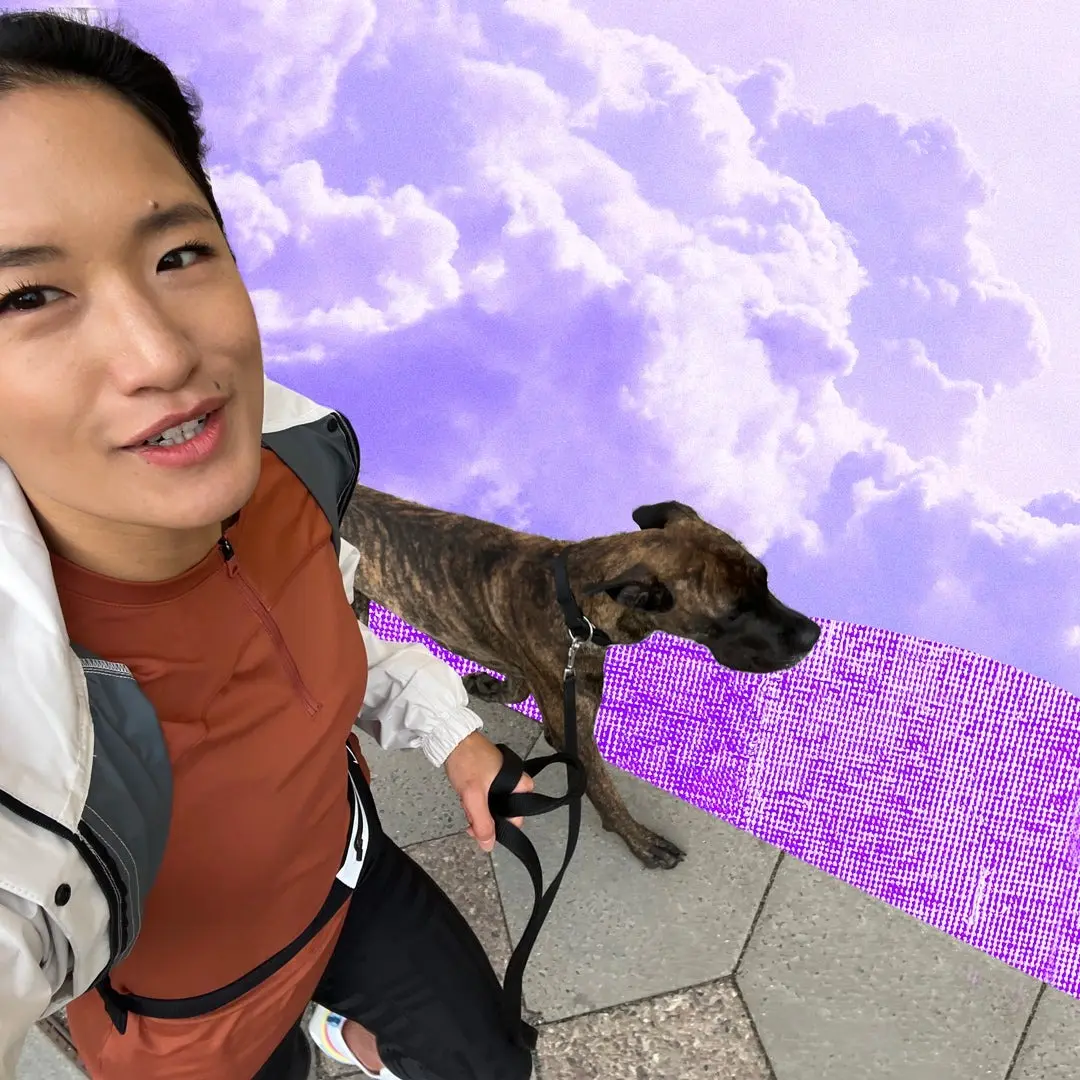
- Canine Companion Training: To inject freshness into her Monday mileage, Hong occasionally borrows a friend’s high-energy dog, Mia. The dynamic creates a playful interval environment: "At the beginning, she pulls me; at the end, I pull her. I might not be as fast as her, but when it comes to sheer endurance, I win."
Tuesday: The Architecture of Longevity (Cross-Training and Prehab)
Marathon preparation is notoriously taxing on the musculoskeletal system. Recognizing that running alone invites repetitive strain injuries, Hong dedicates her Tuesdays entirely away from the asphalt.
- Holistic Conditioning: Her Tuesday protocol comprises targeted yoga sessions, functional strength training, and structured physiotherapy appointments.
- Building a Buffer: This multidisciplinary approach builds a robust physical foundation. It ensures that when Hong pushes past her comfort zone during intensive runs, her body can absorb the mechanical load without catastrophic structural failure. Furthermore, structured recovery days prevent systemic exhaustion, allowing her to lace up her running shoes refreshed 24 to 48 hours later.
Wednesday: Global Horizons and Active Recovery
As a flight attendant, Hong’s professional life is defined by transient global movement. When she returns to her home base in Berlin, her social calendar becomes a priority equal to her training logs.
- Nurturing the Social Sphere: Wednesday acts as a buffer day dedicated to personal relationships and cultural enrichment. Rather than forcing a compromised workout, she prioritizes visiting local art exhibitions and catching up with friends scattered across the city. This psychological reset is treated as an active component of her overall training macrocycle.
Thursday: Pushing Limits on the Track
Thursday marks the return to high-intensity physiological stress. Preparing for a marathon requires structured speed work to improve running economy, lactate threshold, and VO2 max.
- Confronting the Track: Moving away from conversational weekend jogs, Thursday’s session involves interval training on a running track. Hong tests her velocity thresholds and her ability to maintain a high tempo over sustained intervals.
- Equipment Selection: To protect her joints against the repetitive impact of high-speed track sessions, Hong relies on specific footwear engineering. "I like to wear the Nike Invincible 3 during my running training because they give me a secure feeling on any surface and I love the bouncy sole," she explains. This focus on premium cushioning underscores her broader philosophy: comfort is a prerequisite for high performance.
Friday: Mental Decompression and Cultural Immersion
Coming down from Thursday’s intense track workout demands physical grace and patience.
- Regeneration Protocol: Aside from a gentle restorative yoga session, Friday is designated as a complete physical pause. Hong uses this downtime to further immerse herself in Berlin’s vibrant cultural scene, meeting friends for gallery walks and museum visits, reinforcing her identity far beyond the narrow label of "runner."
Saturday: The Urban Long Tempo and Sensory Engagement
The weekend initiates the longer endurance blocks, anchored by familiar urban topography.
- The Landwehrkanal Route: Hong’s standard training route snakes along the scenic Landwehrkanal, offering a varied terrain of asphalt, gravel, and grass.
- Sensory Balance: Depending on her mental bandwidth, she alternates between listening to deep-dive podcasts, ambient street sounds, or total silence. "It’s fun to watch the people around me while I run," she reflects. The workout concludes with a localized ritual: a hot coffee and a fresh snack from a market stall in Kreuzberg.
Sunday: Community Mileage and Culinary Rewards
The crown jewel of Hong’s training week takes place on Sunday, transforming solitary exertion into a shared cultural experience.
- The Joy Run Collective: Hong runs alongside her local running community, the Joy Run Collective, tackling an extended long run through the sprawling expanse of the Tiergarten park. Given the low winter temperatures and extended distance, strategic layering and mental preparation are essential.
- The Post-Run Feast: The psychological carrot at the end of Sunday’s grueling endurance test is communal dining. This week features homemade dumplings prepared by a fellow running group member—a culinary reward anticipated throughout the entire week.
Supporting Context & Metrics: The Evolution of Modern Running Culture
Hong’s trajectory mirrors a broader sociological shift within endurance athletics over the past decade. The running boom of the 2020s has fundamentally democratized the sport, dismantling the intimidating barriers that once discouraged casual participants.
[Traditional Elite Model]        [Modern Holistic Model]
- Strict asceticism               - Integration of career & social life
- High injury rates via volume    - Prioritization of "prehab" & yoga
- Solitary, punishing suffering   - Community-driven (e.g., Running Crews)
- Dismissal of personal comfort   - Technical footwear optimization
The Demographics of the Modern Endurance Athlete
According to recent sports science and industry analyses, the demographic profile of marathon participants has shifted significantly:
- Age and Onset: A growing percentage of endurance athletes begin their serious training regimes well into their late twenties or thirties, defying the outdated athletic axiom that peak physical performance is exclusive to youth. Hong began her running journey at age 26, noting that at 30, she is healthier and fitter than she was throughout her entire twenties.
- Psychological Resilience vs. Physical Suffering: Modern sports psychology increasingly emphasizes the role of intrinsic motivation over draconian self-discipline. Athletes who integrate enjoyment, community support, and social rewards into their training demonstrate significantly lower rates of burnout and long-term dropout compared to those who rely strictly on authoritarian willpower.
- The Rise of Running Collectives: Urban running crews—such as Berlin’s thriving underground and semi-formal collectives—have replaced sterile athletic clubs. These modern social hubs prioritize inclusivity, diverse pacing groups, and cultural intersections (fashion, music, and food), transforming endurance sports from isolated acts of penance into vibrant lifestyle movements.
Official Statements and Personal Philosophy
Reflecting on her journey from a self-proclaimed non-runner to a seasoned marathon veteran preparing for her seventh 42K race, Hong articulates a philosophy that bridges elite training science with accessible human experience.
"I used to be one of those people who thought they weren’t a runner. Today, I am training for my seventh marathon. I work out almost every day, and it is terribly important to me that I feel comfortable while doing it. Because I like things cozy."
— Hong, Berlin-based Designer, Flight Attendant, and Marathoner
Deconstructing the "No Pain, No Gain" Fallacy
Hong’s perspective dismantles the historical puritanism of endurance sports:
- On Consistency Over Intensity: "Consistency and comfort do not have to exclude one another. I can set new boundaries for myself and still feel completely at ease while doing it."
- On Mental Toughness: "Running is so much more than physical training. I have gained a tremendous amount of self-confidence as a runner because I now know how hard I can push myself, even when I feel a bit low."
Future Outlook: The Path to the Seventh Marathon and Beyond
As Hong sets her sights on her seventh marathon, her training methodology offers a sustainable roadmap for the future of endurance sports. The industry is witnessing a clear pivot away from the hyper-aggressive, injury-laden protocols of the past toward holistic athletic management.
Key Takeaways for the Modern Endurance Athlete
- Prioritize Physiological Preservation: Integrating cross-training, yoga, and regular physiotherapy is not a sign of weakness; it is an essential investment in structural longevity.
- Embrace Adaptive Pacing: Utilizing mental hacks—such as listening to curated electronic music or singing aloud when oxygen depletion threatens—maintains psychological engagement and prevents training fatigue from turning into outright aversion.
- Leverage Community Infrastructure: Surrounding oneself with inclusive collectives transforms solitary miles into shared cultural experiences, buffering against the psychological isolation inherent in high-volume training blocks.
- Redefine Motivation: Comfort, premium footwear, aesthetic routes, and post-run culinary traditions are legitimate motivational pillars. They prove that athletic rigor and personal well-being can coexist harmoniously.
As Hong prepares to cross her next major finish line, her journey serves as an enduring reminder: greatness is not reserved solely for those willing to suffer needlessly. With the right community, intelligent structural preparation, and an unwavering commitment to personal comfort, anyone can progress from the morning snooze button to the marathon starting grid.