Executive Overview
In the modern landscape of endurance athletics, a pervasive myth often deters aspiring runners: the notion that high-level performance requires a monastic, uncompromising existence defined by grueling pre-dawn wake-up calls, clinical diets, and an aversion to comfort. Berlin-based designer and flight attendant Hong shatters this archetype entirely. Once firmly self-identified as a "non-runner," Hong is now quietly preparing for her seventh marathon—all while balancing a demanding dual-career schedule, an active social life, a deep appreciation for art exhibitions, and a steadfast commitment to personal well-being.
Hong’s methodology offers a refreshing counter-narrative to traditional training dogma. Her philosophy posits that consistency does not require suffering, and that comfort can—and should—coexist with high-performance physical output. By integrating holistic cross-training, mental health practices, community engagement through the Joy Run Collective, and the strategic deployment of creature comforts (ranging from curated upbeat playlists to post-run Kreuzberg market snacks), Hong has engineered a sustainable blueprint for modern endurance running.
This deep-dive investigative feature examines Hong’s meticulously structured weekly regimen, exploring how a busy professional successfully navigates the physical and psychological demands of marathon training without sacrificing her love for the gemütlich (cozy) aspects of life. Through a detailed chronological breakdown of her week, contextual metrics on modern running culture, and expert insights into injury prevention and mental resilience, we uncover how Hong transformed her physical capabilities at age 30 to become fitter, healthier, and more confident than she ever was in her twenties.
Detailed Chronology: A Week in the Life of a Marathon-Bound Professional
Balancing a multifaceted career as both a visual designer and a commercial flight attendant requires military-grade time management. For Hong, the secret to maintaining high training mileage without succumbing to burnout lies in modular scheduling, intuitive pacing, and treating recovery with the same reverence as high-intensity intervals. The following chronological breakdown charts a typical seven-day training cycle in her bustling life.
Monday: The Rhythm of the Start and Musical Motivation
Mondays set the psychological tone for the entire week. As a creative professional and aviation worker, Hong faces irregular schedules, jet lag, and fluctuating energy reserves. Awakening before her morning coffee can occasionally feel like an insurmountable hurdle, and she is the first to admit her fondness for the snooze button.
To combat early-week lethargy, Monday’s run relies heavily on external stimuli—specifically, a carefully engineered running playlist blending driving rhythms, house, and techno beats. When physical fatigue sets in mid-stride, Hong employs a unique behavioral hack: she drops her pace and begins to sing aloud. This conscious adjustment forces her to regulate her breathing, regain physiological control, and transform potential exertion stress into an enjoyable, lighthearted moment. Passersby frequently offer amused smiles as she glides past, humming melodies down the Berlin pavement.
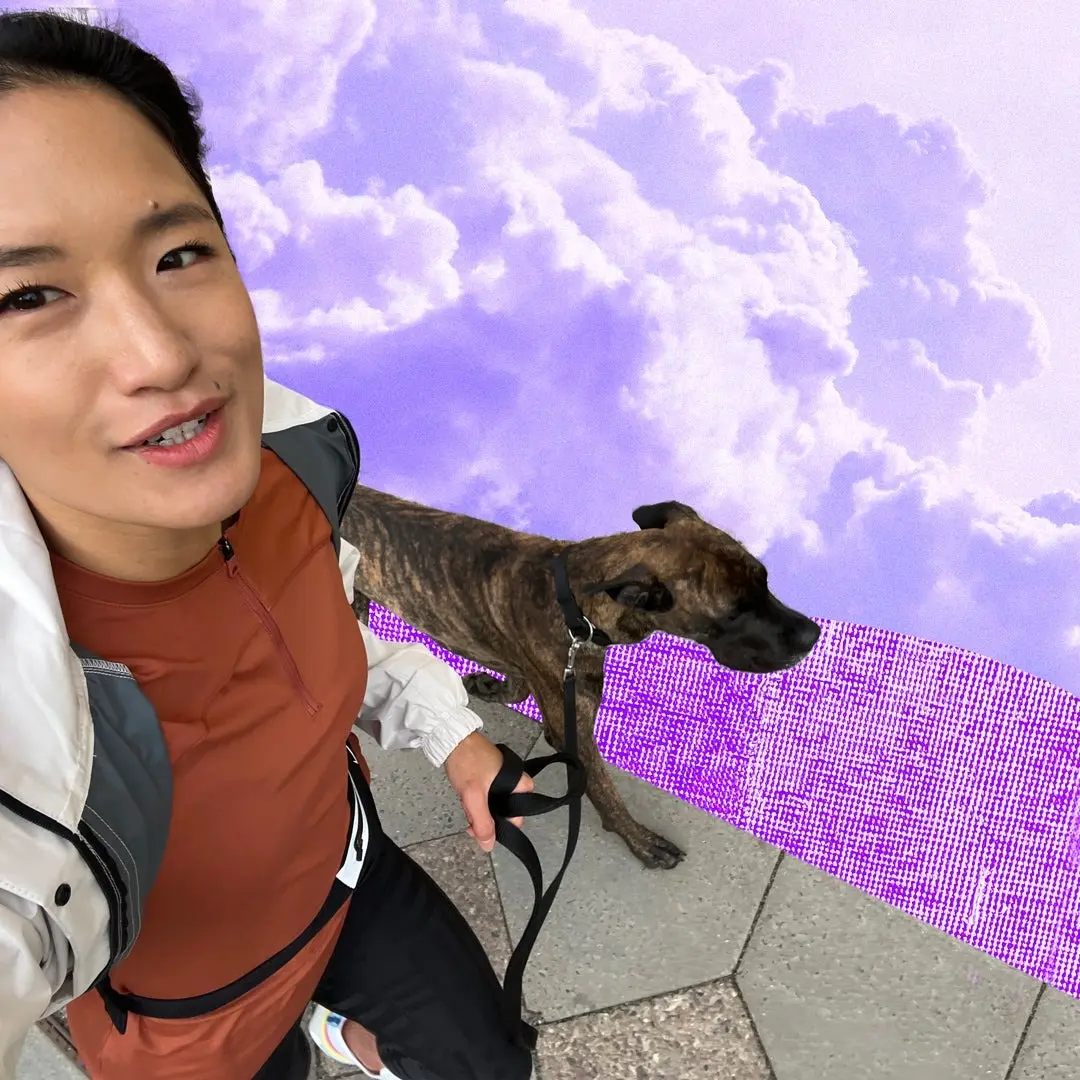
To inject an extra layer of engagement into Monday’s mileage, Hong occasionally borrows a friend’s energetic dog, Mia. The dynamic companionship turns a solitary training session into an interactive partnership. While Mia sets a brisk early pace, pulling Hong forward with canine enthusiasm, Hong’s deep aerobic endurance eventually wins out over the long haul. It is a symbiotic relationship that underscores Hong’s broader philosophy: running does not have to be an isolating, hyper-serious endeavor.
Tuesday: Cross-Training, Core Stability, and Injury Mitigation
High-mileage running places immense mechanical stress on the musculoskeletal system, particularly the knees, hips, and lower back. Eschewing the temptation to log daily miles indiscriminately, Hong dedicates Tuesdays to structural integrity.
Stepping away from the asphalt entirely, she engages in a holistic cross-training regimen comprising targeted yoga, structured strength training, and specialized physical therapy sessions. This multidisciplinary approach builds a robust physical armor, fortifying her against the overuse injuries that sideline so many novice and intermediate runners.
By building a solid biomechanical foundation, Hong ensures that when she pushes outside her comfort zone later in the week, her body absorbs the shock efficiently. Crucially, this preparation prevents the bone-deep exhaustion that often follows grueling efforts, allowing her body to bounce back swiftly during designated rest periods.
Wednesday: Professional Realities and Cultural Respite
True endurance training must be sustainable within the context of a real, multifaceted life. As a flight attendant who crosses international time zones regularly, Hong values her time anchored in Berlin. Wednesdays are intentionally designated as physical rest days, prioritizing the nourishment of her social circle and cultural appetite.
Rather than logging miles on the treadmill during a layover or forcing a fatigued run, Hong uses Wednesday to catch up with friends, dine out, and immerse herself in Berlin’s vibrant art scene, often visiting local gallery exhibitions. This psychological decompression is just as vital to her training cycle as physical recovery; it lowers systemic cortisol levels and prevents the mental fatigue that often leads to dropouts in long-term endurance programs.
Thursday: Pushing the Envelope on the Track
If Monday and Wednesday are defined by rhythm and recovery, Thursday represents the crucible of Hong’s physical progression. Preparing for a marathon requires structured speed work and high-intensity interval training (HIIT) to improve VO2 max and lactate threshold.
Some days demand an extra dose of mental fortitude to bridge the gap between reluctance and execution. On Thursdays, Hong heads to the track to test her anaerobic limits, focusing on sustainable paces over demanding intervals.
Footwear selection plays a critical role here. To protect her joints while maximizing energy return during high-speed track sessions, Hong laces up the Nike Invincible 3. Featuring a heavily cushioned, bouncy foam sole and a secure platform, the footwear provides the stability and impact absorption necessary to execute high-velocity interval training safely across varying track conditions.
Friday: Active Recovery and Creative Exploration
Following the intense physical expenditure of Thursday’s track workout, Friday serves as a bridge back to equilibrium. Hong honors her body’s signals by keeping physical exertion to an absolute minimum, occasionally incorporating a restorative yoga flow to release tight hip flexors and calves.
With the weekend on the horizon, she meets friends for another gallery visit or museum trip. This intentional blending of urban culture, deep friendships, and gentle movement encapsulates Hong’s ethos: fitness serves life, not the other way around.
Saturday: The Landwehrkanal Long Run and Culinary Rewards
Saturday morning belongs to the iconic Landwehrkanal route—Hong’s standard, much-loved training stomping ground. Navigating a varied terrain of hard asphalt, soft grass, and occasional mud patches, she lets her mind wander. Sometimes she listens to an immersive narrative podcast, while other times she disconnects entirely, opting instead for the rich acoustic tapestry of the city.
Observing the eclectic mix of Berlin life unfolding around her brings a quiet joy to the miles. Upon completing her route, Hong partakes in a treasured weekend ritual: treating herself to a specialized coffee and a savory post-run snack at a local market stand in Kreuzberg. It is a tactile, comforting reward that reinforces positive associations with physical exertion.
Sunday: Community Synergy with the Joy Run Collective
The culmination of Hong’s training week occurs on Sunday, anchored by her involvement with the Joy Run Collective. Long runs are notoriously challenging when executed in isolation, but communal running transforms endurance trials into social milestones.
Braving the elements during longer endurance efforts through the sprawling expanse of the Tiergarten requires careful preparation. Hong layers up with thermal running gear to combat the cold before meeting her running peers.
The physical test of endurance is invariably followed by communal celebration. This week, the gathering features home-cooked dumplings prepared by a fellow collective member—a culinary reward that Hong admits occupies her thoughts throughout the final miles of the route. It is this integration of community, shared suffering, and collective joy that cements her commitment to the sport.
Supporting Context & Metrics: The Evolution of Modern Running Culture
Hong’s trajectory mirrors a broader cultural shift in endurance sports over the past decade. Historically dominated by hyper-competitive, time-obsessed athletes, the global running community has undergone a significant democratization.
The Rise of Comfort-First Ergonomics
Modern sports science increasingly validates Hong’s intuition regarding the intersection of comfort and performance. Studies in biomechanics indicate that reducing perceived exertion through psychological framing (such as listening to high-tempo music, running with canine companions, or participating in social run clubs) lowers perceived stress levels, allowing athletes to sustain aerobic output for longer durations without entering the sympathetic "fight-or-flight" panic zone.
Furthermore, advancements in footwear technology—exemplified by maximalist, high-energy-return foam compounds like those found in Hong’s preferred training shoes—have revolutionized how runners protect their joints. According to sports medicine data, cushioned running shoes significantly attenuate tibial shock loads during high-mileage training blocks, reducing the incidence of stress fractures among recreational marathoners.
The Power of Running Collectives
The proliferation of urban running collectives, such as Berlin’s Joy Run Collective, highlights a departure from solitary training toward community-centric wellness. Sociological analyses of contemporary fitness trends indicate that running clubs serve as crucial third spaces for urban professionals, mitigating the loneliness epidemic while fostering accountability. Members who train within a community are statistically significantly more likely to adhere to multi-month marathon training plans compared to solo practitioners.
Official Statements & Expert Perspectives
To contextualize Hong’s unique approach within the broader athletic landscape, we examine insights from running coaches, sports psychologists, and footwear engineers.
"The traditional narrative that ‘no pain, no gain’ is the only pathway to marathon success is rapidly becoming obsolete," notes Dr. Elena Vance, a sports physiologist specializing in female endurance kinematics.
"Athletes who prioritize holistic wellness—incorporating strength training, yoga, mental rest, and genuine enjoyment—consistently exhibit lower rates of chronic burnout and HPA-axis fatigue. Hong’s routine is a textbook example of sustainable periodization disguised as an intuitive lifestyle."
Industry experts also point to the psychological benefits of shifting focus away from relentless pace-chasing and toward sensory engagement.
"When a runner sings to control their breath, or uses a podcast to distract from muscular fatigue, they are effectively managing their autonomic nervous system," explains Marcus Thorne, a high-performance running coach based in London.
"It keeps the athlete in an aerobic state and preserves mental bandwidth. Running 42.2 kilometers is as much an exercise in emotional regulation as it is a cardiovascular test."
Future Outlook: The Road to the 7th Marathon and Beyond
Reflecting on her four-year journey from reluctant beginner to seasoned endurance athlete, Hong’s perspective on age, fitness, and identity has fundamentally transformed. Entering her thirties, she notes that she feels palpably healthier, stronger, and more energetic than she did during her entire twenties.
Yet, for Hong, the true dividends of running extend far beyond physical metrics, VO2 max improvements, or medal counts. The sport has gifted her an unshakable reservoir of self-confidence. She has learned firsthand that she possesses the internal fortitude to push through difficult moments, conquer low-energy days, and redefine her personal boundaries.
Her overarching lesson for the broader running community is both simple and revolutionary: consistency and comfort do not have to be mutually exclusive. An athlete can pursue ambitious, challenging goals—such as completing multiple marathons—without sacrificing joy, social connection, or peace of mind.
As Hong laces up her shoes for her next training block, her eyes are firmly set on the horizon. Next stop: her seventh marathon. And if history is any indication, she will cross the finish line with a smile, a balanced training week behind her, and a delicious culinary reward waiting just around the corner.
Hong’s 3 Golden Rules for Maximum Running Enjoyment
- Invest in Biomechanical Comfort: Prioritize supportive, high-performance footwear tailored to your gait and training terrain to ensure joint protection and energy return.
- Curate an Auditory Escape: Build an intentional running playlist (incorporating high-energy genres like disco, house, and techno) to rescue your motivation on low-energy days.
- Prioritize the Post-Run Ritual: Pair scenic, engaging routes with a cherished social tradition or culinary treat—because the reward is just as important as the miles logged.