Executive Overview
Long before the advent of the internet—centuries before algorithms dictated musical consumption or hyper-specific subcultures formed in Discord servers—Wolfgang Amadeus Mozart sat at his desk and penned a deliberate farce. On June 14, 1787, the Austrian master entered A Musical Joke (Ein musikalischer Spaß, K. 522) into his official catalog. Designed with intentionally clumsy rhythms, gratingly discordant melodies, and structural incoherence, the piece was a biting satire targeting the work of incompetent contemporary composers. It was, in essence, an 18th-century precursor to meme music: a sonic creation where aesthetic perfection took a backseat to the mockery of cultural and social norms.
Fast-forward nearly two and a half centuries, and this spirit of satirical disruption has found its ultimate incubator on the internet. In the digital age, musical in-jokes no longer exist merely as isolated orchestral novelties; instead, they rapidly codify into entire microgenres. The phenomenon is perpetual and self-accelerating. From the viral shockwaves of "UK Poo"—a microgenre coined to mock low-effort, formulaic British rap—to the surreal, glitchy depths of "dariacore," internet-native meme music has evolved from low-stakes trolling into a powerful engine for genuine musical innovation.
Far from being mere sonic trash, these hyper-niche microgenres often transcend their satirical roots. They serve as a testing ground for production techniques, challenging orthodox notions of copyright, high art, and consumer taste. This investigation explores the historical lineage, cultural mechanics, and musical architecture of five of the internet’s strangest and most prolific meme genres: Shitgaze, Wacky Penis Music, Pirate Metal, Juchewave, and Dariacore/SoundClown. In doing so, it examines how the chaotic topography of the modern web has transformed into a legitimate, albeit deeply irreverent, compositional landscape.
Detailed Chronology: A History of Internet-Native Satire
To understand how a joke on Tumblr or MySpace can morph into a globally recognized musical movement, one must trace the chronological evolution of digital culture’s interaction with sound. The trajectory moves from primitive file-sharing and shock humor to highly sophisticated, algorithm-aware pastiche.
The Pre-Digital Foundation: Plunderphonics and Mozart (1787–1985)
- June 14, 1787: Mozart catalogues A Musical Joke, establishing that musical irony and the parody of craft are as old as classical composition itself.
- 1985: Canadian composer John Oswald coins the term "plunderphonics" to describe audio works created by taking existing audio recordings and altering them to make new compositions. This legal and artistic framework of blatant, transformative resampling serves as the conceptual bedrock for future digital meme music.
The Web 1.0 and Early Web 2.0 Era: The Birth of Shitgaze (2000–2010)
- Early 2000s: As high-speed internet adoption broadens, peer-to-peer networks and early music blogs begin dismantling traditional gatekeeping.
- 2005: While listening to the Ohio noise-rock band Psychedelic Horseshit, bassist Kevin DeBroux quips to founder Matt Whitehurst, "Man, this isn’t shoegaze; this is shitgaze."
- Mid-to-Late 2000s: The term migrates to MySpace, quickly picked up by the independent music press. Bands like Times New Viking adopt the aesthetic of intentionally lo-fi, heavily distorted, "no-fi" recording quality. Though the term eventually fades by the early 2010s, its production ethos—deliberate clipping and drowned-out vocals—prefigures contemporary underground bedroom production.
The Mid-2010s: The Absurdist Turn and SoundClown (2012–2018)
- 2012: Jackal Queenston releases "Rubber Band," a cartoonish, frantic drum-and-bass track that will later be retroactively anointed as a pillar of a bizarre internet-born microgenre.
- Mid-2010s: The "SoundClown" movement peaks on SoundCloud. Defined by unhinged pop mashups, it collapses Eminem lyrics into aggressive dubstep drops and pairs anime soundtracks with television theme songs. Running parallel to this are YouTube Poop Music Videos (YTPMV), which stitch together disparate cultural artifacts into frantic audiovisual collages.
- 2018: A now-deleted Tumblr post drops the phrase "penis music" without context or links. The internet seizes on the moniker, applying it retroactively to tracks like the God Hand video game soundtrack and "Rubber Band," turning a nonsensical shitpost into a lasting descriptor for driving, electrofunk-infused, cartoonish electronic music.
The Late-Tens to Present: Vaporwave Offshoots and Dariacore (2019–Present)
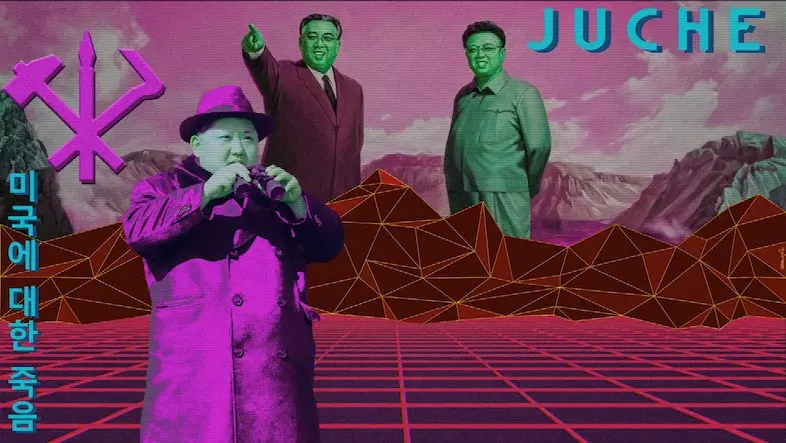
- Late 2010s to 2020: Vaporwave spawns ideological and aesthetic subgenres. "Fashwave" weaponizes the nostalgic, slowed-down aesthetic for far-right propaganda, while "Juchewave" (led by satirical releases like Juchewave by the "North Korean Ministry of Vaporwave") juxtaposes North Korean state ideology and propaganda imagery with the floating, reverb-heavy textures of vaporwave.
- 2021: Producer Jane Remover, operating under the alias Leroy, releases the album Dariacore. Featuring artwork from the 1990s animated series Daria and breakneck, hyper-compressed mashups of pop, jersey club, and drum-and-bass, the album sparks an entire microgenre.
- Present Day: Dariacore inspires global offshoots, such as Japan’s hyperflip scene, signaling the maturity of meme music into a hyper-accelerated art form that treats the entire history of recorded sound as a public-domain sandbox.
Supporting Context & Metrics: The Anatomy of Meme Microgenres
| Microgenre | Primary Era | Core Aesthetic / Musical Characteristics | Cultural Origin Point |
|---|---|---|---|
| Shitgaze | Mid-2000s – Early 2010s | Extreme distortion, lo-fi/no-fi production, slacker/noise rock hybridity. | A MySpace joke by bassist Kevin DeBroux regarding Psychedelic Horseshit. |
| Wacky Penis Music | 2018 – Present | Cartoon sound effects, driving electrofunk rhythms, absurd vocal snippets. | A context-free, now-deleted Tumblr post in 2018. |
| Pirate Metal | 1980s (Origins), 2000s–Present | Sea shanty melodies, theatrical pirate cosplay, folk-metal instrumentation. | Early experimentation by bands like Running Wild; commercialized by Alestorm. |
| Juchewave | Late 2010s – Present | Reverb-drenched vaporwave aesthetics paired with North Korean propaganda. | Online vaporwave subcommunities satirizing state media and political extremes. |
| Dariacore / SoundClown | 2010s – Present | Hyper-compressed breakneck mashups, pop samples, cartoon audio clips. | SoundCloud remix culture and Jane Remover’s 2021 Dariacore project. |
The Mechanics of Internet Folk Music
Meme genres operate under a distinct set of cultural rules that mirror traditional folk music, albeit accelerated by high-speed data networks. In traditional folk communities, songs were passed down orally, altered by each successive singer, and stripped of individual authorship. Internet meme music operates similarly: tracks are anonymous or pseudonymous, heavily sampled, and treated as open-source cultural property.
Metrics from streaming platforms and community archives indicate that these microgenres punch significantly above their weight class in terms of influence. While mainstream pop tracks rely on multi-million dollar marketing campaigns to capture consumer attention, meme genres leverage parasitic virality. By latching onto existing intellectual property—such as The Simpsons, Daria, or corporate North Korean broadcasts—they piggyback on pre-existing brand recognition and nostalgic attachment.
The Production Philosophy: "Intentionally Bad" as a High Art Form
A recurring theme across shitgaze, soundclown, and dariacore is the weaponization of incompetence. Just as Mozart mocked bad composition in 1787, modern internet producers deliberately mishandle audio tools to achieve a desired aesthetic effect.
- Digital Clipping: Intentionally driving audio levels past 0dB to create harsh, warm distortion (a hallmark of shitgaze and modern hyperpop subgenres).
- Genre Whiplash: Abruptly shifting from a delicate ambient synth pad to a blaring airhorn or a distorted trap beat within the span of two seconds.
- Aural Collage: Treating pop acapellas, video game sound effects, and political speeches as interchangeable building blocks.
Official Statements and Critical Perspectives
The tension between high art, low culture, and internet satire has drawn commentary from both the creators within these microgenres and cultural critics analyzing the digital landscape.
Creator Reflections: "A Joke That’s Gone On Too Far"
The self-awareness of meme-genre creators is often their defining characteristic. Jane Remover reflected on the runaway success of Dariacore, describing the project in interviews as "a joke that’s gone on too far." What began as a tongue-in-cheek experiment using nostalgic television imagery and frenetic pitch-shifted samples inadvertently birthed a generation of producers attempting to emulate its breakneck velocity.
Similarly, the founders of shitgaze never intended to codify a movement. As Kevin DeBroux noted in a retrospective 2008 interview recounting his afternoon with Psychedelic Horseshit:
"We were sitting around stoned listening to the Psychedelic Horseshit album, and I knew Matt [Whitehurst] was into [’90s UK] shoegaze stuff… I’m like, ‘Man, this isn’t shoegaze; this is shitgaze’."
What started as a throwaway quip between friends on a couch became a shorthand used by international music journalists to categorize an entire wave of noisy, anti-production-value guitar music.
Cultural Criticism: Humanity’s End Credits
Commentators examining the SoundClown and dariacore phenomena have frequently noted their apocalyptic undertones. One prominent internet archivist famously described SoundClown as "humanity’s end credits," an apt metaphor for a genre where cultural artifacts from the past century collide, shatter, and reconstitute into chaotic noise.
Cultural theorists point out that these microgenres are a direct psychological response to information overload. When an individual is exposed to every song, television show, and political broadcast ever recorded via platforms like YouTube, TikTok, and Spotify, the only rational artistic response is pastiche and absurdity. Meme music is not an escape from this digital noise; it is the noise itself, channeled through a mixing board.
Future Outlook: Where Does Meme Music Go From Here?
As we look toward the future of digital audio culture, the boundary between "legitimate" music production and meme genres continues to dissolve entirely.
The Institutionalization of the Meme
Once confined to the dark corners of Tumblr, MySpace, and SoundCloud, meme music production techniques have steadily infiltrated the mainstream. The hyper-compressed, genre-fluid, sample-heavy architecture of dariacore and SoundClown laid much of the groundwork for the global hyperpop movement, which eventually birthed mainstream chart-toppers and critically acclaimed avant-pop artists. Producers who cut their teeth making absurd internet mashups are now being hired to score films, produce for major pop stars, and design soundscapes for fashion houses.
Furthermore, the rise of generative Artificial Intelligence promises to supercharge the creation of meme microgenres. When anyone can prompt an AI to generate "a pirate-metal sea shanty about cryptocurrency performed by a 1980s synth-pop band," the barriers to entry for absurdist musical creation drop to zero. In this environment, human-made meme music will likely lean even harder into raw, messy authenticity, glitch art, and community-driven subcultures to prove that real humans are behind the digital chaos.
Conclusion: The Enduring Legacy of Musical Absurdism
From Mozart drafting A Musical Joke to mock the untalented elites of Vienna, to a teenager on SoundCloud mashing up Daria samples with gabber kicks, the core impulse remains identical. Humans use humor, satire, and stylistic exaggeration to process the cultural systems surrounding them.
Meme genres are often dismissed as fleeting digital detritus, destined to be replaced by the next viral soundbite. Yet, beneath their low-effort veneers and crude acronyms lies a profound truth about modern creativity: in the digital age, destruction and creation are the exact same act. By tearing down the walls between high and low culture, serious art and shitposting, meme music has ensured that the future of sound will remain gloriously, unpredictably unhinged.