Executive Overview
In a major development for the simulation gaming sector, British game developer Frontier Developments has officially announced a landmark licensing agreement with The Walt Disney Company. Best known for pioneering modern creative management simulation (CMS) masterpieces such as Planet Coaster, Planet Zoo, and the Jurassic World Evolution series, Frontier is now set to apply its trademark systemic depth and mechanical fidelity to one of the most powerful and recognizable intellectual property portfolios in global entertainment.
While specific narrative details, title branding, and platform availability remain tightly under wraps, official press documentation distributed to industry media confirms that the forthcoming project will deliberately capitalize on Frontier’s proprietary expertise within the management simulation genre. Industry analysts and longtime followers of the studio immediately anticipate a spiritual successor or thematic evolution of park-building and management sims—potentially evoking concepts similar to a modern, deeply systemic theme park creator.
This strategic partnership is more than a simple licensing agreement; it represents a pivotal alignment between Disney’s unmatched cultural footprint and Frontier’s proven capacity to craft enduring, community-driven simulation experiences. Coming at a time when Frontier is actively restructuring its portfolio, doubling down on its core strengths, and shedding experimental avenues to focus entirely on its most profitable genre pillars, the Disney collaboration anchors the studio’s medium-term roadmap. Alongside an unannounced Planet franchise title, the upcoming release of Planet Zoo 2 in October, and its publishing ventures within the Warhammer 40,000 ecosystem, Frontier is positioning itself for a robust, stability-focused future built around world-class intellectual properties.
Detailed Chronology
To fully understand the weight of this new partnership, it is necessary to trace Frontier Developments’ trajectory through licensed intellectual properties, its historical relationship with Disney, and the business realities that led the studio back to its foundational genre.
A History of Licensed Adaptations
Frontier Developments has spent decades establishing itself as a technical and creative powerhouse, initially acting as a trusted co-development and porting partner for industry giants before transitioning into an independent publisher and developer. A defining turning point in the studio’s modern era was its pivot toward the creative management simulation genre, popularized by its spiritual stewardship of the RollerCoaster Tycoon lineage through Planet Coaster (2016) and Planet Zoo (2019).
However, the studio’s mastery over complex simulation systems quickly caught the attention of major Hollywood conglomerates looking to translate blockbuster film franchises into interactive entertainment. In 2018, Frontier released Jurassic World Evolution, bridging the gap between Universal Pictures’ dinosaur universe and macro-management simulation mechanics. The title was a commercial success, prompting a fully fledged, critically lauded sequel, Jurassic World Evolution 2, in 2021. Through these projects, Frontier proved it could balance the strict authenticity demanded by massive film licenses with the systemic depth required by hardcore simulation enthusiasts.
The Disney Connection: From Kinect to the Magic Kingdom
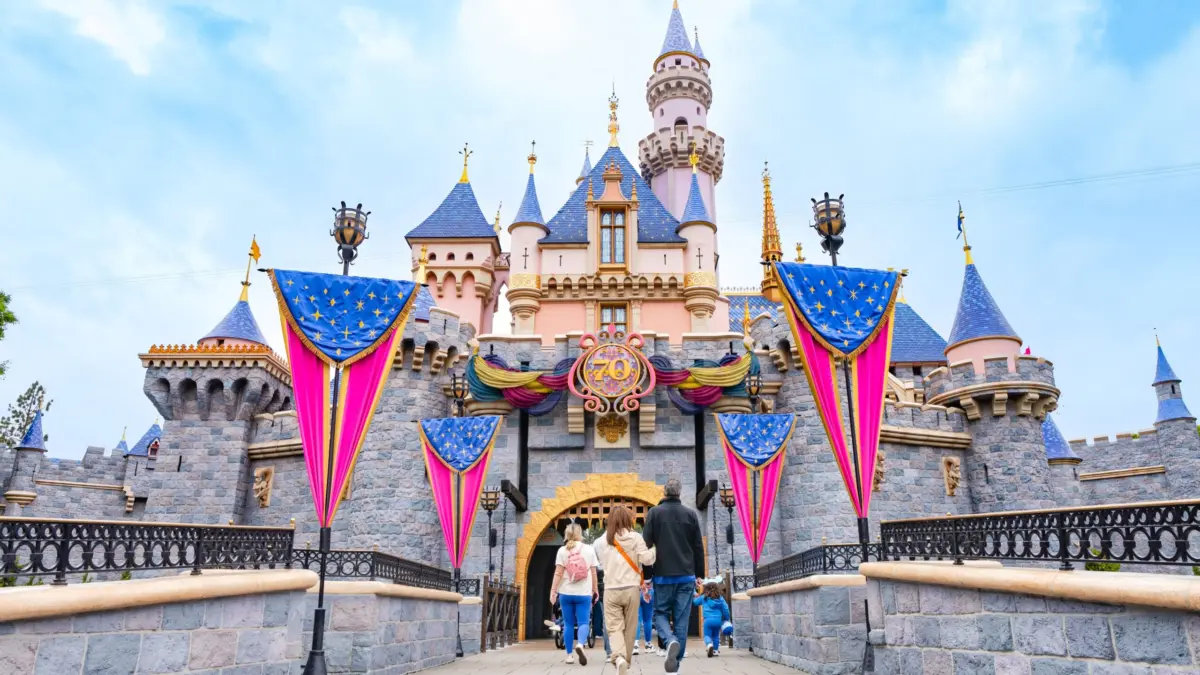
The newly announced collaboration is not, in fact, Frontier’s first foray into the magical realms of Disney. Over a decade ago, the studio developed Kinect: Disneyland Adventures (2011) for Microsoft’s Xbox 360 peripherals. While constrained by the technological and design limitations of motion-tracking hardware at the time, the game allowed players to explore a virtual recreation of Disneyland Park, interact with iconic costumed characters, and experience minigames based on classic attractions like Peter Pan’s Flight and The Haunted Mansion.
Years later, recognizing the enduring nostalgic value of the title, Frontier and Microsoft teamed up to remaster the game, releasing Disneyland Adventures for PC and traditional consoles in 2017, stripping away the mandatory Kinect requirement and introducing modern graphical enhancements.
This historic foundation demonstrates that Frontier and Disney share a long-standing professional rapport. Yet, the upcoming project represents an immense technological and conceptual leap forward. Rather than a linear, action-adventure theme park tour geared primarily toward younger audiences, the new partnership explicitly targets Frontier’s modern bread and butter: sophisticated, economic, and creative management simulation mechanics.
Strategic Realignment and Recent Announcements
The announcement of the Disney project does not arrive in a vacuum. Over the past twenty-four months, Frontier Developments has undergone a rigorous internal evaluation of its business strategy following mixed financial results from non-simulation titles, such as real-time strategy game Warhammer Age of Sigmar: Realms of Ruin.
In response to market realities, CEO Jo Cooke and the executive board instituted a strategic retrenchment, formally pivoting the studio away from risky genre diversification and narrowing its primary development focus squarely onto creative management simulations—a space where Frontier maintains an unassailable competitive advantage.
Concurrently, the studio has structured an ambitious operational runway for the coming years. Alongside the Disney collaboration, Frontier reaffirmed its ongoing development of an unannounced Planet franchise sim, confirmed the upcoming launch of Planet Zoo 2 this October, and maintained its publishing obligations for third-party titles, including the acclaimed tactical strategy game Warhammer 40,000: Chaos Gate – Deathwatch.
Supporting Context & Metrics
Evaluating the commercial viability and industry significance of a partnership between Frontier Developments and Disney requires a close examination of market trends, genre economics, and the specific metrics that define Frontier’s portfolio.
The Resurgence of Creative Management Simulations
The creative management simulation genre has experienced a renaissance over the past decade, largely fueled by digital distribution platforms like Steam, content creator communities on platforms like Twitch and YouTube, and a universal consumer desire for low-stress, highly expressive sandbox experiences. Games like Cities: Skylines, Two Point Hospital, and Frontier’s own Planet series have demonstrated extraordinary long-tail sales curves.
Unlike traditional narrative-driven games that experience front-loaded sales followed by rapid drop-offs, simulation games thrive on continuous community engagement, downloadable content (DLC) monetization models, and user-generated content (UGC). Frontier has mastered this live-service-adjacent single-player model, frequently releasing themed expansion packs that breathe new life into games years after their initial launch. Integrating a powerhouse brand like Disney into this proven economic model presents unprecedented revenue and engagement potential.
Portfolio Performance and Intellectual Property Synergy
Frontier’s financial history underscores the stabilizing power of major intellectual properties. While original intellectual properties like Planet Coaster and Planet Zoo possess fiercely loyal fanbases, licensed games such as Jurassic World Evolution historically provide an immediate, broad-market awareness boost that captures casual gamers alongside hardcore simulation enthusiasts.
| Game Title | Release Year | Primary Genre | Partner / IP Holder | Strategic Impact |
|---|---|---|---|---|
| Kinect: Disneyland Adventures | 2011 / 2017 (Remaster) | Action / Exploration | Disney / Microsoft | Established initial working relationship with Disney. |
| Planet Coaster | 2016 | Management Simulation | Original IP (Frontier) | Defined modern visual and mechanical standards for the studio. |
| Jurassic World Evolution | 2018 | Management Simulation | Universal Pictures | Validated the studio’s capability to handle massive film IPs. |
| Planet Zoo | 2019 | Management Simulation | Original IP (Frontier) | Cemented market leadership in complex biological simulation. |
| Jurassic World Evolution 2 | 2021 | Management Simulation | Universal Pictures | Expanded systemic depth and mechanical variety. |
| Unannounced Disney Project | TBA | Creative Management Sim | The Walt Disney Company | Unites world-class IP with top-tier CMS development expertise. |
By pairing Disney’s global ubiquity—encompassing everything from Walt Disney Animation Studios and Pixar to Star Wars, Marvel, and the physical Disney Parks—with Frontier’s proprietary Cobra game engine, the studio mitigates the commercial risks associated with original IP development while unlocking vast cross-demographic marketing channels.
Official Statements
The gravity of the agreement was reflected in the measured yet enthusiastic statements released by executive leadership on both sides of the partnership.
Frontier Developments CEO Jo Cooke emphasized the strategic alignment between the studio’s long-term vision and Disney’s cultural dominance:
"We are delighted to announce this collaboration with Disney, which further reinforces our clearly defined strategy of developing and nurturing world-class creative management simulation game franchises.
Our mission with this game is to connect a passionate creative community of players with one of the world’s most iconic and beloved brands, and I can’t wait to see what our talented teams will create with this amazing opportunity."
Industry analysts have noted the deliberate phrasing within corporate press communications. By explicitly highlighting the "creative management simulation genre," Frontier has sought to reassure shareholders and fans alike that the studio is not straying into untested genres, but rather applying its core competencies to a tier-one canvas. While Disney representatives have maintained traditional corporate confidentiality regarding specific gameplay mechanics, internal sources suggest the partnership was forged precisely out of mutual admiration for Frontier’s ability to honor complex source material while delivering robust, highly replayable economic simulations.
Future Outlook
As Frontier Developments steps into this next chapter, the convergence of its refined strategic focus and Disney’s unmatched brand equity creates a compelling horizon for the studio and its investors.
What to Expect Next
In the immediate term, consumer attention will naturally pivot toward the imminent October launch of Planet Zoo 2, alongside news regarding the unannounced Planet title and ongoing support for its publishing division. However, anticipation for the Disney collaboration will inevitably cast a long, exciting shadow over the developer’s roadmap.
Because the project is still in development, concrete gameplay reveals, trailers, and platform announcements are likely months—if not years—away. Nevertheless, the announcement serves as a powerful statement of intent. Frontier Developments has weathered industry-wide market corrections by returning to its absolute strengths. By wedding the technical sophistication of the Cobra engine to the magical, universally recognized worlds of Disney, Frontier has positioned itself at the vanguard of the simulation genre, promising an interactive experience capable of captivating millions of players worldwide.