Executive Overview
The video game landscape has long wrestled with the concept of spectator sports, virtual bloodlust, and the gamification of human survival. From The Running Man to The Finals, the entertainment industry continually returns to the high-concept premise of turning carnage into content. Enter Like or Die, a striking new first-person shooter (FPS) developed by the South Korean gaming powerhouse NC. Unveiled to the public for the first time during Gamescom 2026’s Opening Night Live showcase, Like or Die immediately commanded attention for its chaotic traversal, high-octane combat mechanics, and a satirical, hyper-modern premise centered around streaming culture, social media validation, and cosmic voyeurism.
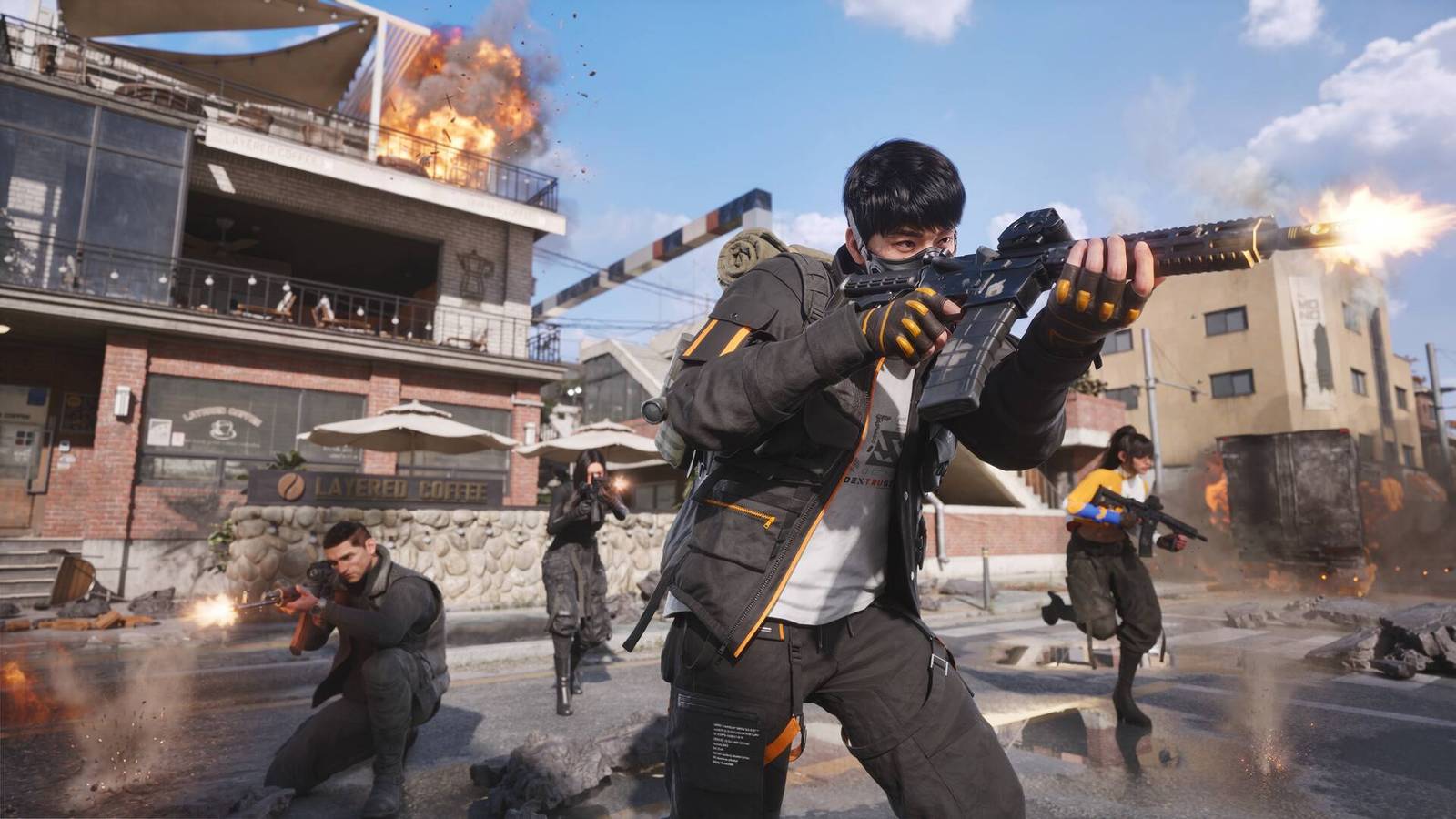
At first glance, Like or Die bears an unmistakable aesthetic and mechanical resemblance to Embark Studios’ breakout hit, The Finals. Players are treated to heavy tactical combat punctuated by sweeping environmental destruction, rapid deployment tools like zip lines and jump pads, and stylized physics where downed competitors disintegrate into showers of pixelated cubes. Yet, as deeper layers of the game’s world-building unfold, it becomes clear that NC is carving out a distinct identity.
In Like or Die, players are not simply competing for cash prizes or corporate glory; they are live-streaming their exploits to a fictional social media and streaming monolith known as "Quaya." Success is measured not just in eliminations, but in audience engagement, viewer sentiment, and algorithm-driven affection. The more "likes" a team accumulates, the more lucrative the perks and gifts bestowed upon them by opportunistic in-game sponsors. However, the true twist—one that shifts the game from a standard streamer-satire into something far more surreal—is the identity of the audience. Beyond the terrestrial fans tuning in from an alternate-universe Seoul lies an interstellar viewership, a sprawling galactic community of aliens and cosmic entities keeping a watchful eye on the chaos through the edge of a massive, omnipresent black hole.
As the industry looks ahead to a potential closed beta test slated before the end of 2026, Like or Die stands as one of the most intriguing and idiosyncratic shooter announcements in recent memory. This comprehensive report breaks down the game’s reveal, its mechanical lineage, its wildly ambitious lore, and the broader context of its development under NC.
Detailed Chronology: From Concept to Gamescom 2026
The journey of Like or Die to the global stage at Gamescom 2026 was marked by a tightly guarded development cycle under NC. For months, whispers of a new shooter project codenamed within the South Korean studio circulated through industry insider circles, but concrete details remained scarce until the curtain rose at Opening Night Live in Cologne, Germany.
The Opening Night Live Reveal
On September 7, 2026, the global gaming community caught its first official glimpse of Like or Die during the Opening Night Live showcase. The announcement trailer immediately set a frantic pace, dropping viewers directly into a hyper-stylized, destructible urban environment reminiscent of an alternate-timeline Seoul. Squads of four players clad in tactical streetwear were seen sliding across polished concrete floors, demolishing concrete walls with heavy assault rifles, and utilizing advanced kinetic traversal tools like portable jump pads and high-tension zip lines.
Industry analysts and fans alike immediately drew comparisons to Embark Studios’ The Finals. The visual language of the destruction—chunks of concrete splintering away, dust clouds obscuring sightlines, and players dissolving into vibrant pixelated cubes upon death—shared a striking DNA with the modern destructible-shooter subgenre. However, the trailer quickly pivoted away from generic military sci-fi tropes to establish its unique hook: the omnipresent HUD elements mimicking live-stream chats, viewer counters, and real-time "like" buttons flashing across the screen as combatants pulled off daring maneuvers.
Behind Closed Doors at Gamescom
Following the public unveiling, select members of the gaming press—including representatives from Polygon—were granted exclusive access to a behind-closed-doors media briefing and extended gameplay demonstration. This private session peeled back the layers of the title, showcasing how the live-streaming economy directly impacts moment-to-moment gameplay.
While the initial trailer focused heavily on gunplay and movement, the closed-door presentation emphasized tactical decision-making dictated by audience metrics. Streamers must balance aggressive, crowd-pleasing plays—such as flashy multi-kills, daring aerial maneuvers, and destructive environment clearing—with survival strategies. Playing too cautiously results in plummeting viewer engagement, cutting off the vital stream of corporate sponsor gifts that supply high-tier ammunition, armor upgrades, and tactical gear mid-match.
The presentation concluded with a dramatic, cinematic flourish: a slow, lingering camera zoom that pulled back from the frantic urban arena, soaring high above the skyline of alternate Seoul, and culminating in a vast, menacing black hole suspended in deep space. This cryptic final shot left journalists with more questions than answers, prompting immediate inquiries during subsequent interviews with the game’s development leadership.
Supporting Context & Metrics: The Mechanics and Lore of Like or Die
To truly understand Like or Die, one must examine the intersection of its mechanical framework and its wildly satirical lore. NC is attempting a delicate balancing act: delivering a competitive, high-skill tactical FPS while embedding a narrative about the perils of modern digital consumption and attention economies.
The Quaya Economy and Streamer Mechanics
At the heart of Like or Die is Quaya, the fictional streaming platform that dictates the rules of engagement. Matches are structured around public perception. Every action a player takes is broadcasted across the platform’s digital infrastructure.
- Audience Engagement Metrics: Viewership numbers fluctuate dynamically based on player performance. High-risk, high-reward plays, close-call revives, and creative use of environmental destruction drive up the viewer count.
- Sponsor Patronage: As viewership scales, corporate entities within the game’s universe take notice. These sponsors reward high-performing players with physical drops—crates containing heavy weaponry, specialized tactical gadgets, and defensive fortifications delivered directly onto the battlefield.
- The Penalty of Irrelevance: Conversely, players who hide, play passively, or fail to entertain experience a drop in viewer sentiment. Low ratings can trigger sponsor withdrawal, leaving squads ill-equipped to handle aggressive, high-tier opponents who are riding high on algorithmic favor.
The Cosmic Scale: Drawing Parables to Dungeon Crawler Carl
The reveal of the space-faring audience and the overarching black hole element has drawn immediate, favorable comparisons to contemporary sci-fi literature, most notably Matt Dinniman’s wildly popular Dungeon Crawler Carl series. In both universes, ordinary environments are co-opted into high-stakes gladiatorial entertainment broadcasted to an indifferent, highly entertained galactic audience.
This layer of cosmic dark comedy elevates Like or Die beyond a simple commentary on Twitch and YouTube streaming culture. It posits that human suffering, tactical ingenuity, and digital clout have become commodities valuable enough to capture the attention of entities light-years away.
Official Statements and Developer Insights
To shed light on the more enigmatic elements of the game—specifically the lingering cosmic imagery—media outlets sat down with key creative figures from NC, including Kim Hwan, the studio’s Head of IP.
Kim Hwan on the Extraterrestrial Audience
Addressing the striking final image of the Gamescom closed-door presentation—the cosmic black hole overlooking Seoul—Kim Hwan clarified the grand narrative scope driving the game’s universe.
"In this alternate universe of Seoul, it’s not just humans watching the stream," Hwan explained during the interview. "It’s all kinds of creatures and aliens, and [the black hole] was the representation of the galaxy watching the stream. Space creatures are traveling and keeping an eye on the game."
When pressed on whether players will ever come face-to-face with these interstellar spectators, Hwan confirmed that NC currently has no plans to physically render or visualize the alien entities within the game maps themselves. Instead, their presence is felt through the abstract mechanics of the stream: fluctuating viewer demographics, sudden anomalous environmental events, and the sheer scale of the cosmic broadcast network framing the battlegrounds.
Addressing the Generative AI Controversy
As with many modern software announcements, technical transparency regarding asset creation has become a focal point for the gaming community. NC has been upfront about its production pipeline, including an official disclaimer clearly visible on the game’s official Steam page.
The developer statement explicitly notes that "generative AI tools were utilized for auxiliary purposes in the production of some assets." However, NC was quick to reassure the community that these tools were strictly limited to foundational scaffolding. The statement emphasizes that "these assets were modified and supplemented by professional art personnel and were finally applied to the game."
By maintaining transparency early, NC aims to preemptively address community concerns regarding AI integration while assuring players that the final visual and artistic direction remains firmly in the hands of human designers and artists.
Future Outlook: What Lies Ahead for Like or Die
As Gamescom 2026 comes to a close, Like or Die exits the convention center floor as one of the most provocative new shooter propositions in years. By marrying the fast-paced, physics-driven tactical destruction popularized by titles like The Finals with a biting satirical commentary on streaming culture and cosmic voyeurism, NC has positioned itself to capture a distinct segment of the competitive FPS market.
Upcoming Milestones and Roadmap
- Closed Beta Testing: While NC has not yet committed to a finalized, firm global launch date, studio representatives have confirmed that their immediate priority is conducting a closed test before the end of the year. This initial testing phase will be crucial for stress-testing server infrastructure, balancing the Quaya streaming economy, and tuning the destructible environments.
- Community Feedback Integration: Given the heavy emphasis on player engagement metrics and live-service dynamics, NC is expected to closely monitor community response during the upcoming closed tests to refine how the "likes" and sponsor systems affect competitive balance.
- Lore Expansion: As more trailers and developer deep-dives are released ahead of the game’s eventual launch, fans will be watching closely to see how deeply the cosmic alien lore integrates into seasonal updates, map designs, and narrative events.
Like or Die is bold, chaotic, and unapologetically referential. Whether its unique blend of algorithmic survival and interstellar entertainment can carve out a permanent home in the crowded shooter landscape will depend heavily on the execution of its upcoming tests. For now, the universe is watching—and the stream is live.