Executive Overview
At its sprawling headquarters in Beaverton, Oregon, Nike recently hosted its flagship World of Athletes showcase, pulling back the curtain on an ambitious, multi-year product roadmap. For a legacy sportswear enterprise that has spent decades defining the intersection of human performance and pop culture, the event served as both a retrospective of its dominance and a crystal ball into its technological future.
Adhering strictly to its foundational ethos—“If you have a body, you are an athlete”—the brand’s presentations catered to an exceptionally wide spectrum of consumers. From elite endurance marathoners to casual recreational walkers, the newly unveiled suite of footwear, apparel, and technological systems signaled a decisive pivot away from iterative updates. Instead, Nike is doubling down on structural engineering, proprietary chemical foams, and digitally optimized manufacturing processes.
While the exclusive Beaverton gathering was restricted to select industry insiders, media, and global brand ambassadors, the ripple effects of the showcase are already being felt across the consumer landscape. Anticipation is mounting for what is poised to drop in 2027 and beyond. This comprehensive report examines the five standout innovations defining Nike’s next era: Tuned Air, the Nike Free 3.0, the Vomero 19, the Therma-FIT A.I.R. Jacket, and the Morpho X.

Detailed Chronology: The Evolution of Nike’s Innovation Pipeline
To understand the weight of the 2027 roadmap unveiled in Beaverton, one must trace the historical trajectory of Nike’s research and development (R&D) divisions. Over the past five decades, the brand’s innovation engine has transitioned through distinct epochs:
Phase 1: The Mechanical Era (1970s–1980s)
Characterized by foundational breakthroughs like Bill Bowerman’s Waffle outsole and the initial introduction of pressurized gas bags in the late 1970s, this era was rooted in mechanical physics. The goal was simple: absorb impact and return energy through physical geometry.
Phase 2: The Digital Integration and Advanced Materials Era (1990s–2010s)
With the introduction of Tuned Air in the late 1990s, followed by the barefoot-inspired Nike Free movement in the mid-2000s, Nike shifted toward biomechanical data collection. The brand began mapping pressure points on the human foot with unprecedented precision, utilizing computers to dictate cushion placement and flex grooves.

Phase 3: The Foam and Sustainability Revolution (2010s–2020s)
The rise of proprietary resilient foams (such as ZoomX) dominated the last decade, sparking a technological arms race in running footwear. However, supply chain pressures, global sustainability mandates, and shifting consumer expectations for everyday wearable technology created a bottleneck.
Phase 4: The 2027 Paradigm (The World of Athletes Blueprint)
The products showcased at Beaverton represent the convergence of these historical epochs. Nike is no longer treating performance and lifestyle as siloed categories. Instead, manufacturing processes like digital printing, selective lamination, and algorithmic foam mapping are being deployed holistically across both elite racing gear and daily streetwear.
Supporting Context & Metrics: The Science Behind the Gear
The 2027 product lineup is underpinned by rigorous material science and biomechanical metrics gathered at the Nike Sport Research Lab (NSRL). Here is a detailed breakdown of the five hero products shaping the upcoming era.

1. Tuned Air: Reinventing Underfoot Cushioning
- The Technology: Digital print and selective lamination processes.
- The Context: Nearly 50 years after Air technology was first introduced to the market, Nike is completely reimagining cushioning from the inside out. Traditional Air units relied heavily on uniform blow-molding techniques. The new Tuned Air iteration leverages advanced digital printing and selective lamination to alter internal pressure zones with pinpoint accuracy.
- Performance Impact: By varying the tensile strength of the internal fibers through algorithmic placement, engineers can deliver targeted support where runners need it most—offering plush cushioning in the heel for impact dissipation and firmer stabilization through the midfoot to prevent overpronation, all without adding dead weight.
2. Nike Free 3.0: The Return of Natural Motion
- The Technology: Optimized underfoot flexibility, hybrid traction nodes, and adaptive support webbing.
- The Context: As part of Nike’s comprehensive update to its foundational Training line—which includes the companion Nike Free 5.0—the Free 3.0 marks a triumphant return to the philosophy of natural motion.
- Performance Impact: Designed explicitly to reactivate intrinsic foot muscles that often atrophy in heavily cushioned maximalist shoes, the Free 3.0 features deep laser-cut sipes along the outsole. These allow the shoe to articulate organically with the foot’s anatomy, marrying high-level traction with uninhibited flexibility for multi-directional gym workouts and short-distance runs.
3. Nike Vomero 19: Featherlight Endurance
- The Context: The Vomero franchise has long answered the prayers of high-mileage runners seeking a balance of plush ride quality and durability. However, historical iterations occasionally suffered from bulkiness in the upper chassis.
- Performance Impact: The Vomero 19 completely sheds this architectural weight. Utilizing an engineered monofilament mesh engineered through data-mapping from hot-spot thermal imaging, the shoe achieves maximum breathability while maintaining structural integrity. The result is a featherlight daily trainer that effortlessly bridges the gap between recovery runs and tempo paces.
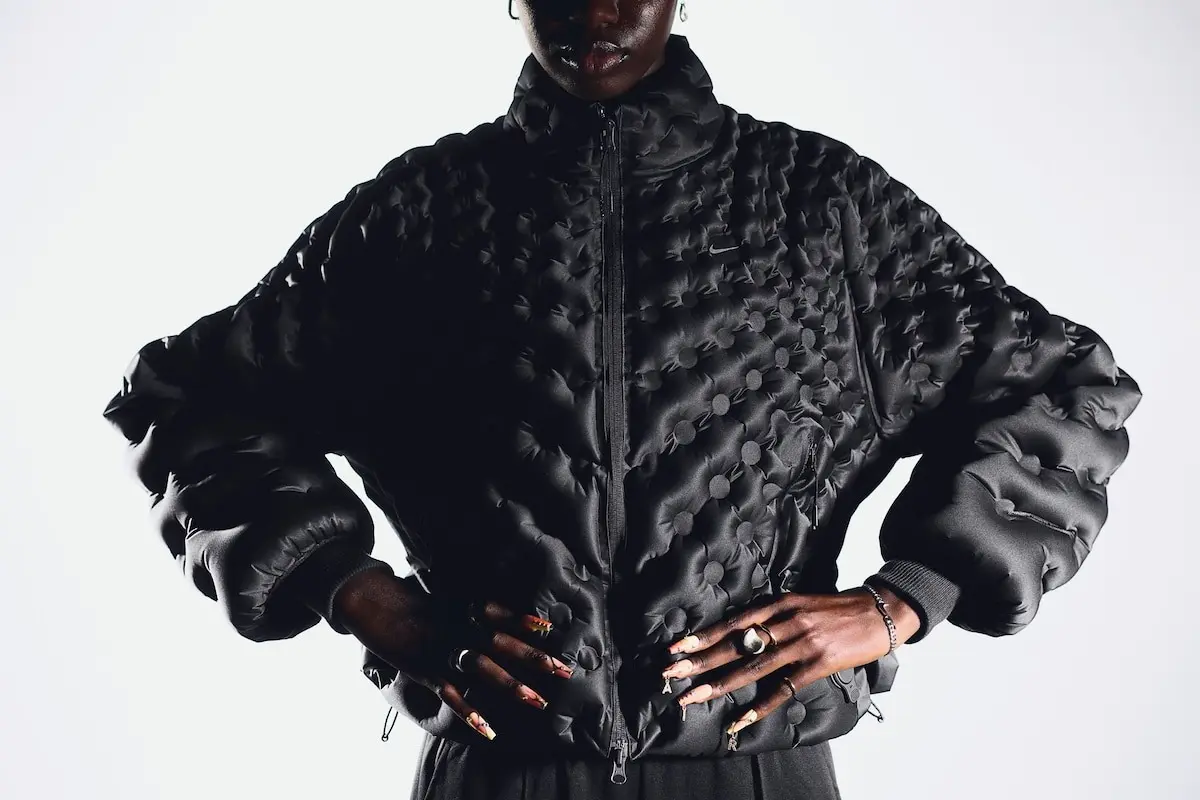
4. Therma-FIT A.I.R. Jacket: Where Function Meets High Fashion
- The Context: For years, technical outerwear was plagued by a dichotomy: high-performance gear looked utilitarian and clinical, while fashionable outerwear lacked genuine weather-resistance.
- Performance Impact: Set for a 2027 commercial release, the Therma-FIT A.I.R. Jacket shatters these obsolete boundaries. Utilizing body-mapped thermal insulation paired with a dynamic micro-ventilation matrix, the jacket traps core heat during static periods while venting excess moisture during active exertion. Its sharply tailored silhouette proves that sportswear can, in fact, be inherently sophisticated.
5. Morpho X: Sports Innovation for Everyday Life
- The Context: The Morpho X represents a philosophical breakthrough for Nike, translating elite athletic technology directly into the lifestyle and casual footwear sector.
- Performance Impact: Powered by Nike’s proprietary SkyX foam technology—previously reserved for top-tier competitive models—the Morpho X brings an unprecedented level of energy return to everyday walking shoes. It democratizes high-performance innovation, ensuring that urban commuters and casual wearers experience the exact same propulsion and shock absorption as elite athletes.
Official Statements and Industry Insights
While specific fiscal guidance and proprietary manufacturing trade secrets remain under wraps, key design leaders at Nike offered profound insights during the Beaverton showcase regarding the brand’s trajectory.
"For decades, our mission has been to push the boundaries of what the human body can achieve when paired with the right engineering," noted a senior VP of Footwear Innovation during the keynote address. "What you are seeing with the 2027 roadmap is not just an update to our catalog; it is a fundamental redesign of how we manufacture movement. By merging digital printing with advanced materials science, we are creating products that adapt to the individual human, rather than forcing the human to adapt to the shoe."
Industry analysts tracking the sportswear sector have noted that Nike’s aggressive push into algorithmic manufacturing and cross-category tech transfer is a direct response to rising market competition. By ensuring that elite breakthroughs like SkyX foam and advanced lamination quickly trickle down to lifestyle models like the Morpho X, Nike is fortifying its ecosystem against agile market disruptors.

Future Outlook: What to Expect in 2027 and Beyond
As the fitness and fashion landscapes converge, the next few years will serve as a critical crucible for Nike’s strategic vision. Consumers can expect a phased rollout leading up to the official 2027 retail launches, beginning with limited-tier athlete testing cycles at major global marathons and athletic competitions.
Key milestones to watch in the coming quarters include:
- Sustainable Scaling: Further integration of closed-loop recycling principles within the manufacturing of Tuned Air units and SkyX foam components.
- Digital Customization: Expanding the digital printing techniques used in Tuned Air to allow consumers to tailor support profiles based on their personal gait analyses.
- Cross-Genre Collaborations: Anticipated high-fashion partnerships utilizing the structural chassis of the Therma-FIT A.I.R. Jacket and Morpho X.
For enthusiasts eager to stay ahead of the curve, the message from Beaverton is clear: start curating those wishlists now. The future of athletic gear is lightweight, highly technical, and designed to move seamlessly from the track to the city streets.