Executive Overview
In an era defined by media fragmentation, algorithmic silos, and a profound crisis of institutional trust, the traditional boundary between the reporter and the reported has effectively dissolved. Nowhere is this phenomenon more acutely visible than on the tear-gassed, smoke-choked streets of Paris.
At the center of this paradigm shift stands Rémy Buisine, a 32-year-old video journalist for the French digital-native media outlet Brut. As France has been rocked by wave after wave of social unrest—most notably the explosive demonstrations against President Emmanuel Macron’s pension reform bills and the enduring cultural fallout of the Gilets Jaunes (Yellow Vests) movement—Buisine has emerged as an unlikely global media icon.
Equipped with little more than a smartphone, a gas mask, and an unwavering commitment to unedited, long-form livestreaming, Buisine has redefined how millions of people consume breaking news. His broadcasts from the frontlines of Parisian protests regularly pull in tens of thousands of concurrent viewers, while short-form clips distributed via TikTok, Instagram, and Facebook generate millions of impressions globally.
Yet, Buisine’s ascent is not merely a story of technological democratization; it is an examination of the grueling physical and psychological toll exacted by hyper-connected, real-time journalism. Operating without a safety net—often targeted by both hostile protestors and heavy-handed riot police—Buisine embodies the new breed of frontline digital journalist: always live, always accessible, and perpetually on the edge of exhaustion.
Detailed Chronology: A Day on the Frontlines with Rémy Buisine
To understand the mechanics of modern digital reporting, one must walk the pavement alongside its practitioners. On April 6, amid a massive day of national mobilization against the Macron administration’s contested pension reforms—which sought to raise the retirement age from 62 to 64—the reality of Buisine’s daily routine came into sharp focus.
The Gathering Storm: Setting the Scene
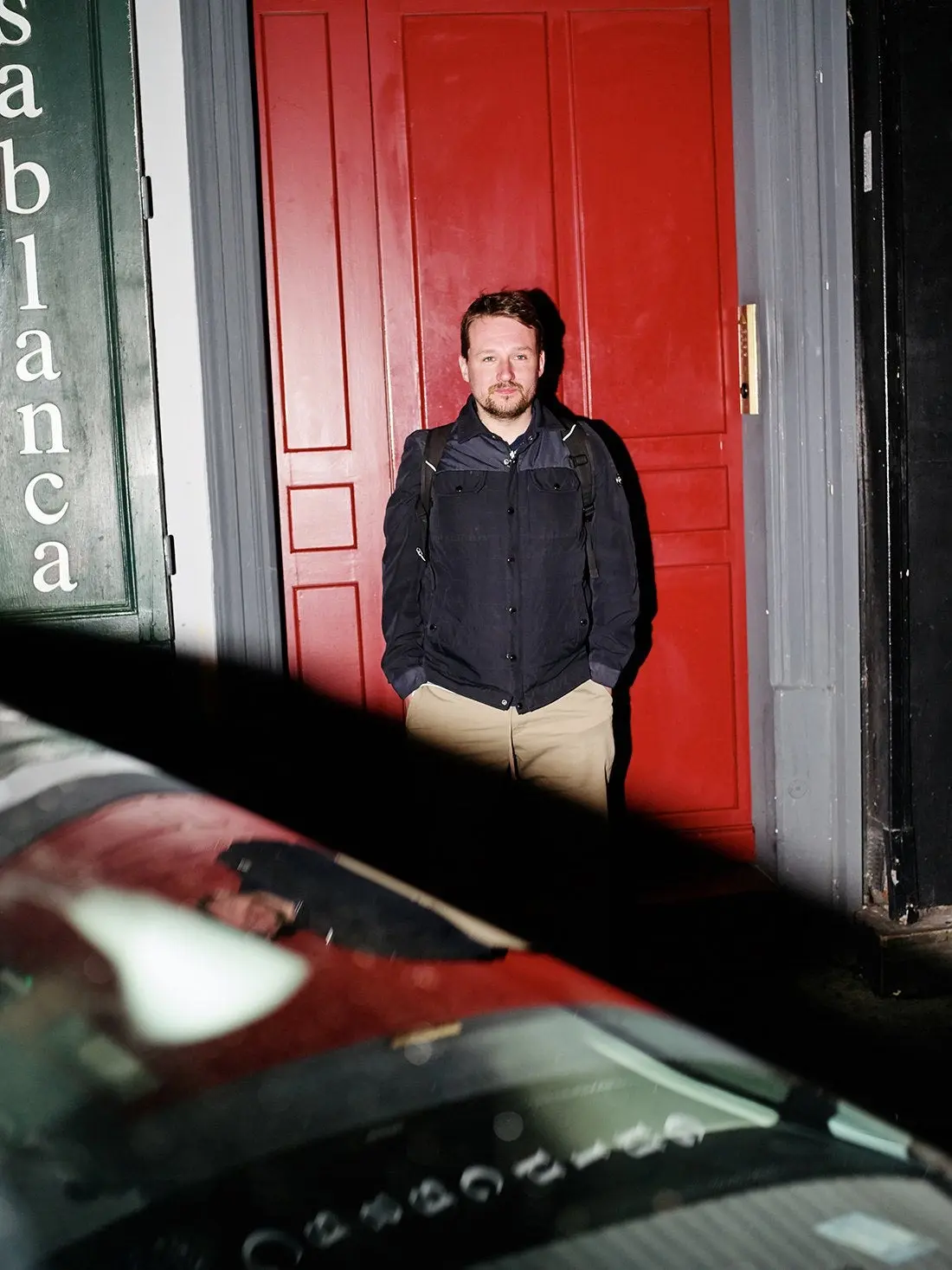
The protest had been moving for half an hour through the streets of Paris before I managed to rendezvous with Buisine. Despite his immense digital footprint—millions of followers across multiple platforms—he blended seamlessly into the crowd. Wearing a light navy puffer jacket and blue jeans, carrying no neon-yellow press armband at that exact moment, he could easily have been mistaken for any one of the tens of thousands of citizens marching. (Estimates of the crowd size varied wildly, as is customary in France: police reported 57,000 attendees, while union organizers claimed upwards of 400,000).
Rather than me finding him, Buisine spotted me, shouting my name with an easy smile before immediately pivoting back to operational matters. He barked instructions to a colleague regarding camera angles for the rear of the march, highlighting his dual role as both a lone reporter and a managing editor coordinating a team.
Gearing Up for the Frontline
As our group approached Montparnasse station, near the headquarters of Brut, the atmosphere shifted visibly. Buisine paused to unpack his survival gear: hermetically sealed safety goggles, a heavy-duty gas mask looped securely around his neck, and a specialized tear gas decontaminant spray slotted into his jacket pocket.
By 3:29 p.m., the ambient noise of chanting gave way to the sharp, concussive crack of an unidentified explosion further down the boulevard. The crowd surged forward, erupting into jeers and chanting anti-police slogans.
Ahead, near the historic Café de la Rotonde, a line of gendarmes—a militarized branch of the French national police force—blocked the boulevard with interlocking riot shields. Black-clad, masked youths loomed near a metro station exit, setting the stage for inevitable kinetic confrontation.
At 3:37 p.m., warning shots rang out. The crowd tensed, some retreating while Buisine aggressively pushed forward. Two more warning shots echoed across the asphalt. Metallic clangs reverberated as protesters struck metal barricades. Having previously agreed to part ways at the first sign of trouble—knowing that Buisine instinctively runs toward police action while I lacked protective gear—I stepped back. Within sixty seconds, the first tear gas canister tore through the air, and Buisine was live, streaming the chaos to millions.
Into the Kettle and the Flames
Unfazed by the chemical agents, Buisine spent the remainder of the evening navigating the most volatile sectors of the protest. He filmed residents hurling objects at demonstrators, captured the awning of the Café de la Rotonde going up in flames, and spent hours trapped inside a vandalized bank branch surrounded by police cordons.
Later that evening at the Place d’Italie, as police kettled defiant protesters near the metro entrance, the crowd broke into spontaneous song in his honor: "Ah Rémy, allez, allez, allez!"
By the time Buisine concluded his livestream at 10:54 p.m., he had been walking and running for over seven and a half hours, logging more than 28,000 steps. On TikTok alone, 1.8 million unique viewers had tuned in. Yet, even as the formal broadcast ended, he lingered on the street, answering questions from weary participants, dodging stray tear gas canisters, and casually editing clips for Instagram before finally seeking sustenance at a local kebab shop well past midnight.
Supporting Context & Metrics: The Rise of Brut and the Mechanics of Livestreaming
From Horticultural High School to Global Reach
Buisine’s path to journalistic prominence is entirely unconventional. Raised in a working-class family in a small village in northeastern France, he lacked the elite academic credentials traditionally required to enter France’s insular media establishment. After graduating from a horticultural technical high school, he initially managed social media accounts for professional soccer players before moving to Paris in 2013 to work as a community manager for local radio stations.
The turning point arrived in 2015 during the nationwide protests against the El Khomri labor laws. Armed with Periscope—a nascent livestreaming application at the time—Buisine began broadcasting the unrest in his spare time. He learned the craft on the ground, studying public reactions to his streams and querying veteran journalists embedded at the marches.
Recognizing the seismic shift toward digital-first media consumption, Brut hired Buisine as a founding member in 2016. Initially, the French political establishment viewed the platform with suspicion, wary of its purely digital footprint. Yet, Buisine’s unique interviewing style—characterized by patience, active listening, and extended, uninterrupted airtime for ordinary citizens—quickly turned him into an indispensable cultural barometer. This trajectory culminated in 2020, when Buisine conducted a landmark two-and-a-half-hour livestreamed interview with President Emmanuel Macron.
Metrics of Engagement
The quantitative impact of Buisine’s reporting is staggering:
- Follower Growth: During the peak weeks of the pension reform protests, Brut’s TikTok account surged by over 1 million followers, stabilizing at 4.2 million.
- Stream Duration: Individual livestreams routinely stretch past seven to eight hours.
- Audience Retention: Peak concurrent viewership on single platforms regularly eclipses 70,000, with cumulative views running into the millions per event.
- The Trauma Multiplier: Data internal to digital streaming trends shows that viewership numbers spike exponentially the moment Buisine encounters police hostility or physical violence—a grim testament to the voyeuristic nature of modern crisis reporting.
Official Statements and Institutional Perspectives
The intersection of aggressive state policing, civilian protest, and digital journalism has forced institutional stakeholders to publicly address the tactics utilized on French streets.
Law Enforcement and Government Stance
The French Ministry of the Interior, under the leadership of Gérald Darmanin, has consistently defended the actions of the national police and the gendarmerie, citing extreme provocation, endemic property destruction by radical blocs noirs (black bloc actors), and the necessity of maintaining public order. Official statements emphasize that warning shots and chemical agents are deployed strictly in accordance with proportionality guidelines designed to protect public infrastructure and police personnel from violent assault.
However, civil liberties organizations and press freedom watchdogs, including Reporters Without Borders (RSF), have repeatedly condemned police tactics targeting journalists. Numerous reports have documented cases of reporters—possessing legal press credentials and wearing standard protective gear—being struck by batons, targeted by rubber bullets, or exposed to excessive tear gas during street operations.
Political Reactions
Elected officials from across the political spectrum have expressed divergent views regarding the unrest. Left-wing figures, notably from La France Insoumise (France Unbowed), have championed the protesters’ demands, characterizing the government’s use of constitutional maneuvers—such as Article 49.3 to force the pension bill through parliament without a vote—as an authoritarian subversion of democracy. Conversely, centrist and right-wing lawmakers have argued that unyielding enforcement of the law is vital to preventing anarchy and protecting the economic stability of urban centers like Paris and Marseille.
Future Outlook: The Sustainability of Real-Time Digital Journalism
As the dust settles on the immediate legislative battles over pension reform, the broader implications of Buisine’s work point toward profound structural changes in how news is gathered, validated, and distributed.
- The Erosion of Traditional Gatekeeping: Platforms like TikTok and Instagram have bypassed traditional broadcast gatekeepers. Viewers increasingly demand raw, unedited, first-person perspectives over polished studio packages. This shift forces legacy media organizations to rethink their digital strategies or risk obsolescence among younger demographics.
- The Mental Health Crisis in Frontline Reporting: Buisine’s personal life—characterized by relentless work hours, singlehood, chronic physical exhaustion, and persistent adrenaline crashes—illustrates the severe human cost of hyper-connected, round-the-clock journalism. The sustainability of a model that relies on single individuals enduring physical danger for hours on end remains a pressing ethical concern for digital newsrooms.
- The Expansion of Decentralized Accountability: With high-definition video broadcasting instantly from every pocket, the capacity of the state to operate without immediate public scrutiny has fundamentally diminished. As mobile technology evolves, the democratization of witnessing will continue to reshape civil disobedience and political accountability not only in France, but across the global democratic landscape.
Reflecting on his relentless schedule, Buisine noted that his life is inextricably bound to his work. The morning after walking 28,000 steps and inhaling copious amounts of tear gas, he was back in the office by 9:30 a.m. to lead editorial meetings as Brut’s head of short-form content. And when a catastrophic building collapse shook Marseille shortly thereafter, Buisine packed his bags once more, proving that in the ecosystem of modern digital media, the live broadcast never truly ends.