Executive Overview
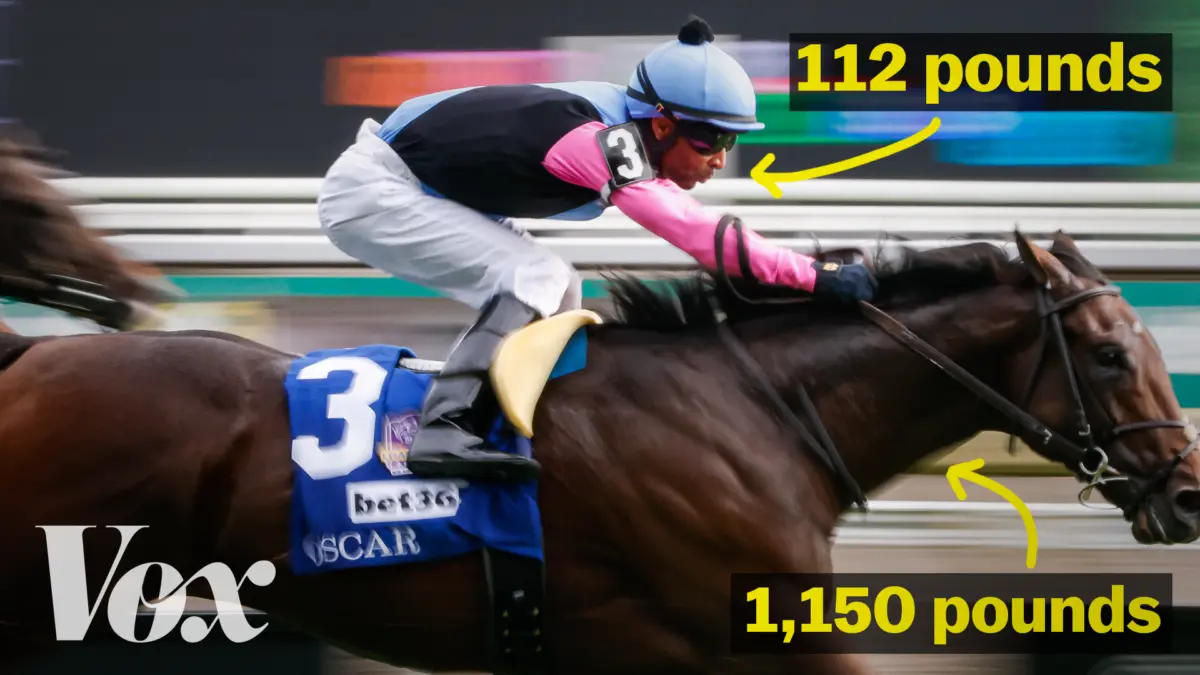
Horse racing has always occupied a singular, high-octane space in the global sporting landscape. It is an arena where ancient traditions meet modern thrills, anchored by an elemental partnership between human and animal. Yet, this spectacle carries an unyielding cost. Operating at the razor’s edge of velocity and endurance, the sport is inherently perilous. Maneuvering a half-ton thoroughbred at speeds approaching 40 miles per hour leaves an agonizingly narrow margin for error. In this rarefied environment, a single misstep, a micro-fracture gone unnoticed, or a momentary lapse in a rider’s physical alignment can trigger catastrophic consequences for both athlete and horse.
For generations, the industry relied heavily on intuition, traditional veterinary practices, and the raw, unmeasured grit of the jockeys to manage these hazards. However, a profound cultural and technological paradigm shift is currently underway. Propelled by unprecedented breakthroughs in wearable sensor technology, biomechanics, and advanced sports medicine, the racing world is transitioning from a reactive safety posture to a proactive, data-driven science.
By continuously monitoring physiological markers, gait dynamics, and neurological loads in real-time, stakeholders across the industry are learning to intercept injuries before they manifest. This investigative deep-dive explores how cutting-edge innovation is reshaping the Belmont Park training grounds and university research labs alike, fundamentally redefining what it means to protect both halves of the racing partnership.
Detailed Chronology: A Morning of Observation and Insight at Belmont Park
To understand the tangible impact of this safety revolution, one must step away from the boardroom and onto the track. A crisp dawn breaks over Belmont Park, one of the crown jewels of American thoroughbred racing. The iconic sprawling grandstands stand quiet, but the backstretch is a hive of meticulous activity. The humid morning air is thick with the scent of damp earth, leather, and liniment as grooms lead magnificent, high-strung athletes toward the dirt tracks for morning gallops.
Our journey into the mechanics of safety begins here, amid the thunderous percussion of hooves striking loam. Observing a horse train at top speed reveals the terrifyingly complex physics of the sport. Every stride places thousands of pounds of pressure on delicate lower-limb joints, requiring absolute physiological synchronization between the equine athlete and the pilot on its back.
Decoding the Equine Engine
To unpack the veterinary side of this equation, I sat down with Dr. Sara Langsam, a respected equine veterinarian and chair of the American Association of Equine Practitioners (AAEP) Racing Committee. Dr. Langsam’s work sits at the intersection of traditional horsemanship and state-of-the-art medical science.
"We are asking these incredible animals to perform at a level that pushes biological limits," Dr. Langsam explained, gesturing toward the track as a group of exercise riders pulled their mounts to a walk. "Historically, our diagnostic tools were limited to what we could see with the naked eye, feel with our hands, or identify after a lameness had already become clinical. Today, wearable technology and advanced imaging are giving us an invisible window into the horse’s musculoskeletal system long before an issue turns critical."
Dr. Langsam detailed how modern biometric monitors—affixed discreetly to exercise equipment or integrated into leg wraps—track everything from stride asymmetry and heart rate variability to internal body temperature and ground reaction forces. When a horse deviates even millimeters from its normal biomechanical baseline, algorithms flag the anomaly. This allows veterinary teams to intervene with targeted diagnostics, such as nuclear scintigraphy or high-definition digital radiography, resting the animal before a micro-injury compounds into a catastrophic breakdown.
The Human Athlete: Bridging the Gap
While safeguarding the equine athlete is paramount, the safety equation remains incomplete without examining the human component. Jockeys are elite athletes subject to extreme physiological stress, rapid weight fluctuations, and severe gravitational forces. To explore this side of the sport, I turned to Michaela Keener, a jockey health researcher at the University of Kentucky whose work focuses on the ergonomic and physiological demands placed on riders.
"People often forget that jockeys are pound-for-pound some of the toughest, most finely tuned athletes in professional sports," Keener noted. "A jockey needs the cardiovascular capacity of a marathon runner, the upper-body strength of a gymnast, and the lightning-quick reflexes of a fighter pilot. If a jockey lacks the required physical fitness or experiences acute muscular fatigue, their technique degrades. When a rider’s balance shifts by even a fraction of an inch at 40 miles per hour, it alters the weight distribution on the horse, creating asymmetrical stress that can put the animal at risk."
To gain a firsthand perspective on these pressures, I spoke with ReyLu Gutiérrez, a seasoned professional jockey who has piloted mounts in over 6,000 competitive races. Gutiérrez’s weathered face and intensely focused demeanor reflect the grueling realities of a career spent hovering above moving thunder.
"When you’re out there on the track, your body is constantly working to absorb shock while making split-second tactical decisions," Gutiérrez shared. "You’re managing a 1,000-pound animal that has its own mind, reading the other horses around you, and fighting gravity on short stirrups. If your core gives out in the final furlong, or if your reaction time slows down by even a tenth of a second because of fatigue, you aren’t just endangering yourself—you’re endangering your horse and everyone else in the race. That’s why modern conditioning and understanding rider health aren’t just personal benefits; they are absolute safety necessities for the entire field."
Supporting Context & Metrics: The Anatomy of Risk and Innovation
To fully appreciate the urgency driving this technological transformation, one must examine the hard metrics that define the sport. Historically, data collection in horse racing was decentralized, anecdotal, and inconsistent. Today, regulatory bodies, academic institutions, and private tech firms are pooling vast oceans of data to map risk probabilities with unprecedented accuracy.
The Biomechanical Imperative
Consider the sheer physics involved in a thoroughbred in full flight. At a gallop, a horse exerts forces up to 1.5 times its body weight on a single limb during the stance phase. This means a 1,000-pound animal is driving roughly 1,500 pounds of force onto a bone structure no wider than a human wrist, repeated dozens of times a minute.
According to data compiled by the Equine Injury Database (EID), catastrophic injuries—while statistically rare in the context of total starts—have historically clustered around specific risk factors: track conditions, surface maintenance, fatigue accumulation, and pre-existing, sub-clinical bone trauma.
This is where the new wave of wearable sensors proves revolutionary. Modern accelerometers and gyroscopes attached to horses can measure:
- Stride Frequency and Regularity: Detecting subtle hesitations or unevenness that indicate early-stage inflammation or bone bruising.
- Heart Rate Recovery Profiles: Gauging cardiovascular stress and metabolic fatigue to optimize training schedules.
- Surface Interaction Metrics: Quantifying how different track compositions (dirt, turf, synthetic) impact impact-shock absorption.
The Physiological Demands on Jockeys
On the human side of the equation, sports science research spearheaded by institutions like the University of Kentucky has shed light on the astonishing physical toll borne by jockeys. Studies measuring caloric expenditure, heart rate zones, and core body temperatures during race conditions reveal that jockeys experience cardiovascular loads comparable to soccer players or combat sports athletes, often sustaining heart rates near their anaerobic thresholds for extended periods.
Furthermore, the chronic practice of rapid weight-making (dehydration and severe caloric restriction) compromises cognitive function, bone density, and recovery times. By introducing sports medicine protocols traditionally reserved for Formula 1 drivers or Premier League footballers—such as personalized nutritional planning, hydration monitoring, and post-exertion physiological tracking—the industry is actively mitigating the cognitive and physical fatigue that contributes to racing accidents.
Official Statements and Industry Perspectives
The convergence of technology, veterinary science, and human sports medicine has garnered widespread endorsement from key industry stakeholders, signaling a unified cultural shift toward uncompromising safety standards.
Dr. Sara Langsam emphasized the collaborative nature of this modern safety paradigm during our discussions at Belmont Park:
"We are no longer operating in silos. Veterinarians, trainers, jockeys, and track superintendents are all beginning to speak the same data-driven language. When a wearable device alerts us to a minor asymmetry in a horse’s gait, or when a sports scientist helps a jockey optimize their core stability, we are building an interlocking safety net. The ultimate goal of modern equine and human medicine in racing is transparency, early intervention, and absolute accountability."
Michaela Keener underscored the importance of treating the jockey as an integral part of the athletic equation:
"For decades, safety discussions in horse racing focused almost exclusively on the horse—and rightfully so, given the animal’s vulnerability. But sports science has taught us that human and equine safety are inextricably linked. If we want to protect the horse, we must protect the pilot. Equipping researchers and trainers with data on rider fatigue, biomechanics, and ergonomics is a massive leap forward for the sport as a whole."
Seasoned jockey ReyLu Gutiérrez offered a pragmatic view from the saddle, reflecting the shifting mindset among professional riders:
"When new safety gear or training regimens are introduced, older generations sometimes view them with skepticism. But when you’ve been in thousands of races and you’ve seen how fast things can go wrong, you embrace anything that gives you an edge in safety. Knowing that science is working behind the scenes—tracking our physical readiness and monitoring our horses’ health—gives us greater peace of mind every time we step into the starting gate."
Future Outlook: The Next Horizon in Racing Safety
As we look toward the future, the integration of wearable technology and advanced sports medicine in horse racing is poised to accelerate exponentially. The initiatives currently being piloted at premier tracks like Belmont Park represent merely the tip of the technological iceberg.
Artificial Intelligence and Predictive Analytics
The next frontier involves the deployment of artificial intelligence (AI) and machine learning models trained on millions of hours of biometric and tracking data. These predictive models will soon possess the capability to synthesize disparate data streams—weather conditions, track moisture levels, historical racing surfaces, individual equine biomechanics, and jockey fatigue indexes—to forecast injury risks before a horse even leaves the barn.
Instead of relying on retrospective analysis after an incident occurs, racing stewards, trainers, and veterinarians will have access to real-time risk dashboards. If an AI algorithm flags an elevated probability of soft-tissue strain or bone fatigue based on a horse’s morning training telemetry, regulatory veterinarians can place the animal on a precautionary veterinary list until further diagnostic imaging confirms absolute soundness.
Wearables and Ergonomic Evolution for Jockeys
For riders, the future will likely see the widespread adoption of smart-textile garments equipped with embedded physiological sensors. These garments will continuously monitor a jockey’s hydration levels, core temperature, muscle activation patterns, and spinal alignment in real-time during races. Lightweight, aerodynamic smart-vests could also incorporate advanced impact-absorption materials derived from aerospace engineering, drastically reducing the severity of spinal and torso injuries during falls.
Cultural Transformation and Global Standardization
Beyond the hardware and software, the most profound evolution is cultural. The sport of horse racing is shedding its historical resistance to change, embracing a philosophy where technological transparency and animal welfare are recognized as non-negotiable prerequisites for long-term viability and public trust.
As regulatory bodies across global racing jurisdictions harmonize these technological standards—sharing data across borders and establishing universal safety benchmarks—the sport is forging a sustainable path forward. By honoring the majestic power of the thoroughbred and the fearless dedication of the human athletes who guide them, modern science is ensuring that the ancient bond of horse racing can endure, thrive, and continually outpace its inherent dangers.