Executive Overview
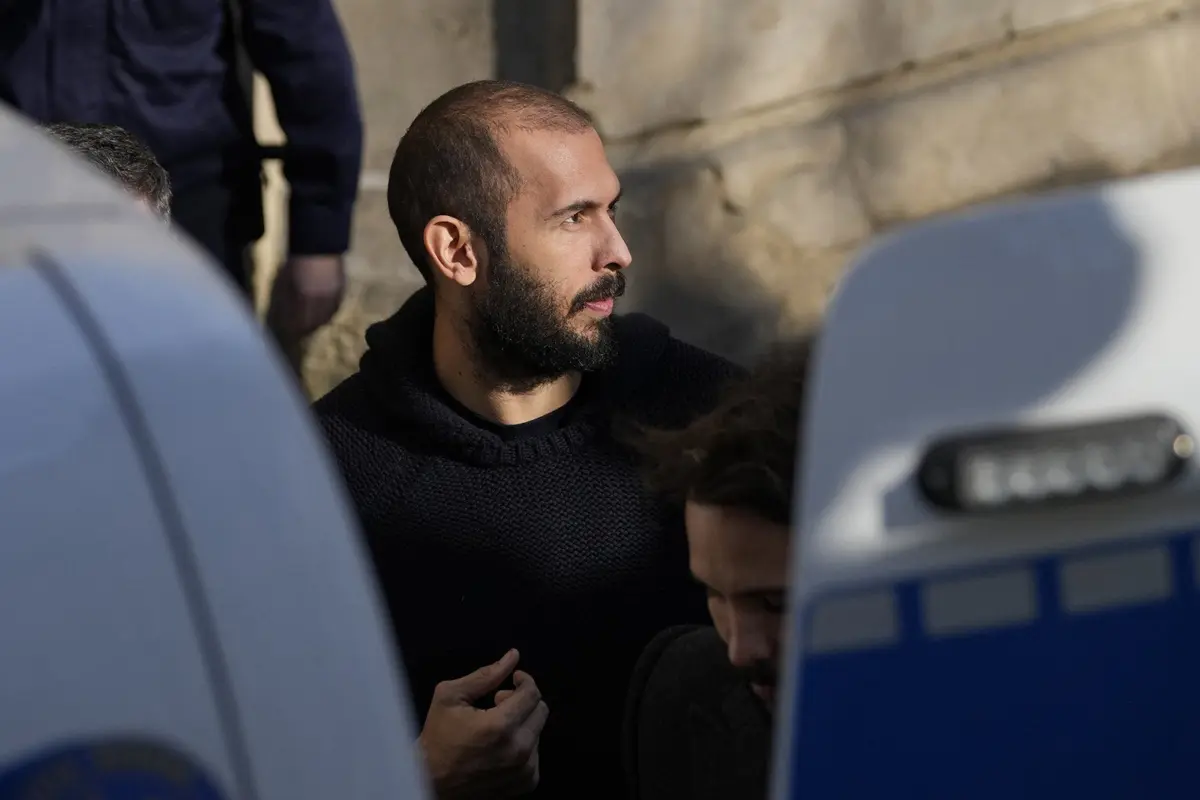
Months after the controversial, misogynistic influencer Andrew Tate and his brother, Tristan Tate, walked out of a Romanian detention facility and into house arrest alongside two alleged accomplices—Georgiana Naghel and Luana Radu—the legal fallout from their time behind bars continues to unravel. Initially hailed as a major victory by the brothers’ defense teams, their transition from a central Bucharest arrest building to a heavily monitored suburban compound may ultimately mask a compounding series of self-inflicted legal wounds.
According to confidential court documents, freedom of information requests, and insider accounts from Romanian prosecutors, the Tates’ time in detention was marked by a relentless series of clandestine plots. Authorities allege that the brothers orchestrated schemes to flee to Dubai under the guise of urgent medical treatment, attempted to intimidate and silence key witnesses, tried to enlist high-profile political figures for public relations leverage, and leveraged illicit access to sensitive police databases.
Legal experts and judicial officials warn that these aggressive, extra-legal gambits have profoundly alienated Romanian judges and prosecutors. Far from helping their defense, the defendants’ actions have fostered a pervasive atmosphere of institutional irritation. As the formal trial approaches, legal authorities are weighing whether to launch entirely separate criminal investigations into witness tampering, document breaches, and obstruction of justice. This comprehensive investigative report examines the multifaceted web of allegations surrounding the Tate brothers, detailing how their compulsion for public control and controversy may ultimately sabotage their entire defense strategy.
Detailed Chronology of Events
The legal saga involving Andrew and Tristan Tate has moved at a dizzying pace, punctuated by dramatic twists, international media spectacles, and shifting judicial rulings. Below is the detailed chronology of key events leading up to and following their high-profile release to house arrest:
- December 29, 2022: Andrew Tate, Tristan Tate, Georgiana Naghel, and Luana Radu are arrested by Romanian authorities during raids on the brothers’ properties in Bucharest. They are detained on serious suspicion of organized crime, human trafficking, and the formation of an organized criminal group aimed at exploiting women.
- April 2022 – December 2022 (Retrospective Discovery): Investigators uncover evidence suggesting that Luana Radu, a former police officer and alleged accomplice, repeatedly breached classified Ministry of Internal Affairs databases to gain strategic advantages for the group during the ongoing investigation.
- December 2022: A United States-based law firm representing the Tates issues a formal cease-and-desist letter to a key witness in Palm Beach, Florida, demanding she retract her statements or face aggressive defamation litigation. Romanian prosecutors later classify this move as part of an organized intimidation campaign.
- February 18, 2023: Pro-Tate online personality Sulaiman Ahmed tweets that he has traveled to Palm Beach, Florida—the hometown of a critical witness—under the guise of pursuing a "major story," stoking fears of localized witness harassment.
- February 21, 2023: In an official summary of a court detention hearing, a Romanian judge cites "new reasons" for denying the Tates’ release. The judge explicitly notes that the accused pose a clear danger to public order, have made preparations to evade justice by fleeing the country, and are actively exerting pressure on victims and witnesses.
- Late February / Early March 2023: Jailhouse phone wiretaps reveal Andrew Tate discussing plans to flee to Dubai under the pretext of seeking treatment for a lung spot characterized by representatives as "most likely a tumor." Andrew later reverses this claim on social media, admitting the spot is old scarring. Romanian authorities formally reject his travel requests.
- March 24, 2023: Romanian Senator Diana Șoacăoacă, whom the Tates allegedly sought to approach for political leverage, is officially added to Ukraine’s national sanctions list over anti-Western and pro-Russian security threats.
- March 31, 2023: Two appeals court judges, reportedly new to the case, overturn previous rulings and approve the transfer of Andrew and Tristan Tate, along with Naghel and Radu, from central detention to house arrest at a guarded compound north of Bucharest.
- Late March / April 2023: Legal experts and prosecutor insiders confirm that the cumulative weight of the Tates’ post-arrest actions—including wiretapped escape plots and witness intimidation—has severely damaged their credibility, paving the way for potential secondary criminal charges as the main trial looms.
Supporting Context & Metrics: The Anatomy of an Investigation
The structural integrity of the prosecution’s case against the Tate brothers relies heavily on digital forensics, wiretapped communications, international legal cooperation, and internal police intelligence. Understanding the quantitative and qualitative metrics of the investigation clarifies the high stakes involved.
The Geography of the Compound and Surveillance
The Tates’ current residence—a fortified compound situated in a wealthy, upscale suburb north of Bucharest—has become the focal point of intense monitoring. Following the March 31 appeals court ruling granting house arrest, Romanian law enforcement agencies have maintained a constant, rigorous physical and electronic surveillance perimeter around the property. Officials remain acutely aware of the flight risk posed by the brothers, particularly given their vast financial resources and international networks.
Digital Footprints and Wiretapped Communications
Central to the prosecutors’ arguments against releasing the defendants are extensive jailhouse wiretaps. Romanian penal facilities routinely monitor non-privileged communications of high-profile inmates. In the case of the Tates, audio logs captured Andrew Tate deliberating on methods to bypass travel bans.
The strategy hinged on exploiting the United Arab Emirates’ lack of an extradition treaty with Romania. By manufacturing a medical emergency—specifically leveraging a pulmonary anomaly—Andrew allegedly sought judicial clearance for medical tourism to Dubai. When medical professionals and prosecutors scrutinized the claims, the narrative fractured, shifting from an alleged malignant tumor to historical scar tissue, further eroding the defendants’ credibility before the bench.
Institutional Breach Metrics
The alleged involvement of Luana Radu introduces a critical dimension of insider threat within the case. Court files indicate that Radu, leveraging her background as a former law enforcement officer, allegedly accessed restricted Ministry of Internal Affairs databases between April and December 2022.
Investigators emphasize that penetrating these classified networks required external coordination. This technical breach not only compromised the operational security of the initial police investigation but also exposed a systemic vulnerability within Romanian state security apparatuses, which prosecutors intend to address through distinct criminal indictments.
Official Statements and Legal Perspectives
The collision between high-profile internet celebrity culture and the rigid mechanics of the Romanian judicial system has generated a wealth of commentary from legal scholars, defense representatives, and institutional insiders.
The Prosecution and Judicial Stance
Judicial authorities have maintained an uncompromising stance regarding the defendants’ behavior. In the February 21 court summary, the presiding judge encapsulated the institutional frustration:
"The accused present a clear danger for public order, they made preparations to evade criminal investigation by leaving Romania, are trying to influence witnesses and are exerting pressure on the victims."
An anonymous source within the prosecutor’s office offered an unvarnished assessment of the influencers’ public and private strategies:
"The Tates have played an extremely dangerous game. From [the Tates’] tweets, it appears they are encouraging it. Every aspect of the case that touches on the victims is very sensitive."
Defense Counterarguments
The defense teams have worked vigorously to neutralize the narrative that the brothers pose an ongoing flight or tampering risk. Eugen Vidineac, an attorney representing the Tates, dismissed the notion of an escape plot in statements to local media:
"They have a home and children in Romania, they are under criminal investigation, there is no reason to run away."
Mateea Petrescu, spokesperson for the Tates, addressed the controversial wiretaps regarding the Dubai travel plans, arguing that context had been stripped away by investigators:
"Regarding their departure from the country, the partially published wiretaps omitted the context, [namely] Andrew discussing leaving to Dubai for medical inquiries only in the case that his status allows it."
Regarding the US-based cease-and-desist letter sent to the Florida witness, Tina Glandian, a US lawyer serving on the Tates’ Romanian legal team, distanced her immediate colleagues from the maneuver, emphasizing that her firm had no direct involvement in dispatching the notice. Petrescu further characterized the letter as a standard legal action, asserting that any suspicions surrounding it were rendered obsolete by the subsequent transition to house arrest.
Independent Legal Analysis
Independent Romanian legal scholars warn that the defense’s optimism may be misplaced. Mihai Mareș, a criminal defense lawyer in Bucharest and law lecturer at Alexandru Ioan Cuza University of Iași, pointed out that the tangible irritation of the judiciary will have lasting consequences:
"Any subsequent statements they may give will be viewed with a certain amount of skepticism by the judicial bodies… If the [cease-and-desist] notification concerned a withdrawal of the criminal complaint, it could lead to a widening of the criminal investigation scope under the aspect of a new crime — that of influencing statements."
Echoing this sentiment, an experienced Romanian justice system insider suggested that Andrew Tate’s inability to temper his public persona is rooted in an insatiable appetite for controversy:
"I think Andrew Tate is not the most intelligent guy, but he probably can’t help himself."
Future Outlook: Trials, Secondary Probes, and Long-Term Implications
As the legal teams prepare for the formal commencement of the trial, the trajectory of the case extends far beyond the core allegations of human trafficking and organized crime. The fallout from the post-arrest maneuvers guarantees that the legal battle will expand on multiple fronts.
Widening Criminal Scopes
Legal analysts project that prosecutors will formally introduce secondary charges once the primary trial commences. These are expected to encompass:
- Obstruction of Justice and Witness Tampering: Stemming from coordinated social media campaigns by followers directed at victims, alongside the deployment of US-based legal threats designed to force retractions.
- Unauthorized Access to State Data: Focusing on the actions of Luana Radu and any unidentified co-conspirators who facilitated breaches of Ministry of Internal Affairs databases.
- Attempted Evasion of Justice: Utilizing the wiretapped audio evidence of planned flight routes to Dubai as a substantive charge of preparing to abscond from judicial oversight.
The Political and Public Relations Gamble
The failed attempt to approach right-wing politicians George Simion and Diana Șoacăoacă underscores the defendants’ desperate reliance on political polarization and external institutional interference. By attempting to trade future political backing for favorable public narratives—a gambit that ultimately failed when both politicians declined involvement—the Tates demonstrated a fundamental misunderstanding of the independence and resilience of the Romanian prosecutorial framework.
Conclusion
For Andrew and Tristan Tate, the move to house arrest was celebrated by their supporters as a vindication of their innocence and a sign of a crumbling prosecution. However, an objective examination of court documents, prosecutorial testimony, and expert legal opinion paints a starkly different picture. By attempting to outmaneuver the state through clandestine escape plans, intimidation tactics, and institutional breaches, the brothers have alienated the very judges who will decide their fate. As the trial approaches, the Tates find themselves not only fighting the original, grave allegations of human trafficking and organized crime, but also drowning in a rising tide of self-inflicted legal liabilities that threaten to dismantle their defense entirely.