Executive Overview
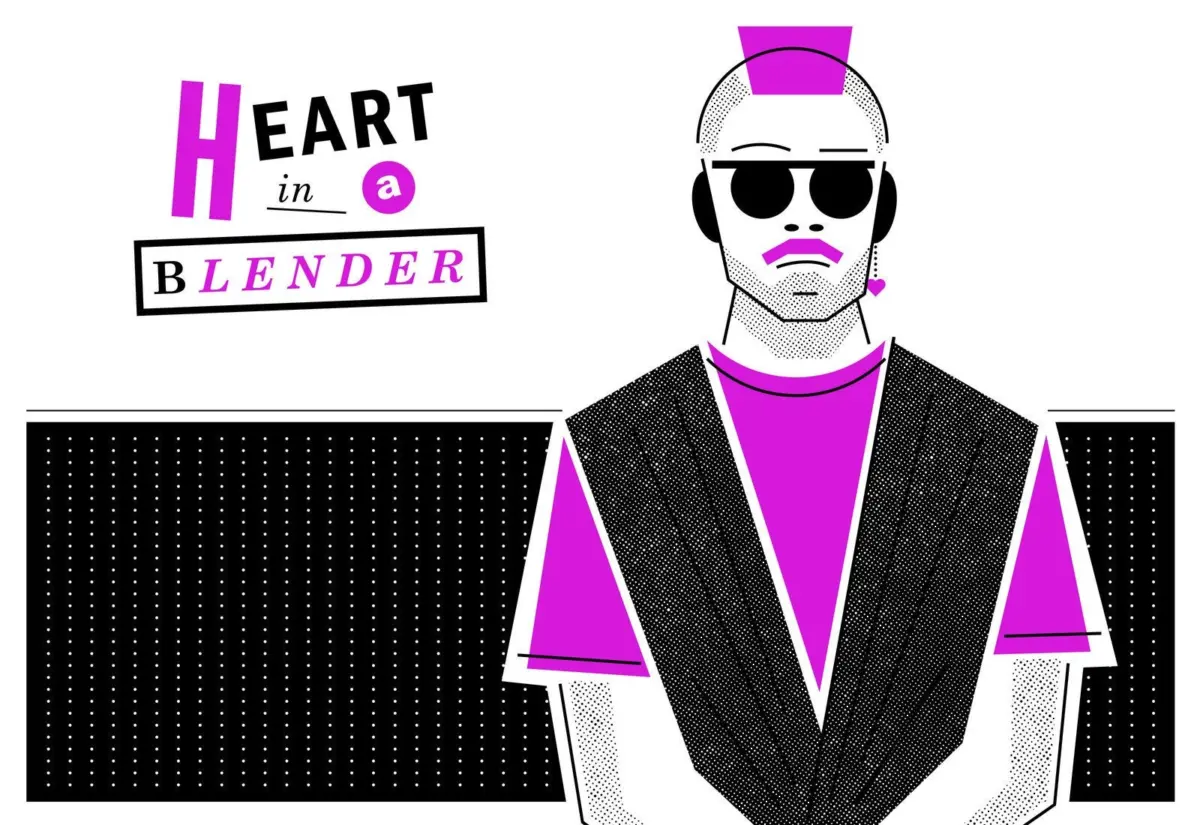
In an era defined by compounding systemic crises—ranging from recurrent mass violence and the erosion of fundamental civil rights to economic precarity and pervasive occupational alienation—traditional systems of institutional support are failing to address the psychological toll placed on the populace. This atmospheric heaviness forms the backdrop of an unconventional public discourse led by Max Collins, frontman of the 1990s alternative rock band Eve 6, who authors an advice column.
Far from offering toxic positivity or detached clinical detachment, Collins engages directly with the profound despondency expressed by everyday citizens, including university educators grappling with the aftermath of campus shootings and twenty-somethings facing acute quarter-life nihilism. This report examines the intersection of late-stage capitalist anxiety and cultural commentary, analyzing the structural conditions that generate widespread despair, the inadequacy of administrative responses, and the small-scale modalities of resistance and resilience advocated in response to societal paralysis.
Detailed Chronology: The Evolution of Institutional Breakdown and Public Disillusionment
The disillusionment articulated by contemporary letter-writers does not occur in a vacuum; it is the culmination of decades of systemic policy failures, cultural polarization, and the desensitization of the public through continuous exposure to trauma via digital mediums.
The Normalization of Mass Violence
- Post-Sandy Hook Era: Following the 2012 tragedy at Sandy Hook Elementary School, the landscape of public safety in the United States shifted fundamentally. Rather than implementing substantial legislative interventions to curb firearm accessibility, institutional entities—particularly educational institutions from K-12 to major universities—pivoted toward "security theater" and reactive protocols.
- The Collegiate Battlefield: Over the subsequent decade, mass shootings migrated from primary schools and public venues into higher education institutions. University administrations, historically structured around academic freedom and open discourse, were forced to adopt corporate-style crisis management strategies.
- The Administrative Failure: As documented in recent accounts from academic personnel, institutional reactions to campus gun violence have devolved into bureaucratic exercises. Rather than addressing the root causes or providing robust, long-term psychological frameworks, governing bodies frequently issue contradictory directives, leaving non-tenured faculty in the impossible position of enforcing policies they recognize as ineffective or actively harmful to student welfare.
The Erosion of Economic and Civil Stability
- The 2008 Financial Crisis and Beyond: For younger generations, the economic landscape has been defined by chronic instability. The promise of upward mobility through higher education and corporate employment has been replaced by stagnant wages, exorbitant housing costs, and the systematic dismantling of the social safety net.
- The Post-2022 Legislative Shift: The overturning of long-standing federal protections regarding bodily autonomy introduced a new vector of existential dread, particularly for women and marginalized groups. Coupled with hyper-polarized political environments and the normalization of public antagonism in the service sector, the baseline of daily public life has shifted toward chronic stress and interpersonal friction.
Supporting Context & Metrics: The Architecture of Contemporary Malaise
To contextualize the despair voiced by the column’s correspondents, one must examine the quantitative metrics that define the current socioeconomic and psychological landscape of the United States.
The Firearms Landscape
- Prevalence: Statistical analyses indicate that the United States possesses more civilian-owned firearms than inhabitants, a metric unique among developed industrialized nations.
- Legislative Gridlock: Despite overwhelming public support for various forms of enhanced background checks and gun safety regulations, the influence of political lobbying and institutional inertia has maintained a status quo characterized by frequent, preventable mass casualties.
Economic Precarity and the Service Economy
- Quarter-Life Ennui: Academic and sociological studies on adults aged 20 to 30 highlight a sharp rise in "quarter-life crises," driven by the realization that traditional milestones—such as homeownership, secure retirement, and stable employment—are increasingly out of reach.
- Service Sector Burnout: Frontline workers in banking, retail, and hospitality report historically high rates of customer aggression. The commodification of daily interactions has transformed service roles into flashpoints for displaced societal anger, where workers absorb the collateral damage of a stressed and furious populace.
| Metric / Indicator | General Trend | Societal Impact |
|---|---|---|
| Firearm Availability | Exceeds total population | Heightened risk and fear of mass violence in public spaces |
| Institutional Trust | Reaching historic lows | Citizens feel abandoned by governance and corporate entities |
| Economic Mobility | Declining for under-35 demographic | Pervasive fatalism regarding retirement and long-term planning |
| Mental Health (Ages 18–29) | Significant rise in reported anxiety/depression | Paralysis, cynicism, and withdrawal from civic engagement |
Official Statements and Cultural Commentary
The discourse surrounding these systemic failures reveals a stark disconnect between institutional messaging and lived reality.
The University Administration Response
In the wake of campus tragedies, administrative bodies across the United States have routinely released standardized safety statements. These communications typically emphasize compliance, procedural readiness, and legal liability mitigation. Critics, however, point out that these statements function primarily as public relations exercises rather than substantive safety overhauls.
As noted by university instructors navigating these directives, administrators operate from a defensive posture:
"It’s clear the administrators never actually planned what to do when this would eventually happen — which is just profoundly stupid given the ridiculous rate these things occur here in the US… I have very little I can do other than letting my thoughts be known to my union."
The Cultural Response: Finding Agency in the Margins
In addressing these institutional shortcomings, cultural figures operating outside traditional political spheres have stepped into advisory roles, utilizing platforms to process collective trauma. Collins’ engagement with his readership avoids hollow platitudes, acknowledging the futility often felt by citizens attempting to petition a capital-driven state:
"How far has ‘Hey, could you please stop letting Americans be killed by senseless violence, preventable illness, war profiteering, poverty, despair, and the rest of the features-not-bugs of late capitalism’ gotten us? Not very!"
Rather than prescribing systemic political reforms—which fall outside the purview of cultural commentary—the advice emphasizes psychological survival mechanisms. By reframing the Serenity Prayer not as a religious dogma, but as a pragmatic tool for establishing boundaries of personal influence, commentators attempt to salvage individual agency from the wreckage of collective powerlessness.
Future Outlook: Navigating Uncertainty and the Path to Inevitable Change
As contemporary society looks toward the horizon, the trajectory of these interlocking crises remains precarious, yet certain structural dynamics point toward long-term transformation.
The Limits of Endurance
Sociological precedent suggests that populations operating under sustained structural pressure eventually reach a saturation point. While the immediate outlook is defined by paralysis, burnout, and defensive isolation, the inevitability of systemic pressure-relief mechanisms implies that current conditions cannot be indefinitely sustained. Change, as argued by cultural observers, is inevitable simply because human beings can only be pushed to the brink of endurance before initiating systemic resistance.
Cultivating Micro-Resistance and Communal Resilience
In the absence of macro-level institutional salvation, survival in late-capitalist society depends increasingly on localized, decentralized networks of mutual aid and creative autonomy:
- Vulnerability and Honesty: Breaking the cycle of isolation requires candid communication among peers, dismantling the illusion that individual despair is a personal failing rather than a rational response to an irrational environment.
- Avant-Garde Micro-Worlds: Cultivating personal spaces—through art, literature, film (such as Studio Ghibli’s explorations of grace and forgiveness), and shared cultural artifacts (such as conceptual music exploring mundane ennui)—provides an essential buffer against corporate co-optation and despair.
- Redefining Sphere of Influence: Recognizing the boundary between unchangeable macro-structures and actionable local engagements allows individuals to preserve their mental health while maintaining the capacity for future collective action.
Ultimately, navigating the modern landscape requires a delicate balance: rejecting both toxic positivity and total nihilism. By accepting the profound absurdity and difficulty of the present era while stubbornly pursuing joy, connection, and creation, individuals can endure the fractures of a shifting world and outlast the current dark age.