Beneath the sun-drenched, turquoise waters popularized by travel brochures and shallow-water snorkeling lies an alien, underexplored frontier. Known to marine scientists as "mesophotic coral ecosystems"—or more colloquially, deep reefs—this twilight zone stretches from approximately 30 meters (100 feet) to 150 meters (nearly 500 feet) below the ocean’s surface. Caught in a perpetual dim-light limbo between the sunlit shallows and the pitch-black abyss, these ecosystems have long remained a blank spot on the maps of marine biology.
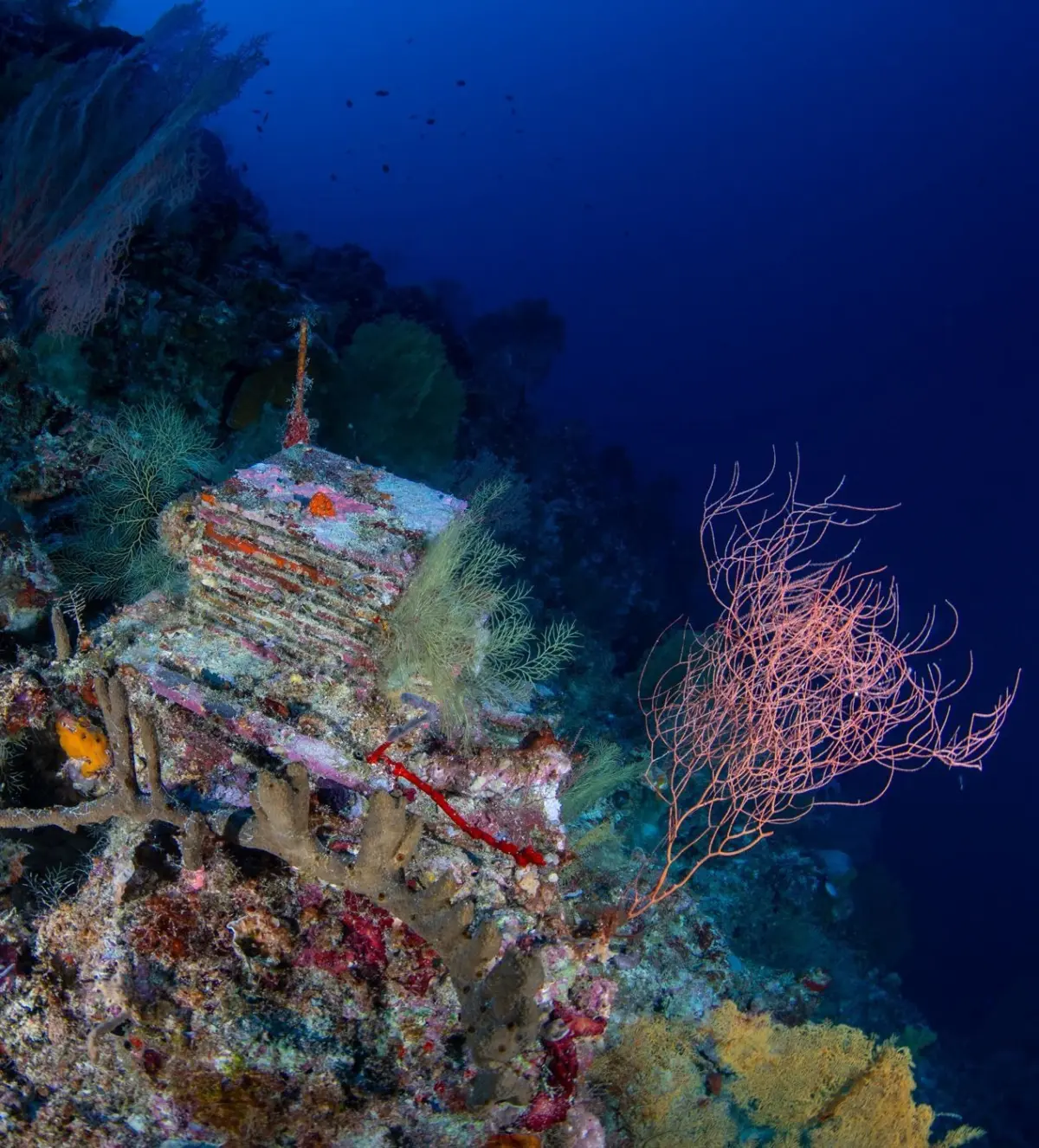
Recently, an international coalition of scientists, led by renowned California Academy of Sciences zoologist Luiz Rocha and supported by the Smithsonian Institution, embarked on a high-stakes expedition to the island nation of Palau. Their mission: to retrieve a series of scientific "time capsules" left submerged nearly a decade ago. These devices, known as autonomous reef monitoring structures (ARMS), spent years becoming encrusted with microscopic larvae, vibrant sponges, rare crustaceans, and delicate corals.
By pulling these artificial mini-reefs from the twilight depths, researchers are finally beginning to construct a baseline understanding of how deep reefs function, who lives within them, and whether they can act as climate refuges for dying shallow-water species. Yet, as this comprehensive journalistic investigation reveals, charting the deep reefs is less about answering immediate questions and more about discovering just how much humanity still doesn’t know about Earth’s final aquatic frontiers.
Detailed Chronology: A Decade-Long Quest in the Pacific
The genesis of this scientific undertaking stretches back to 2016. Recognizing the profound data deficit plaguing mesophotic zones, Luiz Rocha and his colleagues sought a standardized, scalable method to sample biodiversity across extreme depths. Traditional diving methods at 100 meters are notoriously restrictive. Because nitrogen and other gases are rapidly forced into human tissues under high pressure, divers exploring these depths are slapped with strict bottom-time limits of just five to seven minutes. Anything longer risks severe, potentially fatal decompression sickness, requiring hours of agonizingly slow ascents.
To bypass the inefficiencies of brief, high-risk technical dives, Rocha deployed ARMS—stacks of porous PVC plates designed to mimic a multi-story apartment building for marine larvae—across the deep reefs of Micronesia, Guam, the Marshall Islands, and French Polynesia. Placed at varying depths of 10 meters, 50 meters, and 100 meters, these structures were deliberately left alone to let nature take its course.
[2016-2018: Deployment Phase]
  │
  ├─► ARMS units placed at 10m, 50m, and 100m depths in Palau, Guam, & French Polynesia
  │
[Years of Submarine Incubation]
  │
  ├─► Marine larvae, sponges, and crustaceans colonize the PVC plates
  │
[May (Current Year): Retrieval Phase]
  │
  ├─► Technical divers execute complex recovery dives in Palau
  ├─► Samples transferred to the Palau International Coral Reef Center
  │
[Laboratory Analysis Phase]
  │
  ├─► Sorting, morphospecies cataloging, and DNA sequencing
  └─► Long-term data mapping by postdoctoral researchers (e.g., Susanne Bähr)
Fast-forward to May of last year. Funded by private philanthropic backing after years of budgetary hurdles, a team of specialized divers returned to the sparkling waters of Palau. Working in relay-style teams, the divers carefully sealed the encrusted ARMS units inside clear underwater tubs to prevent delicate organisms from washing away during the ascent.
Once hoisted onto the boat, the structures were transported directly to the Palau International Coral Reef Center. There, illuminated by fluorescent lab lights and fueled by caffeine and snacks, the researchers began a meticulous, round-the-clock disassembly line. Plates were pried apart, photographed as archival time capsules, and meticulously combed for hidden worms, mollusks, crabs, and sea slugs. Months later, genetic sequencing and taxonomic analysis continue across global partner institutions, slowly giving a voice to a silent, unseen world.
Supporting Context & Metrics: Decoding the Twilight Zone
To understand why deep reefs are so critical—and so fiercely debated—we must examine the stark environmental differences dividing them from their shallow-water counterparts.
The Environmental Gradient
Shallow Reefs (0–30 meters): Dominated by hard corals that form a symbiotic partnership with photosynthesizing algae (zooxanthellae). The algae supply vital nutrients, while corals secrete calcium-carbonate structures to build complex reef architecture.
Mesophotic Reefs (30–150 meters): Characterized by a sharp drop in ambient light and water temperature. Photosynthesis declines rapidly, forcing organisms to evolve alternative energy strategies, filter-feeding mechanisms, and specialized adaptations to the cold and dim surroundings.
The Scale of the Unknown
The logistical hurdles of studying these depths are staggering. While submersibles and remotely operated vehicles (ROVs) help bridge the visibility gap, cameras frequently fail to capture cryptically colored or microscopic organisms hiding in crevices.
When the research team analyzed the nearly 3,000 biological specimens harvested from the Palauan ARMS units, the data underscored the staggering scale of the unknown:
Species-Level Identification: Only 3 percent of the collected specimens have been successfully matched to known species.
Genus-Level Identification: Slightly less than 20 percent have been classified down to the genus level.
Higher Taxonomic Levels: The vast majority of collected specimens remain categorized only at broad, overarching taxonomic tiers, underscoring how many undescribed life forms likely populate these waters.
Official Statements and Expert Perspectives
The complexity of the ARMS project has brought together leading minds from the Smithsonian Institution, the California Academy of Sciences, and international research facilities. Their insights highlight both the triumphs and humbling realities of deep-reef exploration.
Luiz Rocha, Zoologist and Curator, California Academy of Sciences: "Anything between 30 meters and 150 meters is really, really unknown… In some ways, we don’t even know what questions to ask. We really only know what the crucial questions are when we have a baseline understanding of the ecosystem. And for deep reefs, we don’t have that yet… Whenever we go somewhere, the first thing we find is new species. It’s the most basic thing in science you can do."
Rocha remains philosophical about the generational nature of the work, comparing current mesophotic ecology to mid-20th-century mountain biodiversity mapping. When asked what drives him through the grueling physical and financial hurdles, his answer is absolute: "It’s the reward at the end of it. If it’s a hard puzzle, at the end of it, the reward is always bigger."
Chris Meyer, Director of the Smithsonian Global ARMS Program: "Every one [of the ARMS units]’s the same. It’s prefab housing, and then you just look to see who moves in."
Meyer emphasizes that standardized monitoring structures eliminate the wild variables inherent in pulling random rocks from different parts of a reef, allowing scientists to reliably compare biodiversity across vast geographical distances and depth gradients.
Sarah Tweedt, Research Biologist, Smithsonian Institution: "We’re looking for every unique thing, which we call a morphospecies. And we’re trying to get some representative tissue samples from all of these things so that we can sequence the DNA—and match the DNA to the organism."
Tweedt’s work in the lab often extended past midnight, where cataloging complex ecological relationships—such as pompom crabs brandishing anemones, "skeleton spiders" mimicking hydroids, and red sea snails living symbiotically on crimson octocorals—offered breathtaking glimpses into interspecies dependencies.
Susanne Bähr, Postdoctoral Researcher, California Academy of Sciences:
Analyzing data from ARMS units retrieved across different Pacific sites, Bähr is charting how biological communities shift, overlap, or isolate themselves as depths plunge from the surface to the twilight zone. Her ongoing genetic analysis is vital for determining whether deep reefs can genuinely serve as ecological "lifeboat" refuges for shallow-water species fleeing warming, acidifying surface waters.
Future Outlook: Passing the Torch to the Next Generation
As climate change continues to exert catastrophic stress on the world’s shallow coral reefs through mass bleaching events and thermal anomalies, the scientific community has increasingly pinned its hopes on mesophotic ecosystems. The "Deep Refuge Hypothesis" suggests that these cooler, deeper waters might shield certain corals and mobile species from surface-level heating, allowing them to potentially repopulate degraded shallow areas over time.
However, recent studies indicate that deep reefs are not entirely immune to anthropogenic stressors. Climate change impacts, pollution, and shifting ocean currents do not stop cleanly at the 30-meter mark.
The data retrieved from Palau, Guam, and French Polynesia represents a monumental step forward, but it is merely a drop in the ocean. Sequencing thousands of DNA samples, cross-referencing global genetic libraries, and formally describing hundreds of potential new species will take years of painstaking laboratory work.
When asked by journalists if this generation of scientists will successfully assemble the complete puzzle of the deep reefs, Luiz Rocha offers a realistic yet inspiring assessment:
"No, we will not assemble the puzzle, no, but we’ll generate some good pieces for the next generation to assemble."
Until those pieces are fully examined, the ocean’s twilight zone will continue to keep its cards close to its chest, hiding an entire universe of evolutionary marvels just out of reach of the morning sun.




%2520%25C2%25A9%2520Luiz%2520Rocha.jpg)
%2520%2520%25C2%25A9%2520Steve%2520Lindfield.jpg)