Executive Overview
In one of the most significant corporate restructuring moves in modern tech history, Microsoft Chief Executive Officer Satya Nadella recently laid out the explicit rationale behind offering voluntary buyouts to roughly 60,000 employees. Rather than relying on traditional, top-down mass lay-offs to trim headcount, the Redmond giant elected to present a massive portion of its workforce with a voluntary exit pathway.
At the center of Nadella’s strategy is not a simple downsizing exercise driven by fiscal pressure, but a radical structural pivot toward Artificial Intelligence—specifically, the transition from human-executed tasks to "agentic" AI workflows. Nadella insists the move is not aimed at outright replacing software engineers or knowledge workers with automated scripts. Instead, it represents a foundational reorganization of a 51-year-old corporate giant.
Under this new operating model, every employee is expected to shift from directly performing manual execution to managing fleets of specialized AI agents. For workers unwilling or unready to navigate this rapid behavioral and technical shift, the voluntary buyout was designed to offer an honorable exit, granting employees agency over their career paths rather than leaving them subject to corporate anxiety and abrupt dismissals.
Detailed Chronology
October: The Voluntary Buyout Offer
The initial rift surfaced when reports revealed Microsoft had tendered voluntary buyout packages to an estimated 60,000 workers across multiple divisions. Coming on the heels of broad tech industry rightsizing, the scale of the offer sent shockwaves through the tech sector, raising questions about whether the software titan was signaling a sharp decline in human resource demands or preparing for a deeper operational overhaul.
Mid-November: Public Explanation at the DealBook Summit
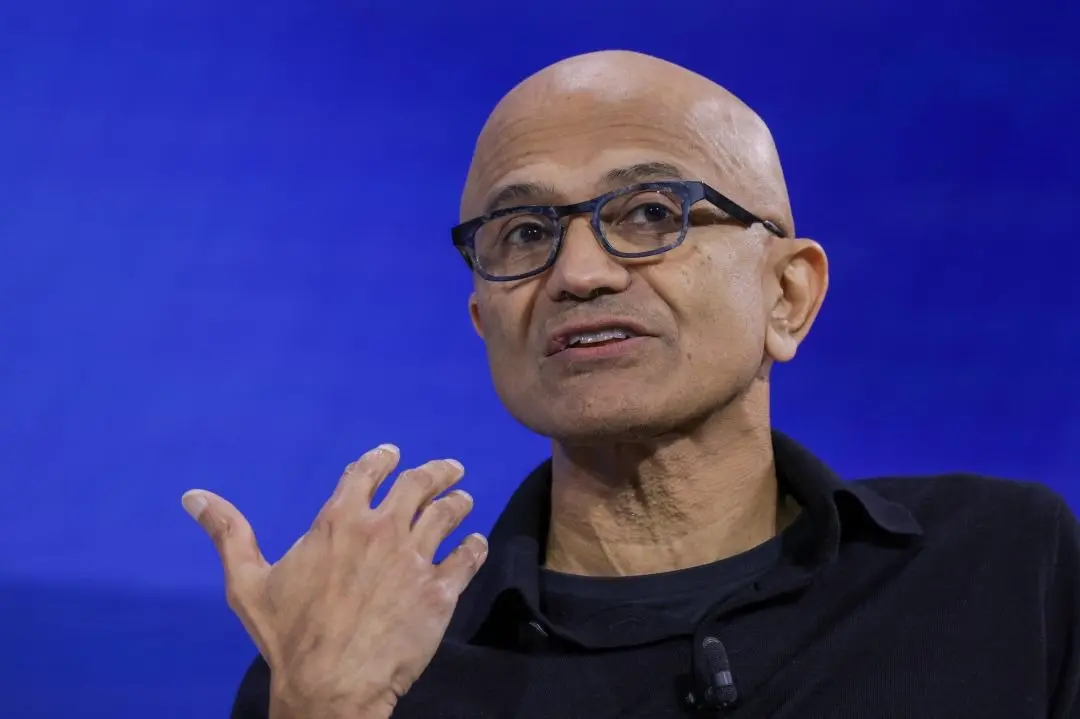
Speaking with The New York Times business columnist Andrew Ross Sorkin at the annual DealBook Summit, Nadella addressed the buyouts publicly for the first time in detail. He reframed the conversation away from standard cost-cutting metrics, explicitly linking the buyout offer to the operational reality of deploying generative and agentic AI across enterprise software. Nadella emphasized that the reorganization was necessary to establish a "new operating point" for software creation and business workflows, arguing that giving employees agency in this transition was a primary moral and strategic objective.
Parallel Discourse: Addressing Workforce Anxiety
In a concurrent appearance on The Pragmatic Engineer podcast hosted by Gergely Orosz, Nadella expanded on the psychological motivations behind the offer. He acknowledged that mainstream rhetoric surrounding the AI "singularity" and total labor displacement had induced unprecedented anxiety within the workforce. The voluntary exit strategy was presented as a deliberate mechanism to grant staff control over their destinies amid an industry-wide structural shift.
+-----------------------------------------------------------------------------------+
|                        MICROSOFT'S AGENTIC TRANSITION TIMELINE                    |
+-----------------------------------------------------------------------------------+
|  OCTOBER             |  MID-NOVEMBER             |  ONGOING                       |
|  60,000 Voluntary    |  DealBook Summit &        |  Operational Shift to          |
|  Buyout Offers       |  Pragmatic Engineer       |  "Manager of AI Agents"         |
|  Tendered            |  Nadella Outlines Pivot   |  Workforce Architecture        |
+-----------------------------------------------------------------------------------+
Supporting Context & Metrics
The Three Phases of Engineering Transformation
To justify the structural reorientation, Nadella articulated an evolution in how software development is perceived and executed within enterprise environments. This transition has moved rapidly through three distinct mental models:
  Phase 1: Skepticism           Phase 2: Total Replacement           Phase 3: The New Operating Point
+-----------------------+     +----------------------------+     +----------------------------------+
| "AI will never be     | --> | "AI can do all software;   | --> | "Software engineering is alive;   |
| able to write complex |     | why do we need software    |     | engineers now manage AI software |
| software code."       |     | engineers at all?"         |     | factories."                      |
+-----------------------+     +----------------------------+     +----------------------------------+
Nadella noted that Microsoft has landed firmly in the third phase: software engineering is thriving, but the fundamental nature of the job has been redefined. The modern software engineer no longer spends the majority of their time manually writing lines of code; instead, they design system architectures, set constraints, and supervise autonomous code-generating agents.
Case Study: The 11-Developer "Software Factory"
To illustrate this new operational philosophy, Nadella highlighted the team responsible for building Cowork, an advanced AI agent embedded across the Microsoft 365 ecosystem.
- Team Size: 11 core software developers.
- Operational Mechanism: Rather than manually programming features, the 11-person engineering unit constructed an automated, AI-driven "software factory."
- Output Model: The developers write high-level prompts, structural rules, and validation pipelines, while AI agents produce and test the actual underlying code assets.
- Paradigm Shift: The team does not build the product directly; they build and maintain the factory that builds the product.
Macro Organizational Metrics & Legacy Incumbent Dynamics
Transforming a corporate giant like Microsoft presents structural friction that nimble, AI-native startups do not face:
| Enterprise Metric | Historical Baseline | New AI-First Target |
|---|---|---|
| Company Age | 51 Years Old | Re-architected for Modern AI Workflows |
| Primary Employee Role | Direct Execution / Task Completion | Orchestrator & Manager of AI Agents |
| Work Artifact Creation | Manual Content / Code Generation | Automated Production via Supervised Agents |
| Organizational Friction | Deep-seated Legacy Workflows | Agile, High-Leverage Small Teams |
Nadella acknowledged that converting tens of thousands of roles across a 51-year-old enterprise into agentic management positions takes significantly more time and cultural adaptation than industry commentators anticipate.
Official Statements & Key Commentary
On Employee Agency and Choice
At the DealBook Summit, Nadella stressed that offering buyouts was fundamentally an attempt to restore autonomy to a workforce grappling with rapid automation:
"The buyout was to make sure that at least everyone felt like they had agency in making choices… For some people, that reorganization and change is sort of hard, right? But, I mean, it has to be done."
On the Evolution of Software Engineering
Directly addressing the existential fears harbored by technical talent, Nadella elaborated on how software roles are changing rather than disappearing:
"We went from, ‘Well, we don’t buy that AI can ever do software,’ to suddenly, ‘Wow, it can do all software, and why do we need software engineers?’ to now rediscovering that software engineering is very much alive and, in fact, is going to thrive, except the way the team is organized and the work that a software engineer does has now got a new operating point."
On the Universal Shift to Managing Agents
Looking beyond computer science, Nadella framed the shift as a universal restructuring of knowledge work across every corporate function:
"They build a software factory that builds the product. They don’t build the product. That level of direction is what, by the way, is going to happen in all jobs."
On Enterprise Transformation Timelines
Explaining the friction of modernizing an established enterprise, Nadella stated:
"So the question is, how quickly can an incumbent transform the work, the workflow, and the work artifact, and with all the wage support that goes with it? It’s going to take a bit more time than anyone expects. And there is going to be in all of this, you know, people who may say, ‘Hey, I have some other choices I want to make.’"
On Countering AI Anxiety and "Singularity" Rhetoric
Speaking on The Pragmatic Engineer podcast, Nadella singled out apocalyptic tech narratives as a major source of internal instability:
"We have created enormous anxiety in people sort of feeling that they don’t have control of their own destiny because of the way we have talked about this AI revolution… All of that leads anyone who even wants to change to be sort of anxious. You have to sort of walk the hard walk of really making the structural changes, getting people slotted, giving them opportunity."
Future Outlook & Enterprise Implications
The Emerging Blueprint for Big Tech Labor
Microsoft’s voluntary exit model represents a potential blueprint for other legacy tech enterprises navigating the generative AI shift. Rather than relying on sudden, disruptive rounds of performance-based dismissals, voluntary buyouts allow companies to reshuffle talent pools humanely while setting clear expectations: adapt to the agent-management workflow or exit with financial dignity.
The Rise of High-Leverage Micro-Teams
The success of the 11-person Cowork team signals an era of hyper-lean product development within mega-cap tech companies. As AI agents handle boilerplate programming, unit testing, and documentation, organizations will increasingly measure engineering success not by headcount scale, but by output leverage per developer.
Navigating the Human-AI Hybrid Era
For the broader labor market, Microsoft’s strategy highlights an immediate requirement for upskilling. The defining skill of the coming decade will not merely be execution capability, but orchestration—the capacity to direct, audit, and optimize autonomous software systems. As Nadella’s strategy illustrates, incumbents must balance rapid technical deployment with human empathy, offering workers a choice in how—and where—they participate in the next wave of technological transformation.