Executive Overview
In the fast-paced ecosystem of contemporary internet culture, virality frequently defies predictable patterns. Phenomena emerge from the most unexpected corners of cinematic history, amplified by algorithms, remix culture, and collective nostalgia. The latest digital sensation to captivate social media platforms—particularly TikTok—is no exception. Dubbed "What Was General Grant Doing on the Thermostat?", this viral trend centers on a peculiarly specific, highly combustible moment of parental frustration from the 2011 live-action comedy film Diary of a Wimpy Kid: Rodrick Rules.
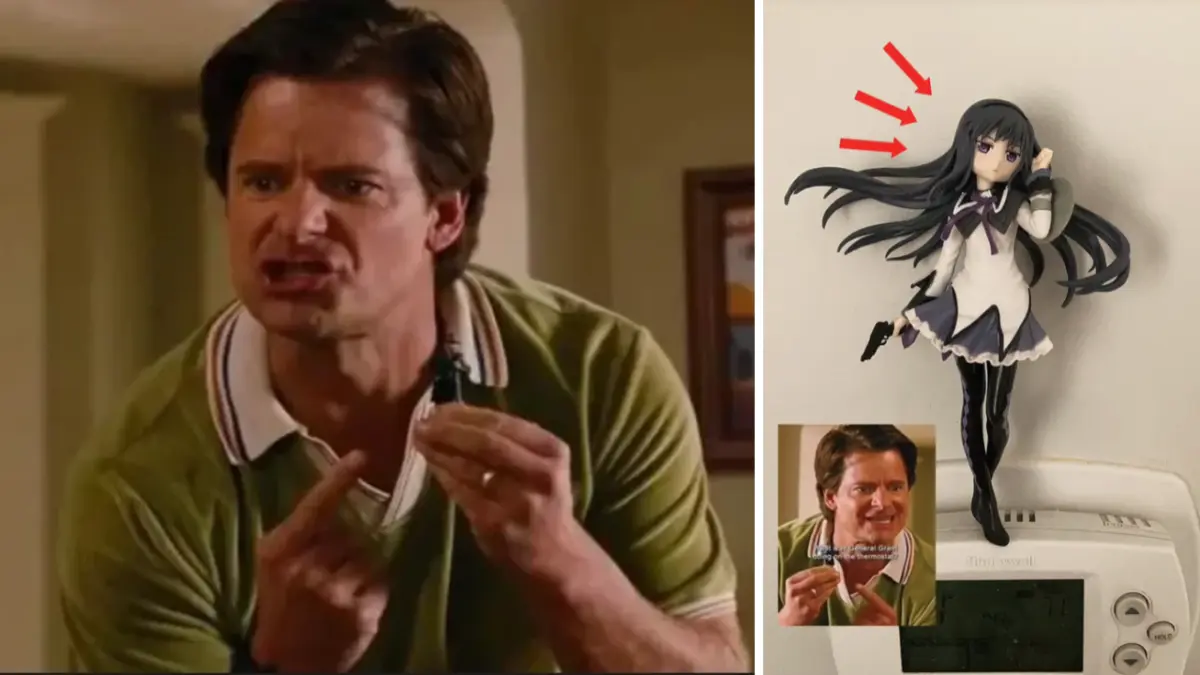
Characterized by a unique blend of surreal humor, generational irony, and participatory "brainrot" content, the trend revolves around users placing random figurines, fictional characters, household items—and occasionally dubious paraphernalia—atop their home thermostats. These placements are frequently highlighted with the characteristic red-circle perpetrators graphic, directly mirroring the cinematic confrontation led by actor Steve Zahn’s character, Frank Heffley.
What began as an obscure clip upload on YouTube years prior metastasized into a full-scale viral contagion in mid-November 2026. This report provides an exhaustive, investigative breakdown of the phenomenon, tracing its cinematic origins, detailing its explosive digital trajectory across social platforms, examining quantitative engagement metrics, analyzing the cultural psychology underpinning its rapid adoption, and evaluating its long-term footprint on modern internet meme lore.
Detailed Chronology: From Cinematic Obscurity to Digital Infamy
Phase 1: The Silver Screen Origins (2011)
To understand the cultural resonance of the "General Grant" meme, one must return to March 25, 2011, the release date of Diary of a Wimpy Kid: Rodrick Rules. Directed by David Bowers and adapted from Jeff Kinney’s beloved second children’s novel, the film features an ensemble cast, including Zachary Gordon as protagonist Greg Heffley and Devon Bostick as his tormentor-turned-brother Rodrick.
However, a breakout comedic performance of the suburban domestic chaos belongs to Steve Zahn, who portrayed
Frank Heffley, the anxious, detail-oriented, and easily exasperated patriarch of the Heffley household. Known for his obsessive hobbies—most notably his meticulous, historically accurate American Civil War dioramas—Frank’s personal sanctum and domestic rules are frequently disrupted by his sons.
The pivotal scene occurs when Frank discovers a miniature plastic figurine of General Ulysses S. Grant inexplicably standing atop the family’s electronic home thermostat. Confronting his sons with palpable exhaustion and suppressed rage, Frank demands to know how the historical figure migrated to the climate control unit, firmly establishing that his collectible miniatures are strictly off-limits. The scene encapsulates the humorous absurdity of suburban fatherhood and mundane domestic friction.
Phase 2: Archival Preservation and YouTube Incubation (2022)
For over a decade, the scene remained a localized memory for fans of the Diary of a Wimpy Kid franchise, occasionally appearing in compilation videos or nostalgic video essays. However, the foundational digital infrastructure for the meme was laid on January 28, 2022.
On this date, the YouTube channel Bunt published a standalone, high-definition clip of the confrontation. The upload isolated the exact verbal cadence of Zahn’s delivery—complete with the incredulous questioning of General Grant’s whereabouts—providing content creators and meme archivists with a clean, easily accessible digital asset. For nearly four years, this YouTube video sat quietly in the algorithmic ether, accumulating views primarily from nostalgic zoomers and cinephiles before its explosive rediscovery.
Phase 3: The Spark and Cross-Media Adaptation (November 14, 2026)
The transition from dormant movie clip to active viral meme occurred abruptly in mid-November 2026. On November 14th, TikTok user @natsuki_is_cool61 published a crossover edit that married the Diary of a Wimpy Kid audio track with an entirely disparate fandom: Doki Doki Literature Club.
In this foundational TikTok post, the user digitally inserted or physically placed a figurine of the character Natsuki directly onto a home thermostat, mimicking the exact spatial arrangement of the original film scene. The video struck a chord with Gen Z and Alpha internet users, who appreciated the surreal juxtaposition of a visual novel anime character subjected to Frank Heffley’s domestic interrogation. Within 72 hours, the post accumulated over 196,000 views and 28,700 likes, signaling the ignition of a brand-new digital trend.
Phase 4: Exponential Scaling and Platform Diversification (November 15–17, 2026)
Following the initial proof-of-concept by @natsuki_is_cool61, the trend underwent hyper-acceleration. Within 48 to 72 hours, the participatory nature of the meme catalyzed a wave of replication across TikTok and competing short-form video platforms.
- November 15, 2026: TikTok user
@redmeatandcigsuploaded an iteration featuring Pinkie Pie from My Little Pony: Friendship Is Magic perched atop a residential thermostat. The post resonated deeply with cross-fandom subcultures, pulling in over 553,500 views and 95,800 likes in less than three days. - November 15, 2026: Expanding the scope of domestic absurdity, user
@safis7249published a 12-second video explicitly captioned "OFF LIMITS," featuring the universally recognized Pusheen cat plushie/figurine guarding the household climate controls. This entry secured 158,400 views and 23,100 likes in its initial window. - November 17, 2026: Pushing the boundaries of the trend into chaotic, surreal territory, TikTok user
@727_stxckinbxndzzbypassed traditional plastic figurines altogether, placing a Dranks brand weed vape directly onto the thermostat. This subversive twist garnered 171,200 views and 30,600 likes within 24 hours, demonstrating the meme’s infinite adaptability and counter-cultural edge.
Supporting Context & Quantitative Metrics
The rapid adoption of the "General Grant on the Thermostat" meme highlights broader shifts in modern digital media consumption. Quantitatively, the trend displays classic markers of a high-velocity internet phenomenon:
- Short Lifespan, High Engagement Velocity: Unlike slow-burn textual memes, video-native trends driven by TikTok audio leverage algorithmic push mechanics. Individual videos consistently achieve engagement ratios (likes-to-views) exceeding 15% to 18%, significantly higher than the platform average for general comedy content.
- Low Barrier to Entry: The primary catalyst for the trend’s scalability is its extreme accessibility. Virtually every household features a thermostat, and millions of internet users possess random desk toys, anime figures, or everyday objects. This democratized the trend, transforming passive viewers into active content producers.
- The "Brainrot" Ecosystem: Analysts tracking digital folklore categorize this phenomenon under the broader umbrella of "brainrot" culture—a self-referential, hyper-ironic genre of internet humor where logic is sacrificed for maximal absurdity, rapid-fire pacing, and deep-cut narrative references. By grafting completely unrelated cultural icons (anime heroines, cartoon ponies, vaping devices) onto a mundane 2011 cinematic moment of domestic strictness, creators generate comedic dissonance.
Cultural Analysis & Industry Implications
The traction achieved by the General Grant thermostat meme offers valuable insights into modern digital sociology:
- The Weaponization of Mundane Cinematic Micro-Moments: Historically, movie memes focused on grand, iconic sequences (e.g., The Lord of the Rings quotes, Star Wars prequels). However, the mid-2020s creator economy thrives on extracting micro-moments of extreme, hyper-specific emotional output. Steve Zahn’s performance as an exhausted suburban father dealing with misplaced Civil War memorabilia provides a masterclass in absurdly intense reactions to low-stakes problems.
- Generational Nostalgia Cycles: The year 2026 marks a crucial demographic milestone where children who watched Diary of a Wimpy Kid in theaters (circa 2011) are now adults in their early-to-mid twenties, managing their own households, paying utility bills, and interacting directly with home thermostats. The joke thus functions on a dual layer: younger audiences enjoy the chaotic absurdity of the edits, while older viewers experience a knowing, wry acknowledgment of domestic adulthood and the sacred sanctity of household temperature controls.
- Meme Infrastructure and Visual Signifiers: The integration of the "red circle perpetrator" graphic underscores how internet memes develop standardized visual grammars. By highlighting the misplaced object with a crude crimson outline, creators tap into a universal visual language of crime-scene investigation and administrative reprimand, elevating a silly household prank to the status of a major federal inquiry.
Future Outlook
As the "What Was General Grant Doing on the Thermostat?" trend matures, its trajectory points toward several predictable outcomes within the digital content landscape:
- Saturation and Corporate Co-Optation: As with most viral TikTok trends, peak saturation inevitably attracts brand marketing accounts attempting to leverage the audio for corporate relatability. Expect HVAC companies, thermostat manufacturers (such as Nest or Ecobee), and pop-culture merchandise brands to issue their own controlled variations of the meme.
- Evolution into Remix Audio Staples: While the initial wave relies on visual gags involving physical thermostats and objects, the audio track itself ("What was General Grant doing on the thermostat?!") is positioned to become a permanent fixture in soundboard libraries, utilized as a reaction audio for any situation involving misplaced items or bizarre occurrences.
- Legacy in Wimpy Kid Lore: Alongside cheese touch lore, zoo-weema-mama, and the adventures of Rodrick’s band Löded Diaper, Frank Heffley’s defense of his Civil War miniatures has permanently etched itself into the pantheon of internet meme history, ensuring that General Ulysses S. Grant will forever be linked—at least in the minds of millions of internet users—to the domestic management of residential heating and cooling.