Executive Overview
It is 8:45 a.m. on a sweltering September morning outside the City of Marion Housing Authority in southern Illinois. The mercury is already pushing 84 degrees, and cicadas drone relentlessly in the scrubby grass flanking the parking lot. Most visitors arriving at this modest municipal building are here to pay rent, submit a maintenance request, or converse with caseworkers. Jeremy Bartlett is not.
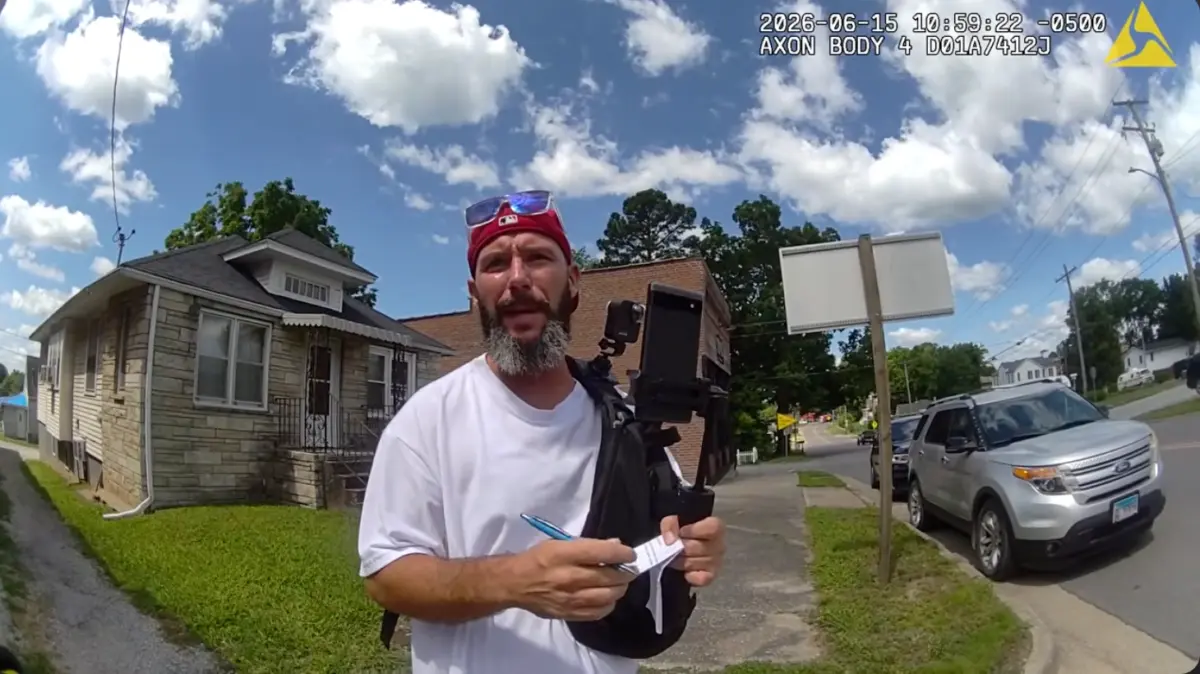
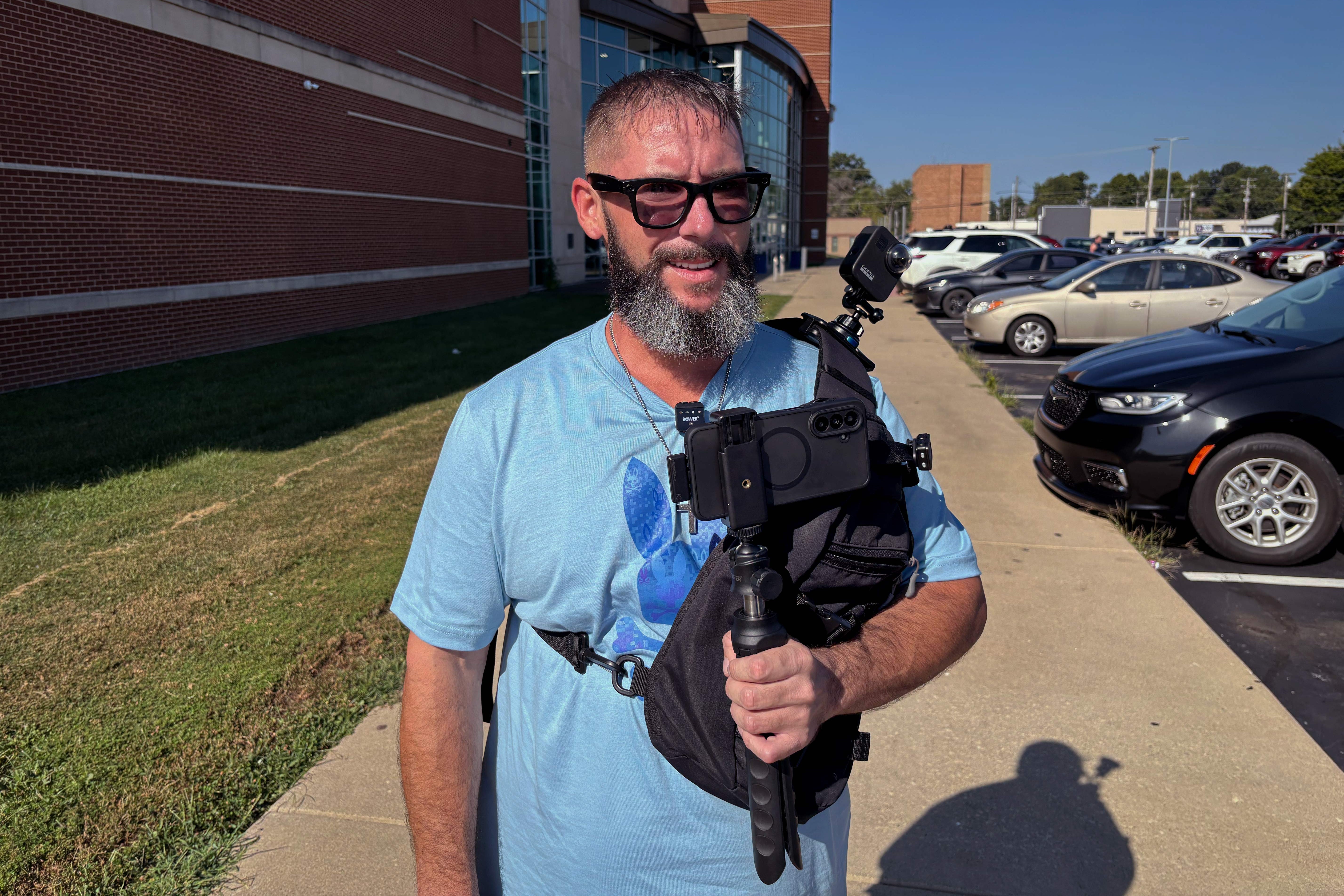
Clamping his smartphone into a heavy-duty tripod, Bartlett straps on a black tactical vest outfitted with a 360-degree GoPro camera on his right shoulder and clips a wireless microphone to his cornflower-blue T-shirt. Peeking out from beneath his red-and-blue Spider-Man sock is an electronic ankle monitor—a tangible souvenir from a previous legal entanglements stemming from his profession. Bartlett is not an accountant checking ledger books; he is a "First Amendment auditor."
As a prominent fixture in a rapidly expanding, highly polarized subculture, Bartlett’s mission—and that of thousands of content creators like him—is to record public officials, government offices, and occasionally private businesses from public property. Adherents frame this practice as a vital stress test of constitutional rights, designed to ensure that the government respects the public’s right to record in the open. Critics, however, view them as belligerent, algorithmic agitators looking to provoke conflict for clout and cash.
Today, this digital phenomenon sits at a historic crossroads. Amid sweeping platform policy shifts, intensifying legal pushback, and escalating real-world confrontations, the era of making a lucrative living off "audit" content is facing its sternest test yet.
Detailed Chronology: An Inside Look at a Southern Illinois Audit
Bartlett’s operation inside the Marion Housing Authority unfolds with calculated methodicalness. Stepping past the automatic glass doors into the nondescript lobby—complete with institutional-grade carpet and standard-issue waiting room chairs—he begins quietly filming bulletin boards crammed with housing notices, the service counter, and the handful of administrative staff working behind it.
Mindful of keeping his lens focused on public employees rather than everyday citizens dropping by for assistance, Bartlett navigates the space until an employee approaches, asking if he needs help. Bartlett calmly pivots, requesting a form to file a Freedom of Information Act (FOIA) request—a standard maneuver through which auditors frequently demand employee names, pay scales, and hire dates.
When Bartlett explores the adjoining open-plan office spaces, he finds one desk occupied by a female employee who shifts from bemused to visibly angered.
"What are you doing?" she asks, a hint of nervous laughter in her voice.
When Bartlett replies that he is simply a member of the public looking around, she asserts that he needs explicit permission to film. Bartlett firmly counters that no such permission is required. Following a brief verbal back-and-forth, she slams her office door shut.
Moments later, the unusual presence of a cam-wearing outsider prompts her to stride across the lobby through an employee-only door. Within minutes, the housing authority’s executive director steps out to confront him.
"We have privacy issues here, we have people’s important information," the executive director warns Bartlett. "Just barging in and going into her office is not acceptable."
Bartlett counters that he never crossed the threshold into private quarters. The executive director stresses the agency’s legal duty to safeguard clients’ sensitive data, to which Bartlett retorts: "The onus is on you to protect it, not me."
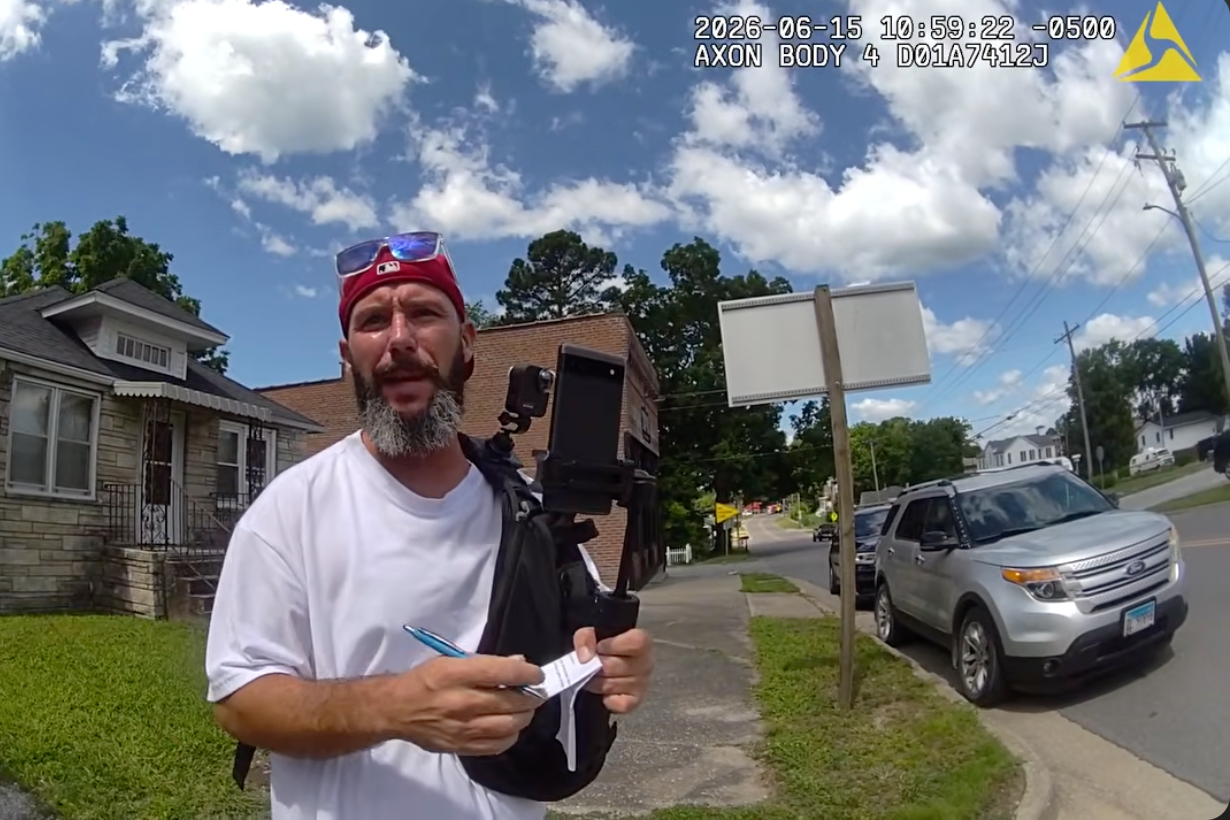
The confrontation eventually circles back to the FOIA request. Lacking pre-printed administrative forms, staff reluctantly hand Bartlett a blank piece of paper and a pen. While Bartlett waits to complete his handwritten request, a steady procession of Marion Police Department officers arrives. One officer greets Bartlett by name, recalling a recent confrontation at a local Department of Children and Family Services office. However, after conferring privately with housing authority personnel in the back rooms, the officers depart without issuing warnings, citations, or dispersal orders.
For Bartlett, it is just another day at the office—captured on camera, annotated with animated graphics, and uploaded for thousands of digital spectators.
Supporting Context & Metrics: The Mechanics and Ecosystem of Auditing
First Amendment auditing is far from an isolated fringe movement; it is a booming corner of the creator economy. Major channels like Long Island Audit, Amagansett Press, First Amendment Protection Agency, and KULT News boast subscriber bases ranging from hundreds of thousands to well over a million followers.
These creators have successfully monetized anti-establishment sentiment, retailing branded merchandise such as "We the People" baseball caps and T-shirts declaring slogans like Less 1984, More 1776. Driven by YouTube’s pay-per-view advertising revenue model, successful auditors historically pulled in between $10,000 and $12,000 a month.
Ideological Roots and Modern Evolution
While the modern audit wave took root roughly a decade ago—with early viral videos documenting rural Florida speed traps and transit station disputes—its ideological lineage stretches back much further.
- The Black Panther Party (1960s): Pioneered organized "copwatching" to monitor law enforcement and curb police brutality.
- The 1980s–1990s Resurgence: Expanded grassroots surveillance networks, laying the groundwork for modern smartphone-based accountability movements.
- The Digital Era: Contemporary auditors have broadened their scope beyond police forces to encompass city halls, libraries, post offices, courthouses, and commercial banks.
According to David R. Dewberry, a professor of communication at Rider University who specializes in First Amendment jurisprudence, auditors represent an evolutionary offshoot of historical copwatchers.
"Nice, pleasant people with pleasant ideas don’t need their speech protected," Dewberry notes. "It’s the people who challenge things… Even though we may not like it because sometimes they’re just kind of, like, well, they’re assholes. But being an asshole is not illegal, right?"
Mike Norton, who runs the channel KULT News after leaving a career as an insurance claims adjuster, frequently targets financial institutions. Norton cites corporate settlements—such as Bank of America’s $72 million payout related to Jeffrey Epstein victims and Wells Fargo’s $3 billion penalty for fake accounts—as justification for shining a harsh public light on corporate corruption.
"We are at a point in American history where the government has become very, very emboldened to do things that they might not have dreamed of doing five or ten years ago," Norton says.
Official Statements and Legal Realities
As auditors increasingly test institutional boundaries, municipal governments, legal scholars, and law enforcement agencies are pushing back.
The Legal Landscape
The legality of filming in public spaces remains a complex, highly localized issue. Clare Norins, director of the First Amendment Clinic at the University of Georgia School of Law, explains that the U.S. Supreme Court has yet to directly address the fundamental right to record in public, leaving lower federal circuit courts to navigate the gray areas.
Norins points to recent nonbinding appellate rulings—such as an 11th U.S. Circuit Court of Appeals opinion determining that individuals do not possess an unfettered right to record inside tax assessor’s offices, which function as limited public forums dedicated to specific administrative tasks rather than open public forums for expressive activity.
To mitigate liability and avoid costly civil rights lawsuits—such as a $55,000 settlement paid out by a Georgia municipality—Norins’s clinic conducts specialized training for public officials. These programs advise agencies to establish clear, unambiguous rules regarding public versus employee-only spaces while maintaining a calm, de-escalatory posture.
YouTube’s Demonetization Crackdown
The greatest existential threat to the auditing community currently comes from Big Tech. August 31, 2026, marked what many creators term "First Amendment audit Armageddon." On this date, YouTube initiated a sweeping wave of demonetizations, stripping major auditing channels of their revenue-generating capabilities.
Sean Paul Reyes, operator of the million-subscriber channel Long Island Audit, condemned the move in a fiery video response: "I believe this was a coordinated attack on the First Amendment auditing and government accountability community. But understand this: We the people will not be silenced, and we will not be stopped."
YouTube defended the policy shift in an official statement:
"While we deeply value citizen journalism and public interest content, creators in the YouTube Partner program must follow our Creator Responsibility policy, which protects our community both on and off the platform. Accordingly, we’ve suspended monetization for channels that dedicate a significant portion of their content to filming people in a way that provokes, harasses, or instigates conflict."
Reyes has advanced unverified theories alleging that law enforcement union officials colluded with federal authorities to pressure platform executives—allegations that the U.S. Department of Justice has formally dismissed as entirely false.
Future Outlook: The Road Ahead for Auditors
The future of First Amendment auditing hangs in a precarious balance between constitutional protections and public fatigue. While top-tier creators scramble to diversify revenue streams through Patreon, direct crowdfunding, and alternative video platforms, grassroots auditors face mounting legal hazards.
Jeremy Bartlett’s immediate future, for instance, hinges on resolving a pending criminal case. While filming outside a local day spa from a public sidewalk in Sesser, Illinois, Bartlett was slapped with stalking charges filed by a business owner. Unaware of an active arrest warrant until informed by his hometown police chief during a separate shoot, Bartlett turned himself in, spending 23 days behind bars before securing release on electronic monitoring. His next court appearance is slated for January 7, with his defense counsel asserting the charges are legally baseless.
Despite the setbacks—ranging from jail time and civil lawsuits to platform demonetization and aggressive public pushback—auditors remain unbowed. Whether viewed as heroic defenders of civil liberties or as self-righteous provocateurs exploiting legal loopholes for digital entertainment, First Amendment auditors have irrevocably altered how everyday citizens interact with institutional power.
As Anna McGarrh, an attorney who analyzed the phenomenon for the Mississippi Law Journal, aptly summarizes:
"Maybe people don’t really like the First Amendment auditors. But one thing I think people often forget, or just generally don’t realize, is that the Constitution is meant to protect unpopular ideas."