Executive Overview
Paris Fashion Week reached its grand, cinematic climax on the evening of October 6, 2026, as the fashion elite converged upon the historic cobblestones of the Cour Carrée at the Louvre for the Louis Vuitton Spring/Summer 2027 (SS27) womenswear presentation. Under the artistic direction of Nicolas Ghesquière, the legendary luxury house delivered a masterclass in sartorial dualism—bridging the chasm between archival heritage and science-fiction futurism.
Against a surreal backdrop of floating Damier-check concept cars perched on metallic stilts, Ghesquière unveiled a collection deeply anchored in "the ergonomic." Rather than relying on the heavy, armor-like structures that defined previous seasons, the SS27 collection prioritized fluid human movement, gossamer layering, and a harmonious synthesis of classical French craftsmanship and outer-space utilitarianism.
The front row proved to be as magnetic as the runway itself, anchored by house ambassador Zendaya, who delivered a masterclass in sustainable celebrity style by recycling a statement lace bolero from her recent The Odyssey press tour. Joined by a powerhouse roster of global talent—including Emma Stone, Saoirse Ronan, K-pop sensation Lisa, and emerging forces from girl group Katseye—the event encapsulated the pinnacle of modern luxury positioning. This review provides a comprehensive analysis of the runway, the front-row dynamic, Ghesquière’s design philosophy, and the broader commercial implications for the house of Louis Vuitton.
Detailed Chronology: The Evening at the Cour Carrée
The Arrival and Front-Row Spectacle
As daylight faded over the Seine, the Cour Carrée transformed into a hyper-futuristic transit hub. The air hummed with anticipation as photographers scrambled to capture the arrival of Louis Vuitton’s carefully curated roster of global ambassadors and muses.
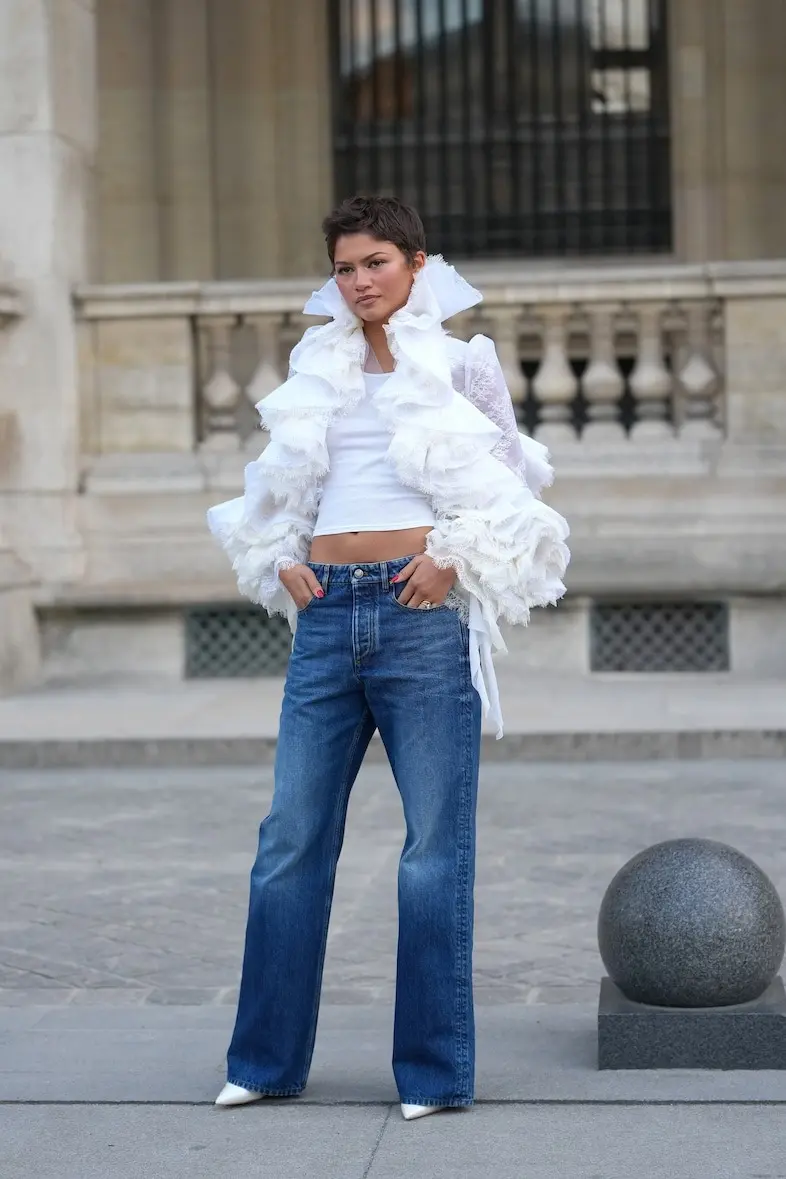
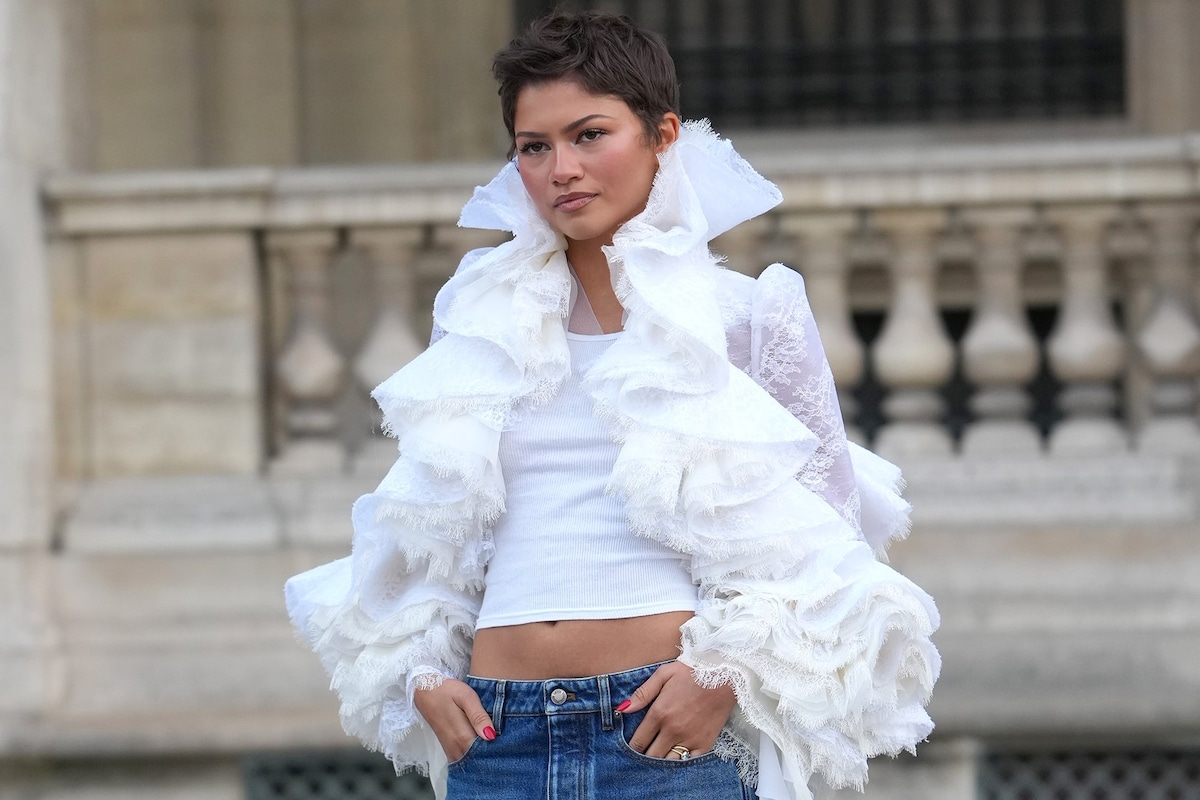
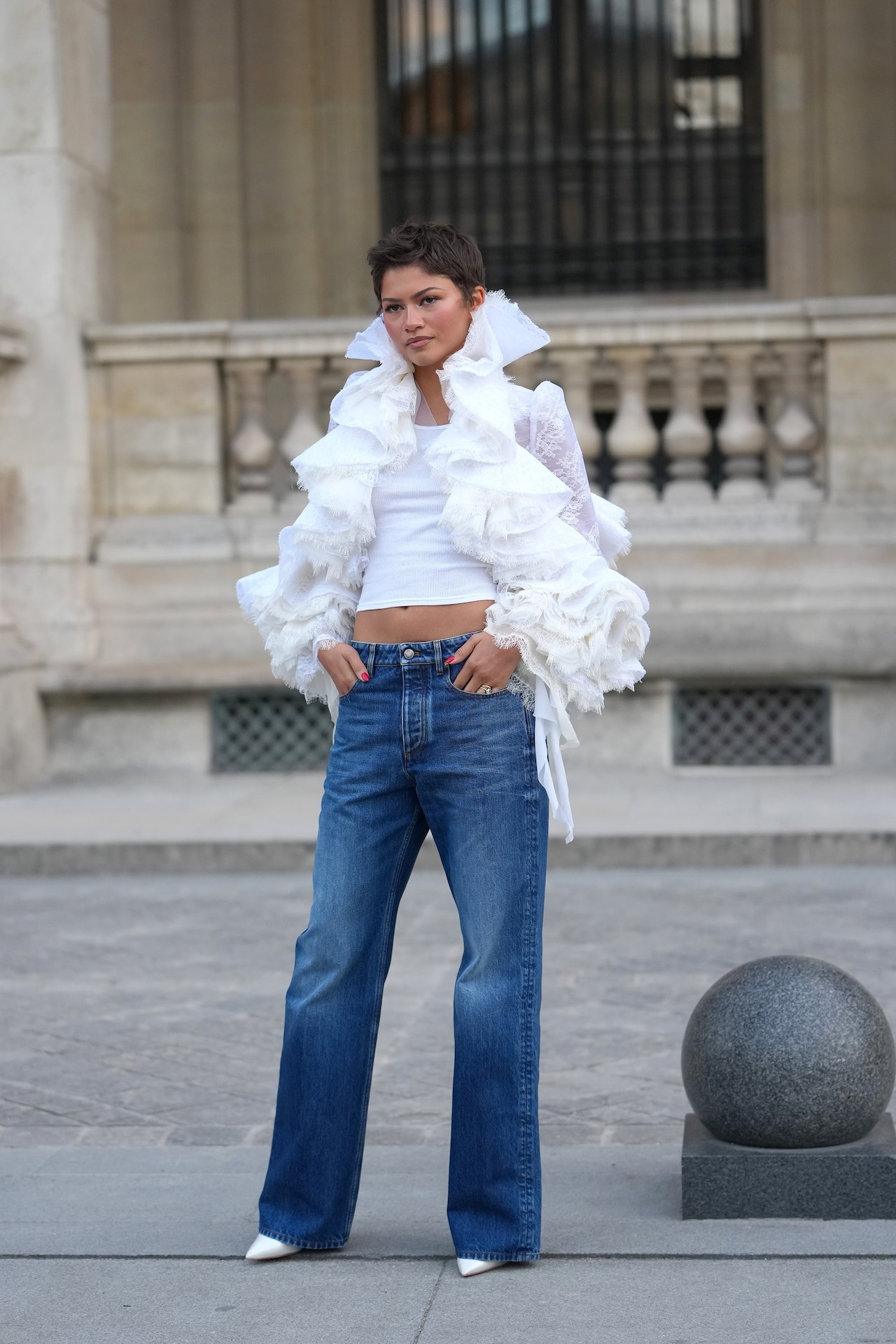
Zendaya commanded immediate attention, striding across the historic courtyard in an effortless juxtaposition of high-low dressing. Having worn a dramatic, Elizabethan-ruffed white lace dress and matching bolero during her summer press tour for The Odyssey, the actor subverted the lifecycle of red-carpet garments. She paired Nicolas Ghesquière’s intricate white lace bolero with a casual-yet-chic foundation of classic blue jeans and a clean white vest. The look was an emphatic statement against the disposable nature of modern celebrity styling, showcasing both resourcefulness and a deep creative synergy between muse and designer.
She was swiftly joined by fellow house stalwart Emma Stone, who opted for streamlined elegance in a cobalt-blue blazer and matching tailored shorts. Academy Award-nominee Saoirse Ronan brought a textured edge to the front row, sporting blunt baby bangs paired with vibrant color-blocked knitwear. Bringing global pop royalty to the heart of Paris, Blackpink’s Lisa arrived in a frothy, voluminous statement top offset by a sharp leather mini-skirt.
The international cast continued to expand with cinematic and television royalty. Adults star Owen Thiele made his highly anticipated Louis Vuitton front-row debut, while Sinners breakout Wunmi Mosaku cut an imposing, elegant figure draped in a structured camel cape. Sophies Turner and Thatcher reaffirmed their status as Ghesquière muses, channeling sleek, modern power-dressing, while French screen icon Catherine Deneuve infused the proceedings with timeless, effortless Parisian classicism.
Adding a fresh dimension to the brand’s demographic reach, Yoonchae Jeung and Daniela Avanzini of the rising global pop powerhouse Katseye made their official Louis Vuitton debuts. Following bandmates Lara Raj and Megan Skiendiel’s appearances at Loewe earlier in the weekend, Katseye’s strategic "divide and conquer" approach across Paris Fashion Week underscored the modern music-fashion pipeline’s immense promotional value.
Supporting Context & Metrics: The Architecture of the Surreal
Setting the Scene: The Highway to Tomorrow
The physical staging of a Nicolas Ghesquière runway is never merely a backdrop; it is an immersive environment designed to dictate the narrative of the collection. For SS27, the Cour Carrée was reimagined as a surrealist highway stretching across centuries of classical architecture.
The runway itself mirrored modern asphalt lanes, bisected and elevated by an installation of futuristic concept cars branded with Louis Vuitton’s iconic Damier check. These vehicles, suspended at varying heights on gleaming metal stilts, defied gravity and traditional automotive design paradigms.
According to official production notes distributed post-show, the set was conceived as "an invitation to consider travel beyond the paths already taken." By placing these floating, geometric marvels against the 16th-century stone facades of the Louvre, the brand orchestrated a visual dialogue between past empires and speculative futures. It was a physical manifestation of Louis Vuitton’s foundational ethos: the Art of Travel, refracted through a lens of science fiction.
Collection Breakdown: From Gossamer to Galaxy
On the runway, Ghesquière stepped away from the heavy, craggy textures and hulking silhouettes of previous seasons, opting instead for a lighter, more tactile approach.
- The Gossamer Open: The collection opened with a breath of fresh air. Delicate, feather-light garments—sheer dresses, bias-cut skirts, and gossamer shirts—fluttered dynamically in the autumn breeze sweeping off the Seine. These pieces were engineered to move in tandem with the human form, validating the show’s core manifesto.
- Subtle Futurism and Space-Age Utilitarianism: As the presentation progressed, the palette and fabrications shifted subtly into the cosmos. Ghesquière introduced streamlined space-age suits and reflective eyewear, worn alongside shift dresses inlaid with liquid-like silver lamé foil.
- Tactile Anomalies: Demonstrating his penchant for surrealist detailing, coats featured elaborately ruffled, tentacle-like formations that nodded playfully toward extraterrestrial lifeforms. Meanwhile, layered diamond-patterned textiles and intricately beaded fringe headpieces leaned heavily into a sophisticated brand of retro-futurism.
Official Statements & Design Philosophy
The Ergonomic Imperative
The guiding principle of Louis Vuitton SS27 was formally articulated in the show’s post-presentation press notes:
“The ergonomic. A notion of design fundamentally shaped by the conditions, capabilities, and movement of the human body is the foundational principle of this collection.”
In an industry frequently accused of prioritizing sculptural spectacle over biological comfort, Ghesquière’s focus on ergonomics marks a subtle yet profound evolution. The designer, renowned for his structural tailoring at Balenciaga and subsequently at Louis Vuitton, sought to liberate the wearer. By marrying architectural integrity with soft, body-conscious engineering, the collection ensured that futuristic fashion did not come at the expense of human agency.
Bridging Heritage and the Avant-Garde
Elaborating on the surrealist staging of the event, the house released an accompanying curatorial statement regarding the dialogue between the clothes and the environment:
“At the crossroads of classical architecture and an imagined future, [the set] offers a surreal evocation of Louis Vuitton’s Art of Travel.”
This conceptual framework explains the enduring success of Ghesquière’s tenure at the French luxury house. By consistently tethering speculative design—such as silver lamé foils and hovering Damier vehicles—to the deeply historic foundation of luggage, transit, and craftsmanship, Louis Vuitton maintains its position as an industry trailblazer without alienating its core luxury consumer base.
Future Outlook: The Trajectory of Louis Vuitton Ready-to-Wear
As Paris Fashion Week draws to a close, the reverberations of Louis Vuitton’s SS27 presentation will undoubtedly shape retail trends, red-carpet styling, and luxury marketing strategies for months to come.
1. The Normalization of Sustainable Red-Carpet Archivalism
Zendaya’s strategic reuse of her Nicolas Ghesquière lace bolero signals a vital cultural shift within luxury fashion. As environmental scrutiny intensifies around the waste generated by the fashion and entertainment industries, the conscious recycling of custom couture pieces on high-profile public platforms establishes a powerful precedent. Expect to see an increase in celebrities revisiting and repurposing statement pieces across upcoming awards seasons.
2. The Ergonomic Shift in Commercial Retail
While runway presentations often lean into the theatrical, Ghesquière’s emphasis on the "ergonomic" points directly toward forthcoming commercial successes. As consumer demands shift toward garments that offer seamless transitions between professional utility, leisure, and travel, the lightweight layering, fluid tailoring, and adaptable separates seen at the Cour Carrée will heavily influence high-street translation and ready-to-wear purchasing behaviors for Spring/Summer 2027.
3. The Omnipresence of Global Cultural Ambassadors
The carefully calibrated front row—spanning Hollywood royalty, French cinema legends, and K-pop/global pop sensations like Lisa and Katseye—demonstrates Louis Vuitton’s masterclass in demographic saturation. By deploying ambassadors across multiple major European shows (such as Katseye’s split appearances between Loewe and Louis Vuitton), luxury conglomerates are effectively capturing fragmented youth markets across Asia, the Americas, and Europe simultaneously.
Ultimately, Louis Vuitton SS27 proved that Nicolas Ghesquière remains peerless in his ability to invent tomorrow while honoring yesterday. By anchoring futuristic ambitions in the comfort and movement of the human body, the house has charted a clear, compelling course for the future of luxury fashion.