
Executive Overview
In a landmark development for international cybersecurity enforcement, a 26-year-old Canadian national has officially pleaded guilty to a sweeping array of federal charges related to one of the most destructive corporate hacking campaigns in recent history. Connor Riley Moucka, hailing from Kitchener, Ontario—who operated under various online aliases including "Judische" and "Waifu"—has admitted to masterminding a massive computer fraud and extortion conspiracy. Moucka’s cybercriminal network targeted over 165 major organizations that utilized cloud storage provider Snowflake, siphoning terabytes of sensitive, proprietary information and personally identifiable information (PII).
The scope of Moucka’s illicit operations extended far beyond standard corporate data theft. Operating between February and October 2024, his syndicate compromised the infrastructure of high-profile enterprises such as Ticketmaster, LendingTree, Advance Auto Parts, and Neiman Marcus. Furthermore, Moucka and his co-conspirators were responsible for exfiltrating the comprehensive call and text history records of more than 100 million AT&T customers.
According to the U.S. Department of Justice (DOJ), the cybercriminal ring amassed over $2.5 million in extortion payoffs by threatening to dump proprietary databases, internal financial files, and citizen records onto public forums. Moucka’s guilty plea marks a critical milestone in dismantling a transnational cell of threat actors characterized by brazen extortion tactics, ties to violent online extremist groups, and targeted harassment of government officials and cybersecurity researchers. With his sentencing scheduled for October 27, Moucka faces up to 30 years in federal prison, alongside a mandatory consecutive minimum sentence for aggravated identity theft.
Detailed Chronology of the Enterprise
The Genesis and Exploitation of Snowflake (February – October 2024)
The operational core of Moucka’s enterprise relied on exploiting foundational security lapses within corporate authentication frameworks. Between February and October 2024, Moucka and his co-conspirators systematically harvested and utilized stolen login credentials to breach cloud-hosted data accounts belonging to customers of a prominent U.S.-based software-as-a-service provider, Snowflake.
Rather than executing a sophisticated zero-day exploit against Snowflake’s core infrastructure, the threat actors targeted accounts that failed to enforce multi-factor authentication (MFA). Armed with these valid credentials, the syndicate accessed high-value corporate tenants, downloading terabytes of sensitive data. The stolen trove included banking and financial records, payroll files, Drug Enforcement Administration (DEA) registration numbers, driver’s licenses, passport numbers, and Social Security numbers.
Recognizing the existential threat posed to its ecosystem, Snowflake was forced to mandate stricter password complexity requirements and universally enforce MFA across its client base. However, for companies like Ticketmaster and Neiman Marcus, the remediation came too late to prevent catastrophic data leaks and subsequent extortion campaigns.
The Rise of "Judische" and the Extremist Nexus
Moucka frequently cycled through digital pseudonyms, occasionally operating multiple online identities simultaneously to obscure his tracks. However, his primary monikers—"Judische" and "Waifu"—became synonymous with the highest echelons of 2024’s cybercrime ecosystem.
Investigative reporting first unmasked Judische in September 2024, illuminating a dark nexus operating at the intersection of English-speaking corporate cybercriminals and extremist online subcultures. These extremist groups frequently specialized in swatting, harassment, and extorting minors into committing acts of self-harm. Investigators discovered that beneath the moniker lay a technically proficient software engineer from Ontario with a history of executing data breaches and voice-phishing (vishing) campaigns against U.S. corporations dating back to at least 2020.
Just over a month after these investigative reports exposed his operational infrastructure, Canadian authorities apprehended Moucka on October 30, 2024, acting on a provisional arrest warrant issued by the United States.

The Co-Conspirators: A Transnational Web of Threat Actors
Moucka did not operate in a vacuum; federal indictments and subsequent legal proceedings have mapped a network of co-conspirators whose actions compounded the severity of the enterprise.
1. Cameron "Kiberphant0m" Wagenius
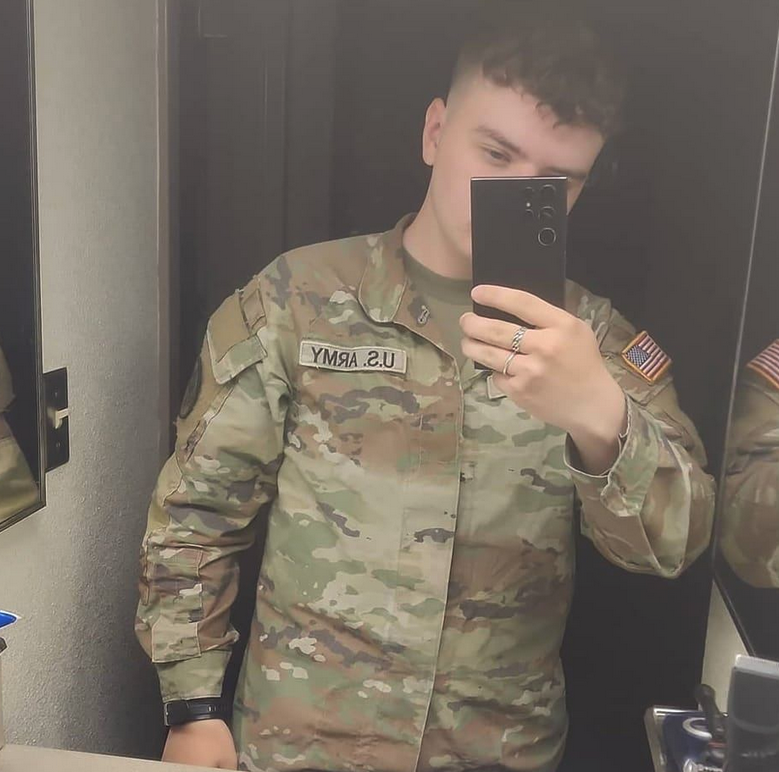
A U.S. Army soldier stationed in South Korea, Cameron Wagenius served as a key accomplice in the infrastructure breaches, playing a central role in extorting telecommunications giants AT&T and Verizon for customer account data. Wagenius pleaded guilty in July 2025 to wire fraud conspiracy and extortion charges.
Wagenius’s digital footprint was as reckless as it was destructive. In the immediate wake of Moucka’s arrest in late 2024, Wagenius attempted to exert leverage by posting what he claimed were AT&T call logs belonging to then-President-elect Donald Trump and then-Vice President Kamala Harris on public hacker forums. He also leaked schematics purportedly stolen from the U.S. National Security Agency (NSA). Wagenius is scheduled to be sentenced on September 3, 2026, facing a maximum penalty of 25 years combined for fraud and extortion, plus a mandatory two-year consecutive sentence for aggravated identity theft.
2. John Erin Binns ("IRDev" / "IntelSecrets")
The third principal figure in the sprawling investigative dossier is John Erin Binns, a 26-year-old American fugitive. Binns was previously indicted for his role in the catastrophic 2021 T-Mobile data breach, which exposed the personal records of at least 76 million customers.
Following his indictment, Binns fled the United States. According to intelligence sources close to the investigation, Binns recently spent time incarcerated in a Turkish prison before securing his release and resurfacing online. Crucially, Binns managed to acquire Turkish citizenship. Under Turkish constitutional and statutory law, citizens cannot be extradited to foreign jurisdictions, rendering him effectively insulated from immediate U.S. prosecution unless he travels outside Turkey’s borders.
Supporting Context & Metrics
The quantitative scale of the Moucka syndicate’s intrusions highlights the vulnerability of centralized cloud ecosystems to credential-stuffing and lax authentication hygiene.
- Target Volume: Over 165 corporate organizations utilizing Snowflake’s cloud architecture suffered verified data exfiltration.
- Telecommunications Impact: Call and text history records of more than 100 million AT&T customers were compromised and weaponized for extortion.
- Financial Extortion Yield: The Department of Justice confirmed that the syndicate successfully extracted upward of $2.5 million in cryptocurrency and fiat ransom payments from targeted corporations.
- Data Diversity: Exfiltrated assets ranged from corporate intellectual property and payroll logs to deeply sensitive government-issued credentials, including DEA numbers and passports.
- Escalation Tactics: In a display of psychological warfare, Moucka and his co-conspirators engaged in "re-extortion"—a practice where, after a victim organization paid an initial ransom, the threat actors returned demanding additional funds under threat of leaking previously withheld records. In at least one documented instance, Moucka utilized the stolen personal data of a government officer and their immediate family members to force compliance.
Official Statements and Legal Implications
The conclusion of Moucka’s guilty plea hearing represents a watershed moment for cross-border law enforcement collaboration between the United States and Canada. The Royal Canadian Mounted Police (RCMP) and the U.S. Federal Bureau of Investigation (FBI), alongside Department of Justice prosecutors, coordinated extensively to neutralize the threat actors.
In an official statement released by the U.S. Department of Justice, prosecutors emphasized the egregious nature of Moucka’s tactics, highlighting his willingness to target not only corporate entities but also public servants and security researchers attempting to mitigate the fallout of the breaches.
"Moucka used the stolen data of a government officer and members of a former government officer’s immediate family in this re-extortion attempt," the DOJ statement noted, underscoring the personal toll and brazen disregard for the rule of law exhibited by the syndicate.
Moucka pleaded guilty to four distinct federal counts:
- Computer Fraud and Abuse
- Wire Fraud Conspiracy
- Aggravated Identity Theft
- Conspiracy to Commit Extortion
With his sentencing date officially locked in for October 27, Moucka faces a mandatory minimum sentence of two years for aggravated identity theft—which must be served consecutively to any other prison term—and a maximum statutory penalty of up to 30 years across the remaining counts. The ultimate decision rests with the federal district judge, who will weigh the vast economic damage, the breach of privacy for over 100 million telecommunication subscribers, and the systematic harassment of investigators against the defendant’s cooperation and guilty plea.
Future Outlook & Industry Implications
The fallout from the Moucka, Wagenius, and Binns indictments has fundamentally reshaped corporate security postures regarding cloud data storage and identity management. The Snowflake campaigns served as a massive wake-up call for Software-as-a-Service (SaaS) providers and enterprise clients alike, proving that perimeter security is entirely undermined by poor credential hygiene.
1. The Mandate for Universal MFA
In the wake of the 2024 breaches, the industry has rapidly shifted toward treating multi-factor authentication not as a customizable preference, but as a non-negotiable baseline requirement. Organizations that fail to implement phishing-resistant MFA—such as FIDO2/WebAuthn hardware keys—remain prime targets for credential-harvesting networks.
2. Geopolitical Complications in Cyber Extradition
The case of John Erin Binns highlights a persistent thorn in international cyber law enforcement: safe havens. As cybercriminals leverage dual citizenship and legal loopholes (such as Turkey’s refusal to extradite its own citizens), prosecuting decentralized threat actors who flee friendly jurisdictions becomes exceedingly difficult. International bodies face mounting pressure to utilize economic and diplomatic leverage to secure the handover of cyber fugitives.
3. Convergence of Corporate Hackers and Extremist Networks
The investigation’s revelation linking high-level corporate extortionists like Moucka to violent, harassment-heavy extremist groups signals a dangerous professionalization and cross-pollination within the cybercrime underground. Modern threat actors are no longer siloed into traditional financial motivated hackers versus social engineers; instead, technical tradecraft, doxxing, swatting, and corporate extortion are increasingly merging into unified criminal business models.
As federal courts prepare to hand down long-awaited sentences for Moucka in October 2025 and Wagenius in September 2026, the legal system is sending an unmistakable message: the era of unchecked, transnational cloud extortion and corporate intimidation is facing a coordinated, highly resilient global defense.