Executive Overview
The rapid democratization of artificial intelligence has fundamentally altered the knowledge economy. Today, generic large language models (LLMs) can generate an instant first draft for almost any conceivable task—whether it is a marketing pitch, a comprehensive content strategy, or a detailed data analysis. While this accessibility is a boon for casual users, it has created a profound crisis of commoditization for consultants, coaches, and digital course creators. When anyone can ask ChatGPT how to build a business framework, the generalized advice loses its premium value. Furthermore, generic AI outputs suffer from a critical flaw: users have no reliable way to validate whether the advice they receive is strategically sound, contextual, or based on proven methodologies.
Enter the era of expert-backed AI.
Co-created by Kelly Sinclair and Michael Stelzner, recent industry insights highlight a massive paradigm shift in how knowledge businesses operate. By embedding a veteran practitioner’s proprietary frameworks, decision-making patterns, and battle-tested methodologies directly into structured software, experts can now transition their businesses from teaching people how to think to allowing people to use an expert’s thinking in real time.
This transition bridges the notorious "implementation gap" that has plagued the digital education industry for decades. According to data cited from a 2025 Thinkific study, traditional digital course completion rates languish between 10% and 20%. However, when integrated AI tool suites—colloquially termed "bot squads"—are introduced into the customer journey, completion rates skyrocket to an astonishing 70% to 80%. This article explores the diagnostic framework for identifying productization opportunities, the mechanics of structuring these tools using the IPO (Input, Process, Output) model, real-world case studies, and the strategic choices creators face when building and scaling client-facing AI applications.
Detailed Chronology of the Shift: From Static Education to Dynamic Implementation
To understand why expert-backed AI represents the future of professional services and digital products, one must examine the evolution of knowledge delivery over the past twenty years.
Phase 1: The Information Era and the Course Boom
In the early days of the internet, monetization of expertise relied heavily on asynchronous content: e-books, webinars, and recorded video courses. This model democratized access to information but exposed a severe structural limitation: high friction at the execution layer. Buyers were handed a theoretical blueprint—a blank page, a spreadsheet template, or a strategic framework—and left entirely to their own devices to execute it. This design flaw resulted in abysmal completion rates and low customer lifetime value.
Phase 2: The Commoditization of Generic AI
When consumer-facing generative AI tools exploded into the mainstream, they initially exacerbated the problem for educators. Why purchase a comprehensive course on copywriting or funnel design when an LLM could spit out an introductory draft in five seconds? However, users quickly realized that generic AI produced generic results. Without an underlying architecture of verified expertise, users were left playing prompt-engineer, guessing at best practices, and constantly validating untrustworthy outputs.
Phase 3: The Rise of Bot Squads and Subscription Ecosystems
The modern paradigm merges human genius with machine velocity. Experts are no longer selling static libraries of information; they are packaging their unique procedural intelligence into interconnected suites of AI tools. By deploying "bot squads"—multi-agent systems that guide clients sequentially through complex workflows—creators can build recurring revenue streams. Clients maintain subscriptions not for static PDFs, but for frictionless, guided access to tools that permanently accelerate their daily workflow.
Supporting Context & Metrics: Diagnostic Frameworks and the IPO Model
Transitioning from a traditional service model to an AI productized suite requires precision. Creators must first identify where an AI tool will deliver outsized value before writing a single line of prompt engineering or code.
The Four Diagnostic Friction Points
Kelly Sinclair outlines four critical diagnostic questions that reveal where an AI tool will create the highest impact within an existing business ecosystem:
- Repetition: Identify the questions clients ask over and over again. Any topic that generates a high volume of repetitive inquiries is prime for automation, delivering customized, automated answers tailored to each client’s specific context.
- The Implementation Gap: Pinpoint where clients consistently stall out after receiving high-level strategy. The chasm between understanding what to do and executing the steps is where AI tools provide momentum, holding the client’s hand through the execution phase.
- The Skip Zone: Examine the steps in your process that clients actively avoid. Every framework has a crucial, yet tedious, step that clients treat as optional. By removing "blank-page syndrome" and generating an instant first draft, AI lowers the perceived effort and eliminates psychological resistance.
- The Confidence Gap: Recognize where clients understand a concept intellectually but lack the self-assurance to deploy it. A well-designed tool provides timely validation and feedback, bridging the mindset gap.
The IPO Framework: Input, Process, Output
Once an opportunity is identified, the structural design of the tool must follow a rigorous architecture. Sinclair champions the IPO framework (Input, Process, Output) to ensure that tools are user-agnostic in their execution yet hyper-personalized in their results.
- Input: The variables provided directly by the end-user. This includes their specific business description, target demographic data, raw research, or responses to tailored intake questionnaires. The input ensures the tool speaks directly to the user’s unique situation.
- Process: This is the sacred ground where the expert’s proprietary methodology lives. It consists of three distinct pillars:
- The Goal: A sharply defined objective detailing the exact job the tool must perform.
- The Instructions: Granular, step-by-step rules governing how the AI should behave.
- Training Resources: Rich context files including coaching call transcripts, foundational course modules, proprietary templates, and examples of exceptional past outputs.
- Output: The final tangible deliverable received by the customer. Whether it is a customized messaging matrix, an audit report, or a targeted media pitch, defining the output first informs every decision regarding what inputs to collect and how to construct the process layer.
Official Case Studies: Real-World Applications of Expert-Backed AI
Theory becomes reality when examined through the lens of practitioners who have successfully productized their methodologies.
1. Michelle: Transforming Brand Messaging Through "Moxie"
Michelle, a messaging strategist holding a doctorate in communications, encountered a recurring market objection: prospective clients believed comprehensive messaging audits took months to complete. To dismantle this barrier, she built a bot squad named Moxie.
- The Workflow: Clients conduct voice-of-customer research independently and input their raw findings into Moxie.
- The Result: The tool analyzes the qualitative data using Michelle’s proprietary framework, extracting core linguistic patterns and transforming them into ready-to-use marketing copy. Clients bypass weeks of tedious qualitative analysis, instantly deploying high-converting messaging underpinned by academic rigor.
2. Kelly Sinclair: Valerie the Visibility Auditor
As a visibility strategist, Kelly noticed that entrepreneurs habitually wasted time executing low-ROI daily social media posts instead of pursuing high-leverage activities like podcast guesting, strategic networking, and joint-venture collaborations.
- The Workflow: Clients input their weekly marketing activities into Valerie the Visibility Auditor.
- The Result: The tool evaluates each action against a strict ROI framework, gently redirecting the user toward high-impact strategies previously established during coaching engagements.
3. Nicole: The End-to-End PR Machine
Nicole, a veteran public relations coach and journalist, engineered a sophisticated three-bot sequence to automate earned media outreach:
- Bot 1 (Intake & Messaging): Conducts a conversational intake interview, outputting a bespoke media messaging guide.
- Bot 2 (Targeted Discovery): Cross-references the messaging guide with a database to surface niche podcasts perfectly aligned with the client’s specific expertise, bypassing generic "top 10" lists.
- Bot 3 (Pitch Generation): Automatically drafts compelling, personalized pitch letters written precisely in the client’s authentic voice, pulling directly from the messaging documents generated in step one.
Future Outlook: Choosing Your Build and Delivery Architecture
For creators ready to build their own AI tools, the technological landscape offers three distinct architectural pathways, each carrying unique tradeoffs regarding maintenance, scalability, and intellectual property protection.
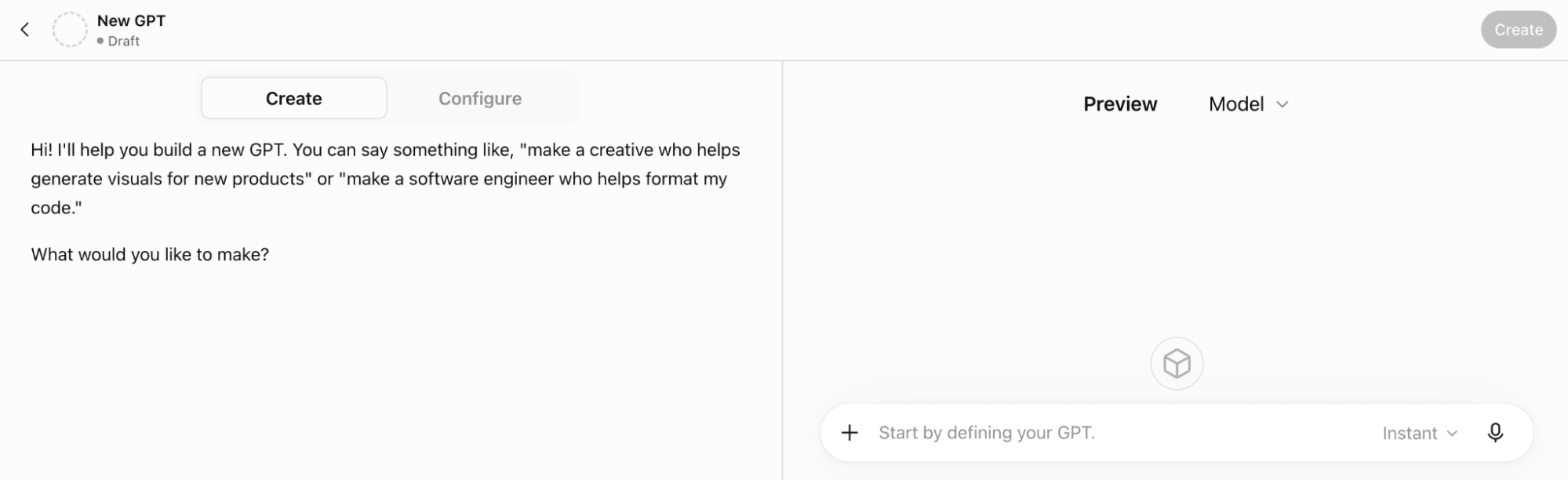
Approach 1: Custom GPTs (The Sandbox Starting Point)
Built directly inside the ChatGPT ecosystem, Custom GPTs offer an exceptionally low barrier to entry. Creators can spin them up conversationally using the IPO framework.
- Drawbacks: They operate in isolated silos. For multi-step workflows, users must manually copy-paste data from one GPT into another. Furthermore, access control is notoriously difficult; sharing via links makes revoking access for churned membership subscribers cumbersome, and OpenAI’s underlying model updates can cause prompts to break unexpectedly.
- Best For: Proof-of-concept testing and single-step utility tools.
Approach 2: Claude Skills and Multi-Agent Orchestration
Representing a significant technological leap, Claude Skills allow for multi-step orchestration within a single, unified user session.
- Advantages: Skills are highly portable. Formats introduced by platforms like Anthropic are increasingly supported across alternative ecosystems (ChatGPT, Gemini, etc.). They allow creators to deploy sophisticated subscription models where clients pay to access continually updated methodologies.
- Drawbacks: Intellectual property exposure. Distributing a skill package essentially hands over your proprietary prompt architecture in a zipped folder format. Creators must decide if they are comfortable with that level of framework transparency.
Approach 3: Custom Software and "Vibe Coding"
For advanced creators looking to build standalone software assets, no-code/low-code development platforms like Lovable, alongside advanced coding agents like Claude Code and OpenAI Codex, allow non-technical founders to build secure, multi-tenant web applications.
- Considerations: Running custom software requires a shift into software entrepreneurship. Creators must manage user isolation (ensuring Client A never accesses Client B’s data), infrastructure hosting, and ongoing technical maintenance. Platforms like wAIv (by Gravia Studio) have emerged to solve these exact friction points, providing centralized dashboards for creators to manage bot squads, track user licensing, and optimize operational costs by routing simple tasks to lighter models (like Claude Haiku) and complex analysis to advanced LLMs.
The Imperative of Rigorous Testing
Regardless of the architectural pathway chosen, creators must prioritize rigorous validation. Because generative AI outputs are inherently non-deterministic—meaning the exact same prompt yields varying responses across different runs—building robust guardrails in the "Process" layer is non-negotiable. Creators must stress-test their tools with diverse, extreme, and messy user inputs to guarantee that outputs consistently align with professional standards before launching to paying clients.

Conclusion
The evolution from selling static digital courses to delivering dynamic, subscription-based AI bot squads marks the most significant opportunity for monetization in the modern knowledge economy. By isolating core friction points—repetition, implementation gaps, skip zones, and confidence deficits—and structuring solutions through the IPO framework, experts can scale their impact exponentially. Whether starting with simple custom GPTs or launching fully realized custom software platforms, the future belongs to practitioners who successfully fuse human expertise with machine execution.