Executive Overview
The cooperative gaming landscape has long welcomed titles that weaponize communication against players. From the frantic kitchen orders of Overcooked to the high-stakes bomb defusals of Keep Talking and Nobody Explodes, developers have continuously found creative ways to test the limits of human patience, coordination, and friendship. Enter Bombanana, a chaotic new indie co-op puzzle game developed by TARK, which puts a uniquely feral twist on the genre.
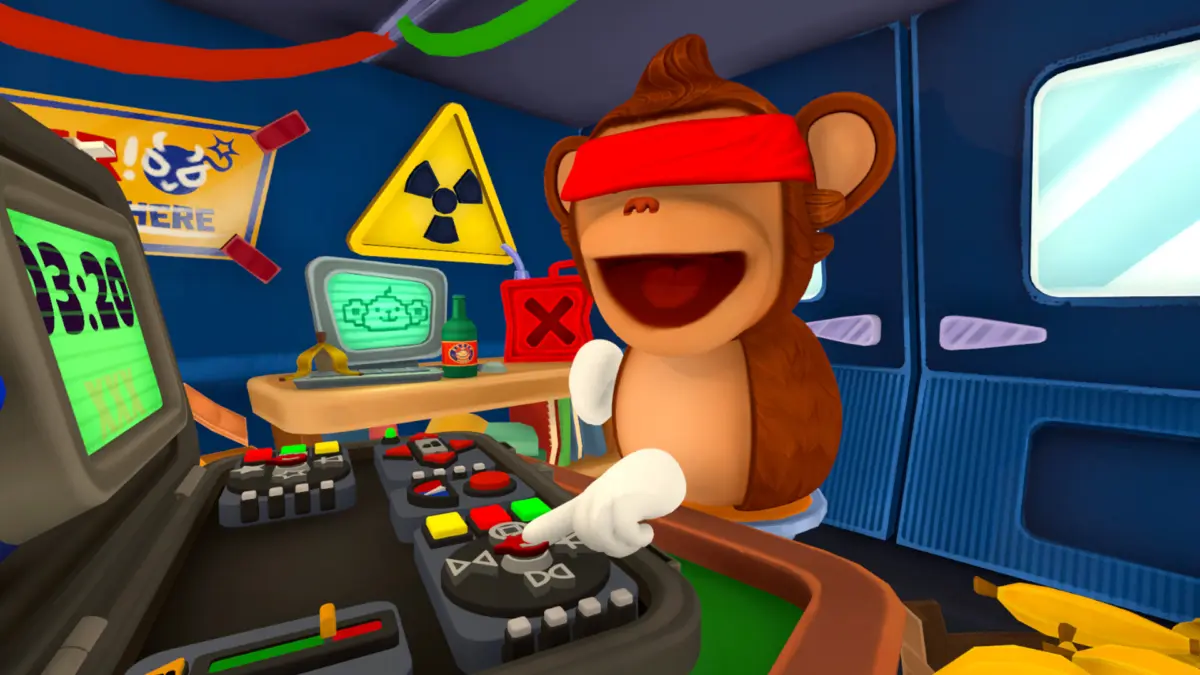
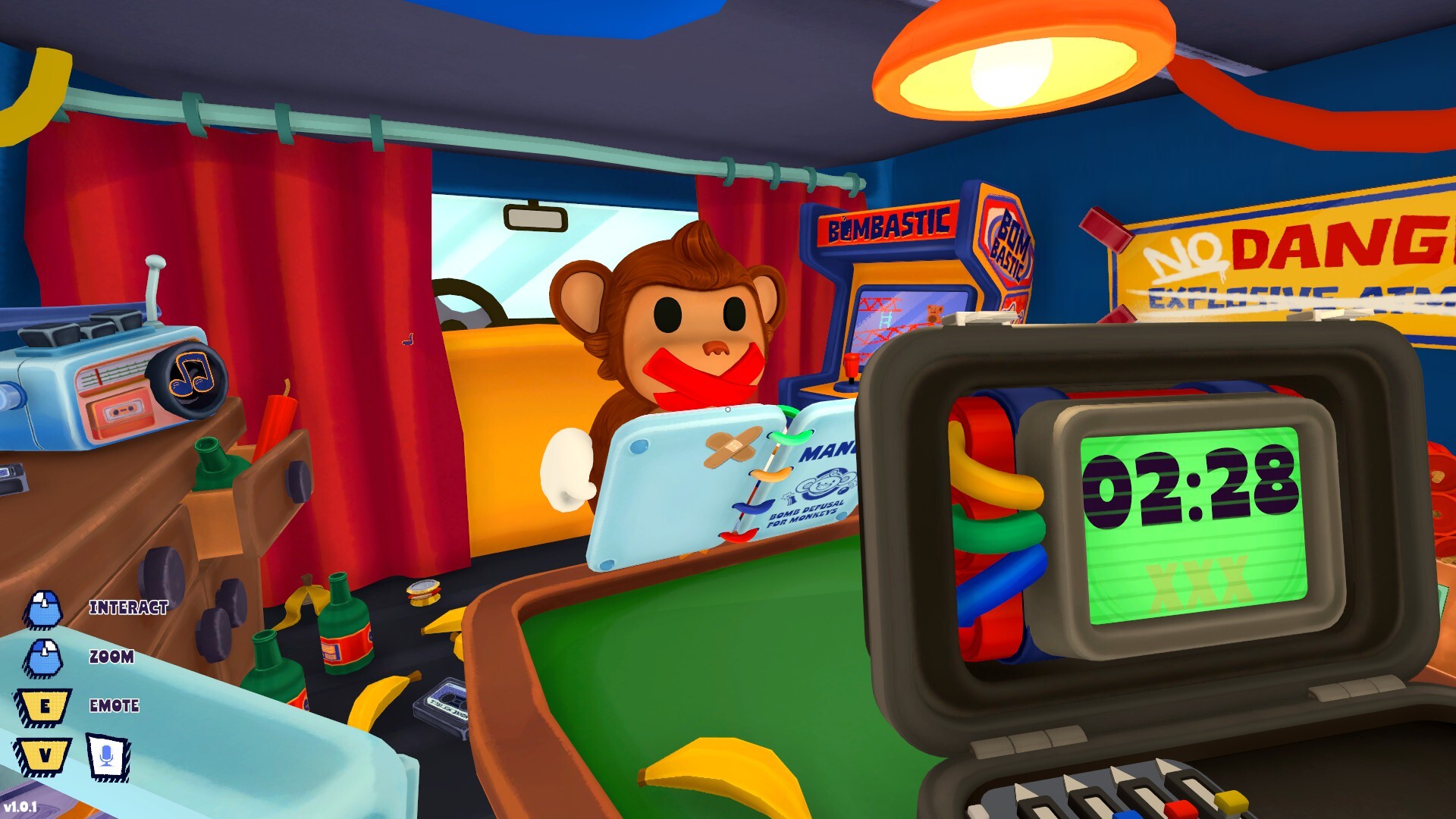
In Bombanana, you and up to three friends step into the paws of primates tasked with an impossible mission: defusing complex, ticking time bombs while dealing with severe sensory restrictions. Heavily reminiscent of the classic "Three Wise Monkeys" philosophy—and sharing mechanical DNA with cooperative building titles like Team 3—the game assigns players severe limitations. One player cannot see, one cannot hear, and another cannot speak.
What follows is not a clinical exercise in technical precision, but a descent into absolute mechanical madness. Players are forced to bypass traditional gaming paradigms, relying instead on a broken chain of tactile feedback, frantic hand gestures, and hurled bananas. As the industry continues to search for the next breakout party game, Bombanana emerges as a prime contender to ruin game nights, spark uncontrollable laughter, and test whether modern friendships can survive high-stress simulated explosive decompression.
Detailed Chronology: A Descent into Primate Panic
To understand the true nature of Bombanana, one must experience its steep, unforgiving learning curve firsthand. A typical play session rarely begins with heroic coordination; instead, it starts in utter confusion.
Phase 1: Total Sensory Disconnect
Upon launching a fresh round, players are randomly assigned their primate avatars and accompanying sensory handicaps. In an initial hands-on test involving a coordinated squad of writers and gamers, the roles fell disastrously into place. The author of this account was cast as the sightless monkey—who also, cruelly, happened to be the one responsible for handling the bomb’s delicate internal wiring.
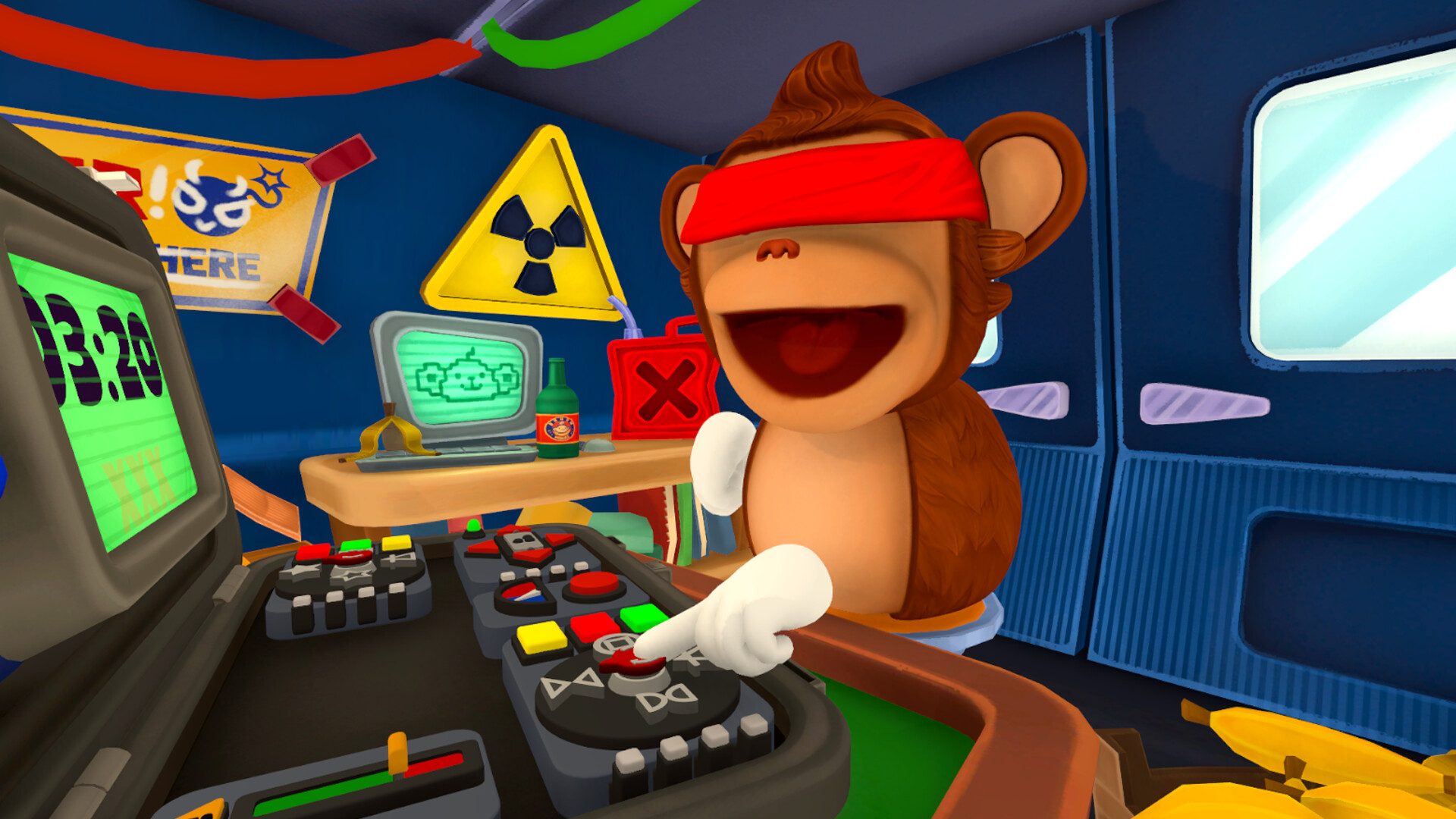
The sheer disorientation of the opening moments cannot be overstated. None of the participants possessed a functional understanding of the UI, the layout, or the baseline operational procedures. The communication pipeline was instantly shattered:
- The Manual Holder possessed the critical instructions but was completely struck dumb, unable to voice the steps required for survival.
- The Middle Monkey could see the bomb’s internal architecture perfectly well, but was rendered stone-deaf, completely oblivious to urgent questions, panic-stricken inquiries, or shouts for guidance.
- The Blind Defuser (holding the tools) sat in total darkness, wrestling with high-pressure anxiety and an absolute lack of visual data.
Faced with an insurmountable communication barrier, the team abandoned all pretense of tactical execution. For the first few minutes, gameplay devolved into pure slapstick: sitting back, pelting virtual bananas at one another, and passively waiting for the inevitable explosion to put the squad out of their misery. It was a chaotic, humiliating wipe—and an essential reset to clear the air for actual strategy.
Phase 2: Establishing the Chain of Command
Survival in Bombanana demands the formulation of a rigid, albeit bizarre, protocol. Following several fiery detonations, the squad established a functional workflow to tackle the internal mechanics of the device.
The process relied on a painstakingly slow, multi-tiered relay system:
- The Visual Assessment: The middle monkey (who could see but not hear) meticulously inspected the internal components of the bomb, cataloging every switch, wire, and blinking light.
- The Manual Cross-Reference: They would relay these visual markers to the mute manual-holder, who frantically flipped through pages of instructions—often resorting to frantic physical gestures, staring at the floor, or looking at the ceiling to signal comprehension.
- The Interrogation: Once the manual holder identified the correct procedure, the middle monkey had to frame precise, targeted questions (e.g., "The first switch is red; should it be flipped up or down?").
- The Execution: The middle monkey then translated this verbal instruction to the blind defuser, who blindly trusted their teammate and manipulated the hardware.
Phase 3: Escalation and Collapse
As players progress past the introductory stages, Bombanana ruthlessly scales up the difficulty. TARK introduces additional layers of complexity designed to fracture even the most disciplined primate teams. Later levels inject compounding environmental distractions, secondary puzzles that must be solved concurrently, and a deeply unforgiving mechanical gauge.
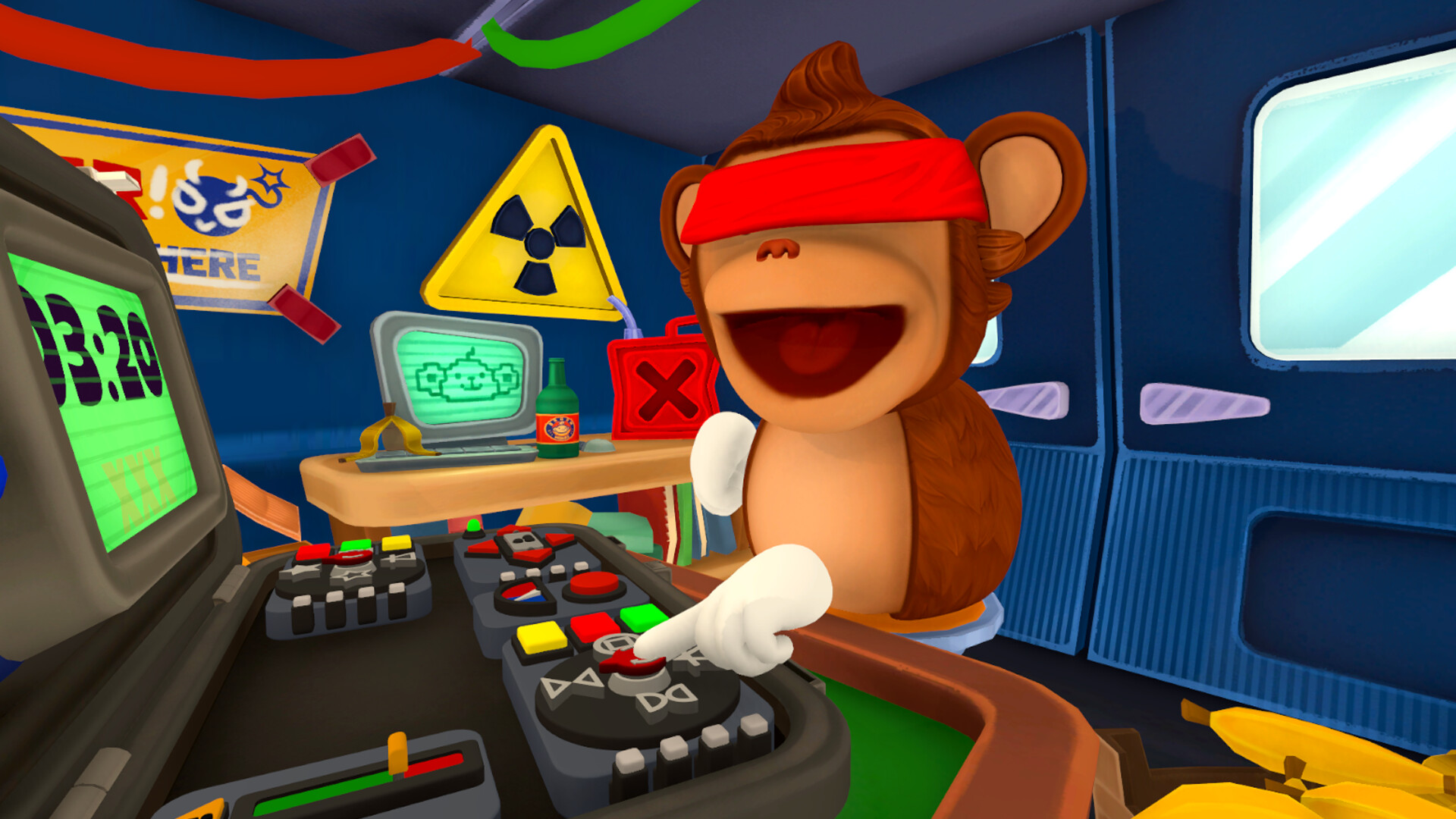
This gauge creeps steadily upward throughout the mission, serving as a biological and mechanical countdown. If players waste too many seconds deciphering the chain of communication, the gauge maxes out, triggering an immediate, cataclysmic explosion. By the late game, maintaining composure becomes nearly impossible, reducing even seasoned cooperative gamers to frantic shouting matches and singed fur.
Supporting Context & Metrics: The Evolution of Asymmetric Co-Op
To contextualize Bombanana, it is helpful to examine the lineage of asymmetric communication games. Over the past decade, the video game industry has seen a massive surge in "information asymmetry" titles—games where players are deliberately separated from vital information and forced to communicate across artificial barriers.
| Game Title | Core Mechanic | Primary Communication Barrier | Chaos Factor |
|---|---|---|---|
| Keep Talking and Nobody Explodes | Bomb defusal via manual | One player sees the bomb; others have the manual (no visual link). | High |
| Team 3 | Physical block stacking | Players embody the Three Wise Monkeys (Blind, Deaf, Mute). | Extreme |
| Overcooked | Kitchen management & cooking | Spatial separation and overlapping task queues. | Severe |
| Bombanana | Primate bomb defusal | Rotated sensory deprivation (blind/deaf/mute) + rising panic gauge. | Maximum |
The Psychology of Stressful Co-Op
Psychologically, games like Bombanana tap into what researchers call "cognitive load theory" under duress. When human beings are stripped of their primary sensory faculties—sight, hearing, or speech—their brains must work significantly harder to build a mental model of their environment. By forcing players to outsource their senses to teammates who are also handicapped, TARK creates an artificial environment of high cognitive friction.
This design philosophy transforms simple mechanical tasks—like flipping a switch or cutting a wire—into high-wire emotional acts. Every success feels like a miraculous stroke of genius, while every failure is instantly hilarious, blunting the frustration of defeat and encouraging the "just one more round" mentality that defines the best party games.
Official Statements & Developer Insight
While Bombanana is still finding its footing in the broader indie market, developer TARK has leaned heavily into the chaotic, unscripted nature of the game’s design. In early promotional materials and community briefings, the studio highlighted that the primary goal was never to create a serious, tactical simulation of bomb disposal. Instead, the focus was squarely on capturing the unpredictable energy of couch co-op gaming.
"We didn’t want to build a game where players feel like calm, collected bomb squad technicians," noted a representative close to the development team. "We wanted to capture the exact feeling of three monkeys in a room throwing fruit at each other while a ticking clock counts down to zero. If you aren’t laughing, yelling, or completely failing because your teammate forgot how to speak, we haven’t done our job right."
Early reception from playtesters and press echoes this sentiment. Reviewers have frequently noted that while the game can induce genuine panic attacks for players who struggle under pressure, its distinct charm lies in its ability to turn communication breakdowns into memorable gaming anecdotes.
Future Outlook: Can Bombanana Dominate the Party Game Scene?
As Bombanana prepares for its broader rollout, its long-term viability hinges on community adoption and content expansion. Party games live and die by their replayability and accessibility.
Key Challenges Ahead
- Matchmaking and Friend Groups: Like Keep Talking and Nobody Explodes, Bombanana shines brightest when played with a close-knit group of friends over voice chat or on a living room couch. Translating that specific brand of chaotic energy to random online matchmaking queues will be a significant test for the developers.
- Content Longevity: Defusing bombs under sensory restriction is a brilliant pitch, but the core loop risks becoming repetitive if subsequent levels rely too heavily on recycled puzzle variations. TARK will need to introduce rolling seasonal updates, randomized puzzle modifiers, or custom level builders to keep the community engaged.
- Accessibility Balance: While the sensory handicaps are the core mechanic of the game, ensuring that the title remains approachable for players with genuine sensory processing differences or communication anxieties will be vital for broader audience adoption.
Final Verdict
Despite these hurdles, Bombanana stands out as a breath of fresh, albeit smoke-filled, air in the co-op puzzle genre. It proves that video games do not always need hyper-realistic graphics or sweeping narrative campaigns to leave an impression. Sometimes, all you need is a ticking bomb, a basket of virtual bananas, and three friends who are entirely incapable of hearing your desperate screams.
Whether you emerge victorious with a defused device or end up singed, charred, and laughing hysterically on the floor, Bombanana delivers the kind of unforgettable multiplayer chaos that modern gaming needs more of. Just make sure you pick your role wisely before the timer hits zero.