

Executive Overview
In the sprawling, hyper-accelerated landscape of contemporary global culture, true icons are increasingly defined not by their longevity alone, but by their ability to radically recalibrate the spaces they inhabit. Paris, a city practically paved with historical monuments, boasts few structures as universally recognized or geometrically arresting as the Arc de Triomphe. Standing proudly at the western end of the Champs-Élysées, it represents triumph, engineered precision, and an unyielding structural legacy. In the parallel universe of electronic music, Belgian DJ, producer, and powerhouse label owner Charlotte de Witte commands an analogous position. Over the past decade, de Witte has systematically rewritten the playbook for contemporary techno. Stripped back, uncompromising, and moving forward with absolute industrial certainty, she has transcended the role of mere selector to become an undisputed icon of her genre.
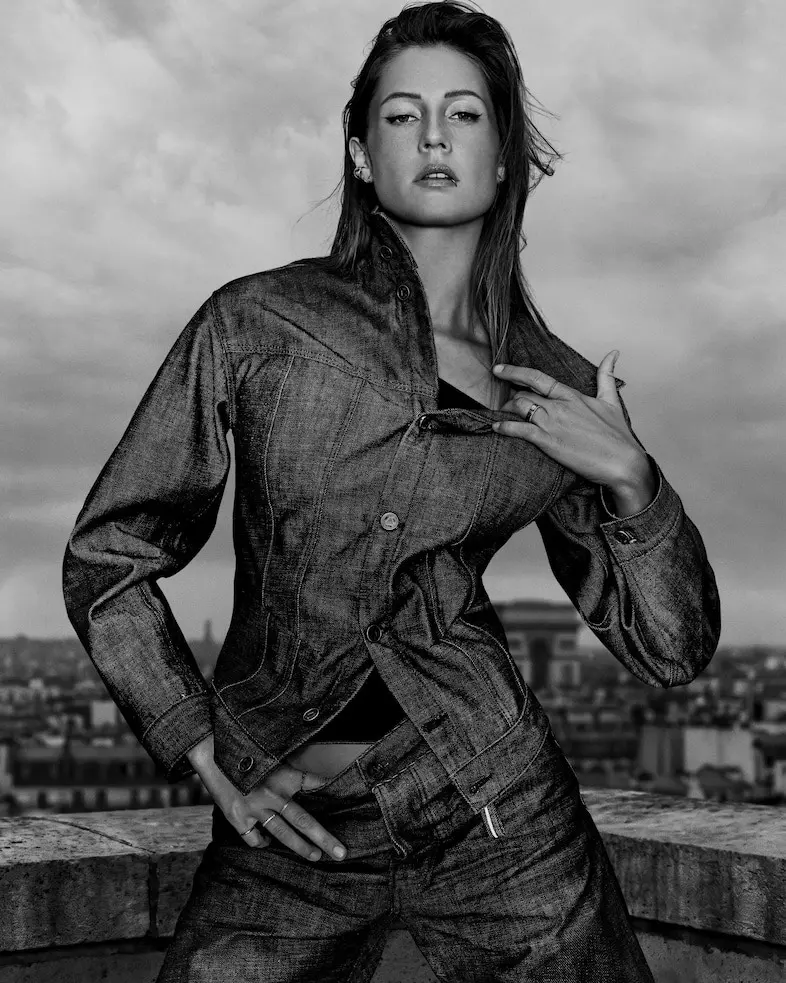
It is fitting, therefore, that this formidable intersection of architecture, sound, and style has materialized as Own the Arc, the flagship global campaign from Dutch denim innovator G-STAR. Announced earlier this month and featuring de Witte as the brand’s newly minted global ambassador, the campaign anchors itself around the imposing silhouette of the Parisian landmark. Shot entirely in stark, cinematic black-and-white against the moody, expansive Paris skyline, the campaign images capture the techno pioneer caught in rare, reflective moments between punishing club nights and sold-out international tour dates.
Yet, Own the Arc is far more than a standard celebrity endorsement deal; it is a meticulously crafted conceptual dialogue. The campaign draws direct parallels between the historic geometry of the French capital’s most famous arch and the structural reinvention of G-STAR’s signature Arc jean, a garment celebrated for its revolutionary, engineered three-dimensional silhouette. Beyond the obvious material connections, however, the imagery serves as a visual metaphor for de Witte’s relentless ascent. It evokes the long, solitary hours—forged day after day, or rather night after night—that define a journey to the absolute zenith of global techno dominance.
For G-STAR, this high-profile partnership inaugurates a bold new chapter for its women’s collection, seamlessly bridging its historic foundations in industrial design with a more fluid, contemporary sensibility. As fashion and electronic music continue to converge in increasingly sophisticated ways, the alliance between de Witte and G-STAR offers a compelling study in how modern brands can leverage independent artistic authority to build their own cultural monuments.
Detailed Chronology: From Underground Soundscapes to Global Runways
To fully comprehend the cultural weight of the Own one’s Arc campaign, one must trace the parallel trajectories of Charlotte de Witte and G-STAR—two entities whose historical timelines have ultimately converged at the pinnacle of modern design.
The Genesis of a Techno Titan
Charlotte de Witte’s journey to becoming a household name in electronic music was neither swift nor accidental. Emerging from the vibrant underground scene of Ghent, Belgium, in the early 2010s, de Witte initially navigated the precarious waters of electronic music under various monikers, gradually stripping away the extraneous vocal elements and playful tech-house tropes that dominated the era. By the time she firmly established her birth name as her primary artistic vehicle, her signature sound had crystallized: a dark, driving, hypnotic strain of techno characterized by relentless percussion, atmospheric dread, and an unyielding forward momentum.
As her touring schedule expanded from sweaty, subterranean European clubs to the main stages of mega-festivals like Tomorrowland, Awakenings, and Time Warp, de Witte’s operational footprint grew accordingly. In 2019, she founded KNTXT, initially conceived as a specialized club night in Ghent before rapidly evolving into a globally recognized record label, radio show, and festival curator. KNTXT became the physical embodiment of her artistic ethos: uncompromising, meticulously curated, and fiercely independent. This fierce independence caught the attention of fashion houses and cultural tastemakers worldwide, setting the stage for high-end creative collaborations that respected her uncompromising sonic aesthetic.
G-STAR’s Architectural Evolution
Founded in the Netherlands in 1989, G-STAR RAW carved out an enviable niche in the global denim market through a philosophy rooted in uncompromising craftsmanship and industrial design. Eschewing traditional denim styling in favor of architectural construction, the brand introduced game-changing silhouettes that challenged the conventional flat-pattern approach to clothing manufacturing.
Among these innovations, the Arc jean—introduced over a decade ago—stands out as a masterclass in garment engineering. Utilizing twisted seams to create a bowed, O-legged silhouette that wraps ergonomically around the wearer’s legs, the Arc was designed to move with the body rather than constrain it. It was a garment built for motion, utility, and attitude. Over the years, the Arc became a canvas for G-STAR’s ongoing experiments in sustainable fabric innovation and avant-garde styling, cementing its status as a cornerstone of the brand’s design lineage.
The Convergence: Own the Arc
The alliance between de Witte and G-STAR was formalized earlier this month when the Dutch denim label officially announced the Belgian artist as its global brand ambassador. While initial announcements laid the groundwork, the unveiling of the Own the Arc campaign represents the first time the public sees de Witte fully integrated into the brand’s visual identity.
Captured in a series of arresting black-and-white portraits that pit human endurance against monumental stone, the campaign bridges the gap between G-STAR’s sartorial engineering and de Witte’s sonic architecture. Positioned against the majestic backdrop of the Arc de Triomphe, the imagery tells a story of modern endurance—a visual testament to two distinct creative forces that refuse to compromise on structure, form, or vision.
Supporting Context & Metrics: The Anatomy of Modern Collaborations
In the contemporary luxury and streetwear markets, brand ambassadorships are a dime a dozen. However, the partnership between Charlotte de Witte and G-STAR succeeds because it is underpinned by shared values, demographic alignment, and a mutual understanding of cultural capital.
The Intersection of Techno and High Fashion
Electronic music and fashion have enjoyed a symbiotic relationship since the hedonistic days of early rave culture, but the nature of this exchange has evolved dramatically over the last decade. Gone are the days when DJs simply served as walking billboards for streetwear logos. Today’s top-tier electronic artists are recognized as formidable lifestyle brands in their own right, boasting massive, highly engaged global digital ecosystems that rival those of traditional pop stars or cinematic actors.
Charlotte de Witte commands an impressive digital footprint, reaching millions of dedicated music fans across Instagram, Spotify, YouTube, and SoundCloud. Her audience is notoriously discerning, skewing urban, young, digitally native, and deeply invested in subcultural authenticity. For G-STAR, aligning with de Witte provides direct, organic access to this coveted demographic—a global community that values individuality, resilience, and industrial aesthetics.
Denim as Industrial Armor
From a functional standpoint, de Witte’s affinity for denim is rooted in the grueling physical realities of her profession. A standard touring weekend for a world-class techno DJ involves grueling international flights, fluctuating cabin pressures, restless sleep in premium hotels, and hours spent navigating high-stress backstage environments before stepping up to command sound systems capable of rattling the ribs of tens of thousands of revellers.
In this context, clothing must perform like industrial armor. Speaking on the pragmatic dimensions of the partnership, de Witte notes:
"I’ve always lived in denim. It’s functional, effortless and has attitude, which feels very natural to me."
This sentiment strikes at the core of G-STAR’s design philosophy. Denim, in its purest form, is a utilitarian fabric designed for laborers, miners, and engineers. By reclaiming this heritage and applying advanced 3D ergonomics—as seen in the engineered silhouette of the Arc jean—G-STAR transforms working-class fabric into high-end structural fashion. De Witte’s daily uniform of durable, unpretentious, yet striking apparel mirrors the stripped-back, high-impact nature of her musical output.
Official Statements & Cultural Philosophy
To understand the deeper currents driving Own one’s Arc, one must look to the shared ethos articulated by both the artist and the brand during the campaign’s rollout.
The Independent Spirit
Both de Witte and G-STAR have built their reputations on an unwavering refusal to follow fleeting trends. While mainstream dance music has frequently chased commercial crossover sounds, de Witte has steadfastly remained loyal to the hypnotic, driving core of underground techno. Similarly, while many denim brands have succumbed to fast-fashion cycles and generic production methods, G-STAR has maintained its laser-focus on raw denim, architectural cuts, and sustainable material innovation.
"Both brands share a certain sensibility," de Witte explains, highlighting an "independent spirit and a strong point of view—the desire to build their own kinds of monuments." This philosophical alignment transforms the campaign from a commercial transaction into a manifesto of creative autonomy. "There’s a real connection between our worlds," she adds, "through music, fashion and a global audience that values individuality."
Commemorating Revolutionaries
It is hardly a coincidence that the campaign centers on the Arc de Triomphe. Originally commissioned by Napoleon Bonaparte in 1806 to commemorate those who fought and died for France—particularly during the French Revolutionary and Napoleonic Wars—the monument stands as a permanent tribute to systemic upheaval and radical transformation.
G-STAR leverages this historical subtext to signal a major strategic shift for its women’s collection. While the brand has historically been revered for its strong, masculine-leaning industrial designs and rugged workwear aesthetics, the partnership with de Witte heralds a more fluid, dynamic direction. By reinterpreting the iconic Arc jean through a modern, gender-fluid, and culturally charged lens, G-STAR is rewriting its own design history—honoring its revolutionary roots while boldly looking toward the future.
Future Outlook: The Next Wave of Sonic and Sartorial Innovation
As Own the Arc rolls out globally across digital platforms, out-of-home media spaces, and select retail flagships, industry analysts are watching closely to see how this high-profile synergy will shape future brand trajectories.
Redefining the Ambassador Model
The success of this campaign points toward a broader evolution in luxury and contemporary marketing: the shift away from passive celebrity endorsement toward active, values-driven co-creation. Audiences today possess an acute radar for inauthentic partnerships, readily dismissing collaborations where the featured talent appears to have no genuine connection to the product.
By grounding the campaign in de Witte’s actual lifestyle—her relentless touring schedule, her nocturnal creative rhythms, and her authentic wardrobe choices—G-STAR has established a gold standard for how brands can integrate cultural tastemakers into their narrative structures. Moving forward, we can expect to see further blurred boundaries between the worlds of electronic music production and high-end fashion design, with artists increasingly stepping into roles as creative directors, curators, and structural muses.
The Evolution of G-STAR’s Women’s Portfolio
For G-STAR, the introduction of de Witte as the face of its women’s collection marks a pivotal turning point. As the brand continues to refine its sustainable manufacturing practices—incorporating organic cottons, recycled denim fibers, and water-saving dyeing technologies—the integration of an uncompromising, modern female icon signals a commitment to forward-thinking femininity. The fluid, ergonomic lines of the Arc jean, when juxtaposed with de Witte’s commanding physical presence, suggest a future where utility and elegance are no longer seen as opposing forces, but rather as complementary pillars of modern design.
Charlotte de Witte’s Expanding Empire
For Charlotte de Witte, the campaign is yet another milestone in a career defined by continuous expansion. Having conquered the global techno hierarchy and established KNTXT as an elite tastemaker brand, her foray into high fashion via G-STAR demonstrates that her cultural influence extends far beyond the DJ booth. As she continues to bridge the worlds of underground electronic music and international style, de Witte is proving that the architecture of personal branding, much like the Arc de Triomphe itself, is built to withstand the test of time.
Ultimately, Own the Arc serves as a powerful reminder that whether you are engineering a revolutionary denim silhouette, constructing a monumental stone archway, or dropping a punishing bassline before fifty thousand rapturous fans, the rules remain fundamentally the same: strip away the unnecessary, commit fully to your vision, and move forward with absolute, unyielding certainty.




