SAN FRANCISCO — As B2B software and artificial intelligence companies finalize their annual marketing and event expenditures through January, a familiar pattern is emerging across the industry. Leaders are scattering critical budgets across an unwieldy array of conferences, relying on curated lists pulled directly from organizer press releases rather than hard data.
For many CMOs and VP of Marketing roles, event sponsorship has historically operated as a "black box"—a line-item expenditure justified by vague promises of brand awareness and unverified foot traffic. However, as capital efficiency becomes the defining mandate of the tech sector in
2027, this status quo is no longer tenable.
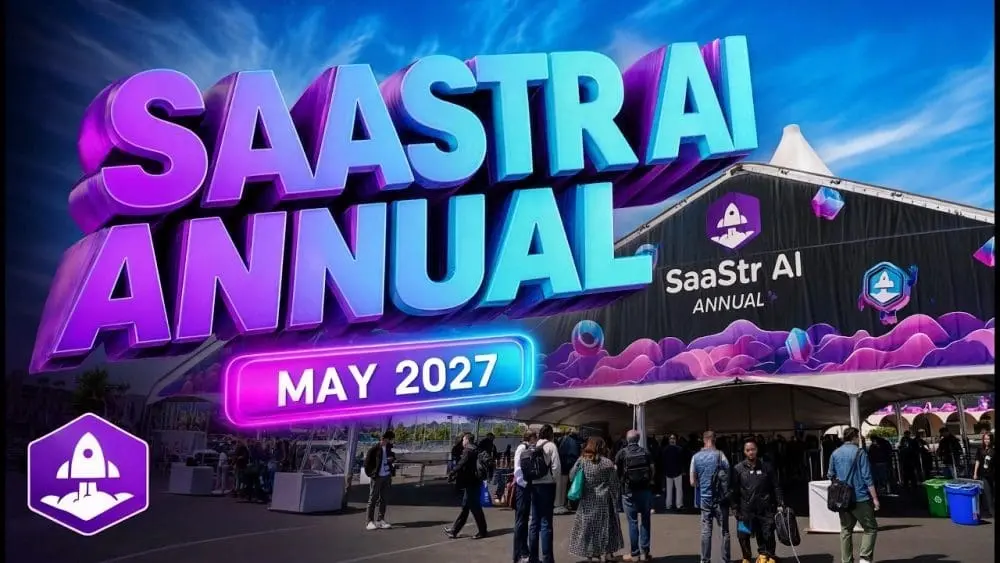
Challenging the industry standard of opaque event metrics, organizers of the upcoming SaaStr AI Annual have taken an unconventional step: publishing raw, verifiable performance numbers, sponsor identities, and direct references from the 2026 conference. Scheduled for May 11–12, 2027, at the San Mateo County Event Center in the SF Bay Area, the event is positioning itself as a case study in data-driven event ROI.
An analysis of these metrics provides a revealing look at how B2B AI companies are driving pipeline, closing enterprise deals, and capturing market share in a crowded ecosystem.
Executive Overview: The Shift Toward Accountable Event ROI
The calculus of B2B event sponsorship has fundamentally shifted. Gone are the days when companies could justify six-figure sponsorships on the vague metric of "impressions." Today’s executive buyers demand a direct line from the exhibition floor to closed-won annual recurring revenue (ARR).
The pressures facing B2B and AI organizations heading into the 2027 budgeting cycle are clear:
- Hyper-Competitive Landscapes: With thousands of AI-native startups and legacy players flooding the market, differentiation requires high-signal environments where decision-makers congregate.
- Budget Scrutiny: Finance teams are auditing marketing expenditures closer than ever, demanding immediate pipeline generation and accelerated deal velocity.
- The "Press Release" Trap: Relying on generic trade show calendars often leaves companies sponsoring poorly targeted events where attendees lack genuine purchasing authority.
To combat this, modern event strategy must be anchored in verifiable outcomes. By examining the performance data of top-tier sponsors from the 2026 SaaStr AI Annual, organizations can better evaluate where to allocate their 2027 event budgets for maximum yield.
Detailed Chronology: From 2026 Performance to 2027 Planning
Understanding the lifecycle of a high-ROI event requires looking backward at how performance translates into pipeline acceleration, and forward at how early commitments secure strategic advantages.
The 2026 Baseline: Performance on the Exhibition Floor
At the 2026 event, the top tier of sponsors did not merely collect badge scans; they systematically captured qualified enterprise leads.
- The Lead Generation Threshold: Six of the top nine sponsors cleared 900 verified leads during the event. Replit led the field with 1,423 leads, followed closely by Lightfield (1,062), Aurasell (1,046), Salesforce (1,027), Rippling (921), and OpenRouter (915).
- The Diamond Tier Standard: The median lead count for Diamond-tier sponsors hovered at 896, proving that top-tier investments consistently yielded high-volume engagement.
- The Democratization of Booth Success: Even down the leaderboard, performance remained robust. Lovable secured ninth place with 605 leads, while Google for Startups (817) and Vivun (793) demonstrated that floor success is less about corporate size and more about booth execution, demo quality, and the strategic alignment of the on-site team. Notably, AI-native startup Lightfield outperformed industry giant Salesforce by 35 leads on the exact same floor, illustrating that nimble category disruptors can out-convert established market leaders when armed with compelling technology.
The 2027 Pacing and Timeline
As organizations lock in their Q2 and H2 marketing strategies, the timeline for securing optimal placement at major industry gatherings is compressed.
- Pacing Metrics: Current data indicates that sold sponsorship revenue for the 2027 SaaStr AI Annual is running roughly double the pace of the previous year at the exact same milestone.
- Strategic Window: Premium assets—such as prime booth locations, Diamond-tier slots, and main-stage presentation opportunities—are claimed months in advance. Organizations committing early use the runway between January and May to coordinate target account lists, load matchmaking software, and orchestrate Bay Area side events, ensuring that by the time doors open on May 11, their sales calendars are already full.
Supporting Context & Metrics: Breaking Down the Data
To evaluate whether an event deserves a share of a restricted B2B marketing budget, leaders must analyze three core pillars: lead generation, deal velocity, and audience seniority.
1. Lead Generation and Category Leadership
Capturing contact information is only the first step. The true value lies in securing category dominance and reaching non-GTM buyers.
- Claiming the #1 Spot: In 2026, fourteen sponsors secured the #1 position in their respective categories—ranging from Replit in vibe coding and OpenRouter in AI infrastructure to Rippling in HR/payroll and Vivun in AI sales agents. Achieving top status provides powerful collateral for sales decks, board presentations, and recruitment campaigns.
- Diverse Buyer Ecosystems: Significantly, half of the category winners do not sell Go-To-Market (GTM) software. Brands like Revolut Business, Booking.com, Aircall, Firebolt, and OpenRouter proved that whether a company provides corporate travel, financial services, banking, or technical infrastructure, the B2B buyer is present and active on the floor.
2. Deal Velocity: From Badge Scan to Closed Revenue
The ultimate metric of event success is not pipeline volume, but closed-won revenue. Case studies from the 2026 floor highlight unprecedented deal velocity:
- Artisan: Generated 634 qualified leads, closed $249,000 in ARR directly on-site, built $2,000,000 in subsequent pipeline, and secured over $1,000,000 in closed deals in the months following the event. Their success was amplified by a live AI BDR demonstration on the main stage.
- Monaco (via Sam Blond, ex-CRO of Brex): Reported closing four five-figure deals sourced directly from the event floor in under three weeks, designating it as the highest-ROI conference in their marketing portfolio and prompting an immediate upgrade to Diamond sponsorship for subsequent iterations.
- Aurasell: Noted instances where enterprise prospects completely converted and switched providers within five days of an initial booth interaction, validating the hyper-intent of the attendee base.
3. Audience Seniority and Budget Ownership
The economic power concentrated within the venue alters the traditional cost-per-acquisition equation.
- The Decision-Maker Density: The core demographic consists of founders and CEOs managing companies from $5M to $100M in ARR, alongside CROs, CMOs, and CCOs at organizations ranging from $25M to $1B+ in ARR. A revenue leader at that scale typically commands a seven-figure technology budget; a single substantive conversation can eclipse the conversion yield of months of digital outbound campaigns.
- Targeted Session Engagement: High-level educational sessions continue to draw massive, senior-level crowds. For instance, Replit’s 2026 showcase drew 987 attendees representing 715 distinct companies, with 76% of the room classified as senior leadership.
Official Statements & Industry Perspectives
The structural evolution of B2B event marketing reflects broader macroeconomic shifts in how enterprise software is bought and sold. As traditional outbound channels experience diminishing returns due to saturated digital inboxes and AI-generated noise, physical proximity to qualified buyers has re-emerged as a high-value strategic channel.
Industry analysts note that the pivoting of corporate budgets toward AI-focused gatherings is not a temporary trend, but a structural realignment.
"When three-quarters of a legacy sponsor base turns over in a single 12-month period and the event continues to scale, it tells you something profound about where the market is moving," notes an advisory review on enterprise marketing efficiency. "The companies writing six-figure sponsorship checks today are doing so because their customers—the modern enterprise budget holders—have permanently relocated their attention to AI-centric ecosystems."
By inviting prospective sponsors to directly call past participants—such as Monaco, Artisan, Aurasell, and Replit—event organizers are removing the guesswork that has historically plagued event marketing, establishing a new benchmark for corporate accountability.
Future Outlook: Maximizing Your 2027 Event Strategy
As B2B organizations finalize their operational roadmaps for the remainder of the decade, the integration of physical events into digital-first go-to-market motions requires precise orchestration.
To maximize the return on a 2027 event investment—whether at the upcoming SaaStr AI Annual or across other strategic venues—marketing leaders should adopt a rigorous, multi-phase framework:
- Demand Data and References: Refuse to rely solely on marketing brochures. Ask event organizers for verifiable leaderboards, historical lead distributions, and direct references from previous sponsors within your specific software category.
- Align Product with Stage: Ensure your on-site presence matches your organizational maturity. If you are a category disruptor, lean into live, high-impact product demonstrations that can out-execute legacy incumbents.
- Pre-Schedule and Matchmake: Never leave floor engagement to chance. Utilize matchmaking applications, pre-book executive meetings weeks in advance, and coordinate targeted side-events or private dinners across the surrounding market to prime your prospects before they step onto the exhibition floor.
- Bridge Q2 Pipeline to H2 Budgets: Capitalize on strategic timing. Events occurring mid-year—such as the May 11–12 gathering at the San Mateo County Event Center—provide a critical window to build pipeline that matures precisely when corporate buyers finalize their back-half financial planning and H2 budgets.
By demanding transparency, focusing on verified deal velocity, and executing with rigorous pre-event preparation, B2B and AI companies can transform event sponsorships from a speculative line item into a predictable, high-yielding engine for enterprise growth.