

Executive Overview
In the hyper-accelerated ecosystem of internet culture, viral trends frequently emerge from the mundane anxieties of everyday life. As the autumn leaves fall and the spooky season approaches, a new satirical format has captured the imagination of social media users worldwide. The "Hope Whoever Stole My Amazon Package" meme—a rapidly growing snowclone sweeping across X (formerly Twitter) and other platforms—takes the universal modern frustration of porch piracy and weaponizes it into a canvas for absurd, hyper-niche, and deeply ironic Halloween costume reveals.
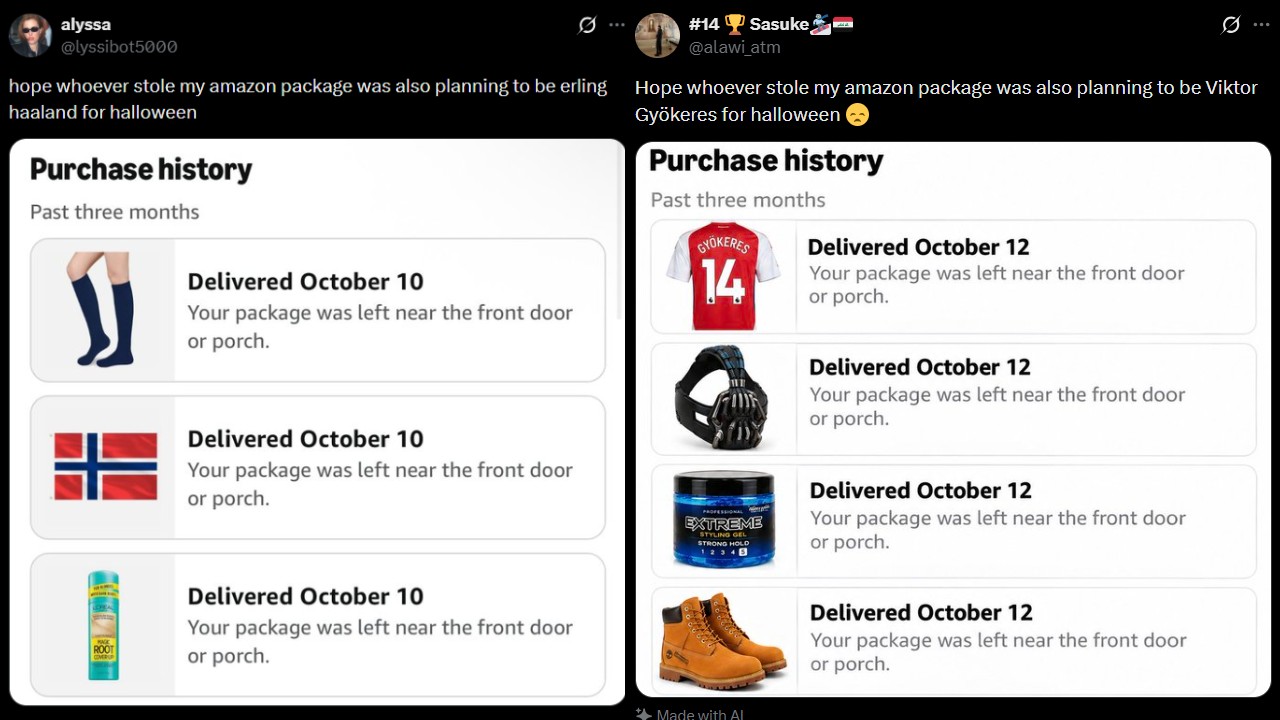
The formula is deceptively simple: a user shares a screenshot of their purported Amazon delivery history, complete with mundane tracking updates indicating a package was left near their front door. They then pair the image with a variation of the phrasal template: "Hope whoever stole my Amazon package [X]," where "X" unveils an entirely improbable, overly specific, or aggressively niche pop-culture reference that they were supposedly planning to dress as for Halloween.
What began as a single tongue-in-cheek post about a stolen football star costume in mid-October 2026 has quickly metastasized into a massive cultural touchstone. Millions of views, tens of thousands of likes, and an endless stream of user-generated variations have turned a petty property crime into a masterclass in community-driven dark humor. This comprehensive report explores the origins, rapid digital spread, psychological appeal, and broader cultural implications of the "Hope Whoever Stole My Amazon Package" phenomenon.
Detailed Chronology: From a Porch Pirate Grievance to a Global Trend
The genesis of any major internet meme can often be traced back to a single, lightning-in-a-bottle post that resonates with the collective zeitgeist. For the stolen Amazon package trend, that catalyst arrived on October 11th, 2026.
The Spark: The Erling Haaland Incident
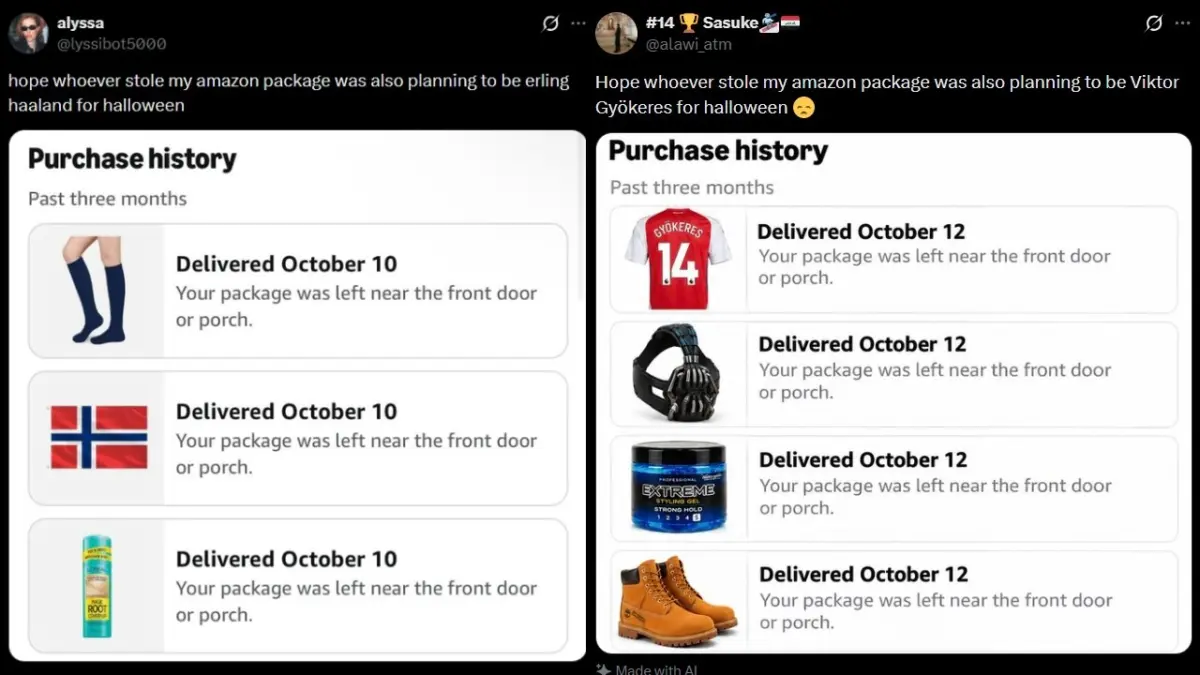
On October 11th, X user @lyssibot5000 took to the platform to air a grievance common to urban and suburban dwellers alike: the theft of a delivered online order. However, rather than simply complaining about porch pirates, @lyssibot5000 attached a screenshot of their Amazon purchase and delivery history. The log showed multiple deliveries marked as left near the front door on October 10th.
The caption accompanying the screenshot read: "hope whoever stole my amazon package was also planning to be erling haaland for halloween."
The juxtaposition of a mundane, slightly frustrating domestic inconvenience with the hyper-specific, highly visual prospect of an anonymous thief accidentally being forced to dress up as Manchester City striker Erling Haaland struck an immediate chord. The post exploded across the platform, racking up over 176,000 likes and millions of impressions within just five days. It laid the foundational blueprint for a snowclone template that other users could easily adapt, iterate upon, and mutate.
Rapid Acceleration and Iteration (Mid-October 2026)
Recognizing the comedic potential of turning a victimhood narrative into an absurdist creative writing prompt, users across various subcultures quickly jumped on the bandwagon. The days immediately following the initial post saw a geometric expansion of the format, with creators pushing the boundaries of what could plausibly—or implausibly—be found inside a standard delivery box.
- October 14th, 2026: User @chaeryliv adapted the format to target music fandoms, posting a screenshot claiming they had intended to dress as Olivia Rodrigo from a specific, textually dense album cover (You Seem Pretty Sad for a Girl So in Love), pulling in over 50,000 likes in 48 hours. Later that same day, user @0NEMORETlME leaned into surreal meme culture, claiming their stolen package contained the pieces necessary to dress as "Why"—a viral meme format featuring a woman wearing a plague doctor mask. That iteration hauled in over 150,000 views in two days.
- October 15th, 2026: The gaming community claimed the trend as X user @SpaghettiSpace_ posted a variation stating they had planned to dress as the Ascent B Site triple boxes from the tactical shooter Valorant*. This bridge between competitive gaming culture and real-world consumer annoyance proved wildly successful, pulling in tens of thousands of engagements.
- October 16th, 2026: The format diversified further into niche television, sports, and internet personality references, with users claiming stolen contents ranging from baseball star Giancarlo Stanton to tech entrepreneur Alexandr Wang and various reality television icons.
Supporting Context & Metrics: Analyzing the Spread
While comprehensive third-party search analytics for the exact phrase remain scarce due to the suddenness of the trend, engagement metrics across social media platforms paint a vivid picture of its viral velocity.
Engagement Breakdown
| Date (2026) | User Handle | Core Subject ("X") | Primary Platform | Approximate Engagement |
|---|---|---|---|---|
| Oct 11 | @lyssibot5000 | Erling Haaland | X | 176,000+ Likes / 1.5M+ Views |
| Oct 14 | @chaeryliv | YSPSFAGSIL Album Cover | X | 50,000+ Likes / 1.5M+ Views |
| Oct 14 | @0NEMORETlME | "Why" Plague Doctor Meme | X | 150,000+ Views |
| Oct 14 | @gabosarchive | Lorde at the 2017 VMAs | X | 822,000+ Views |
| Oct 14 | @ricericebaby22 | Giancarlo Stanton | X | 421,700+ Views |
| Oct 15 | @SpaghettiSpace_ | Valorant Ascent B Boxes | X | 10,000+ Likes / 162,300+ Views |
| Oct 15 | @winternet | Alexandr Wang | X | 45,700+ Views |
| Oct 16 | @baddaysareover | Nene (Reality TV) | X | 34,400+ Views |
Why the Snowclone Works: Psychological and Cultural Factors
The enduring success of the "Hope Whoever Stole My Amazon Package" meme relies on several interlocking psychological triggers:
- Subversion of Grievance: Porch piracy is a genuine, widespread annoyance that evokes feelings of helplessness and frustration. By converting a real-world crime into an ironic punchline, users reclaim narrative control, turning themselves from victims of petty theft into satirists.
- The Power of Hyper-Specificity: Humor in the mid-2020s heavily favors hyper-specific, absurd references. Telling an audience you are dressing as a generic "pirate" or "witch" is boring; telling them you are dressing as the "Ascent B Site triple boxes" or "Lorde at the 2017 VMAs" creates an in-group dynamic where followers must appreciate the granular details of the reference.
- Template Adaptability: The snowclone requires minimal effort to reproduce—a standard screenshot of an Amazon delivery confirmation combined with a creative writing punchline. This low barrier to entry ensures a high volume of user participation, fueling the algorithmic engine required for sustained virality.
Official Statements and Industry Impact
As of late October 2026, neither Amazon corporate representatives nor major delivery service providers have issued formal statements regarding the meme. However, the cultural saturation of the trend touches upon a very real, billion-dollar logistics headache: package theft during the peak holiday shopping ramp-up.
Industry analysts note that while memes trivializing porch piracy provide comic relief, they also underscore the normalization of retail delivery theft in modern consumer culture. Rather than sparking outrage, the crime has become so commonplace that it is now treated as an inevitable background condition of contemporary life—so much so that it can be mined for absurdist Halloween humor.
Digital culture experts suggest that brands and marketers should monitor such fast-moving organic trends carefully. While direct corporate hijacking of the meme risks coming across as "cringe" or forced, the format highlights how deeply integrated e-commerce delivery notifications have become in our daily visual language. A delivery confirmation screenshot is now as universally recognized as a smartphone lock screen or a text message bubble.
Future Outlook: The Longevity of Seasonal Satire
As Halloween 2026 approaches its zenith, questions naturally arise regarding the shelf life of the "Hope Whoever Stole My Amazon Package" phenomenon.
By its very nature, the meme is heavily tethered to the autumn holiday season. While it is unlikely to maintain its current daily velocity once November arrives and Halloween costumes are packed away, the underlying structural format possesses cyclical potential. Experts predict that variations of the "Hope whoever stole my package" template could easily re-emerge during subsequent gifting holidays, such as the peak December shipping season or Valentine’s Day.
Furthermore, the trend cements a broader shift in how internet users process contemporary frustrations. In an era marked by economic pressures, supply chain quirks, and petty inconveniences, collective dark humor remains one of the internet’s most effective coping mechanisms. Whether porch pirates across the globe actually end up dressed as Erling Haaland, obscure album covers, or video game geometry remains to be seen—but for millions of scrollers online, the joke was more than worth the lost delivery.




