Executive Overview
Fashion month traditionally concludes with a crescendo of high-octane sensory overloads, but Saturday morning at Paris Fashion Week offered a rare moment of serene contemplation. Inside the historic grounds of the Musée des Archives Nationales, French luxury house Celine transported its distinguished guests from the bustling heart of the French capital directly to the sun-bleached shores of the Mediterranean. Erected within the courtyard was an immaculate, white-walled, thatched-roof lodge—an architectural illusion that evoked the effortless, bohemian beach club aesthetic of Mykonos, Hydra, or Santorini.
Yet, the tranquility of the venue was expertly juxtaposed with the high-voltage electricity of the front row, punctuated by the rare appearance of global music icon SZA. Marking American designer Michael Rider’s fifth runway collection for the historic French house, the presentation served as a masterclass in tension: blending the subdued elegance of "quiet luxury" with the poignant, legacy-minded philosophy of New York City’s legendary underground ballroom culture.
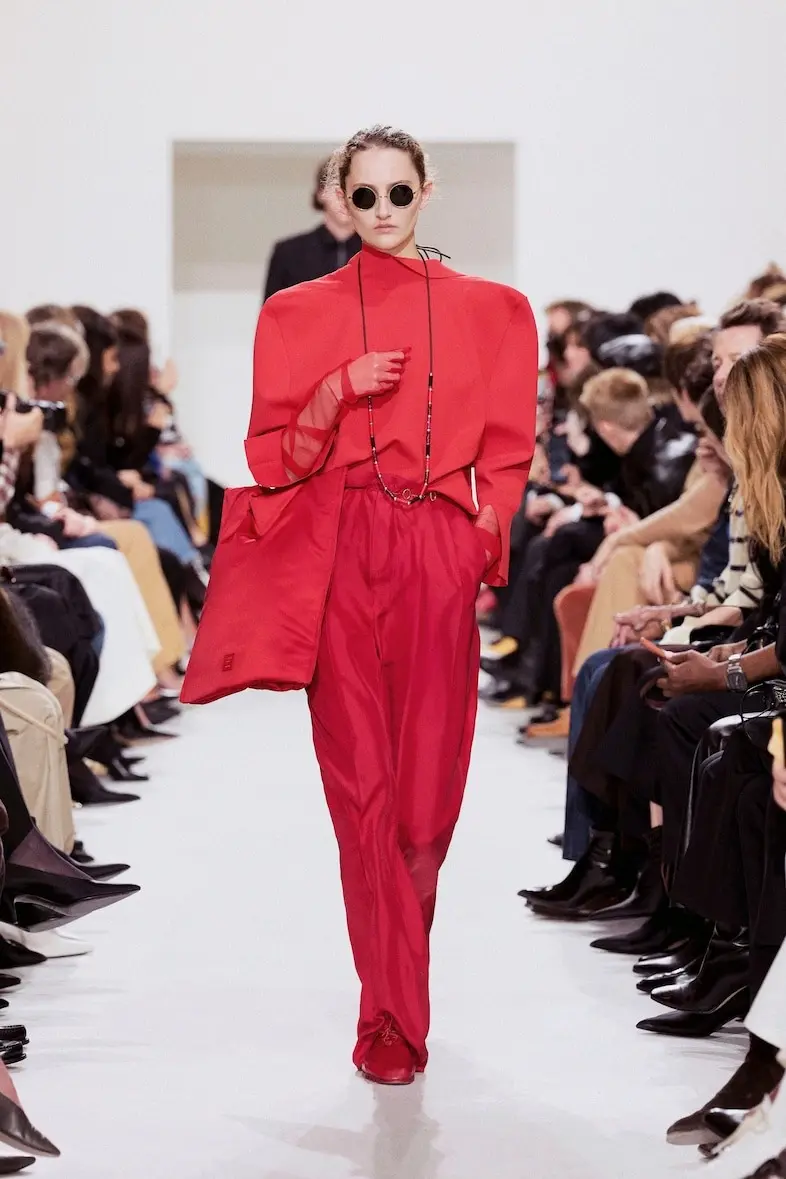
Rather than offering a literal translation of the vibrant, high-contrast visual lexicon of the 1990 documentary Paris Is Burning, Rider delivered a restrained, highly sophisticated collection. It relied on micro-details, exaggerated accessories, and precise tailoring to command attention. In an industry increasingly dominated by viral stunts and sensory overload, Celine’s latest outing proved an authoritative counter-narrative: true impact does not require shouting to be heard.
Detailed Chronology: A Morning at the Musée des Archives Nationales
The Atmosphere and the Arrival
The final weekend of fashion month opened under a shroud of deceptive calm. Guests arriving at the Musée des Archives Nationales stepped past the imposing stone facades of the historic archives and into a sunlit oasis. The custom-built, whitewashed, thatched-roof pavilion immediately set a relaxed, escapist tone. It was an environment engineered to strip away the frantic pacing of the preceding four weeks, inviting editors, buyers, and celebrities to exhale.
That serenity, however, was instantly energized by the arrival of SZA. Known for her selective approach to the fashion week circuit—attending shows sparingly—her presence immediately commanded the room. Speculation among fashion insiders suggested that her recent appointment as the first-ever artistic director of Vans may have sharpened her critical eye, turning the front row into an atelier of research and observation.
SZA was far from the only luminary populating the coveted front-row seating arrangement. The eclectic, star-studded guest list featured a sophisticated cross-section of global talent, including:
- Tracee Ellis Ross, renowned for her pioneering sartorial choices.
- Lisa Bonet, embodying timeless, bohemian elegance.
- Hannah Einbinder, celebrated breakout star of Hacks.
- Rahim Redcar, formerly known to the music world as Christine and the Queens.
- Daniel Levy, multi-hyphenate creator and style icon.
- Ebon Moss-Bachrach, breakout star of FX’s critical darling The Bear.
- All six members of the burgeoning K-op sensation TWS, representing the next generation of global style consumers.
The Auditory Prelude: Dorian Corey and Erykah Badu
As the house lights dimmed and the murmur of the audience subsided, the show bypassed standard runway techno in favor of a profound, spoken-word introduction. The space was filled with the resonant, gravelly voice of legendary Paris Is Burning performer Dorian Corey, who tragically passed away from AIDS-related complications just three years after the landmark 1990 documentary’s release.
Corey’s voice echoed through the pristine white pavilion:
"I always had hopes of being a big star, and as you get older you aim a little lower, and I say you still might make an impression. Everybody wants to leave something behind them, some mark upon the world."
This somber, reflective overture gave way to the hypnotic, rhythmic strains of Erykah Badu’s "I’ll Call U Back." As the baseline pulsed gently through the speakers, the first models emerged, establishing a dreamlike, introspective rhythm that dictated the pace of the entire presentation.
The Silhouette: Subdued Palettes and Subversive Details
The collection opened with a series of looks rendered entirely in obsidian black silk. To the casual observer scanning from afar, the garments appeared deceptively simple—clean lines, minimalist cuts, and an overarching sense of classic French bourgeois restraint. However, as the models drew closer, a complex web of subversive quirks and meticulously engineered details revealed themselves.
Rider’s tailoring subverted traditional proportions through extreme contrasts. Accessories were intentionally blown up to surrealist proportions:
- Massive Belt Buckles: Sculptural belt buckles scaled up to the width of skirts, bearing a striking conceptual kinship to the avant-garde, oversized hardware championed by rising Swedish designer Beata Rydbacken.
- Statement Jewelry: Colossal gold hoops that brushed the models’ shoulders, casting dramatic shadows against the collarbones.
- Obscured Vision: Hats featuring wide brims that drooped low over the eyes, lending the wearer an aura of aristocratic mystery.
Conversely, other elements of the collection contracted into hyper-minimalism. Ties were rendered in wafer-thin silhouettes, pushing the boundaries of the "skinny tie" trend to unprecedented levels of narrowness. Headbands—traditionally a feminine staple—were styled sharply on male models, while John Lennon-style round sunglasses added a touch of counter-cultural intellectualism.
Styling choices further emphasized an ethos of effortless lived-in luxury. Dust coats were not worn conventionally; instead, they were casually flung over shoulders as if hastily handed off by a companion to stave off a morning chill—a masterclass in high-fashion nonchalance.
Supporting Context & Metrics: The Business and Culture of Celine Under Rider
The Michael Rider Era
Michael Rider’s tenure at Celine represents a pivotal transitional and foundational era for the LVMH-owned maison. Stepping into the creative driver’s seat, Rider has been tasked with maintaining the fervent commercial momentum built by his predecessors while injecting a distinctly personal, narrative-driven point of view.
| Metric / Indicator | Context & Analysis |
|---|---|
| Collection Milestone | This presentation marked Rider’s fifth runway collection for Celine, signaling a maturing design vocabulary and structural cohesion within the house. |
| Cross-Category Influence | Building upon his recent, highly praised menswear offerings, Rider continues to blur the lines between traditional gendered categories, successfully courting both traditional luxury clients and younger, trend-conscious demographics. |
| Front-Row Star Power | The presence of cross-industry titans (from Hollywood and prestige television to indie soul and K-pop) underscores Celine’s calculated strategy of global demographic capture. |
The Paris Is Burning Paradox
Utilizing Paris Is Burning—a film intrinsically tied to the vibrant, hyper-expressive, and marginalized Black and Latino queer ballroom scene of 1980s Harlem—as a thematic springboard for a traditionally polished French luxury house might initially appear incongruous. New York ballroom culture is defined by fierce competition, explosive color, camp theatricality, and radical self-expression.
Celine’s runway, by contrast, was an exercise in monastic restraint, monochrome palettes, and understated bourgeoisie codes. Yet, the conceptual bridge between the two worlds was anchored entirely in Dorian Corey’s meditations on legacy. Ballroom culture was, at its core, about survival and carving out a permanent footprint in a society that sought to render its participants invisible.
Rider translated this ethos not through voguing or theatrical costumes, but through the enduring pursuit of design permanence. In an era where fashion houses frequently chase fleeting TikTok micro-trends, Rider’s commitment to quiet, enduring garments is his own way of "leaving a mark upon the world."
Official Statements and Industry Reception
While traditional post-show press conferences have largely evolved into curated digital statements and Instagram press kits, the critical consensus surrounding Celine’s presentation was immediate and authoritative.
Industry Insiders and Critics Note:
- "Rider has successfully decoupled Celine from the pressure of the novelty cycle," noted one veteran European fashion editor. "By anchoring a famously quiet brand to the existential weight of Dorian Corey’s words, he has elevated the collection from mere clothing to a philosophical statement."
- Cultural commentators lauded the strategic deployment of the front row, noting that the inclusion of K-pop group TWS alongside cultural icons like Lisa Bonet and Tracee Ellis Ross demonstrates a sophisticated understanding of modern luxury consumption. It bridges heritage craftsmanship with contemporary pop-cultural ubiquity.
- Buyers praised the commercial viability of the collection, highlighting the extreme versatility of the accessories—specifically the oversized statement hardware and precision outerwear—as guaranteed drivers of next-season retail success.
Future Outlook: The Strategic Trajectory of Celine
As the fashion industry navigates a macroeconomic climate characterized by consumer fatigue toward logomania and fast-trend acceleration, Celine’s autumn/winter trajectory signals a broader industry shift toward enduring wardrobe architecture.
1. The Consolidation of "Quiet Luxury"
While the term itself has occasionally been overused by market analysts, the design philosophy underpinning it remains robust. Michael Rider’s Celine is proving that quiet luxury does not have to mean boring or derivative. By embedding subversive quirks—such as razor-thin ties, obscured eyes, and dramatic scale shifts in hardware—into otherwise classic silhouettes, the house is maintaining intellectual rigor without alienating its core commercial base.
2. Expanding Demographic Footprints
The intentional curation of the front row points directly to Celine’s future retail strategy. By aligning the brand with cultural polymaths like SZA and K-pop powerhouses like TWS, LVMH is ensuring that Celine remains relevant across multiple generations and geographic markets. The strategy pays dividends: younger consumers, increasingly fatigued by overt branding, are drawn to the codes of understated sophistication that Rider champions.
3. The Legacy of Michael Rider
As Rider enters the phase beyond his initial collections, the structural identity of Celine is solidifying. No longer merely defined by the eras that preceded him, the house under Rider is carving out a distinct intellectual niche. It is a space where the emotional weight of cultural history—symbolized by the haunting words of Dorian Corey—meets the precise, exacting demands of modern Parisian atelier craftsmanship.
Ultimately, Celine’s Saturday morning presentation proved that the loudest voices in fashion do not always belong to those screaming the hardest. By embracing the philosophy of leaving a lasting mark through nuance, restraint, and impeccable detail, Michael Rider and Celine have secured their place at the vanguard of modern sartorial evolution.