Executive Overview
As artificial intelligence transitions from experimental pilot programs to mission-critical enterprise workflows, corporate leadership is encountering a sobering operational reality: the staggering financial burden of running generative AI at scale. While initial enterprise adoption was driven by raw capability and benchmark performance, Chief Information Officers (CIOs) and Chief Technology Officers (CTOs) are now facing systemic "token inflation"—a scenario where complex, multi-step agentic tasks consume astronomical amounts of compute budget, often yielding diminishing economic returns.
In response to growing enterprise fatigue over escalating inference expenses, enterprise AI platform Writer has introduced its newest flagship language model, Palmyra X6, alongside a sweeping architectural upgrade to its agentic orchestration harness. Built through specialized post-training on Z.ai’s open-source GLM-5.2 architecture, Palmyra X6 is explicitly engineered to offer production-grade enterprise capabilities at a fraction of the cost of legacy closed-source models.
Combined with architectural optimizations at the orchestration layer, Writer guarantees operational cost reductions of up to 50% for standard enterprise tasks. The announcement highlights a fundamental pivot in enterprise technology strategy: the focus is shifting away from blindly chasing performance metrics on public benchmarks toward aggressive cost containment, harness efficiency, and open-source model optimization.
Detailed Chronology
========================================================================================================
                                   ENTERPRISE AI ADOPTION CYCLE
========================================================================================================

 [Phase 1: 2022–2023]               [Phase 2: 2023–2024]              [Phase 3: Present Day]
  Benchmark Obsession                Token Inflation Crisis            Architectural Efficiency
  • Adoption of closed-source LLMs   • Agentic multi-step loops        • Shift to targeted post-training
  • Premium API pricing accepted       trigger budget overruns           • Harness optimization reduces costs
  • Focus on general capabilities    • CIO pushback on vendor lock-in  • Writer releases Palmyra X6
========================================================================================================
The Initial Rush and the Benchmark Obsession (2022–2023)
The enterprise AI land rush began with a singular focus on model capability. Organizations rushed to integrate foundation models from premier research laboratories—such as OpenAI, Anthropic, and Google—into internal knowledge bases, marketing suites, and customer service frameworks. During this initial expansion, procurement teams largely swallowed high per-token pricing structures under the assumption that model intelligence directly correlated with business value. Enterprise software vendors competed almost exclusively on standardized benchmarks, encouraging customers to continually upgrade to larger, more resource-intensive model iterations.
The Agentic Turn and Token Inflation (2023–2024)
As enterprise use cases evolved from basic text generation to complex, multi-step "agentic" workflows—where AI systems autonomously plan, execute tools, retrieve data, and self-correct—the underlying cost structure broke down. Unlike single-turn prompts, agentic loops require dozens of intermediate inference calls, context window repetitions, and system prompt injections. This reality caused enterprise API spending to explode exponentially. By mid-2024, corporate technology executives began calling for predictable pricing models, expressing growing frustration over unpredictable monthly AI operational expenses.
The Open-Source Response and Writer’s Strategic Move
Recognizing that closed-source proprietary models were becoming financially unsustainable for high-volume enterprise tasks, open-source AI developers accelerated the release of high-performing base weights. Leveraging these breakthroughs, Writer developed a targeted post-training regimen atop Z.ai’s GLM-5.2 foundation model.
On Thursday, Writer officially released Palmyra X6 alongside an optimized agentic harness. Designed specifically to strip away unnecessary computational overhead while maintaining domain-specific accuracy, the unified platform was immediately made available across Writer’s product suite and integration ecosystems, marking a turning point in the economics of corporate AI deployments.
Supporting Context & Metrics: Model vs. Harness Efficiency
To understand how Writer achieves up to a 50% reduction in customer operational expenses, it is essential to decouple two distinct components of enterprise AI architecture: the underlying base model and the execution harness.
+-----------------------------------------------------------------------------------+
|                            ENTERPRISE AI STACK                                    |
+-----------------------------------------------------------------------------------+
|  [Agentic Harness Layer]                                                          |
|  • Prompt Optimization  • Context Trimming  • Tool Calling Routing                |
|  (Delivers ~40% average cost reduction across all models)                         |
+-----------------------------------------------------------------------------------+
|  [Foundation / Base Model Layer]                                                  |
|  • Specialized Weights (e.g., Palmyra X6 via Z.ai GLM-5.2)                        |
|  (Provides targeted enterprise accuracy at reduced per-token cost)                |
+-----------------------------------------------------------------------------------+
The Role of Specialized Base Models
While general-purpose frontier models are trained on massive, varied datasets to answer virtually any query, enterprise applications typically demand deep mastery over specific, repeatable tasks—such as legal analysis, brand-compliant content creation, or structured data extraction.
By utilizing Z.ai’s open-source GLM-5.2 as a foundation and applying proprietary post-training techniques, Writer created a enterprise-ready model in Palmyra X6. Because the model is tuned specifically for agentic execution and specialized enterprise functions, it avoids the unnecessary parameter inflation typical of massive foundation models, offering substantially lower raw per-token costs.
Harness Infrastructure as an Efficiency Multiplier
While model selection sets the baseline cost per token, the harness—the software infrastructure that manages prompt construction, system instructions, tool calls, dynamic memory, and context retrieval—determines the total number of tokens consumed.
A recent empirical research paper published by Writer engineers (arXiv:2607.06906) demonstrates that optimizing the execution harness is often a far more reliable method for lowering costs than simply switching models.
Key Empirical Research Findings:
- Compounding Savings: Optimizing the agentic harness yielded an average 40% cost reduction across every model evaluated in the study.
- Model Agnosticism: Because the harness wraps around the intelligence layer, efficiency improvements introduced at the harness level automatically apply to any underlying LLM—whether Palmyra X6, external open-source weights, or proprietary models hosted on Azure and Amazon Bedrock.
- Token Pruning and State Management: The upgraded harness drastically cuts down on redundant context injection, preventing agentic loops from re-sending long conversation histories with every intermediate tool execution.
Empirical Efficiency Breakdown
| System Layer | Primary Innovation | Mechanism for Savings | Impact on Operational Expenses |
|---|---|---|---|
| Foundation Model (Palmyra X6) | Fine-tuned post-training on Z.ai GLM-5.2 | Eliminates unneeded parameters; optimizes task-specific instruction following | Lower baseline per-token cost |
| Agentic Harness (Infrastructure) | Advanced context pruning, dynamic prompting, efficient tool routing | Prevents token inflation in multi-step reasoning loops | ~40% average token volume reduction |
| Unified Deployment | Combined harness + model optimization | End-to-end efficiency across the enterprise AI pipeline | Up to 50% net cost savings |
Official Statements & Industry Backlash
The launch of Palmyra X6 highlights a growing divide between enterprise technology buyers and mainstream AI research laboratories. In conversations surrounding the release, enterprise leaders expressed deep frustration with the prevailing economic model offered by traditional provider labs.
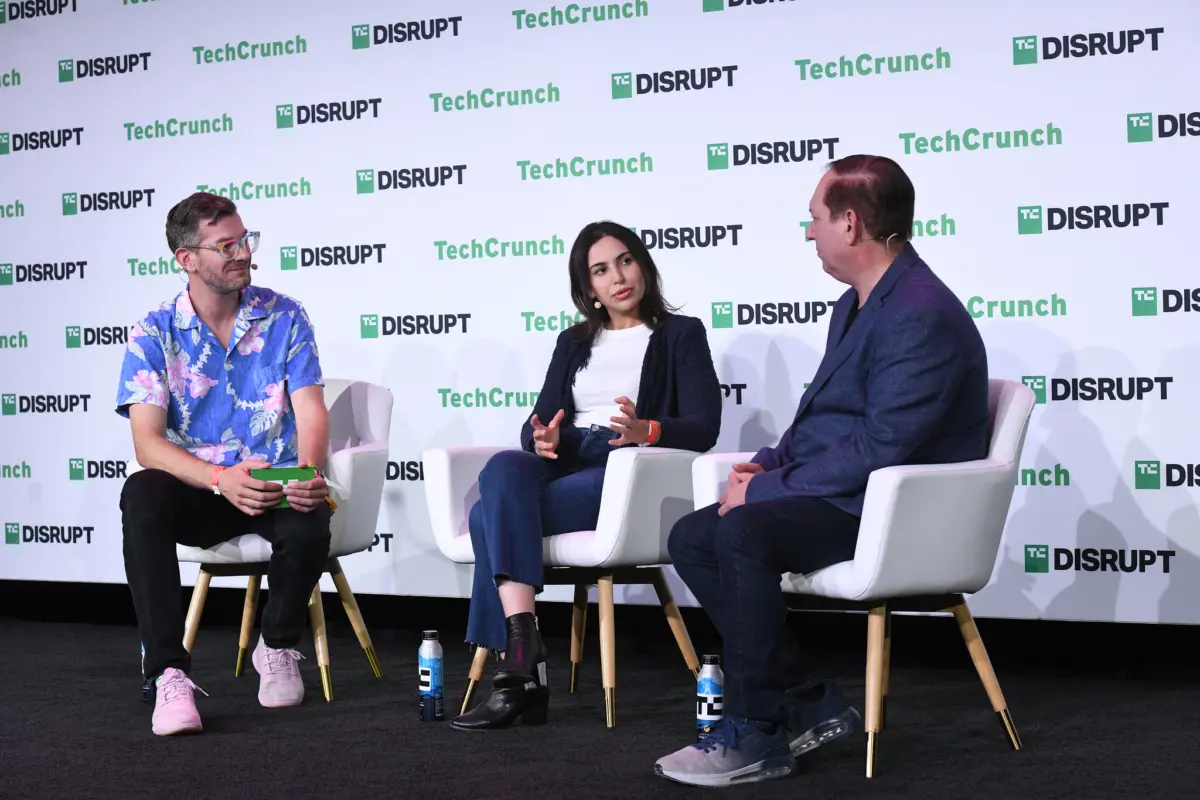
"I think the enterprise is absolutely sick of chasing the next benchmark. They want flattening cost, and it seems like nobody can deliver that."
— May Habib, CEO of Writer
Habib argued that the core incentives of major AI labs are fundamentally at odds with the operational goals of enterprise corporate buyers. Because closed-source API vendors generate revenue based on the raw volume of tokens processed, they lack a financial incentive to build systems that minimize token consumption.
"The cost explosion here is just unprecedented for customers, and so is the degree to which CIOs are giving up on the labs. The AI labs don’t deeply understand right now how to help an enterprise get real benefit from AI."
— May Habib, CEO of Writer
According to Writer’s research team, treating system architecture as a secondary concern behind raw model size is a major mistake in modern software engineering:
"The harness is the one component whose efficiency multiplies across every model an organization runs—present and future."
— Writer Research Team
This commentary signals a fundamental shift in executive sentiment. Enterprise technology leaders are increasingly turning away from high-priced, proprietary APIs in favor of model-agnostic orchestration platforms, open-source fine-tuning, and predictable infrastructure spending.
Future Outlook
Writer’s dual release of Palmyra X6 and its upgraded agentic harness points toward a broader structural shift in enterprise AI strategy. As corporate adoption matures, the competitive landscape is likely to evolve across several key dimensions:
+-----------------------------------------------------------------------------------+
|                          FUTURE ENTERPRISE AI ECOSYSTEM                           |
+-----------------------------------------------------------------------------------+
|                                                                                   |
|  +---------------------------+               +---------------------------------+  |
|  |     Model Agnosticism     |               |   Open-Source Domain Models    |  |
|  | Multi-model orchestration |               | Fine-tuned weights tailored to   |  |
|  | via Azure & Bedrock       |               | specialized business tasks      |  |
|  +-------------+-------------+               +----------------+----------------+  |
|                |                                              |                   |
|                +----------------------+-----------------------+                   |
|                                       |                                           |
|                                       v                                           |
|                  +------------------------------------------+                     |
|                  |     Harness-Centric System Design        |                     |
|                  | Focus shifts to context pruning, tool    |                     |
|                  | routing, and predictable unit economics  |                     |
|                  +------------------------------------------+                     |
+-----------------------------------------------------------------------------------+
1. The Rise of Harness-Centric Engineering
As research proves that harness adjustments offer greater cost controls than swapping underlying models, enterprise engineering teams will increasingly prioritize orchestration architecture. System designers will focus on context compression, dynamic prompt assembly, and local state management to prevent runaway token costs, rather than relying strictly on brute-force inference from larger models.
2. A Hybrid, Model-Agnostic Ecosystem
Despite launching Palmyra X6, Writer is keeping its platform model-agnostic. Customers can run Palmyra X6 alongside alternative proprietary offerings or bring third-party models via cloud marketplaces like Amazon Bedrock and Microsoft Azure. Enterprise architectures will increasingly rely on routing frameworks that dispatch simple, routine queries to lightweight, cost-effective models while reserving expensive frontier models exclusively for exceptionally complex edge cases.
3. Open-Source Fine-Tuning Over Monolithic APIs
The success of Palmyra X6—derived from Z.ai’s open-source GLM-5.2—demonstrates the viability of specialized, post-trained open models for enterprise workloads. Organizations are discovering that tailored open-source foundations often match or exceed the performance of massive proprietary models on targeted tasks, all while dramatically lowering per-token expenses and eliminating vendor lock-in.
4. Direct Pressure on Frontier AI Vendor Pricing
As enterprise buyers prioritize unit economics over public benchmarks, major AI research labs will face mounting pressure to rethink their commercial strategies. To retain corporate clients, tier-one API providers will likely need to introduce tier-based pricing, native context compression algorithms, and transparent efficiency guarantees.
Conclusion
Writer’s launch of Palmyra X6 and its revamped agentic harness marks a pivotal step toward sustainable enterprise AI economics. By demonstrating that harness optimization and targeted post-training can cut enterprise operational costs by up to 50%, Writer offers a clear blueprint for an industry struggling with unsustainable compute budgets.
As corporate leaders continue to prioritize predictable unit economics over public benchmark records, the future of enterprise AI will be defined by efficient, adaptable, and cost-controlled infrastructure.