Executive Overview
When modern gamers envision the cultural monolith that is Mario, their minds almost invariably drift toward the sprawling landscapes, dynamic power-ups, and legendary level design of 1985’s Super Mario Bros. That seminal title permanently reshaped platforming and propelled video games into the cultural mainstream. Yet, long before Mario traded his blue overalls for fire flowers and star power to rescue princesses in a fantasy kingdom, he was a working-class hero trapped in a cramped, multi-tiered basement, locked in a frantic war of attrition against an endless infestation of creatures crawling up from the urban sewers.
Released by Nintendo to arcades in July 1983, Mario Bros. was a pivotal stepping stone in digital entertainment. It was the game that definitively christened the character previously known as "Jumpman" from Donkey Kong, while simultaneously introducing a foundational pillar of modern gaming lore: Mario’s sibling, Luigi.
Though largely overshadowed by its side-scrolling successor, this 40-year-old fixed-screen arcade game holds up remarkably well. Stripped of lengthy tutorials, convoluted storytelling, and modern hand-holding, Mario Bros. delivers pure, unadulterated arcade mechanics. Today, thanks to modern preservation efforts via platforms like Nintendo Switch Online and the Arcade Archives series, this retro artifact has found a surprising second life. It serves as an ideal "palate cleanser" for modern gamers—a snappy, accessible, and deceptively deep experience that is just as rewarding today as it was in the summer of 1983.
Detailed Chronology: From the New York Basements to Global Platforms
1. The Genesis in the Arcade (1983)
Following the monumental commercial breakthrough of Donkey Kong (1981) and its sequel Donkey Kong Junior (1982), Nintendo game designer Shigeru Miyamoto and his team turned their attention toward a new kind of cooperative action experience. Inspired in part by Williams Electronics’ 1982 arcade hit Joust, Miyamoto conceptualized a game set within a closed, single-screen environment where verticality and platform navigation dictated survival.
Instead of scaling a construction site or a jungle, the action was moved underground. Mario, now formally named after Nintendo of America’s warehouse landlord Mario Segale, was reimagined as an Italian-American plumber. Crucially, the hardware limitations and economic realities of the arcade era demanded a two-player simultaneous mode. To accommodate this, developers introduced a second character clad in green: Luigi. This functional necessity born of arcade capitalism birthed one of the most famous sibling duos in pop culture history.
2. The Great Porting Era and Industry Turmoil (1983–1985)
As Mario Bros. gained traction in arcades, Nintendo licensed the intellectual property to various third-party developers for conversion to home microcomputers and early consoles. This era coincided with a tumultuous period in the North American video game industry, marked by the video game crash of 1983.
Publishing schedules shifted violently, and several ports of Mario Bros. were developed by regional studios only to face commercial purgatory, occasionally circulating in limited quantities or cancelled outright. Despite this fragmentation, many players experienced their first taste of the plumber’s adventures on non-Nintendo hardware. Apple IIe, Atari, Commodore 64, and Sinclair ZX Spectrum versions introduced the title to computer labs and family living rooms worldwide, cementing its footprint across diverse demographics.
3. The NES Milestone and North American Release (1986)
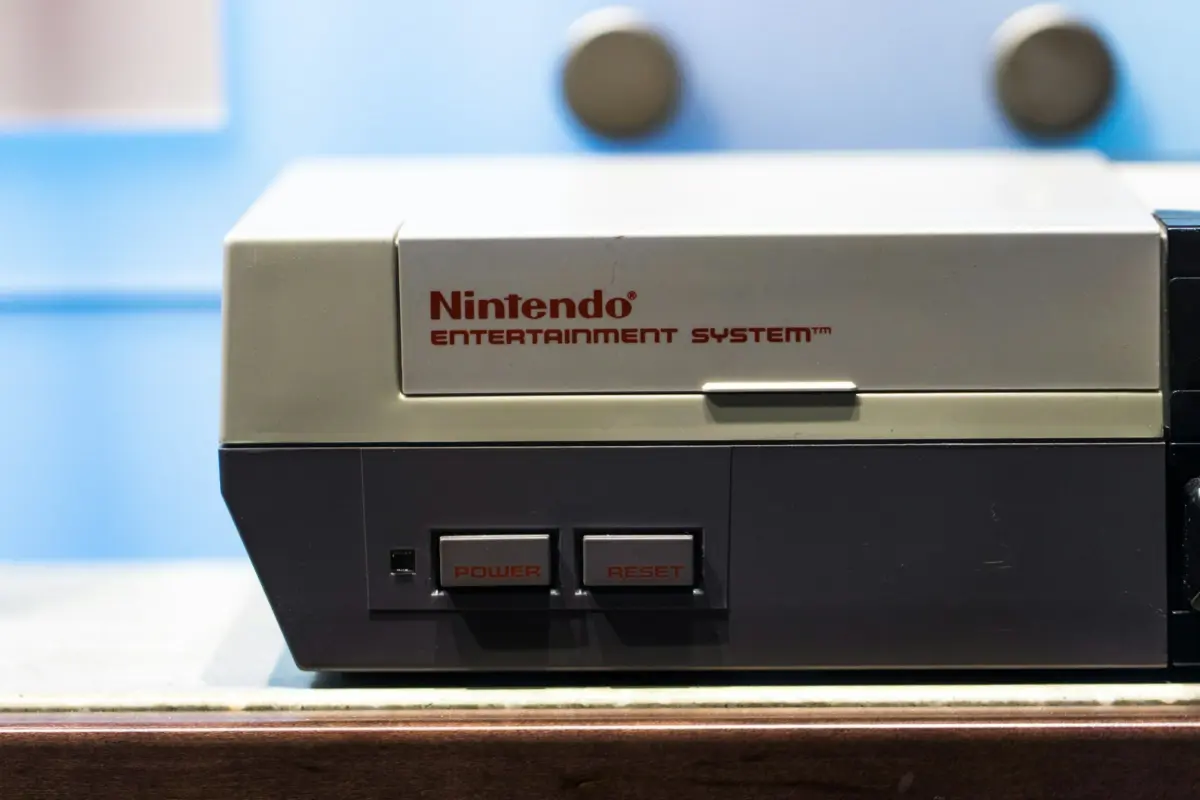
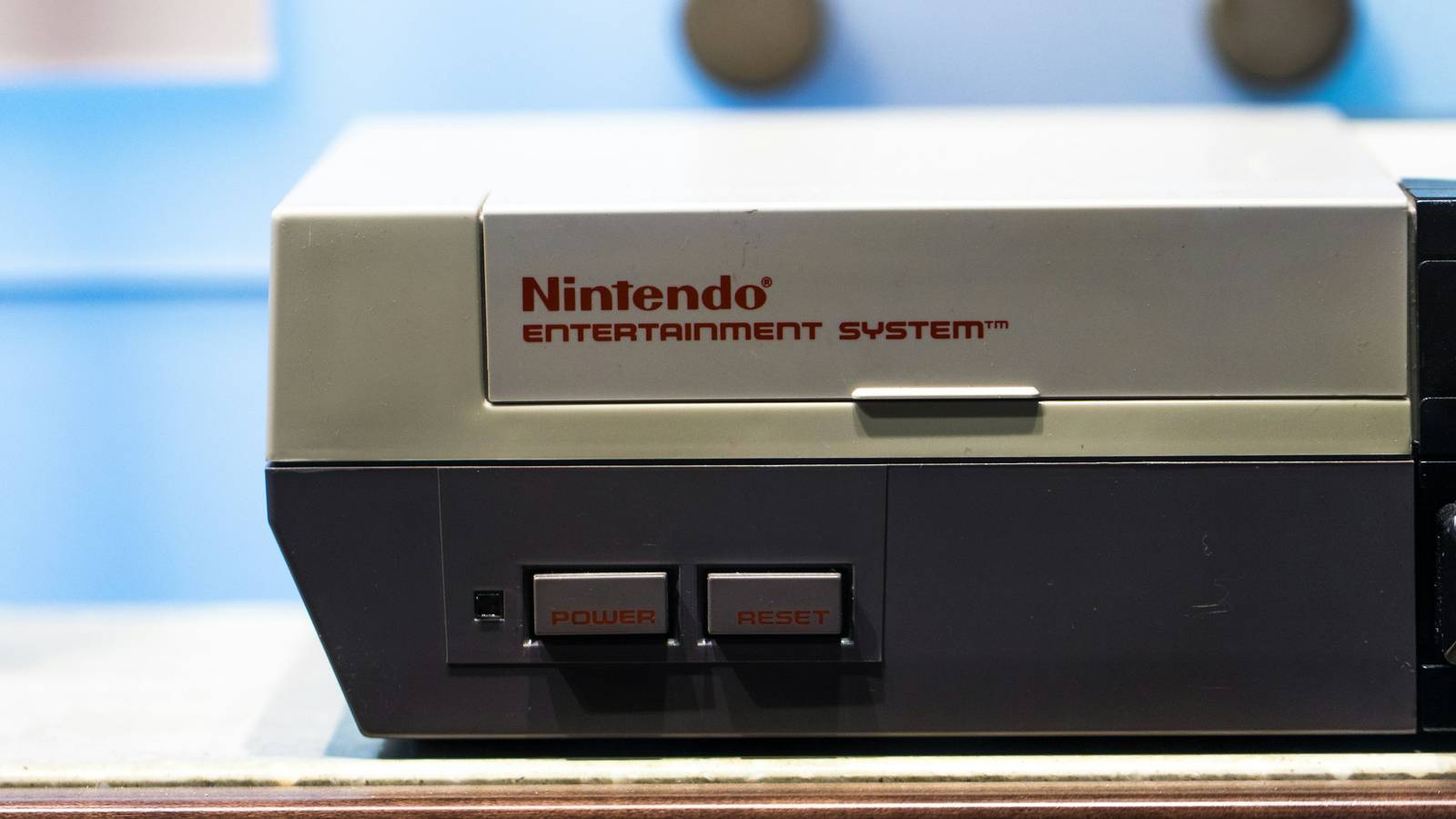
By 1985, the landscape of interactive entertainment had irrevocably shifted with the release of the Family Computer (Famicom) in Japan and its western counterpart, the Nintendo Entertainment System (NES). In 1986, Intelligent Systems spearheaded the development of the official NES port of Mario Bros. for North American audiences.
For households of the era, the NES port delivered exceptional value. Unlike the quarter-eating pressure of the arcades, home consoles allowed friends and siblings to play cooperatively or competitively for hours on end without financial penalty. While it lacked the sweeping adventure of Super Mario Bros., the console adaptation provided a tightly wound, highly addictive gameplay loop that sustained countless game nights.
4. Modern Renaissance and Preservation (Nintendo Switch Era)
Fast forward to the modern era, where game preservation has transformed retro titles from fleeting novelties into easily accessible digital commodities. Through Nintendo Switch Online and modern retro compilation releases, Mario Bros. is readily available to a generation raised on high-definition graphics and open-world epics. Stripped of modern bloat, the game offers an immediate, friction-free engagement model that appeals equally to nostalgic veterans and young children experiencing digital interaction for the very first time.

Supporting Context & Metrics: Mechanics, Meta, and Design Philosophy
To truly appreciate why Mario Bros. remains compelling four decades after its debut, one must examine its mechanics. At its core, the game is a masterclass in risk-reward balancing and physics-based spatial awareness.
The Mechanics of the Sewers
Players control Mario (and Luigi in two-player mode) as they navigate a series of stationary platforms connected by slip-resistant flooring. Unlike the momentum-heavy platforming of later titles, characters in Mario Bros. can survive staggering drops without taking fall damage, provided they land safely on a ledge.
The primary objective is clearing each stage of invading pests that emerge from the top pipes. However, direct contact with these creatures spells instant doom for the plumber unless the enemy has been neutralized first. This is achieved via a unique mechanic: running underneath a platform and jumping upward to "bop" the ceiling, sending a seismic shockwave that rattles enemies on the floor above, temporarily flipping them onto their backs.
The Menagerie of Hazards
The difficulty of Mario Bros. scales organically through the introduction of distinct enemy types, each requiring a specific tactical approach:
- Shellcreepers (Turtles): The foundational enemies of the game. They move at a leisurely pace across platforms. A single bop from below flips them; the player must then run up and kick them into the abyss before they right themselves and become even faster.
- Fighter Flies: Introduced in later rounds, flies are unpredictable menaces. They move in large, bouncing arcs through the air. Crucially, they are completely invulnerable to ceiling bops while airborne. Players must time their strikes precisely, waiting for the fly to land, or execute daring maneuvers by running beneath them at the exact peak of their leap.
- Sidesteppers (Crabs): The most resilient of the standard foes. A single bop merely angers a Sidestepper, turning its color and causing it to move at an accelerated pace. Defeating a Sidestepper requires two successful bops from below, demanding swift reflexes and calculated positioning from the player.
Environmental Hazards: Fireballs and Ice Blocks
Beyond biological threats, the environment itself actively fights the player. Fireballs materialize along the edges of the screen, cutting across platforms in predictable horizontal lines or bouncing diagonally in erratic, chaotic paths. These fireballs disrupt combo setups and force players to constantly relocate.
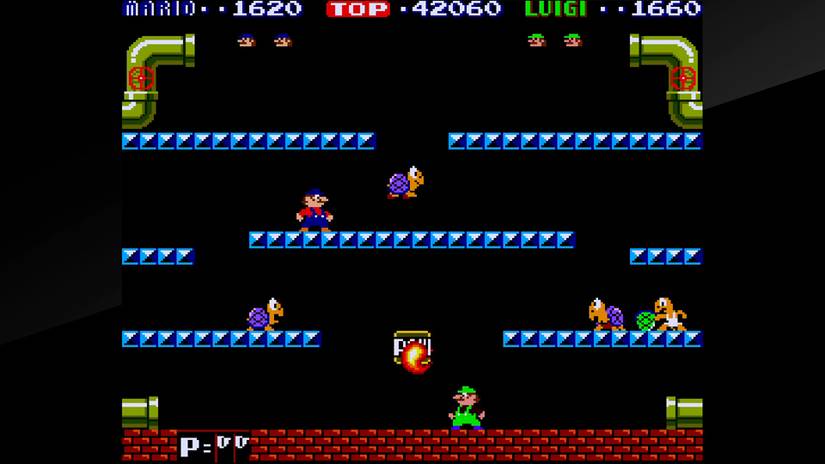
Compounding this is the moving ice block, an intermittent hazard that can freeze ledges upon contact. If left unchecked by a swift upward bop, the iced-over platform turns slippery, severely restricting movement and turning subsequent enemy encounters into perilous exercises in traction control.
Scoring Systems and Bonus Rounds
High-score chasing forms the beating heart of Mario Bros. Stunned enemies can be chained together; flipping multiple creatures close to one another multiplies the awarded points exponentially—surging from a baseline 800 points up to 1,600 and beyond. This introduces high-stakes risk management: do you secure the safe, single kill, or hold out for a multi-enemy combo while fast-moving late-stage threats close in?
Between standard levels, players are treated to bonus stages featuring floating coins. Successfully collecting every coin within a strict time limit yields massive point bonuses. While manageable solo in early rounds, later bonus stages virtually require cooperative two-player synchronization to clear efficiently, highlighting the game’s deep multiplayer synergy.
Official Statements & Industry Legacy
Reflecting on the evolution of Nintendo’s flagship character, industry historians and Nintendo leadership have frequently noted the vital stepping-stone nature of the 1983 arcade title.
In retrospective interviews regarding the development history of the Super Mario franchise, Shigeru Miyamoto has emphasized that the transition from Donkey Kong to Mario Bros. was driven by a desire to make character movement feel more expressive and dynamic:

"With Donkey Kong, the vertical movement was about climbing ladders and overcoming obstacles in a linear ascent. With Mario Bros., we wanted to explore horizontal space, momentum, and the physics of jumping from underneath. That foundation of interacting with the environment—hitting blocks from below—directly informed every platformer we created afterward."
Furthermore, software preservation advocates have praised the accessibility of classic releases on subscription services like Nintendo Switch Online. Industry analysts note that titles such as Mario Bros. serve as crucial educational tools for younger demographics entering the gaming ecosystem, proving that timeless game design transcends graphical fidelity.
Future Outlook: The Everlasting Appeal of the Arcade Classic
As the video game industry marches forward into an era defined by photorealistic graphics, massive open worlds, live-service monetization, and hundreds of hours of narrative content, the value of concise, arcade-style design has never been more apparent.
Mario Bros. occupies a secure, respected niche in the digital landscape. It no longer needs to compete with modern blockbusters; instead, it thrives alongside them as the ultimate interactive palate cleanser. Whether utilized by nostalgic players seeking a quick five-minute burst of retro adrenaline, parents introducing their children to the foundational mechanics of digital play, or preservationists studying the evolutionary DNA of Nintendo’s empire, the humble sewer-pumping adventures of Mario and Luigi remain entirely timeless.
Four decades after its initial coin-op release, the pipes of Mario Bros. continue to flow, proving that brilliant core mechanics never truly go out of style.