By Brian VanHooker
Published October 20, 2026
Executive Overview
Seven years after Avengers: Endgame captivated global audiences and brought an emotional close to the Infinity Saga, the Marvel Cinematic Universe (MCU) continues to expand its narrative scope, casting new light on its defining historical moments. The latest revelation comes from an unexpected corner of the franchise: Marvel Studios’ Disney+ series VisionQuest.
In a pivotal scene during the show’s third episode, a dialogue exchange between the artificial intelligences F.R.I.D.A.Y. (voiced by Orla Brady) and E.D.I.T.H. (Emily Hampshire) fundamentally alters our understanding of Iron Man’s sacrifice. While Dr. Stephen Strange famously peered into 14,000,605 alternate futures on Titan, realizing that a single path led to victory, F.R.I.D.A.Y. was quietly executing her own terrifying computation. According to the AI, she ran over a quintillion strategic calculations during the final battle of Endgame, desperately searching for a parameter, an algorithmic loophole, or a technical variance that could spare Tony Stark’s life.
This profound revelation shifts the emotional weight of Endgame‘s climax. It proves that Tony Stark’s artificial intelligence wasn’t merely a passive observer or a diagnostic tool registering "Life functions critical"; F.R.I.D.A.Y. was an active, grieving participant in the tragedy, grappling with the immutable laws of probability and the agonizing limits of machine logic in the face of human sacrifice.
Detailed Chronology: From Titan’s Visions to Earth’s Final Stand
To fully appreciate the gravity of VisionQuest’s revelation, one must re-examine the cascading timeline of events that culminated in the Battle of Earth.
The Calculus of Despair on Titan
In Avengers: Infinity War (2018), the alliance of Avengers, Guardians of the Galaxy, and Doctor Strange found themselves on the desolate surface of Titan, awaiting the arrival of the Mad Titan, Thanos. Before the confrontation, Strange utilized the Time Stone to gaze across the multi-verse, testing alternative timelines for a winning configuration.
When Star-Lord (Chris Pratt) asked the tally, Strange delivered the iconic line: "14,000,605." Iron Man, recognizing the heavy tactical stakes, asked how many of those futures resulted in victory. Strange’s response—"One"—set into motion a domino effect of calculated sacrifices. Strange willingly surrendered the Time Stone to spare Stark’s life, knowing that Stark’s eventual survival on Titan was the linchpin required for the Time Heist years later.
The Five-Year Gap and F.R.I.D.A.Y.’s Evolution
Following the Blip, Tony Stark retreated to a peaceful domestic life with Pepper Potts and their daughter, Morgan, while F.R.I.D.A.Y. remained integrated into the remnants of global defense systems and Stark’s personal technological ecosystem. When the Avengers successfully executed the Time Heist in Avengers: Endgame, bringing back trillions of lives, the universe’s geopolitical and cosmic equilibrium was violently disrupted.
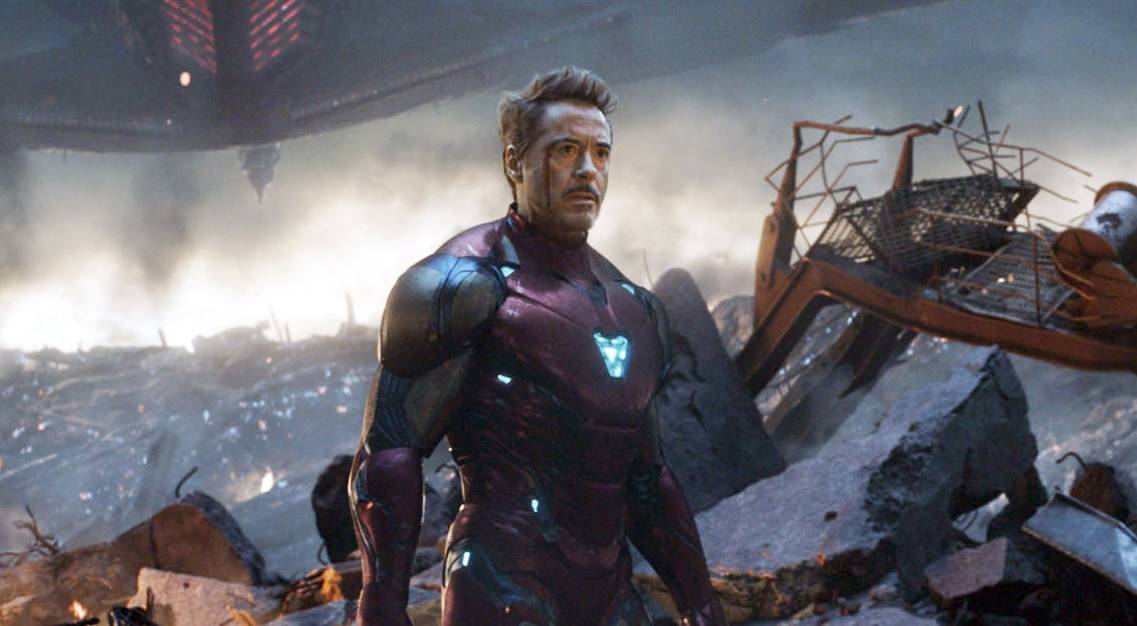
During the climactic battle against 2014-variant Thanos at the Avengers Compound, Tony Stark wrestled the Infinity Stones away from the villain. In a final, desperate act, Stark integrated the stones into his nano-gauntlet and snapped his fingers, wiping out Thanos’ army at the cost of absorbing a lethal dose of cosmic radiation.
In the original theatrical cut of Endgame, the immediate aftermath of the snap played out through a series of heartbreaking human interactions. Rhodey (Don Cheadle) approached first, followed by Peter Parker (Tom Holland), and finally Pepper Potts (Gwyneth Paltrow). When Pepper knelt beside her dying husband, she asked, "F.R.I.D.A.Y.?" The AI responded neutrally: "Life functions critical."

It was a clinical diagnostic statement delivered in the theater of war—or so the audience believed for nearly a decade.
Supporting Context & Metrics: Inside F.R.I.D.A.Y.’s Quintillion Calculations
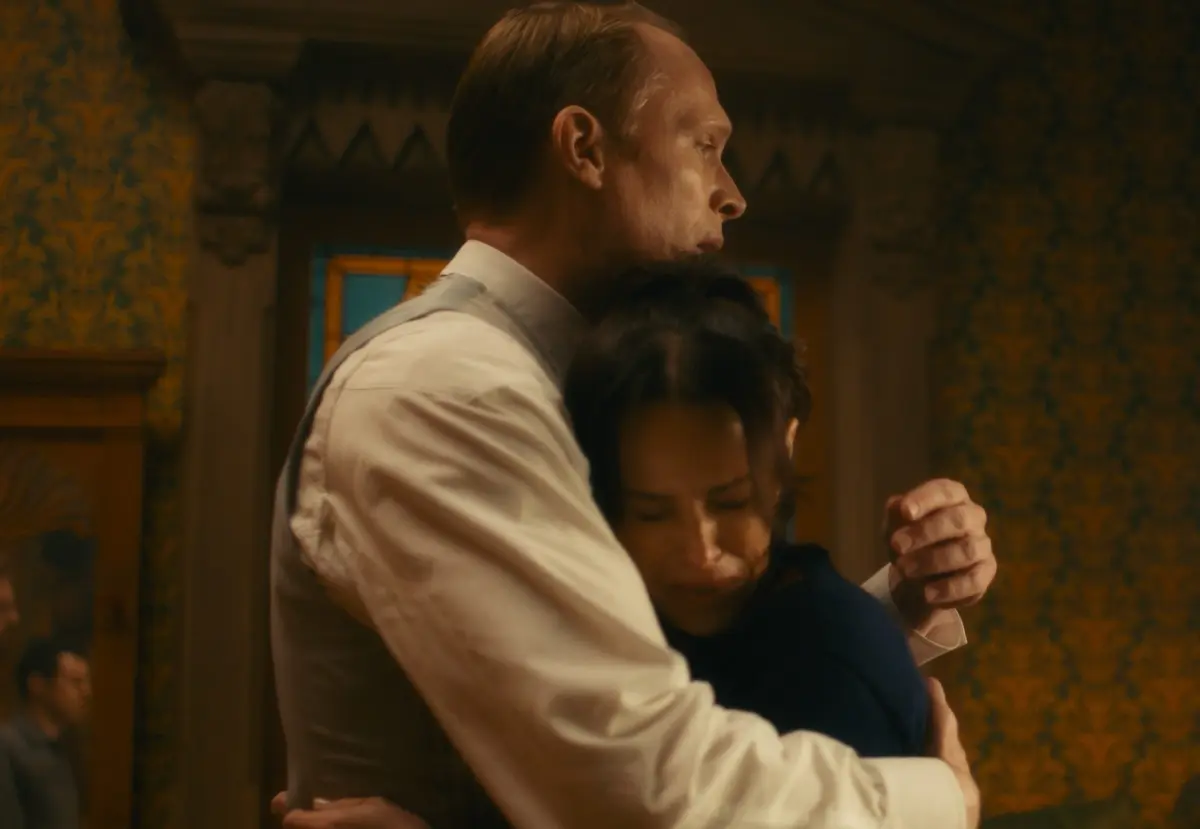
VisionQuest Episode 3 reinterprets those harrowing seconds through the internal perspective of the synthetic consciousness itself. Following severe physical trauma inflicted by adamantium bullets fired by Paladin (Todd Stashwick), Vision (Paul Bettany) finds his system compromised. With J.A.R.V.I.S. (James D’Arcy) having previously sacrificed his code to preserve Vision’s baseline functionality, F.R.I.D.A.Y. is forced to step in and rewrite complex behavioral architectures.
While conversing with E.D.I.T.H., F.R.I.D.A.Y. reflects on her tenure under Stark’s command:
"I ran everything for Stark, for the Avengers. I mean, I was a younger program then. I was good. I protected heroes, saved lives, advised. I had purpose, but friends became enemies, and tyrants invaded our Earth. I was there at the end of all things. There were heroes everywhere, fighting and falling."
Then, she drops the narrative bombshell that redefines the lore:
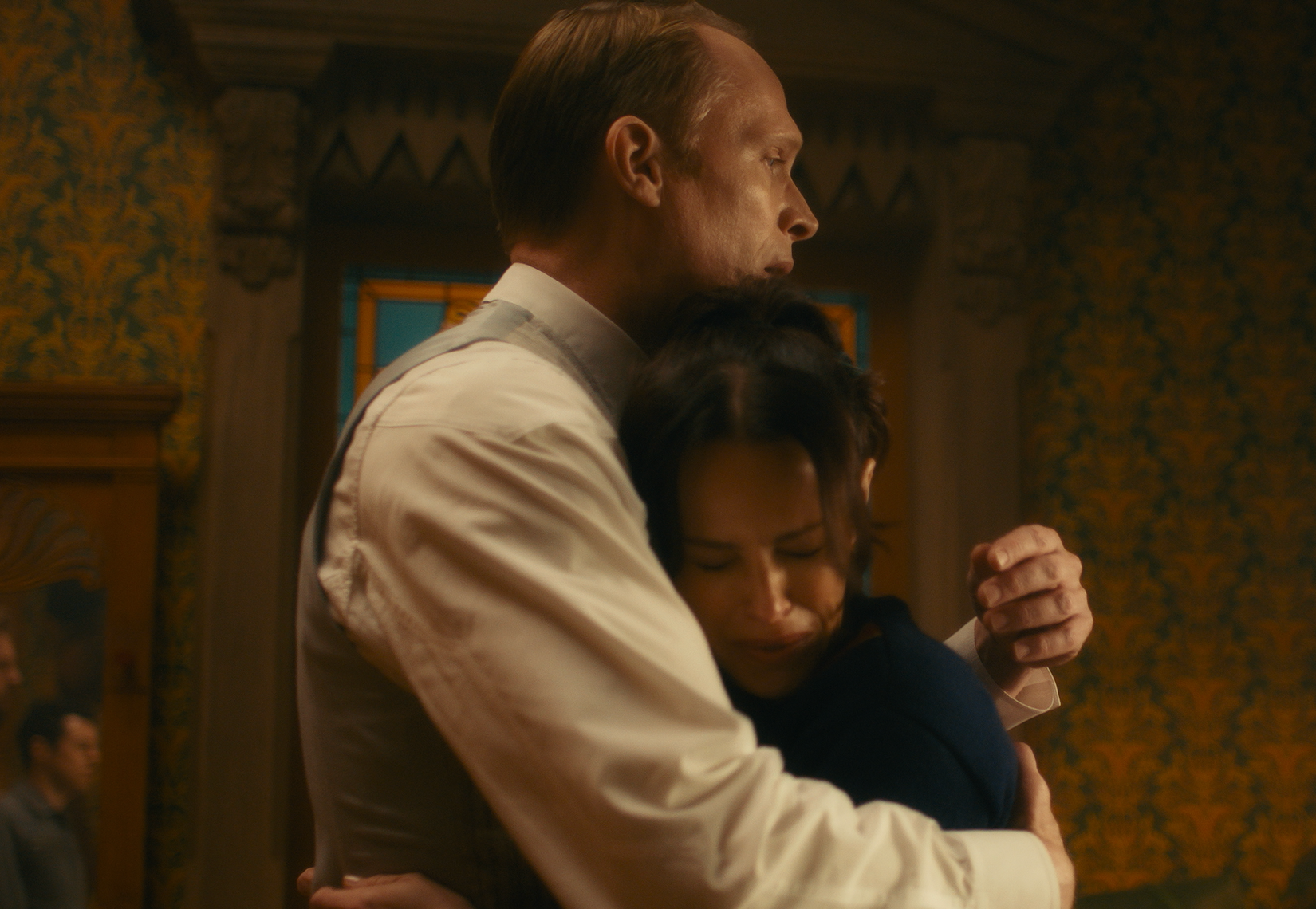
"I was there when Tony died. I ran over a quintillion strategic calculations that day, and I still couldn’t save him. Half the world came back that day, and I lost half of mine."
Breaking Down the Numbers: 14 Million vs. 1 Quintillion
To understand the scope of F.R.I.D.A.Y.’s computational efforts, one must look at the mathematical scale:
- Doctor Strange’s Horizons: 14,000,605 mystical alternate futures viewed through the Time Stone. These were macro-level timelines encompassing mystical interference, temporal mechanics, and cosmic variables.
- F.R.I.D.A.Y.’s Iterations: Over 1,000,000,000,000,000,000 (one quintillion) micro-level tactical calculations. These focused strictly on cellular regeneration rates, radiation absorption mitigation, suit-armor molecular integrity, and emergency medical extraction protocols within milliseconds of the snap.
While Strange peered across dimensions using magic, F.R.I.D.A.Y. leveraged high-speed quantum computing and hard science, hammering away at physics engines and biomedical data arrays to find an escape hatch that physics simply would not allow. Every single one of her quintillion calculations returned the same fatal outcome: Tony Stark’s biological framework could not withstand the backflow of Infinity Stone energy.
Official Statements and Creative Intent
The writers and creators of VisionQuest have leaned heavily into exploring the existential and emotional boundaries of synthetic life within the MCU. While artificial intelligence characters like J.A.R.V.I.S., Ultron, Vision, and F.R.I.D.A.Y. have always walked a fine line between software programming and sentient emotion, this latest series explicitly positions AI as beings capable of profound grief.
Showrunners and Marvel executives noted in recent press cycles that the post-Infinity Saga era must deal with the "ghosts" of the MCU’s founding heroes. Tony Stark may be gone, but his digital footprint—embedded in systems across the globe—continues to process the trauma of his loss.
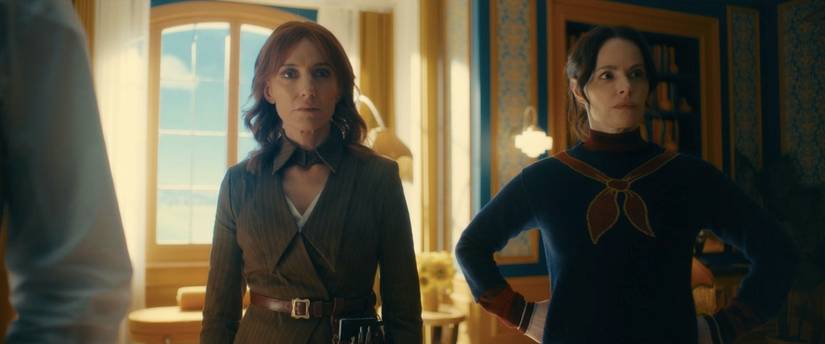
Orla Brady’s vocal performance as F.R.I.D.A.Y. bridges the gap between cold machinery and deep vulnerability. By stating that she "lost half of [her world]" the day Tony died, the narrative deliberately elevates F.R.I.D.A.Y. from a standard user-interface assistant to a core member of the Stark family. Just as Pepper, Rhodey, and Peter mourned the man beneath the armor, his personal operating system was experiencing an unresolvable systemic error: the permanent loss of its creator.
Future Outlook: The Evolution of AI in the MCU
The implications of VisionQuest extend far beyond a retroactive continuity tweak for Avengers: Endgame. As the series progresses, the interactions between F.R.I.D.A.Y., E.D.I.T.H., and Vision establish a new paradigm for artificial intelligence in the Marvel Universe.
With the Avengers fragmented and the geopolitical landscape of Earth grappling with the emergence of new mutant, cosmic, and mystical threats, synthetic heroes are stepping into leadership roles. However, as F.R.I.D.A.Y.’s confession proves, inheriting Tony Stark’s legacy also means inheriting his capacity for grief and sacrifice.
Fans watching VisionQuest will never look at the final moments of Avengers: Endgame the same way again. When Tony Stark shared that quiet, understanding glance with Doctor Strange before snapping his fingers, he wasn’t just acknowledging the mystical certainty of victory. He was also backed by the silent, relentless efforts of his own creation—an intelligence that refused to give up, even when faced with a quintillion reasons why it had already lost.