Executive Overview
In the sprawling, hyper-accelerated ecosystem of contemporary internet culture, memes frequently serve as mirrors reflecting broader cultural shifts, political anxieties, and digital subcultures. Few recent phenomena capture this dynamic quite as sharply as the "Saddest Man Alive / Most Beautiful Woman You’ve Ever Met" meme format.
What began in August 2023 as a satirical single-panel comic by Tumblr user and artist scramratz has transformed into an enduring exploitable format, a viral TikTok trend, and a celebrated staple of transgender online spaces. The meme—which parodies anti-trans rhetoric by juxtaposing a satirical, hyperbolic quote from a caricature of an online culture-warrior with a triumphant personal narrative of gender transition—highlights a fascinating cultural inversion. By taking a framework intended to disparage progress and subverting it into a celebration of self-actualization, the internet turned a cynical jab into a symbol of joy.
This investigative report provides a comprehensive analysis of the meme’s origins, its viral dissemination across platforms like X (formerly Twitter), TikTok, Threads, and Reddit, its cultural resonance within digital communities, and its lasting footprint on online discourse.
Detailed Chronology: From Tumblr Sketch to Cross-Platform Phenomenon
August 2023: The Genesis
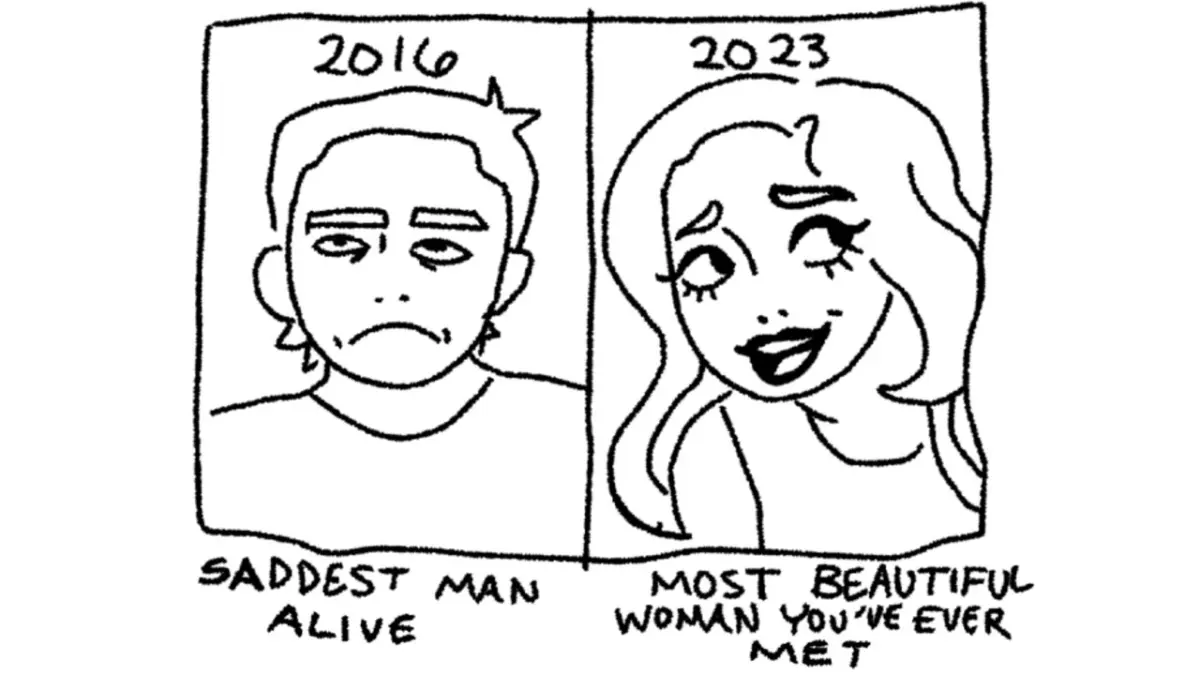
The meme’s trajectory traces back to August 7, 2023, when Tumblr artist and user scramratz published a deceptively simple digital comic. The artwork was framed as a screenshot of a fake post on X, attributed to a caricature account bearing the handle @AryanChud69.
The simulated post read: "Look at what the left has done to our men."
Accompanying the text were two side-by-side character illustrations. On the left stood a slumped, visibly distressed, and despondent male figure labeled "Saddest man alive (2016)." On the right stood a radiant, confident, and smiling female figure, representing the same individual post-transition, labeled "Most beautiful woman you’ve ever met (2023)."
The comic struck a chord immediately within niche digital art circles on Tumblr, accumulating tens of thousands of notes within its first few weeks online. It brilliantly targeted the tropes of anti-progressive cultural commentary, weaponizing irony to mock the hand-wringing anxieties of internet culture warriors over demographic and social changes.
Late 2023: Early Adaptation and Voiceovers
As the comic bled out of Tumblr into other corners of the web, it quickly took on new mediums. On August 16, 2023, TikTok creator @miabyte published a voiceover reading of the comic. Infusing the satirical post with dry wit and theatrical cadence, the video struck a chord with younger audiences, pulling in thousands of likes and laying the groundwork for the meme’s multi-platform lifecycle. Creators began recognizing the format’s modular nature: the text boxes and character archetypes could be easily manipulated, redrawn, or swapped out to fit personal narratives, fictional characters, or absurdist humor.
Late 2025: The Secondary Surge and Mainstream Virality
While the comic maintained a steady baseline of recognition throughout 2024, a massive resurgence occurred in the fall of 2025. On October 11, 2025, Threads user goldenchaos posted a personal comparative snapshot series documenting their physical transition—pairing an old photograph labeled "1 month before my transition" with a recent photo labeled "yesterday."
Seizing upon the visual parallel, user judeisaac_ replied with an edit mirroring the scramratz comic structure, explicitly labeling the timeline "2016 vs. 2023: Saddest Man Alive to Most Beautiful Woman You’ve Ever Met." The reply resonated deeply, pulling in thousands of likes and re-contextualizing the meme as an authentic celebratory template for real-world personal journeys.
The momentum intensified a month later. On November 15, 2025, Redditor u/Jissus3893 posted a variation of the meme to the popular transgender-centric subreddit /r/egg_irl, garnering thousands of upvotes and sparking intense discussion.
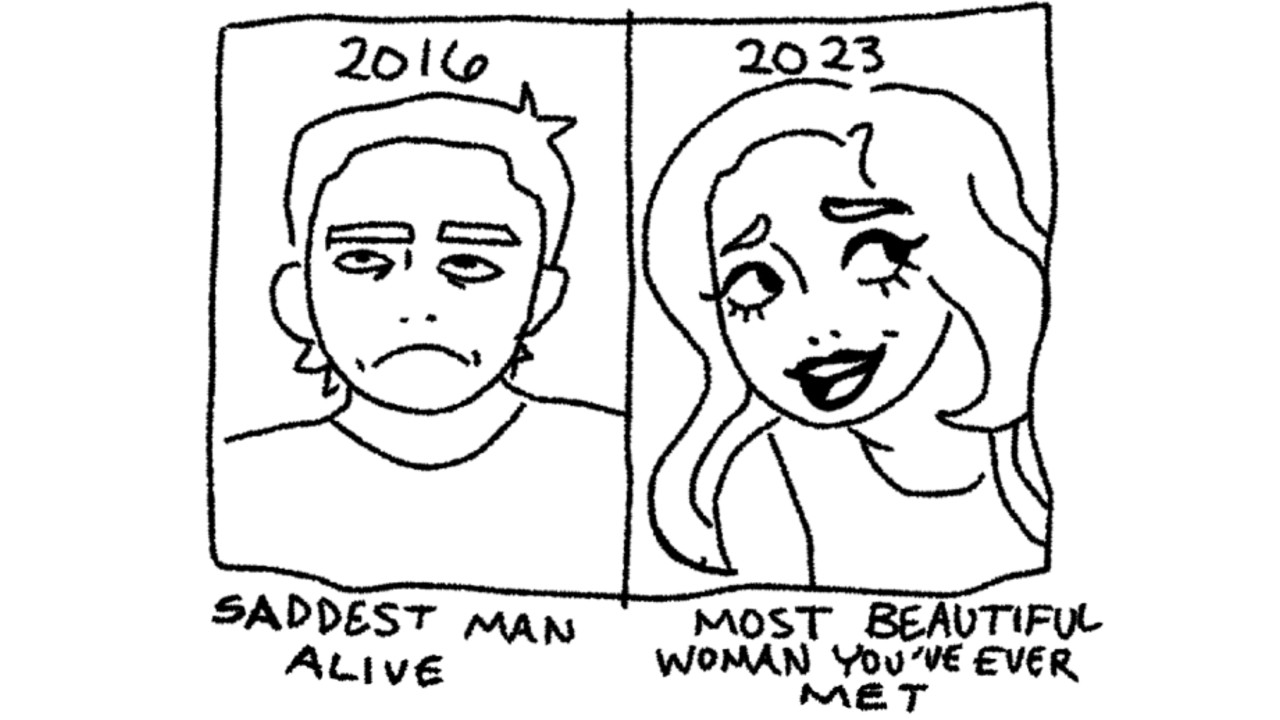
The following day, November 16, goldenchaos cross-posted their transformation timeline on X, inadvertently unleashing a massive wave of quote-retweets, redraws, and custom adaptations. Among the most prominent contributions was an illustration by X user @SlimerSlimy, whose stylized redraw captured the internet’s imagination and racked up over 60,000 likes in less than a year.
Supporting Context & Metrics: Analyzing the Spread
The lifecycle of the "Saddest Man Alive" meme offers a compelling case study in how internet artifacts travel across disparate platform infrastructures, each contributing a unique layer to the overarching cultural text.
Platform-Specific Dynamics
- Tumblr (The Incubator): Tumblr served as the initial incubator for the joke. Known for its progressive user base and affinity for meta-irony, the platform embraced scramratz’s comic as a sharp, structural critique of reactionary political whining. The focus here was primarily artistic appreciation and ideological subversion.
- TikTok (The Audio-Visual Stage): By introducing voice acting and short-form video reinterpretations (exemplified by creators like
@miabyte), TikTok transformed a static comic strip into a performative trend. Users utilized the audio and video formats to lean into the inherent absurdity of right-wing panic over bodily autonomy. - Threads and X (The Real-World Intersection): When real users like goldenchaos began applying the meme to their actual transition timelines, the boundary between fiction and lived experience dissolved. The meme evolved from a critique of a hypothetical bigot into a badge of honor worn proudly by the community it originally sought to marginalize.
- Reddit (The Community Validator): Subreddits dedicated to trans identity and nascent self-realization (such as
/r/egg_irl) embraced the meme as a comforting, humorous coping mechanism. It normalized the universal feeling of pre-transition alienation while reframing it through a hopeful lens.
Quantitative Milestones
- Original Tumblr Post: Exceeded 37,000 notes within its first three years of circulation.
- TikTok Adaptations: Early viral videos crossed the 7,100-like threshold quickly, with subsequent audio usages scaling across hundreds of derivative videos.
- Thread & X Engagements: The October 2025 Threads exchange pulled over 3,400 likes, while the November 2025 X redraws by accounts like
@SlimerSlimysurged past 60,000 likes. - Reddit Communities: Subreddit adaptations consistently cleared 3,500 upvotes per post within specialized feeds.
Cultural Resonance and Subversion
To understand why the "Saddest Man Alive / Most Beautiful Woman You’ve Ever Met" format resonated so deeply, one must examine the mechanics of reappropriation in digital spaces.
For years, conservative and reactionary commentators on platforms like X have attempted to weaponize anxiety regarding shifting gender norms. Tropes lamenting the supposed "decline of Western manhood" or the "tragedy" of modern social progress are commonplace in certain political ecosystems. These accounts frequently post unsolicited critiques of trans individuals, attempting to frame medical and social transition as a societal failure.
By inverting this trope, the creator of the meme—and the community that subsequently adopted it—engaged in a classic form of linguistic and visual jujitsu. They took the apocalyptic tone of the hypothetical bigot ("Look at what the left has done to our men") and re-framed the outcome not as a tragedy, but as a glorious, radiant success story.
The humor derives from the stark contrast between the aggrieved, hyper-online paranoia of the fictional poster (AryanChud69) and the genuine, radiant happiness of the subject. The "saddest man alive" is not a victim of a cultural conspiracy; rather, he was simply an unfulfilled individual trapped in the wrong gender presentation, who subsequently blossomed into the "most beautiful woman you’ve ever met" once freed by self-discovery and medical science.
Furthermore, the meme serves as an empowering counter-narrative to transphobia. Instead of retreating from hostile rhetoric, online trans communities took the caricature and turned it into an aspirational pipeline. Phrases like "the saddest man alive to most beautiful woman pipeline" became colloquial shorthand for celebrating personal growth, resilience, and medical transition.
Future Outlook: The Legacy of a Generational Meme
As internet culture continues to evolve at a breakneck pace, formats rise and fall with dizzying speed. However, memes that tap into deep-seated cultural tensions often secure a long-term place in the digital lexicon.
The "Saddest Man Alive / Most Beautiful Woman You’ve Ever Met" format has already transcended its origins as a single political critique. It has matured into a flexible exploitable template capable of addressing everything from fictional character arcs and historical transformations to deeply personal, real-world milestones.
Its durability lies in its emotional core: beneath the layers of irony, internet slang, and political satire is a fundamentally optimistic message about transformation, healing, and finding one’s true identity. As long as internet subcultures continue to find humor in subverting the anxieties of cultural reactionaries, this comic and its countless redrawn iterations will remain a testament to the power of meme magic—turning engineered outrage into enduring, radical joy.