Executive Overview
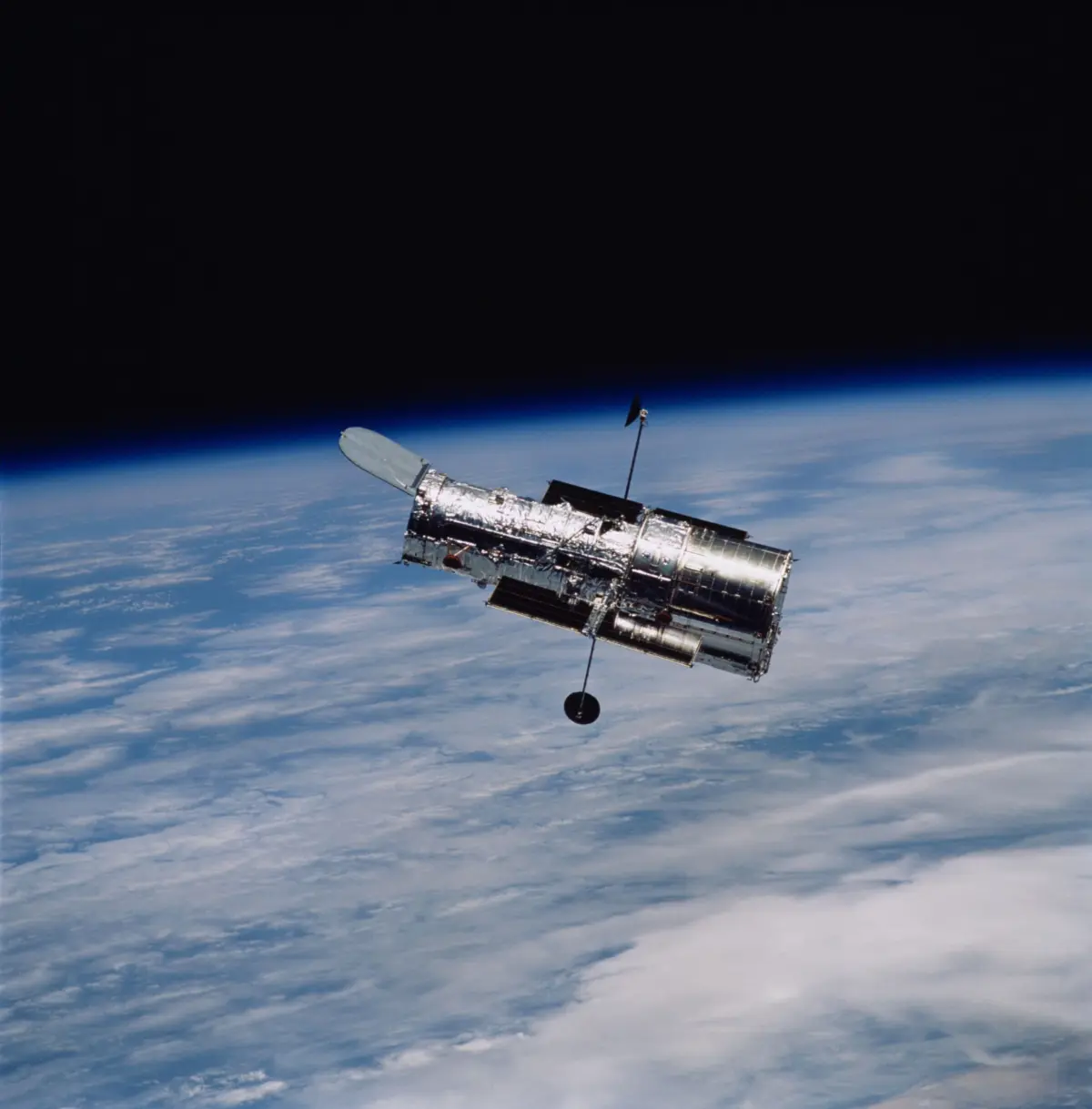
For over three decades, the Hubble Space Telescope has served as humanity’s eye on the cosmos, capturing breathtaking imagery and gathering data that has radically rewritten astronomical textbooks. Yet, time and physics remain relentless adversaries. Orbiting in the harsh environment of low Earth orbit (LEO), the legendary observatory is caught in a slow, irreversible descent. Pushed downward by atmospheric drag and hobbled by decades of hardware degradation, Hubble is projected to reenter Earth’s atmosphere by 2033 or 2034.
Faced with the impending loss of one of its most productive scientific assets, NASA is formally casting a wider net. The agency has issued an urgent Request for Information (RFI), appealing to commercial spaceflight companies to pitch innovative solutions for in-space servicing. While raising the telescope’s altitude to a higher, more stable orbit remains the primary goal, NASA is also entertaining ideas for safe, controlled atmospheric disposal or critical onboard hardware upgrades.
This pivot to private enterprise underscores a broader shift in aerospace strategy. No longer reliant solely on government-funded crews and space shuttles, NASA is looking to leverage the agility and capital of the burgeoning commercial space sector. However, the path forward is fraught with technological hurdles. Recent missteps in commercial orbital rescue missions highlight the high stakes of trying to service aging hardware in a hostile vacuum. As the clock ticks toward an estimated 2032 deadline for a successful reboost mission, the space agency, lawmakers, and scientists find themselves weighing the extraordinary costs of intervention against the irreplaceable scientific value of a true national icon.
Detailed Chronology: Hubble’s Operational Timeline and Orbital Decay
The Golden Years and the Shuttle Era (1990–2009)
Launched on April 24, 1990, aboard the Space Shuttle Discovery (STS-31), Hubble was designed from its inception to be a maintainable asset. Engineers envisioned a symbiotic relationship between human spaceflight and orbital observation, outfitting the telescope with modular components, handrails, and interface fixtures that visiting astronauts could manipulate.
Between 1993 and 2002, four successive servicing missions corrected the infamous optical flaw in its primary mirror, replaced failing components, and installed cutting-edge instruments that vastly expanded its observational capabilities. However, the tragic loss of the Space Shuttle Columbia in 2003 abruptly altered NASA’s calculus. Initially, the final planned servicing mission (STS-125) was canceled out of safety concerns.

Public outcry and a reassessment of risks ultimately compelled NASA to reverse course. In May 2009, the crew of Space Shuttle Atlantis executed a daring and final servicing mission. They installed new batteries, gyroscopes, and two powerful new science instruments—the Cosmic Origins Spectrograph and Wide Field Camera 3—while also attaching a soft-capture mechanism designed to aid eventual deorbit or retrieval efforts. Since then, Hubble has operated completely unassisted by human hands.
The Onset of Orbital Decay and Hardware Malfunctions
Without a propulsion system of its own, Hubble relies entirely on external forces to maintain its altitude. Operating at roughly 330 miles (540 kilometers) above Earth, the telescope still encounters wisps of the outer atmosphere. Over decades, this atmospheric drag has systematically sapped its orbital energy, drawing the spacecraft ever closer to the planet.
Compounding the altitude crisis are internal systemic failures. After 34 years in space, the telescope’s mechanical nervous system has begun to fray. In June 2024, NASA announced a drastic operational pivot: Hubble would transition to a "single-gyroscope mode."
Of the original six gyroscopes used to determine the telescope’s orientation in space, only three remained operational, and one of those was displaying erratic, abnormal telemetry. To preserve the lifespan of the final functioning backup, mission controllers opted to idle it and run the entire observatory on a single gyro. While this mode successfully keeps Hubble operational, it restricts the speed and efficiency with which the telescope can acquire new targets, marginally slowing its scientific throughput.
The Commercial Explorations Begin (2022–Present)
Recognizing that its internal capabilities could no longer support a crewed rescue mission, NASA began looking outward. In September 2022, the agency signed a non-funded Space Act Agreement with SpaceX. The partnership was designed to study the feasibility of using a SpaceX Dragon spacecraft to dock with Hubble and reboost it to a higher, safer orbit. While the study proved that a commercial reboost was technically possible, NASA elected not to fund or execute the mission immediately, leaving the concept in limbo.

The urgency of orbital decay was sharply underlined by the fate of another aging NASA asset: the Swift Observatory. In September 2025, NASA commissioned private startup Katalyst Space Technologies to perform an orbital rescue of Swift, which was suffering from accelerated atmospheric drag. The mission suffered a fatal blow in July 2026 when the servicing spacecraft experienced a catastrophic attitude control malfunction shortly after launch. With the rescue abandoned, Swift reentered Earth’s atmosphere and disintegrated over Indonesia on November 4, 2026—serving as a sobering reminder of the margins for error inherent in orbital mechanics.
Supporting Context & Metrics
To fully understand the gravity of NASA’s current dilemma, one must examine the hard metrics governing Hubble’s physical existence and its scientific footprint.
+-------------------------------------------------------------------------+
|                        HUBBLE BY THE NUMBERS                            |
+------------------------------+------------------------------------------+
| Launch Date                  | April 24, 1990                           |
| Initial Altitude             | ~600 km (subsequently lowered)           |
| Current Altitude             | ~540 km and dropping                     |
| Projected Reentry (Unchecked)| 2033 – 2034                              |
| Target Reboost Deadline      | 2032                                     |
| Servicing Missions Completed | 5 (1993, 1997, 1999, 2002, 2009)         |
| Gyroscopes Remaining Active  | 2 (1 active use, 1 in reserve)           |
+------------------------------+------------------------------------------+
The Science at Stake
Hubble’s scientific output remains staggering. It has logged over 1.6 million observations and contributed to the publication of more. than 20,000 peer-reviewed scientific papers. Its deep-field surveys revealed thousands of previously unknown galaxies, helping to constrain estimates of the age and expansion rate of the universe (the Hubble Constant).
Even with the massive James Webb Space Telescope (JWST) now operational, Hubble retains unique advantages. Because JWST observes primarily in the infrared spectrum, Hubble’s unique capabilities in ultraviolet and optical light remain irreplaceable. The two telescopes operate in complementary synergy, probing cosmic phenomena from different regions of the electromagnetic spectrum. Losing Hubble would create a profound gap in NASA’s multi-wavelength observation strategy, particularly in studying transient events, solar system bodies, and local stellar nurseries.
The Commercial Landscape and Risk Profiles
The RFI issued by NASA represents a fundamental philosophical shift: moving from government-directed mission architectures to a commercial service-provider model. Under this paradigm, private aerospace firms are invited to pitch not just propulsion solutions, but entirely novel robotics, autonomous docking protocols, and life-extension kits.

Yet, the risks are substantial. Attempting to rendezvous with a non-cooperative, tumbling, or aging satellite that lacks modern docking transponders is an engineering nightmare. Furthermore, as demonstrated by the Katalyst-Swift failure, robotic servicing in low Earth orbit carries a high risk of mission failure. A botched docking attempt could inadvertently push Hubble into an uncontrolled tumble, accelerating its destruction rather than preventing it.
Official Statements
The future of the telescope has sparked intense discussion among agency leadership, highlighting the tension between fiscal responsibility and scientific ambition.
Nicky Fox, associate administrator of NASA’s Science Mission Directorate, emphasized the symbolic and practical importance of exploring every avenue:
"Hubble is a national icon. Given the time we have until Hubble’s anticipated reentry, we are eager to explore the breadth of possibilities to boost Hubble to a higher orbit while we develop the flagship mission to follow."
Echoing this sentiment, NASA Administrator Jared Isaacman highlighted the duty owed to the public and the scientific community:

"Hubble still has important science ahead of it, and we should be looking at every reasonable opportunity to keep it delivering for as long as possible. If there are innovative and cost-effective ways to extend the life of an asset already in orbit, we owe it to the American taxpayer and the scientific community to explore them. Extending Hubble’s life would mean more discoveries, more science, and more opportunities to expand our understanding of the universe."
Independent aerospace analysts have also weighed in, noting that while the technical hurdles are immense, the success of a commercial Hubble servicing mission could usher in a new era of orbital sustainability. If a private company can successfully service a legacy asset built over thirty years ago, it will prove the commercial viability of orbital debris removal, satellite life-extension, and in-space manufacturing markets—industries projected to be worth tens of billions of dollars in the coming decades.
Future Outlook
As NASA reviews the proposals submitted through its latest Request for Information, the immediate future of the Hubble Space Telescope hangs in the balance. The technical roadmap moving forward requires clearing several high hurdles:
- Proposal Evaluation and Feasibility Studies (2026–2028): NASA will vet commercial submissions for safety, cost-effectiveness, and technical viability. Companies possessing advanced autonomous robotics and heavy-lift capabilities will likely take center stage.
- Funding and Partnership Decisions (2028–2030): Unlike the initial non-funded SpaceX study, saving Hubble past its 2030 threshold will likely require financial capital—either from NASA procurement budgets, private philanthropic funding, or a hybrid public-private partnership.
- The Critical Window (2030–2032): If a mission is greenlit, launch and execution must occur before atmospheric drag lowers Hubble’s orbit to a point of no return, universally estimated around 2032.
- The Ultimate Twilight (2033–2034): Should commercial rescue efforts prove economically unviable or technically too risky, NASA will have to orchestrate a guided, controlled reentry to ensure that any surviving fragments of the 12,240-kilogram telescope splash down safely in remote ocean waters, bringing a glorious chapter of space exploration to a formal close.
For now, Hubble continues to gaze outward into the dark, snapping crisp images of distant nebulae and ancient galaxies. Whether its journey ends in fiery atmospheric oblivion early next decade or is miraculously prolonged by a new generation of commercial spacecraft, the legacy of the world’s most famous space telescope is already permanently etched into human history.