Executive Overview
In the high-stakes, multi-billion-dollar underworld of cyber extortion, the line separating trusted incident response professionals from the criminal syndicates they are hired to fight has blurred dangerously. Recent developments in an aggressive U.S. federal investigation into the notorious ShinyHunters hacking group have exposed a deeply disturbing nexus: executives at prominent ransomware negotiation and cybersecurity firms maintaining illicit, highly cooperative ties with cybercriminals.
Federal investigators probing the group—which made global headlines after executing a high-profile breach of the Federal Bureau of Investigation’s recruitment portal—have identified senior executives across multiple international negotiation firms who allegedly aided the syndicate. According to sources close to the investigation, one U.S.-based executive went so far as to help operate a live extortion portal designed to pressure victims into paying out multi-million-dollar ransoms.
The investigation has widened dramatically following a series of dramatic international arrests, decrypted instant messaging logs, and deep-dive forensic audits. The scandal exposes systemic vulnerabilities and inherent conflicts of interest within the cybersecurity ecosystem, where the lucrative practice of ransom mediation can create perverse incentives for rogue actors to collude directly with the threat groups they are paid to neutralize.
Detailed Chronology: From Dutch Raids to Federal Indictments
The unraveling of the ShinyHunters network represents one of the most fast-paced, high-impact counter-cybercrime campaigns executed by international law enforcement in recent years. The domino effect began in earnest in the fall of 2026, driven largely by the group’s brazen decision to target the FBI itself.
The Breach of fbijobs.gov and the Fall of "Rey"
In late September 2026, hackers aligned with ShinyHunters successfully breached fbijobs.gov, the official recruitment portal of the FBI. The group taunted federal authorities by threatening to release highly sensitive personnel data, including Social Security numbers, home addresses, specialized unit designations, and deep psychological and medical records.
The attack on the bureau provoked an unprecedented response. Leveraging immense investigative resources, federal and international partners moved rapidly to round up individuals communicating with the syndicate’s current administrator, a teenage hacker from Amman, Jordan known online as "Rey." On October 3, Reuters reported that Rey had been detained by Jordanian authorities and was actively cooperating with the FBI.
The Arrest of Pepijn van der Stap
Rey’s ascension to leadership of the ShinyHunters brand—which has extorted upwards of $70 million this year alone—occurred only after the previous leadership structure was violently dismantled. On the evening of September 15, 2026, Dutch police executed a high-risk raid in the Netherlands, deploying flash-bang grenades to apprehend convicted hacker and ShinyHunters suspect Pepijn van der Stap.

Authorities successfully seized Van der Stap while he was actively logged into his Signal instant messaging account. This tactical win allowed investigators to harvest a goldmine of unencrypted communications with frequent contacts, including ransomware negotiators based in the United States and Canada.
According to sources familiar with the matter, Van der Stap’s Signal logs revealed far more than routine extortion chats: they pointed toward an aborted murder-for-hire plot targeting individuals abroad, allegedly ordered by Van der Stap himself, though never carried out. More critically, the chat logs mapped out a vast, clandestine network of white-collar cybersecurity professionals who were intimately cozy with the hackers.
The Arrest of Edward Dubrovsky
The decrypted communications directly implicated Edward Dubrovsky, a 54-year-old Canadian cybersecurity executive and the founder of a ransomware negotiation firm who had recently authored a book on handling cyber extortion. On October 9, the FBI arrested Dubrovsky. Federal prosecutors charged him with threatening to disclose hacked data and interfering with interstate commerce through extortion.
Court records and subsequent reports from outlets like Politico revealed that prosecutors requested Dubrovsky be held pending trial, keeping much of the case file under seal. Investigators discovered that Dubrovsky’s communications with Van der Stap showed he was regularly tipped off about fresh ShinyHunters victims before the companies even realized they had been compromised. Most damningly, federal investigators found that Dubrovsky knew ShinyHunters had stolen sensitive data from FBI servers but deliberately withheld that information from the bureau until the group publicly weaponized the leak on social media.
Supporting Context & Metrics: The Mechanics of Extortion
To understand the depth of the collusion, security researchers and federal analysts have closely examined the operational infrastructure built to monetize the group’s breaches—most notably, a short-lived platform known as Shinywire.
The Rise and Fall of shinywire.com
Federal investigators believe that at least one executive at a prestigious U.S.-based consulting firm with over 1,000 associates played an active role in operating shinywire[.]com. Active from May 3, 2026, until mid-October, the site listed nearly 100 victim organizations compromised by ShinyHunters.
The platform functioned as an interactive pressure cooker. Each victim profile featured samples of stolen proprietary data and a strict countdown timer. If a victim failed to engage or negotiate within seven days, the portal threatened to dump all pilfered intellectual property, customer data, and internal emails onto the group’s dark web shaming blog hosted on the Tor network.

High-profile corporate targets were routinely funneled through this pipeline. For instance, Intuitive Surgical, an American medical technology giant, found itself listed on Shinywire after suffering a credential-harvesting phishing attack in March 2026.
The Ghostbyte Legacy and Industry Inbreeding
The web of corruption extends deep into the historical roots of the ransomware negotiation industry. Interviews with former colleagues of Daniel Tobok, the former CEO of Toronto-founded cybersecurity firm Cypfer, revealed that as far back as 2018, Tobok was known to prolific Russian-language ransomware affiliates under the moniker "Ghostbyte."
Forensic investigations into historical Dharma ransomware attacks from 2018 uncovered communications where threat actors actively directed reluctant victims to contact an IT professional via the email address [email protected], assuring them that this specific Canadian entity specialized in smoothing over negotiations and guaranteeing safe deliverables. Constella Intelligence data later linked email addresses frequently used by Tobok to online accounts registered under the username "ghostbyte."
While Tobok has faced fierce corporate disputes—including a bitter lawsuit filed in Ontario by his former partner Edward Dubrovsky alleging a campaign to "destroy" him—the broader ecosystem of ransom mediation has drawn intense scrutiny from regulatory and law enforcement bodies alike.
The Conflict of Interest in Ransom Payouts
The financial structures underpinning modern incident response firms often create a moral hazard. According to Mark Camillo, Chief Executive of CyberAcuView, many specialized negotiation and remediation providers charge a fee structured as a percentage of the final ransom paid out to cybercriminals.
This compensation model introduces an inherent, perverse conflict of interest. A negotiator financially rewarded by the sheer volume of the transaction has every incentive to validate the attackers’ leverage, discourage aggressive pushback on pricing, and facilitate rapid payouts rather than exploring alternative remediation or legal avenues.
[Victim Organization Hit]
        │
        ▼
[Incident Response Firm Appointed]
        │
        ├──> Fixed Fee Model: Neutral or Cost-Plus
        │
        └──> Percentage-of-Payout Model (High Conflict):
                  │
                  ▼
             [Maximizes Ransom Size] ──> [Higher Cut for Negotiator]
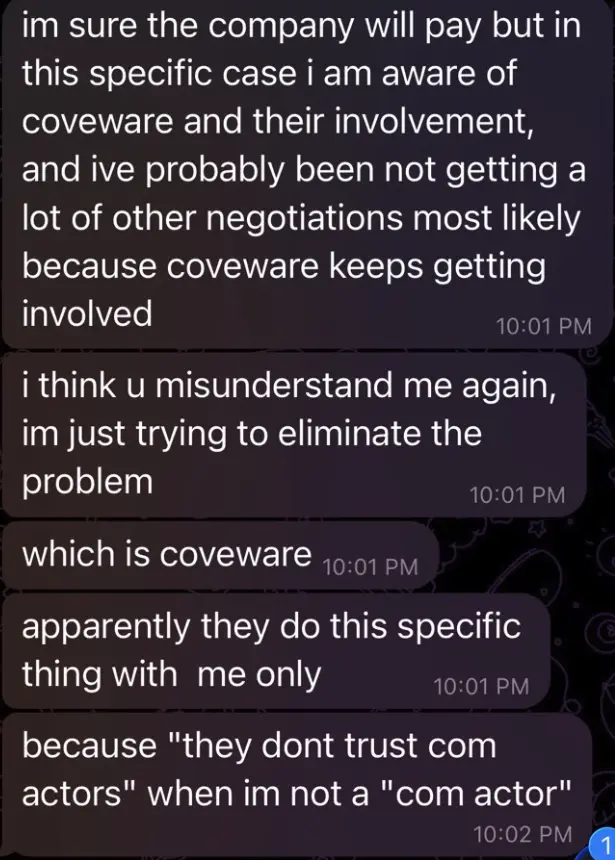
Industry heavyweights have long sounded the alarm. Firms like Coveware and Unit 221B have consistently counseled victims against paying ShinyHunters, warning that extortionists routinely retain stolen data regardless of contractual promises, later reselling it or using it to harass clients downstream.

This principled stance, however, has made these firms direct targets for the criminals. Internal Telegram chats recovered by investigators show ShinyHunters leadership venting intense frustration over Coveware’s interference. In a May 2026 chat, a ShinyHunters leader complained to an accomplice:
"Go on my website, majority of those companies would’ve paid if it weren’t for Coveware giving them misinformation… Someone (100% Coveware) is going out of their way to make sure i am not paid."
Another chat from April 2026 explicitly stated that the group was actively looking to "eliminate the problem" posed by Coveware’s anti-payment advisories.
Official Statements and Industry Fallout
The arrests of high-profile figures like Edward Dubrovsky and MonsterCloud CEO Zohar Pinhasi—who was charged by the Department of Justice on October 7 with wire fraud and conspiracy for secretly paying hackers $8 million behind his clients’ backs while billing them $19 million—have sent shockwaves through the cybersecurity sector.
In an official statement addressing the unfolding crisis, Cypfer distanced itself from its former leadership:
"We had no prior knowledge of Mr. Dubrovsky’s arrest. CYPFER has not received any outreach from law enforcement and, to our knowledge, is not the target of any law enforcement investigation."
Cypfer further clarified its corporate lineage, noting it operates completely separate from CyberSteward and is currently under the ownership of the Apros Group, led by former FBI special agent Jason Hogg.

Meanwhile, federal prosecutors are tightening the noose around rogue intermediaries. The U.S. Department of Justice has made it clear that corrupt intermediaries who cross the line from remediation advisors into active co-conspirators—such as Angelo Martino, who was sentenced to 70 months in prison for leaking client negotiation strategies to the Blackcat/ALPHV syndicate—will face severe criminal penalties.
Future Outlook: Reforming the Ransomware Ecosystem
The infiltration of ransomware negotiation firms by cybercriminal syndicates marks a watershed moment for the cybersecurity industry. As federal investigators continue to comb through seized messaging databases, financial ledgers, and cooperation agreements from detained figures like "Rey" and Pepijn van der Stap, further indictments are widely anticipated.
The fallout from these revelations demands structural reform across the incident response landscape:
- Regulatory Transparency: Industry leaders are calling for strict regulatory oversight regarding how ransom payments are calculated, demanding the elimination of percentage-based broker fees that reward negotiators for larger payouts.
- Vetting and Compliance: Cyber insurance providers must rigorously vet the third-party remediation and negotiation firms they recommend to policyholders, ensuring total independence from threat actor networks.
- Information Sharing: Greater friction must be established between corporate incident responders and law enforcement to prevent rogue brokers from shielding active extortion campaigns from federal oversight.
Ultimately, the exposure of "Shadow Negotiators" proves that the commercialization of cyber extortion has created internal malignancies within the defense industry itself. Restoring trust in the cybersecurity ecosystem will require uncompromising enforcement, radical transparency, and an absolute rejection of the cynical view that doing business with cybercriminals is just another cost of doing business.