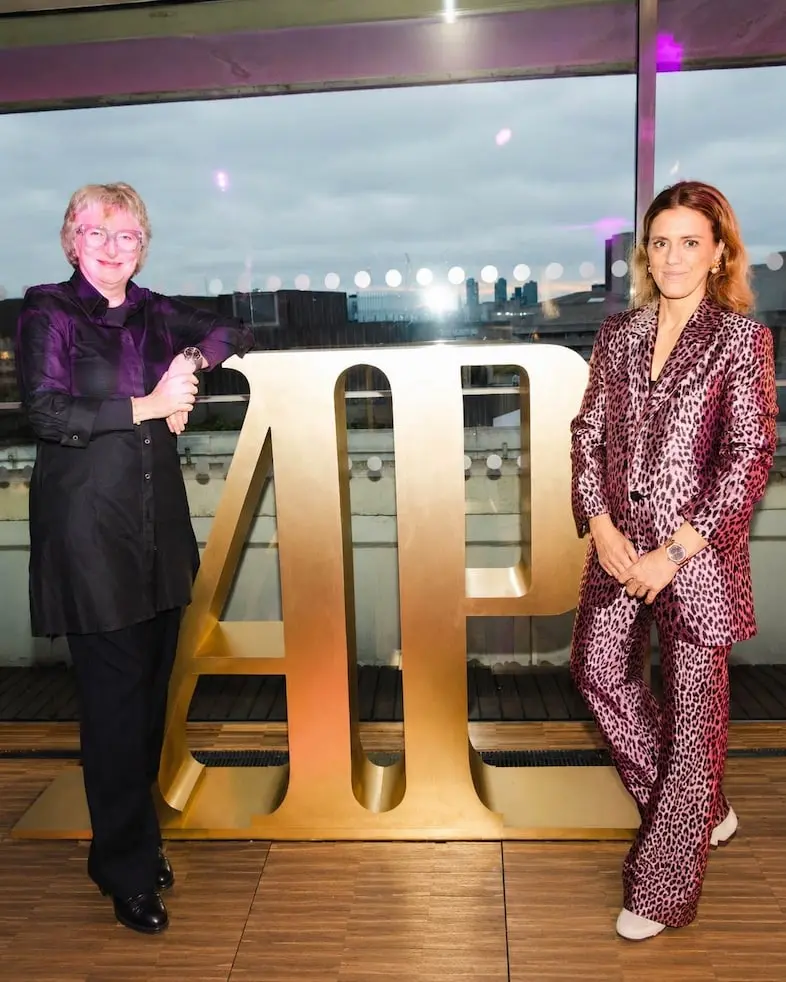
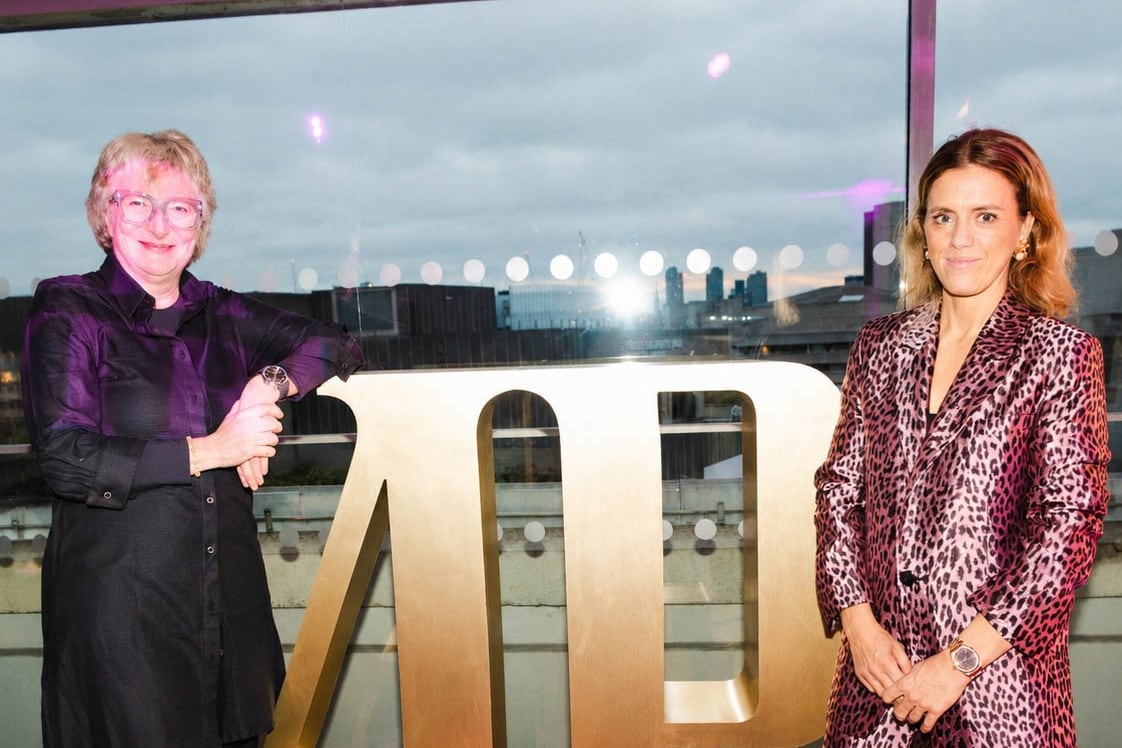
Against the vibrant, high-stakes backdrop of London’s annual Frieze art fair week—a period when the global art market converges on the British capital—a distinct intersection of contemporary fine art, architectural intervention, and luxury patronage took center stage. Last week, Dazed Club, the cultural community arm of influential youth-culture publication Dazed, joined forces with Audemars Piguet Contemporary to host an intimate yet culturally resonant evening at the Southbank Centre’s St Paul’s Roof Pavilion.
The gathering was designed to mark a dual milestone: the height of London’s autumn art calendar and the unveiling of Swiss artist Renée Levi’s monumental public commission, titled September, at the adjacent Hayward Gallery.
Rather than retreating into the sterile, hermetic confines of a traditional white-cube gallery, Levi’s latest commission boldly reimagines the brutalist concrete façade of the Hayward Gallery as an active canvas. By deploying industrial mesh, vibrant fluorescent acrylics, and light-responsive silver spray details, the artist has transformed the institution’s distinct architectural lines into an evolving visual experience.
The partnership between Audemars Piguet Contemporary and Dazed Club sought to unpack this radical departure from conventional exhibition spaces. Bringing together art historians, critics, curators, and members of the Dazed Club community, the evening featured an incisive public conversation moderated by writer and cultural programmer Lewis Dalton Gilbert. He was joined by Renée Levi and Audrey Teichmann, curator at Audemars Piguet Contemporary. Together, they dissected the complexities of public art commissions, the dialogue between painting and brutalist architecture, and the broader socio-political implications of taking contemporary art beyond museum walls and directly into the public sphere.
Detailed Chronology of the Evening
Dusk at the St Paul’s Roof Pavilion: Setting the Scene
As twilight descended over the River Thames last week, attendees began arriving at the Southbank Centre’s St Paul’s Roof Pavilion. The venue offered an atmospheric vista of London’s evolving skyline at dusk, juxtaposing historic landmarks with contemporary glass-and-steel monoliths. Far from being isolated from the city’s pulsing energy, guests were treated to a living tableau directly beneath the pavilion’s wrap-around balconies: the red carpet arrivals and flashing cameras of a major London Film Festival gala unspooled on the plaza below.
This sensory collision—the high-octane glamour of cinema meeting the rigorous intellectualism of contemporary visual art—established the tone for an evening dedicated to cross-disciplinary dialogue. Sipping artisanal drinks and sampling curated canapés, attendees from varied creative backgrounds—spanning fashion, architecture, design, and fine art—mingled within the minimalist architecture of the pavilion. The room buzzed with anticipation, underscored by the physical presence of Levi’s nearby intervention just a stone’s throw away on the Hayward Gallery’s exterior.
The Critical Dialogue: Breaking Down September
At the heart of the evening was a rigorously curated conversation led by Lewis Dalton Gilbert. Seated before an engaged audience of cultural tastemakers and Dazed Club members, Gilbert guided Renée Levi and Audrey Teichmann through a comprehensive autopsy of the creative process behind September.
The dialogue opened with an examination of the logistical and conceptual hurdles inherent in commissioning large-scale public art. Teichmann articulated Audemars Piguet Contemporary’s ongoing mission: to support artists in realizing ambitious projects that might otherwise remain unrealized due to financial, scale, or institutional constraints. For Teichmann, Levi’s practice represented an ideal synthesis of uncompromising artistic vision and structural daring.
Levi herself elaborated on the visceral nature of working with industrial materials. Rather than applying pigment to stretched canvas, Levi’s process on September involved treating industrial mesh with high-visibility fluorescent acrylics and reactive silver sprays. The artist discussed how her interventions do not merely "decorate" a building; instead, they interrogate its material reality. By working in dialogue with the Hayward Gallery’s iconic 1960s brutalist exterior—designed by architects Norman Engleback, Ron Herron, and Warren Chalk—Levi engages in a visual conversation with architectural history.
The conversation further ventured into the philosophy of public space. As cities become increasingly commercialized and privatized, the panelists debated the vital necessity of free, accessible art that confronts urban citizens in their daily commutes. Levi emphasized that public art must disrupt the mundane, offering moments of sudden psychological rupture through color, light, and scale.
After-Hours Connections: The Dazed Club Community Experience
True to the ethos of Dazed Club, the evening transitioned seamlessly from formal critique to community building. Following the panel discussion, guests lingered in the pavilion to debate the evening’s themes, exchange contact information, and forge new creative alliances.
The atmosphere was electric yet intimate, characterized by the organic mingling of emerging creators and seasoned art-world professionals. By facilitating direct access to artists and curators of Levi and Teichmann’s caliber, the event successfully dismantled the elitist barriers that often alienate younger generations from institutional contemporary art. Attendees left not only with a deeper appreciation of Levi’s artistic methodology but also with a renewed sense of belonging within London’s vibrant, interconnected cultural ecosystem.
Supporting Context, Architecture, and Metrics
Taking Art Beyond the White Cube: The Anatomy of September
To fully grasp the significance of the Audemars Piguet x Dazed Club event, one must examine the physical artwork that catalyzed the gathering. Renée Levi’s September is a masterclass in site-specific spatial intervention.
The Hayward Gallery, opened in 1968, stands as one of the most uncompromising examples of brutalist architecture in the United Kingdom. Composed of board-marked concrete, heavy geometric masses, and sparse exterior ornamentation, the building has long polarized public opinion. For many contemporary artists, however, its raw, unapologetic materiality offers a compelling foil.
Levi’s September directly confronts this brutalist heritage. Spanning the building’s west façade in a two-part composition, the installation dramatically frames the gallery’s elongated horizontal windows. By utilizing industrial mesh—a material more commonly associated with construction scaffolding and industrial filtration than fine art—Levi introduces a permeable, textile-like quality to the monolithic concrete.
Color, Light, and Ephemerality
The chromatic palette of September is deliberately jarring yet harmonious with the grey tones of its architectural host. Painted with blazing fluorescent acrylics, the work radiates an artificial intensity that contrasts sharply with London’s frequently overcast skies. Furthermore, the strategic application of silver spray-painted details ensures that the installation is never static.
As the sun shifts across the London sky and natural light gives way to artificial urban illumination, the silver components reflect and refract light dynamically. From one angle, the installation appears hyper-saturated and opaque; from another, it dissolves into semi-transparent veils of color that whisper across the concrete surface. This temporal mutability forces viewers to reconsider the building not as a permanent, immutable fortress of culture, but as a living, breathing canvas subject to the passage of time and light.
The Patrons of the Avant-Garde: Audemars Piguet Contemporary
The realization of works on the scale of September is rarely achieved by individual artists alone; it requires robust institutional backing and visionary corporate patronage. Audemars Piguet Contemporary has carved out a unique niche within the global art ecosystem by commissioning artists to create ambitious, complex works that challenge traditional boundaries.
Unlike traditional corporate sponsorship—which often limits itself to logo placement and passive financial support—Audemars Piguet Contemporary operates more akin to a proactive production house and curatorial laboratory. By collaborating closely with artists throughout the entire lifecycle of a project—from initial conceptualization to final installation—the initiative empowers creators to push the limits of their practice. The partnership with Dazed Club for this Hayward Gallery commission underscores a growing imperative within luxury and media brands: to bridge the gap between high-end patronage and youth-oriented cultural discourse.
Official Statements and Perspectives
While the panel discussion provided immediate insights, the broader discourse surrounding the collaboration highlights shifting attitudes toward public art and institutional accessibility.
Audrey Teichmann, Curator at Audemars Piguet Contemporary, noted during the evening’s conversation:
"When we look at artists like Renée, we are looking at individuals who refuse to be confined by the conventional parameters of the studio or the gallery wall. Public art commissions demand a very special kind of bravery—they require the artist to surrender control to the elements, to architecture, and to the unpredictable gaze of the general public. Supporting this means trusting the creative vision to alter the urban fabric in ways that provoke genuine, unscripted human reactions."
Renée Levi, reflecting on the conceptual roots of September, emphasized the democratization of visual experience:
"A painting does not belong exclusively inside a quiet room behind a velvet rope. By bringing September onto the exterior of the Hayward Gallery, we are entering a dialogue with the city itself. The concrete is heavy, historical, and immovable; our intervention is light, chromatic, and responsive. That tension creates a new space for the viewer—one where art is encountered spontaneously, interrupting the daily rhythm of urban life."
Cultural programmers and critics present at the event further praised the initiative for addressing a central crisis in contemporary cultural institutions: the growing disconnect between elite art spaces and the broader public. By combining the curatorial weight of Audemars Piguet Contemporary, the architectural canvas of the Hayward Gallery, and the sub-cultural reach of Dazed Club, the collaboration successfully created a multi-tiered platform where contemporary art was demystified, debated, and celebrated without pretension.
Future Outlook: The Evolution of Public Art and Collaborative Curation
As the dust settles on Frieze week and London’s art institutions transition into their winter exhibition schedules, the reverberations of the Audemars Piguet x Dazed Club event offer a compelling glimpse into the future of cultural patronage and public engagement.
The Shift Toward Experiential Integration
The success of September signals a growing appetite for ephemeral, site-responsive interventions that challenge the hegemony of the traditional gallery interior. As cities densify and public spaces become increasingly commodified, artists and curators are likely to increasingly view urban architecture not as a neutral backdrop, but as an active participant in the artistic narrative. Future commissions will increasingly demand interdisciplinary collaborations—bringing together painters, architects, lighting designers, and structural engineers to execute works that redefine the urban landscape.
Redefining Luxury and Cultural Stewardship
The active involvement of luxury watchmaker Audemars Piguet in supporting cutting-edge contemporary art points to an evolving model of corporate social responsibility and cultural stewardship. Rather than relying on safe, crowd-pleasing acquisitions, brands with significant capital are increasingly positioning themselves as risk-tolerant patrons of the avant-garde. This trend suggests that the future of major public art installations may increasingly rely on private-public partnerships capable of funding projects that municipal budgets alone can no longer support.
Empowering Grassroots Cultural Communities
Finally, the collaboration with Dazed Club highlights the indispensable role of digital-first, community-driven media platforms in shaping contemporary art discourse. By translating high-art theory into accessible, engaging experiences for a younger, digitally native audience, initiatives like this ensure that contemporary art remains vital, relevant, and fiercely democratic.
As Renée Levi’s fluorescent brushstrokes continue to catch the shifting London light on the brutalist flanks of the Hayward Gallery, they stand as a permanent reminder of what happens when institutional rigor, daring patronage, and youth-culture communities collide: the city itself becomes a masterpiece.