Executive Overview
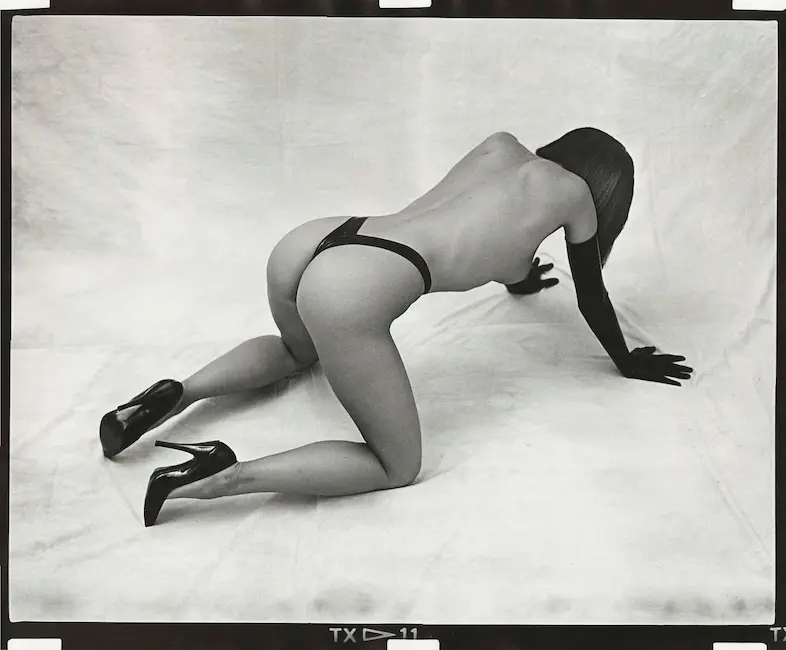
Twenty years after his tragic death by suicide at the age of 55 in 2006, the indelible, controversial, and often misunderstood photographic legacy of Bob Carlos Clarke is once again confronting the public eye. London’s prestigious Atlas Gallery is set to host a landmark retrospective, The Last Dolls, running from September 5 to September 26, 2026, in partnership with The Little Black Gallery. This major exhibition serves as a critical reappraisal of an artist who operated as one of photography’s most relentless and polarizing provocateurs.
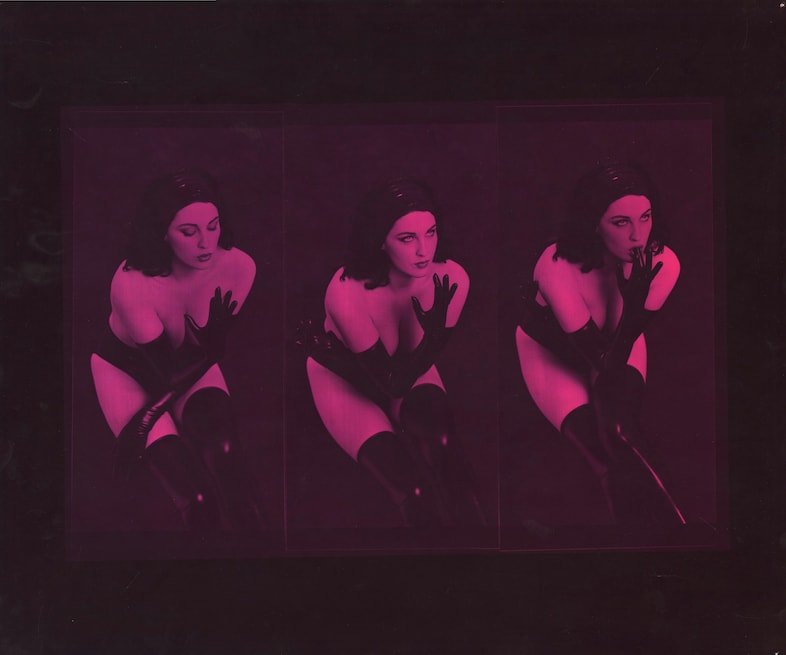
Featuring rare and unique vintage prints, previously unseen mixed-media collages, and iconic imagery from his final major series, Love Dolls Never Die, the exhibition traces the trajectory of a man whose lens captured the frantic energy of rock-and-roll royalty, the sleek commercial demands of global advertising, and the murky, fetishistic underworlds of human desire. Yet, beneath the high-contrast sheen of his darkly erotic black-and-white prints lies a deeply complex narrative of alienation, meticulous darkroom craftsmanship, and a lifelong wrestling match with personal demons forged in the strict confines of a mid-20th-century British boarding school.
As contemporary image-making increasingly turns toward synthetic algorithms and hyper-processed digital workflows, the tangible, chemically altered physical prints of Bob Carlos Clarke offer a visceral reminder of the human hand in art. This retrospective not only celebrates his stylistic bravura but also unveils the tender, melancholic nuances of an artist who could breathe human soul into inanimate objects, cementing his enduring status as a titan of modern photographic subversion.
Detailed Chronology
Formative Years and the Wellington College Rebellion
Long before he was framing high-contrast erotica or shooting promotional campaigns for global brands, Robert Carlos Clarke was a young man at odds with institutional authority. Born into an era of strict societal expectations, he was dispatched to Wellington College, a prestigious English boarding school designed to turn out disciplined gentlemen. Instead, it produced a defiant non-conformist.
A surviving letter from his housemaster to his father paints a vivid picture of this youthful rebellion: “Robert is not a clever boy. He would do well to put more thought into goals and waste less time on girls and guitars.”
That precise prescription—to abandon the pursuit of girls and guitars—proved to be an impossible directive. The obsession with music and female allure would instead become the twin engines driving his entire career. Yet, the price of this defiance was high. The profound alienation, isolation, and unhappiness Carlos Clarke experienced during his formative years at boarding school created psychological fissures that would shadow him throughout his life, culminating in his tragic death in 2006.
The Accidental Entrance to Photography and "The Commander"
Following his turbulent departure from traditional schooling, Carlos Clarke sought refuge at the West Sussex College of Art. Photography, initially, was not a grand artistic calling; it was a tactical maneuver. Developing a heavy crush on a woman who supplemented her income through part-time modeling, the young art student offered her a professional photo shoot purely as a means of courtship.
The strategy succeeded—not only did they complete the shoot, but the two married a few years later. Though the marriage ultimately dissolved, the brief union acted as a portal. Carlos Clarke had discovered the profound access a camera afforded him: a backstage pass to models, underground subcultures, notoriety, and a life fueled by adrenaline that would soon prove dangerously intoxicating.
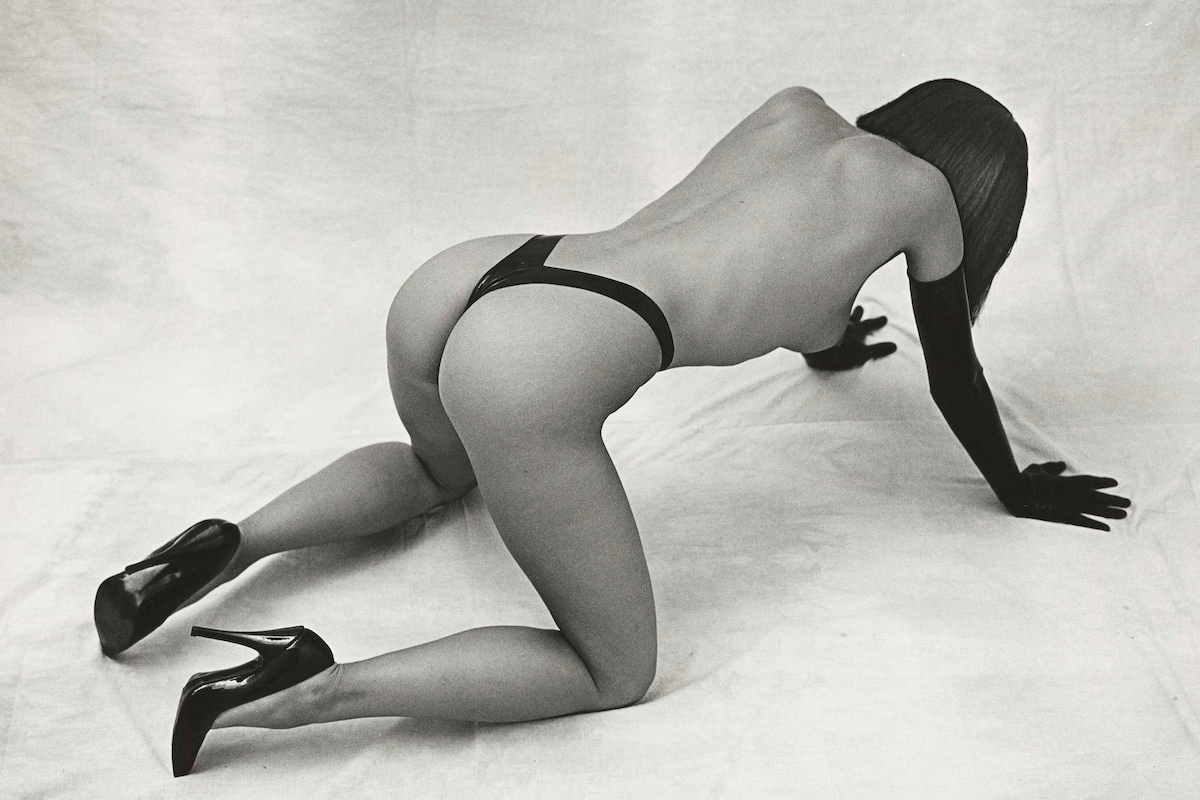
During his student years, his artistic and psychological trajectory shifted dramatically upon meeting an enigmatic older man known simply as "The Commander." A former frogman in the Royal Navy, The Commander published an underground magazine dedicated to enthusiasts of latex and rubber wear. Fascinated by the sensory properties of his old diving suits, The Commander introduced Carlos Clarke to a universe of fetish photography that transcended standard pin-up glamour, diving headfirst into darker, morally ambiguous, and psychologically charged territories.
The Royal College of Art and the Avant-Garde
Armed with this burgeoning fascination for alternative aesthetics, Carlos Clarke advanced to the Royal College of Art (RCA). During this pivotal period, he forged a lifelong friendship with artist Allen Jones. Jones was courting severe controversy at the time for his hyper-realistic sculptural furniture featuring latex-clad female forms.
Both artists found themselves drawn to a shared visual language of fetishism, commodity culture, and stylized desire. Their work inevitably drew fierce criticism from feminist theorists who argued that reducing the female form to plasticized furniture or fetishized objects was inherently demeaning. Yet, from an art-historical perspective, Carlos Clarke and Jones were not merely reproducing exploitation; they were holding up a distorting mirror to consumer capitalism, interrogating how society commodifies the human body, desire, and the psyche.
Supporting Context & Metrics
The Versatility of a Master Craftsman
While Carlos Clarke’s name became synonymous with darkly erotic, unapologetically fetishistic studio photography, his professional footprint was remarkably vast. His portfolio spanned across several distinct cultural spheres:
- Rock-and-Roll Iconography: He captured the raw, decadent spirit of musical outlaws and cultural troublemakers, most notably Rolling Stones guitarist Keith Richards and celebrity chef/provocateur Marco Pierre White.
- Commercial Campaigns: He elevated corporate advertising in the 1980s and 1990s, executing high-profile, visually arresting campaigns for blue-chip brands such as Levi’s and Smirnoff.
- Fine Art Erotica: His signature black-and-white studio works remained his masterpiece. These images rendered women simultaneously as goddesses, futuristic aliens, mythical sirens, and mechanical objects—complete with literal on/off switches or wind-up keys.
Darkroom Obsession and Analogue Purity
Carlos Clarke was far more than a conceptual shooter; he was a master darkroom technician. He approached his prints with a level of obsessive, methodical craftsmanship that borders on alchemy. Working tirelessly under red safelights, he produced everything from hyper-detailed, large-format exhibition prints to deeply experimental, gold-toned, one-of-a-kind monotypes.
This deep devotion to physical process is precisely why his work resonates so profoundly two decades after his passing. In an era dominated by instantaneous digital shutter clicks and AI-generated image generation, the photography world is experiencing a powerful counter-movement toward analogue processes. The physical labor embedded in a Carlos Clarke print—the grain, the chemical wash, the deliberate burning and dodging—transforms each photograph from a fleeting digital file into a tangible, tactile artifact.
The Thames Mudlark: A Poetic Contradiction
Beyond the glossy, high-contrast world of latex and celebrity, The Last Dolls exhibition highlights an entirely unexpected facet of Carlos Clarke’s artistic output: his quiet, contemplative side.
Included in the retrospective is a series of grainy still-life photographs depicting utilitarian objects—principally cutlery and miscellaneous metallic fragments—collected during solitary walks along the muddy banks of the River Thames at low tide. Known to friends and colleagues as a boisterous, high-energy, and often confrontational presence, Carlos Clarke’s "mudlarking" photographs reveal a tender, mournful, and deeply poetic sensibility.
Official Statements
Reflecting on her father’s enduring legacy and the timely nature of the upcoming retrospective at Atlas Gallery, Scarlett Carlos Clarke emphasizes the vital connection between analogue history and contemporary artistic anxieties:
"I think that, with the rise of digital and AI imagery, photographers are returning to analogue and darkroom processes," notes Scarlett Carlos Clarke. "Process itself, now more than ever, has made tangible objects like prints and books so much more desirable."
Discussing his unique artistic touch—particularly his ability to bridge the gap between organic life and industrial manufacturing—she highlights the profound empathy underlying his provocative compositions:
"He had an ability to take an inanimate object and somehow make it feel human. If he wasn’t in the darkroom, he was always collecting or making things."
Art historians and curators organizing The Last Dolls point out that Carlos Clarke’s work thrives on a delicate, perpetual state of tension. His images constantly oscillate between opposing forces: the indexical truth of the camera versus chemical manipulation, unbridled wildness versus strict formal restraint, and the porous boundary between living human subject and inanimate object.
Future Outlook
As the art world prepares for the September 2026 opening of The Last Dolls at the Atlas Gallery on Dorset Street in Marylebone, London, the cultural lens through which we view Bob Carlos Clarke has matured. No longer dismissed simply as a shock-jock of 1980s flash photography, he is increasingly recognized as a sophisticated psychological portraitist who mapped the anxieties of a consumerist, hyper-sexualized society.
The exhibition, realized in partnership with The Little Black Gallery, arrives at an inflection point for contemporary visual culture. As synthetic media threatens to decouple photography from physical reality, retrospectives of master darkroom printers like Carlos Clarke serve as vital anchors. They remind audiences that photography was—and can still be—a visceral, dangerous, and deeply physical act of creation.
For collectors, photography enthusiasts, and cultural historians, The Last Dolls offers an unmissable pilgrimage into the mind of a troubled genius who spent his life exploring the dark corners of desire, leaving behind a body of work that remains as untouchable, commanding, and fiercely alive as the women he immortalized on film.