Executive Overview
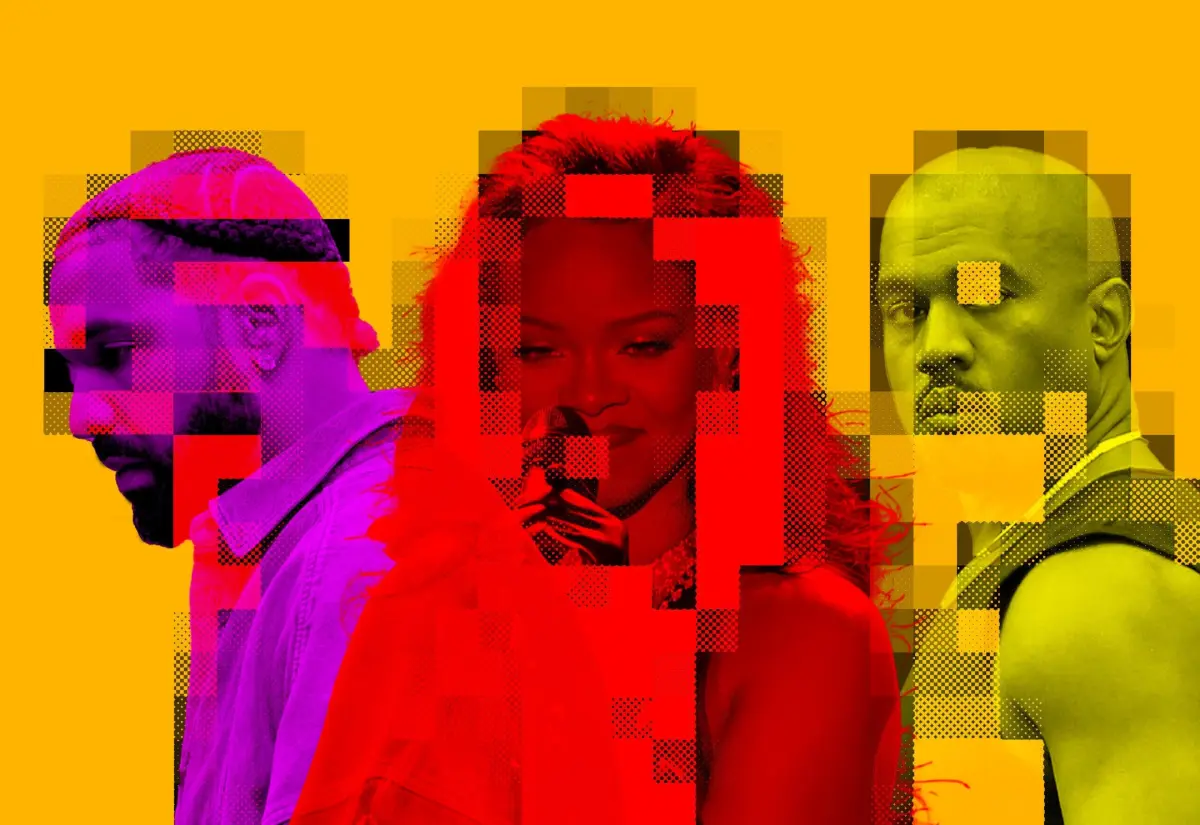
The global music industry stands at a critical technological and legal crossroads. Thanks to the explosive democratization of powerful generative artificial intelligence tools, the once-unimaginable is now commonplace: anyone with a standard laptop, an internet connection, and basic instructions can clone the voice of a superstar. Platforms like YouTube, Instagram, and TikTok are currently flooded with unauthorized tracks where legendary artists appear to sing, rap, and perform entirely original compositions—or covers of other artists’ work—that they never touched or approved in their lifetimes.
What began as niche technological experiments by basement programmers and tech enthusiasts has rapidly escalated into a full-scale cultural and economic phenomenon. From superstar DJs dropping unreleased AI-generated Eminem verses in live concerts to viral tracks blending the vocal likenesses of Drake and The Weeknd, generative AI has outpaced both copyright law and industry guardrails. Major labels like Universal Music Group are aggressively pushing back, sounding alarms about existential threats to intellectual property, while legal scholars scramble to define the boundaries of voice cloning, identity theft, and fair use.
This deep-dive investigation explores how the technology works, the amateur creators driving the trend, the fierce corporate resistance from major labels, and the looming legal battles that will shape the future of human creativity.
Detailed Chronology of the AI Music Boom
Early 2023: The Proof of Concept
The collision of artificial intelligence and mainstream popular music accelerated drastically in early 2023. Superstar DJ and producer David Guetta sent shockwaves through the electronic music community in February when he posted a video clip from a live concert. In the footage, Guetta played an original track featuring distinct, hyper-realistic vocals of Eminem. The rapper had nothing to do with the creation of the track, yet thousands of concertgoers and online viewers listened to a convincing digital simulation of his signature cadence and flow.
Around the same time, French hip-hop act AllttA released "Savages," a single utilizing AI-generated vocals modeled after Jay-Z. Reviewers and cultural critics noted that the unmistakable texture of Jay-Z’s voice brought a compelling, eerie authenticity to the track. These early high-profile stunts demonstrated that the technology had evolved past metallic robotic autotune; it could now accurately replicate the breathiness, inflection, and emotional resonance of human performers.
The Viral Tipping Point: "Heart on My Sleeve"
The phenomenon reached a fever pitch with the unexpected viral explosion of "Heart on My Sleeve," an impeccably produced collaborative track featuring simulated vocals from Drake and The Weeknd. The song swept across social media platforms within hours, prompting widespread speculation. While many fans celebrated it as a futuristic masterpiece, industry insiders and tech analysts quickly suspected it was a sophisticated marketing ploy orchestrated by an unknown AI startup to test platform reactions.
As the floodgates opened, thousands of amateur creators began churning out faux cover songs. The boundaries of taste were rapidly tested. Drake found himself at the center of the storm when an AI-generated track surfaced featuring his voice rapping Ice Spice’s breakout hit "Munch (Feelin’ U)." Visibly frustrated by the proliferation of unauthorized deepfakes bearing his likeness, Drake took to Instagram to declare that the track was officially "the final straw."
While male artists like Drake and Kanye West vocalized their discontent, others remained silent. Pop superstar Rihanna, for instance, became the subject of numerous AI-generated covers performing tracks originally by Beyoncé, Katy Perry, and Maroon 5, yet she and her management team offered no immediate public comment.
The Undercurrents: How Hobbyists Built the Movement
While major artists fumed, hobbyists were hard at work democratizing the technology. Consider "YeezyBeaver," a 22-year-old creator from Oklahoma who runs a popular YouTube channel dedicated to Kanye West (Ye) performing unexpected tracks. His most popular creation is a surprisingly charming, melancholic cover of the Plain White T’s classic "Hey There Delilah" delivered in the unmistakable vocal tone of Kanye West.
YeezyBeaver, speaking on the condition of anonymity, explained that he stumbled into the world of AI music creation through a link on a Ye Discord fan server. The community shared a pre-trained voice model of the rapper alongside step-by-step instructions on how to integrate the model into open-source generative music software.
The tool of choice for many of these creators is So-Vits-SVC (Soft-Voice-to-Voice Conversion), an open-source project hosted on GitHub. The software has gained such immense traction that the corresponding hashtag on TikTok has amassed over 2 million views. YeezyBeaver initially tested the tool by mapping Kanye’s voice onto Drake’s emotional track "Jungle." When that experiment gained traction on TikTok, he expanded his repertoire, selecting songs he believed suited Kanye’s artistic persona.
Similarly, "pieawsome," an American college student and member of the internet’s tight-knit "Kanye unreleased community," used his technical skills to train an advanced voice model. Dedicated to archiving and finishing Ye’s unfinished studio sessions, pieawsome realized the community had accumulated enough isolated vocal stems (acapellas) to train an accurate AI model.
"I realized we had enough Kanye material where we could probably make an AI model out of it to finish some of the songs," pieawsome explained. He chopped up raw vocal samples, fed them into So-Vits-SVC, and allowed his computer to train the model over several days. The results were startlingly accurate. He distributed the model on Discord, where fellow fans quickly used it to generate new tracks. Within weeks, the movement gained viral validation when superstar Travis Scott "liked" an Instagram post featuring a viral AI track of Ye covering Ice Spice’s "Munch."
Supporting Context & Metrics
The rapid acceleration of generative AI in music is supported by a confluence of accessible technology, massive datasets, and shifting consumer habits.
- Democratization of Compute Power: High-end neural network training, which once required enterprise-grade supercomputers, can now be executed on consumer-grade GPUs or cloud-hosted notebooks in a matter of hours.
- The Scale of the Underground: Dedicated Discord servers focused on AI voice cloning boast tens of thousands of active members sharing training weights, datasets, and troubleshooting scripts.
- Platform Reach: TikTok, YouTube Shorts, and Instagram Reels serve as hyper-efficient distribution funnels, where short-form audio snippets can reach millions of listeners before copyright detection algorithms can index and flag them.
- Consumer Ambiguity: A significant portion of younger digital natives view AI covers not as copyright violations, but as a natural extension of internet meme culture, fanfiction, and video game modding.
Official Statements & Industry Resistance
The Corporate Counter-Offensive
While hobbyists view their creations as harmless fan tributes, the institutional music establishment views the technology as an existential threat. Universal Music Group (UMG)—home to major recording artists including Drake, Rihanna, Taylor Swift, and Billie Eilish—has moved aggressively to protect its catalog.
According to reports from the Financial Times, UMG reached out to major streaming platforms, including Spotify and Apple Music, demanding that they block AI developers from scraping copyrighted melodies, lyrics, and vocal tracks from their platforms. The primary objective is to starve generative AI models of the high-quality training data required to produce convincing vocal replicas.
The music giant’s aggressive posture was likely galvanized by warnings from financial analysts. A prominent analyst at BNP Paribas Exane recently published a note labeling generative AI music as a "new disruptive threat" to the traditional economics of the major record labels, warning that unchecked AI generation could permanently alter royalty distributions and devalue human artistry.
Legal Limbo and Ethical Dilemmas
Despite the corporate panic, the legal status of AI-generated music remains a gray area. Traditional intellectual property law was never designed to account for generative neural networks that can learn the acoustic fingerprint of a human voice without necessarily stealing specific master recordings or compositions.
Jered Chavez, a 19-year-old student at the University of South Florida who runs a popular Instagram page featuring AI-generated mashups (such as Drake, Ye, and Kendrick Lamar singing the closing theme to the anime Rascal Does Not Dream of Bunny Girl Senpai), acknowledges the ethical friction.
"With this area of AI, there’s a lot of controversy and ethical concerns," Chavez noted. "Obviously, people that make this music and use this AI are taking someone’s likeness and, most of the time without permission, creating something that’s essentially putting words in people’s mouths."
Chavez pointed out that the ethical boundaries become even more blurred when applied to deceased artists who cannot give consent. Yet, projects like BohemianRhapsod.ai—which allows users to conduct a virtual choir of 16 AI-generated vocal tracks of Freddie Mercury singing Queen’s classic hits—demonstrate an insatiable consumer appetite for reanimating legends.
Legal experts are sharply divided on how existing laws apply. Jonathan Bailey, former chief technology officer of music technology firm Soundwide, argues that the practice crosses clear ethical and legal boundaries. "I think you can make a persuasive argument that using AI to reanimate Jay-Z’s voice to have him rap or sing something he never created is kind of a form of identity theft," Bailey asserted.
Conversely, veteran entertainment attorney Donald Passman—who has represented industry titans like Adele and Taylor Swift—declined to offer a definitive legal prediction, citing the unprecedented novelty of the technology. "It’s way too new," Passman said, noting that he refused to comment on theories that might contradict future litigation positions.
Creators like pieawsome draw parallels to established internet subcultures. "I think of what we do as the equivalent of modding a video game or producing fanfiction based on a popular book," he said. "That may be a good thing. It may be a bad thing. I don’t know. But it’s kind of an inevitable thing that was going to happen."
Future Outlook: Where Does the Industry Go From Here?
As major labels ramp up copyright takedowns across YouTube and SoundCloud, the cat-and-mouse game between legal compliance and underground innovation is accelerating. Automated content ID systems are becoming more sophisticated, frequently flagging and removing unauthorized AI tracks within hours of upload.
However, creators remain defiant. "I guess that’s one way of tackling it," Jered Chavez said regarding label takedowns. "But honestly, now this technology is out there, I don’t think people are ever going to stop using it. The responsibility lies in the judgment of the people that are making [AI-generated music]. I try to use my best judgment. This is kind of new territory for everyone."
Looking ahead, the resolution of the AI music crisis will likely depend on three major developments:
- Legislative and Judicial Precedent: Landmark lawsuits brought by major publishers against AI developers will force courts to clarify whether training models on copyrighted vocal tracks constitutes fair use or copyright infringement, and whether a person’s voice can be legally protected as an un-ownable acoustic trademark.
- Authorized Licensing Models: Rather than attempting to ban the technology outright, forward-thinking labels may soon establish official licensing frameworks. Artists could legally lease their voice models to developers, earning royalties on AI-generated tracks created within approved ecosystems.
- Watermarking and Cryptographic Provenance: Technology firms and standards bodies are developing cryptographic watermarking protocols for audio files, allowing streaming platforms to instantly identify, authenticate, or block synthetic voice generation at the point of upload.
Until these technical, legal, and cultural frameworks mature, the global music landscape will continue to navigate an unpredictable frontier—one where the line between human expression and machine simulation grows blurrier with every single viral track.