In the high-stakes theater of modern e-commerce fulfillment, speed and efficiency are the ultimate currencies. For years, traditional parcel delivery has relied on an asset-heavy, legacy infrastructure of dedicated cargo fleets, vast sorting hubs, and fixed ground routes. Yet, this model has grown increasingly fragile, plagued by capacity bottlenecks, steep operational costs, and the sudden, arbitrary cancellation of carrier accounts. Enter ClearJet, an Austin-based, AI-enabled logistics startup that is rewriting the rules of the middle mile.
In an exclusive announcement, ClearJet has secured a $25 million Series B funding round led by Edison Partners. The raise brings the company’s total funding to $40 million since its inception in 2022. The round saw enthusiastic participation from returning backers including Venture53, Origin Ventures, SaltVC, and SpringTime Ventures, alongside earlier institutional supporters such as Sky VC (formerly JetBlue Ventures) and Tandem Ventures.
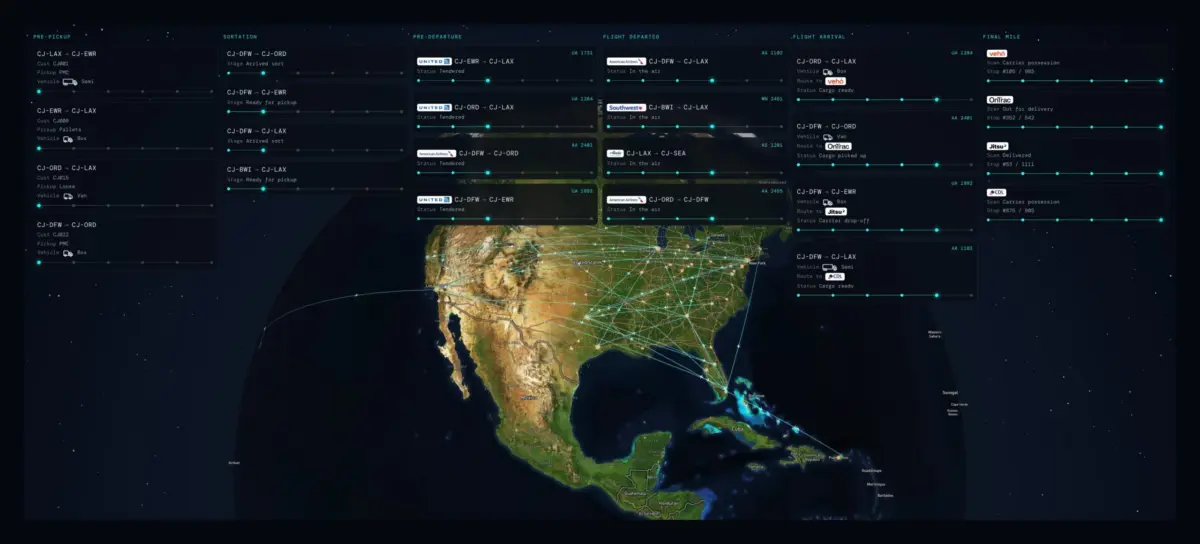
Rather than sinking capital into planes, trucks, and massive sorting facilities, ClearJet operates on an asset-light, "Uber for cargo" model. The company leverages unused cargo capacity on commercial passenger flights already crisscrossing the United States. By connecting major retailers, e-commerce platforms, third-party logistics (3PLs) providers, and marketplaces directly to a proprietary software network, ClearJet transforms commercial aviation into a decentralized "super carrier."
The financial and operational results are striking. Just three years after its founding, ClearJet is profitable, growing its top-line revenue by more than 300% year-over-year, and rapidly approaching nine figures in annual revenue. Moving over 30 million packages annually across a footprint spanning 95 U.S. airports, ClearJet’s technology-driven approach slashes shipping costs by up to 35% while accelerating delivery windows by one to three days. As global supply chain and logistics funding surges toward a projected multi-billion dollar milestone in 2026, ClearJet stands out as a category-defining disruptor poised to reshape how goods move across the country.
Detailed Chronology: From E-Commerce Frustration to Aviation Innovation
The Origin Story: A Million-Dollar Headache
ClearJet’s genesis was born out of profound operational frustration. Founder and CEO Chris Guggenheim is no stranger to the digital commerce landscape. His entrepreneurial journey began in 1997, when an accidental meeting with legendary musician Willie Nelson and his family led him to pioneer direct-to-fan e-commerce operations. Over the ensuing decades, Guggenheim built a formidable reputation in the entertainment and retail sectors, launching digital properties like beyonce.com and heading up One Live, a company that eventually powered more than 2,000 Shopify Plus stores representing over $1 billion in Gross Merchandise Value (GMV).
Despite this commercial success, logistics remained an intractable, bleeding wound. Shipping costs steadily climbed to become the second-largest operational expense for his businesses, trailing only the cost of the products themselves. The breaking point arrived in 2019. After spending $55 million with United Parcel Service (UPS) over a sustained period, Guggenheim received an abrupt email granting him a mere five-day notice that his corporate shipping account was being terminated because it failed to meet internal profitability thresholds.
"And so I said, ‘There has to be a better way,’" Guggenheim recalled.
The "Shark Tank" Moment on the Tarmac
Determined to find an alternative, Guggenheim looked up at the thousands of domestic passenger aircraft flying overhead every single day. He wondered: Why couldn’t the empty belly space of these commercial airliners be harnessed to build a faster, more agile parcel network?
Lacking initial connections in the notoriously insular aviation industry, Guggenheim did what any relentless entrepreneur would do—he started cold-emailing aviation executives. His persistence paid off when he landed a brief audience with the president of United Cargo at an industry event. In what he now fondly calls his "Shark Tank moment," Guggenheim had roughly five minutes to pitch his radical concept.
"I said, ‘I want to start flying packages from LA to New York. Do you have any flights?’" Guggenheim recalled. "And he put his arm around me and said, ‘You and I are going to be best friends.’"
That pivotal handshake opened the floodgates. Guggenheim systematically forged relationships with major domestic carriers, including United Airlines, Delta Air Lines, Southwest Airlines, American Airlines, and JetBlue (which later backed the startup through its corporate venture arm). He recruited elite talent from both the airline and parcel sectors, spent months refining the underlying software architecture, and officially launched ClearJet in May 2023.
Overcoming Physical Constraints
A major engineering hurdle stood in the way of utilizing commercial passenger flights for e-commerce parcels: the aircraft themselves. Most domestic passenger planes are narrow-body aircraft featuring cargo doors too small to accommodate the large, standardized pallets typically utilized by traditional freight forwarders.
ClearJet solved this structural challenge by engineering proprietary overpack bags designed specifically for e-commerce parcels. These specialized containers seamlessly navigate airport sorting systems much like standard passenger luggage before being loaded onto aircraft and subsequently handed off to final-mile delivery providers at their destination cities.
Supporting Context & Metrics: The Mechanics of the "Super Carrier"
How ClearJet Operates
The mechanics of ClearJet’s platform are engineered for maximum efficiency through a seamless blend of software integration and physical logistics coordination:
API Integration: Retailers connect directly to ClearJet via a streamlined API. When an order is placed, the system generates a specialized two-day shipping label.
Pickup and Screening: ClearJet dispatches teams to pick up the parcels from the retailer, transporting them to local airport facilities where they undergo necessary sorting and security screening.
Belly-Space Transport: The packages are packed into proprietary overpacks and loaded into the unused cargo holds of scheduled commercial passenger flights already traveling between U.S. cities.
Final-Mile Injection: Upon landing at the destination airport, ClearJet unloads the cargo and injects the packages directly into established final-mile delivery networks.
To execute this final leg, ClearJet partners with a robust roster of localized delivery providers, including FedEx, the U.S. Postal Service (USPS), DoorDash, Uber, OnTrac, and Veho.
Real-World Impact and Unit Economics
The tangible benefits of this model are best illustrated by ClearJet’s enterprise clients. According to Guggenheim, one of the company’s early large-scale retail customers previously relied entirely on traditional carriers like FedEx to move goods manufactured in Asia through the supply chain. The typical journey from overseas factory to domestic customer doorstep took a grueling seven days.
By partnering with ClearJet, the workflow was dramatically optimized. Products arrive at Los Angeles International Airport (LAX), where ClearJet takes immediate possession of the cargo, sorts it, and dispatches it across flights heading to 14 different regional airports. From there, the items are dropped directly into final-mile networks. The result? Total transit times dropped from seven days to five, while generating an astounding $35 million in cost savings for that single retailer.
With a network currently spanning 95 U.S. airports, ClearJet moves upwards of 30 million packages annually. Yet, this volume represents merely a drop in the bucket compared to the broader market: the startup estimates there are approximately 1.8 billion U.S. parcels annually that are eligible to move by air.
Broader Market Dynamics
ClearJet’s funding milestone arrives amidst a robust macroeconomic backdrop for supply chain technology. Global funding directed toward supply chain management and logistics startups has reached $8.4 billion in 2026 to date, according to Crunchbase data. With over four months remaining in the year, 2026 is firmly on pace to eclipse 2025’s total funding of $9 billion, underscoring strong investor appetite for asset-light, technology-forward logistics innovations.
Official Statements and Investor Perspective
The unique convergence of steep cost reductions, accelerated delivery schedules, and asset-light scalability was precisely what drew Edison Partners to lead the Series B round.
Ryan Ziegler, who leads Edison Partners’ vertical SaaS and AI practice, noted that his firm had spent years evaluating potential investments in supply chain tech, only to walk away repeatedly due to the unsustainable financial models employed by legacy players.
"We looked at a few supply chain businesses over the years," Ziegler said. "Candidly, most of them went bankrupt because they took an asset-heavy approach to the middle mile."
By contrast, ClearJet’s software-driven, asset-light architecture bypasses the capital expenditures that doom asset-heavy competitors. Ziegler emphasized that the company’s intricate web of airline partnerships, regional sortation infrastructure, regulatory licensing, and proprietary technology forms an insurmountable competitive moat.
"When you think about what they built, it is a very unique aviation infrastructure platform, and it’s difficult to replicate," Ziegler noted. "He [Guggenheim] has proven the business model, and the unit economics work."
For Guggenheim, the overarching goal of the platform is clear: returning operational leverage to the brands selling the goods.
"We call it the super carrier because it truly is that, and it gives all the power back to the retailer," Guggenheim stated.
Future Outlook: AI Agents, Returns, and Global Expansion
With $25 million in fresh capital secured, ClearJet is accelerating its roadmap across multiple strategic vectors.
The Artificial Intelligence Frontier
AI is already deeply embedded in ClearJet’s current operations, serving as the computational brain that analyzes cost, speed, and geography to map the optimal route for every single parcel across its aviation network. Looking ahead, the company is developing autonomous AI agents designed to handle complex operational workflows that traditionally required human intervention.
Guggenheim revealed that ClearJet is engineering an "army of agents" tasked with automating rating, booking, proactive tracking, and exception management. For instance, if severe weather threatens to ground flights in a specific region, ClearJet’s AI agents can instantaneously reroute affected packages onto alternative flights or through different hub cities—a level of dynamic agility impossible for carriers tied down to rigid, single-network operations.
Network Expansion: Bringing additional U.S. airports and regional transit nodes online to widen geographic coverage.
Returns Management: Scaling specialized infrastructure to handle the notoriously complex and costly reverse logistics (returns) market for major e-commerce brands.
International Shipping: Extending the "super carrier" network beyond domestic borders to streamline international cargo flows.
Consumer Transparency: Enhancing real-time tracking visibility for end consumers, bridging the transparency gap to match the hyper-local tracking experiences popularized by on-demand delivery services like DoorDash.
Operating with a lean, full-time team of just under 50 employees—supplemented by hundreds of contractors working around the clock, seven days a week—ClearJet is methodically building out what its backers believe will be a category-defining institution.
As e-commerce continues to demand faster, cheaper, and more resilient fulfillment solutions, ClearJet’s vision of turning commercial passenger fleets into the backbone of American logistics is no longer just a clever pitch—it is rapidly becoming the new industry standard.