Executive Overview
In a dramatic about-face that underscores the mounting turbulence within the modern gaming industry, Sony Interactive Entertainment and developer Guerrilla Games are radically restructuring Horizon Hunters Gathering. Originally conceived as a flagship live-service, co-op action game set within the beloved post-apocalyptic Horizon universe, the title is undergoing a frantic, last-minute metamorphosis following overwhelmingly negative playtest feedback.
According to reports from Bloomberg, rather than pulling the plug entirely—a fate that has befell several other high-profile Sony live-service ventures—executives have granted Guerrilla Games a narrow window of opportunity to salvage the project. The team has been tasked with pivoting Horizon Hunters Gathering away from its perpetual live-service framework, scaling down its overarching ambitions, and re-engineering it into a traditional, story-driven co-op game.
This high-stakes gamble comes at a pivotal time for PlayStation. Once riding high on a company-wide mandate to flood the market with games-as-a-service (GaaS) titles, Sony is now urgently retreating from the sector following a string of high-profile financial disasters, development hells, and catastrophic market miscalculations. With the December milestone fast approaching, the fate of Horizon Hunters Gathering hangs in the balance, serving as a cautionary tale of shifting corporate strategies in an increasingly volatile gaming landscape.
Detailed Chronology: From Ambition to Crisis
The trajectory of Horizon Hunters Gathering illustrates the dangers of chasing market trends without securing a clear creative identity.
The Live-Service Gold Rush and Initial Announcements
Years ago, emboldened by the massive, ongoing revenues generated by live-service juggernauts across the industry, PlayStation leadership—spearheaded by former leadership—pushed its premier first-party studios to diversify into multiplayer and live-service experiences. Guerrilla Games, fresh off the massive commercial and critical success of Horizon Zero Dawn and Horizon Forbidden West, was tapped to expand Aloy’s futuristic, machine-riddled world into the multiplayer space.
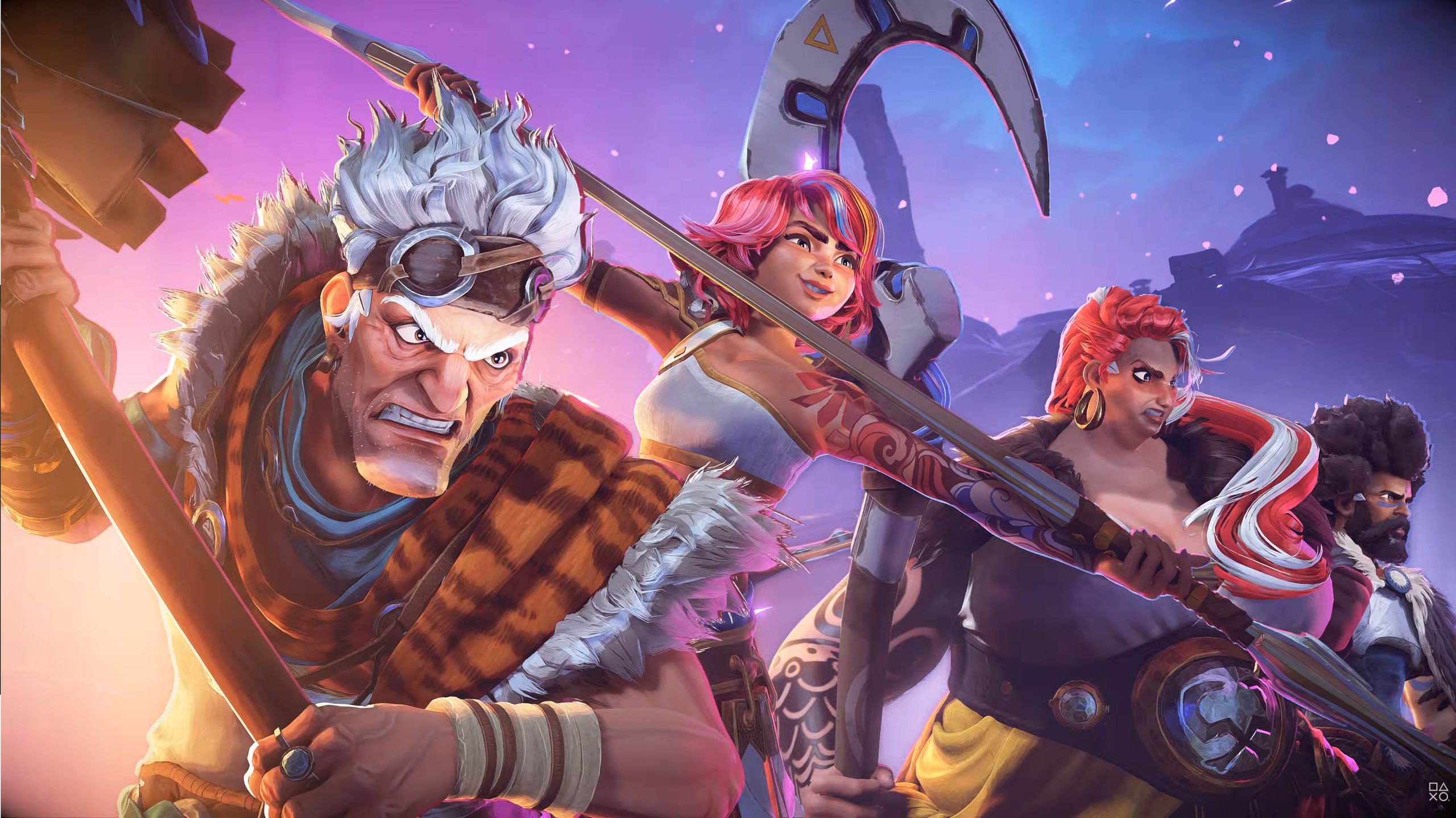
Horizon Hunters Gathering was introduced to the public as an ambitious co-op action game where players would team up as specialized, stylized heroes to hunt down iconic mechanical beasts. Designed with cross-play and a day-one PC release in mind, the title aimed to capture the lucrative co-op demographic that titles like Monster Hunter and Helldivers 2 command.
The Playtest Disasters of 2026
Trouble began brewing early this year when Guerrilla conducted three separate closed playtests to gauge community reaction. The feedback, according to inside sources, was disastrously poor. Players reportedly struggled to connect with the game’s core loop, finding the live-service progression metrics uninspired and the hero-based character dynamics at odds with the grounded tone historically associated with the Horizon franchise.
Adding insult to injury, the execution of these playtests was plagued by logistical missteps. Notably, the first playtest was scheduled directly on top of Bungie’s Marathon server slam weekend, splitting the targeted testing pool and drawing unwanted comparisons regarding Sony’s internal scheduling coordination.
The Sony Ultimatum
Confronted with lukewarm-to-negative data from the playtests, PlayStation executives delivered an ultimatum. Rather than issuing an immediate cancellation notice—a familiar guillotine that previously fell on unannounced live-service spinoffs for God of War, The Last of Us, and Spider-Man—management gave Guerrilla Games a lifeline.
The studio was instructed to completely overhaul the game’s structural DNA. The open-ended, monetization-heavy live-service mechanics are being stripped out in favor of a focused, narrative-driven co-op campaign with a vastly reduced scope. The team has been given a strict deadline: they must thoroughly impress PlayStation executives with their next major milestone presentation in December. Failure to wow corporate leadership by the end of the year will likely result in Horizon Hunters Gathering being quietly buried alongside Sony’s other abandoned GaaS experiments.
Supporting Context & Metrics: The Anatomy of a Strategy Collapse
To understand the immense pressure riding on Guerrilla Games’ December milestone, one must examine the broader financial and strategic bloodbath that has defined Sony’s recent publishing history.
The Concord Catastrophe and the GaaS Correction
The bleeding at PlayStation began in earnest with the catastrophic launch of Concord, a 5V5 hero shooter developed by Firewalk Studios that cost upwards of hundreds of millions of dollars and spent nearly a decade in development. Upon its release, Concord was met with profound player indifference, resulting in abysmal concurrent player counts before Sony took the unprecedented step of pulling the game offline barely two weeks after launch, ultimately shuttering the studio entirely.
The fallout from Concord triggered a domino effect of internal audits across Sony’s global studio network. Projects that lacked immediate viability or failed to demonstrate long-term retention potential were unceremoniously axed. Among the casualties were multi-million dollar live-service spin-offs tied to some of PlayStation’s most lucrative single-player intellectual properties:
- The Last of Us Online: Naughty Dog’s standalone multiplayer project was canceled after Bungie reportedly warned Sony that it lacked the necessary engagement loops to sustain a long-term live-service ecosystem.
- God of War Live-Service Spinoff: Shelved during the initial wave of corporate contraction.
- Spider-Man Multiplayer/Live-Service Initiatives: Canceled as Insomniac Games refocused its resources on traditional blockbuster single-player experiences and upcoming Marvel solos.
The Exception to the Rule: Helldivers 2 and Marathon
Sony’s pivot away from internal live-service development leaves a glaring vacuum in its portfolio. Currently, the company’s only major operational successes in the GaaS space are Helldivers 2—developed by third-party partner Arrowhead Game Studios—and perennial sports titles like MLB The Show.
Meanwhile, Bungie, acquired by Sony to serve as its live-service guru, has faced its own internal crises, massive layoffs, and a fundamental restructuring of Destiny 2 content updates. Bungie’s other major hopeful, Marathon, has faced an uphill battle to capture the extraction shooter crown, though experimental modes have occasionally breathed temporary life into its metrics.
The Trouble at Fairgames
Compounding Sony’s woes is Fairgames, an upcoming competitive PvP heist sandbox being developed by Haven Studios, headed by industry veteran Jade Raymond. Officially revealed in 2023, the title has virtually vanished from the public eye. Reports from outlets like Insider Gaming indicate that the development team has deeply struggled to "find the fun" in pre-alpha builds, casting serious doubt on whether Sony’s remaining live-service bets can cross the finish line intact.
Official Statements and Industry Impact
While neither Guerrilla Games nor Sony Interactive Entertainment has issued a formal public press release detailing the exact mechanics of the Horizon Hunters Gathering reboot, industry insiders and journalistic reporting have painted a vivid picture of internal reorganization.
According to Bloomberg, the vast majority of developers previously assigned to Horizon Hunters Gathering have been reassigned to other initiatives within Sony’s European studio ecosystem. Meanwhile, a core, highly compartmentalized skeleton crew remains at Guerrilla Games, shouldering the dual burden of restructuring the co-op title for its December evaluation while a separate team spearheads pre-production on the next mainline single-player Horizon sequel—ensuring that Aloy’s definitive narrative journey remains the studio’s ultimate north star.
Industry analysts view this move as a pragmatic, albeit painful, course correction. For years, traditional single-player studios were coerced into adopting live-service business models to satisfy investor demand for recurring revenue streams. The disastrous consumer rejection of forced multiplayer iterations has proven that players do not inherently want every single-player franchise shoehorned into a seasonal, microtransaction-laden multiplayer framework.
Future Outlook: What Lies Ahead for Guerrilla and PlayStation?
The coming months will serve as an absolute crucible for Guerrilla Games and Sony’s broader publishing strategy.
For Horizon Hunters Gathering, the December milestone is a do-or-die moment. If the scaled-down, story-focused co-op vision successfully demonstrates creative cohesion and technical polish, PlayStation may yet salvage a modest, well-received cooperative spin-off that keeps fans engaged between mainline franchise entries. However, should the presentation fall flat, the project will almost certainly be canceled, joining Concord as a stark reminder of the perils of corporate overreach in the games industry.
More broadly, Sony appears to be returning to its roots. The rapid dismantling of its sprawling live-service pipeline signals a renewed appreciation for what PlayStation does best: cinematic, story-driven, single-player blockbusters. As the industry recalibrates from the GaaS gold rush of the early 2020s, the fate of Horizon Hunters Gathering will stand as a defining milestone—marking either the successful salvage of a troubled spin-off or the final, definitive nail in the coffin of Sony’s aggressive multiplayer expansion.