Executive Overview
In the fast-moving world of hardware development, leaks are rarely accidental, but when they do happen, they often provide the most unvarnished look at a company’s upcoming ecosystem. This week, Valve Corporation inadvertently gave the gaming world an early, unfiltered look at its highly anticipated virtual reality hardware. Through an errant update to the ARM Steam Client, Valve pushed out eight instructional and promotional videos detailing the unboxing, fitting, and operational mechanics of the upcoming Steam Frame VR headset.
Although community members and data miners quickly captured and reposted the media before engineers could scrub the servers, the leak has done more than just spoil a marketing rollout—it has provided a comprehensive masterclass in how Valve intends to onboard users into its next-generation hardware ecosystem. The videos, characterized by a clean, corporate-meets-quirky aesthetic reminiscent of Portal’s Aperture Science, walk users through everything from basic wear-and-tear procedures to eccentric edge cases, such as wearing the headset over one’s mouth or utilizing it as a makeshift handbag.
Beyond the humor, the leaked footage offers critical insights into the ergonomic philosophy driving the Steam Frame. We now have our clearest look yet at the device’s physical customization options, including an IPD (interpupillary distance) wheel with an integrated sliding lock, modular magnetic face gaskets, hand straps, and a battery-pack-integrated rear head strap.
With the Steam Frame slated for a commercial launch this summer—alongside Valve’s broader hardware push, including the recently debuted Steam Machine and new Steam Controller—the market is watching closely. This report provides an exhaustive breakdown of the leaked videos, analyzing the technical specifications, ergonomic features, pricing concerns amid global silicon shortages, and the broader strategic implications of Valve’s impending entry into the standalone and PC-VR market.
Detailed Chronology: How the Leak Unfolded
The Push and the Discovery
The sequence of events began during a routine background update cycle for the ARM Steam Client. Software engineers at Valve pushed a patch that included a localized media directory intended for future support documentation and onboarding tutorials. However, proper access controls were seemingly bypassed or prematurely flagged, allowing the payload—consisting of eight distinct high-definition MP4 files—to be downloaded by clients worldwide.
Within minutes of the update hitting user machines, sharp-eyed community members dissecting the client manifest noticed the new file additions. Recognizing their significance, users began extracting the assets. Prominent community archivists and hardware sleuths, including notable X (formerly Twitter) accounts such as @HardwareSteam and @Neupro5, began syndicating the videos across social media platforms.
Valve’s Reaction and the "Barreling Forward" Strategy
Realizing the scale of the leak, Valve opted not to engage in an aggressive, futile copyright-striking campaign across every corner of the internet. Instead, the company adopted a pragmatic approach, officially releasing select snippets while allowing the broader collection of leaked assets to circulate organically. This passive acknowledgment has effectively served as an unconventional, cost-free viral marketing campaign, generating intense speculation and discussion across Reddit, ResetEra, and dedicated VR forums.
The eight leaked videos span specific onboarding milestones:
- The Unboxing and Initial Component Layout: Detailing the core headset, controllers, and bundled accessories.
- Basic Headset Fitting: Demonstrating standard head placement and the adjustment of the primary rear strap.
- The Authentication and Sign-In Process: Showcasing the eccentric QR-code login methodology.
- IPD Adjustment and Locking: Highlighting the mechanical dial for lens separation.
- Controller Ergonomics and Hand Straps: Illustrating grip security and adjustment features.
- Crown Support Strap Installation: Detailing the secondary overhead stability strap.
- The Extended Light Blocker Module: Specifically designed for users with smaller nasal bridges.
- Modular Magnetic Gasket System: Showing the ease of swapping out the facial interface.
Ergonomics, Hardware Design, and Accessories
A primary takeaway from the leaked footage is Valve’s rigorous attention to ergonomic modularity. Building upon the lessons learned from the Valve Index—which was praised for its comfort but criticized for its weight and tethered nature—the Steam Frame appears to strike a balance between standalone autonomy and refined weight distribution.
Weight Distribution and the Battery Placement
One of the most consequential design choices highlighted in the leaked clips is the positioning of the charging and power architecture. The primary power delivery system and charging port are integrated directly into a weighted battery pack housed on the rear of the main head strap. By shifting the battery weight to the back of the skull, Valve has engineered a counter-balance system that minimizes frontal torque, reducing neck strain during extended gaming sessions.
Mechanical IPD Adjustment with a Twist
Interpupillary distance adjustment is a make-or-break feature for modern VR headsets, directly impacting visual clarity and preventing motion sickness. The Steam Frame incorporates a physical IPD wheel that allows users to seamlessly align the lenses with their eyes. Notably, the leaked footage reveals a sliding lock mechanism built into the IPD wheel. This design choice prevents accidental adjustments—a common annoyance when users pass a headset between friends or store it in a case.
Modular Customization: Face Gaskets and Light Blockers
Facial structures vary wildly across the global consumer base, leading to light bleed and discomfort in many commercial headsets. Valve has addressed this through a fully modular ecosystem:
- Magnetic Face Gaskets: The squishy, foam-backed face interface attaches via high-strength magnets, allowing for effortless cleaning, replacement, or switching between different hygienic materials.
- Extended Light Blocker: Included in the accessory ecosystem is a specialized extended light blocker tailored for users with smaller nasal bridges. This targeted fix prevents light leakage from the bottom of the frame, ensuring total immersion in dark virtual environments.
- Overhead Crown Support Strap: For users requiring additional vertical support, an optional strap runs across the crown of the head, distributing downward pressure more evenly across the skull.
- Controller Hand Straps: Similar to the Index controllers, the Steam Frame peripherals feature secure hand straps that allow players to release their grip entirely without dropping the controllers, facilitating natural throwing and grabbing mechanics in virtual reality.
The Quirky Software Onboarding and GLaDOS-Esque Aesthetics
While hardware functionality is critical, Valve’s software presentation remains a signature element of its brand identity. The leaked onboarding videos carry a distinct tonal fingerprint—part professional tech-support guide, part psychological experiment orchestrated by a corporate entity with a dark sense of humor.
The QR Code Lens Trick
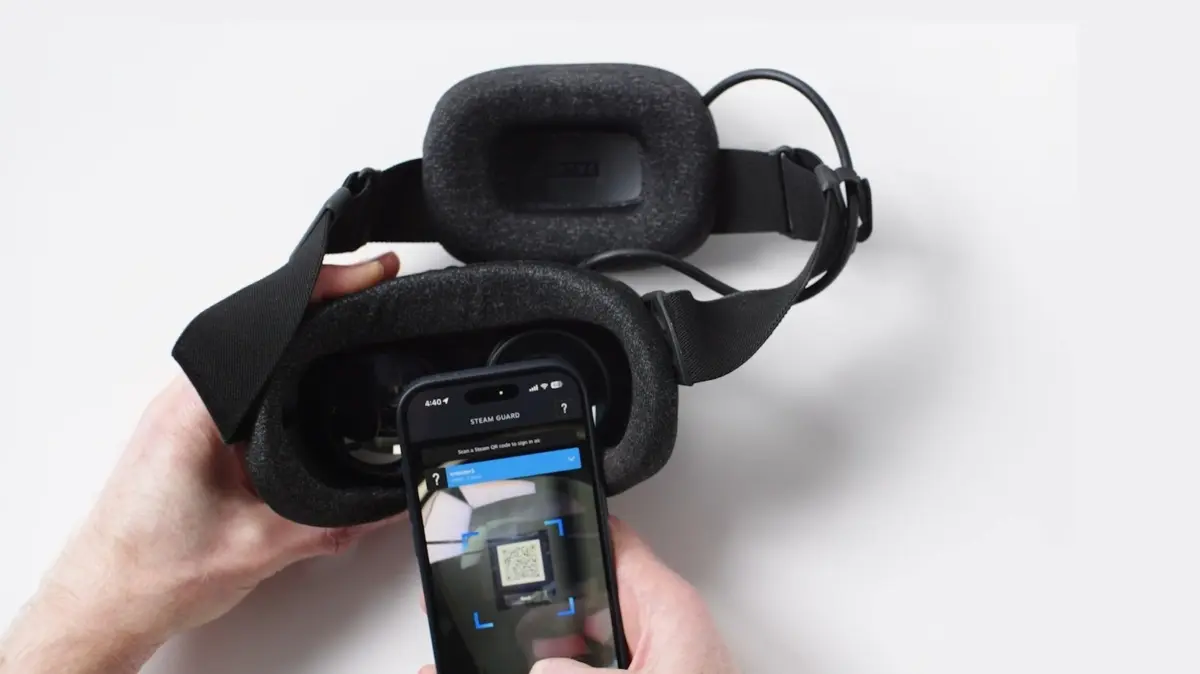
The sign-in video is particularly tongue-in-cheek. Setting up a VR headset while wearing it has historically been a chicken-and-egg problem: how do you log into your account using a smartphone authenticator or QR code when your vision is occluded by the device?
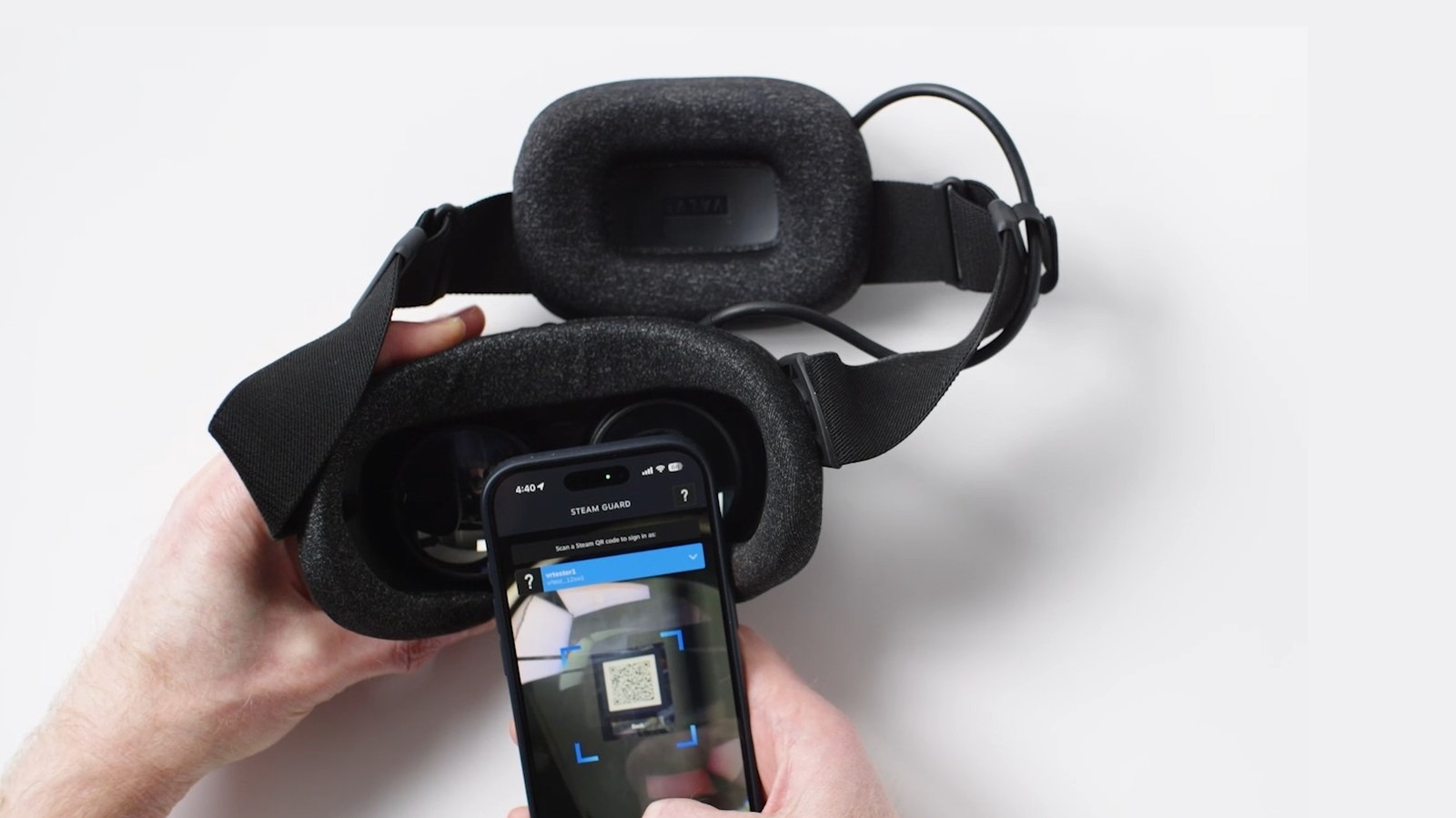
Valve’s solution is both functional and mildly absurd. The onboarding video instructs users to hold their smartphone camera up and focus it directly through one of the headset lenses to scan an authentication QR code generated within the Steam VR dashboard. The visual presentation of this process—showing disembodied hands manipulating phones through glass optics—leans heavily into the deadpan, slightly surreal aesthetic that fans associate with the Half-Life and Portal universes.
Playful Edge Cases
True to Valve’s internet-literate culture, the basic fit video leans into meme territory by demonstrating intentionally absurd use cases. Actors in the tutorial videos are briefly shown wearing the Steam Frame entirely incorrectly—such as strapping it across their mouths or utilizing the chassis as a miniature handbag. While these moments are clearly meant to inject humor into dry instructional media, they underscore a company confident enough in its product identity to poke fun at the steep learning curve traditionally associated with VR hardware.
Supporting Context & Metrics: Pricing, Specs, and Market Realities
As exciting as the ergonomic improvements and quirky software walkthroughs are, the Steam Frame enters a hyper-competitive and economically volatile hardware landscape.
The Silicon Crunch and RAM Constraints
The overarching economic backdrop of the Steam Frame’s launch is the ongoing global RAM shortage. Industry analysts have pointed out that component pricing across the semiconductor sector has spiked significantly over the past year. Because the Steam Frame packs 16GB of high-speed RAM to handle both standalone operating tasks and complex visual rendering, manufacturing overhead is substantially higher than it was during the rollout of previous-generation VR hardware.
While Valve has not yet officially announced the standalone retail price of the Steam Frame, industry watchers anticipate a premium price point. This expectation is reinforced by recent hardware pricing revelations from Valve’s broader ecosystem rollout:
- The Steam Machine: Valve’s standalone living-room PC platform starts at $1,049 for the base 512GB storage model (shipping without a controller bundled in the base tier).
- The Steam Controller: Relaunched with modern inputs and refined telemetry, positioned as a premium peripheral.
Given that the Steam Frame is engineered to interface seamlessly with the Steam Machine and high-end desktop rigs, it is expected to target the enthusiast tier rather than the budget-conscious consumer market occupied by standalone competitors like Meta’s Quest lineup.
Technical Speculative Baseline
Though the leaked videos focused primarily on physical ergonomics and account setup, previous data leaks and regulatory filings point to the following expected specifications for the Steam Frame:
- Display Panels: Custom high-refresh-rate LCD or OLED panels (rumored to support 90Hz to 120Hz operation).
- Connectivity: Wi-Fi 6E/7 support for ultra-low latency PC-VR streaming, alongside standalone processing capabilities.
- Audio: Integrated off-ear spatial audio speakers, mirroring the acclaimed acoustic design of the Valve Index.
Official Statements and Industry Reception
Valve Corporation has maintained a characteristically understated public posture regarding the leak. Rather than issuing a panicked corporate press release or filing sweeping DMCA takedown notices, representatives from Valve have allowed the community discourse to run its course. This strategy aligns with the company’s historical philosophy of letting its user base decode developer builds and hidden updates organically.
Industry analysts have reacted positively to the transparency provided by the leaked videos. Where traditional marketing rollouts often obscure ergonomic flaws behind polished CGI renders and idealized actors, Valve’s internal support videos offer an unfiltered look at how the device actually functions in the real world.
VR developers have expressed particular enthusiasm for the inclusion of locking IPD mechanisms and robust hand-strap integrations, noting that standardized physical controls reduce friction for players and ensure consistent telemetry across different user demographics.
Future Outlook: What to Expect This Summer
With the official release window locked in for this summer, the leakage of these eight instructional videos marks the de facto kickoff of the Steam Frame marketing season.
Over the coming weeks, industry observers expect Valve to formally release the videos in their polished, intended context, alongside definitive pricing details, exact launch dates, and regional pre-order schedules. As the missing pieces of the puzzle fall into place—specifically how the Steam Frame integrates natively with the newly released Steam Machine—Valve is positioning itself to capture a commanding share of both the PC-VR enthusiast market and the growing standalone virtual reality ecosystem.
Despite the accidental nature of the leak, Valve has inadvertently provided consumers with a masterclass in product preparation. If the physical refinement, modular flexibility, and signature humor showcased in these videos are any indication, the Steam Frame may well represent a watershed moment for virtual reality hardware design when it hits shelves later this year.