Executive Overview
The artificial intelligence landscape stands at a fascinating and potentially volatile precipice. User adoption metrics continue to shatter historical precedents, capital flows into the sector at unprecedented velocities, and corporate valuations have reached astronomical heights. Yet, beneath the surface of soaring market caps and relentless product rollouts lies a profound philosophical and economic question that is no longer confined to the realms of science fiction: What is Artificial General Intelligence (AGI), and is it absurd to suggest that we have already crossed the threshold?
This query forms the crux of a broader, high-stakes debate unfolding across Silicon Valley, Wall Street, and global research laboratories. Leading the charge in redefining market sentiment is Anthropic, an AI safety and research company whose anticipated or targeted Initial Public Offering (IPO) valuation has sent ripples through the investment community. This targeted valuation is not merely a reflection of current revenue streams or user growth; it is a profound market bet that AGI—a machine capable of matching or exceeding human intelligence across a broad economic spectrum—is no longer a distant theoretical milestone. Instead, investors are increasingly pricing it in as an imminent reality.
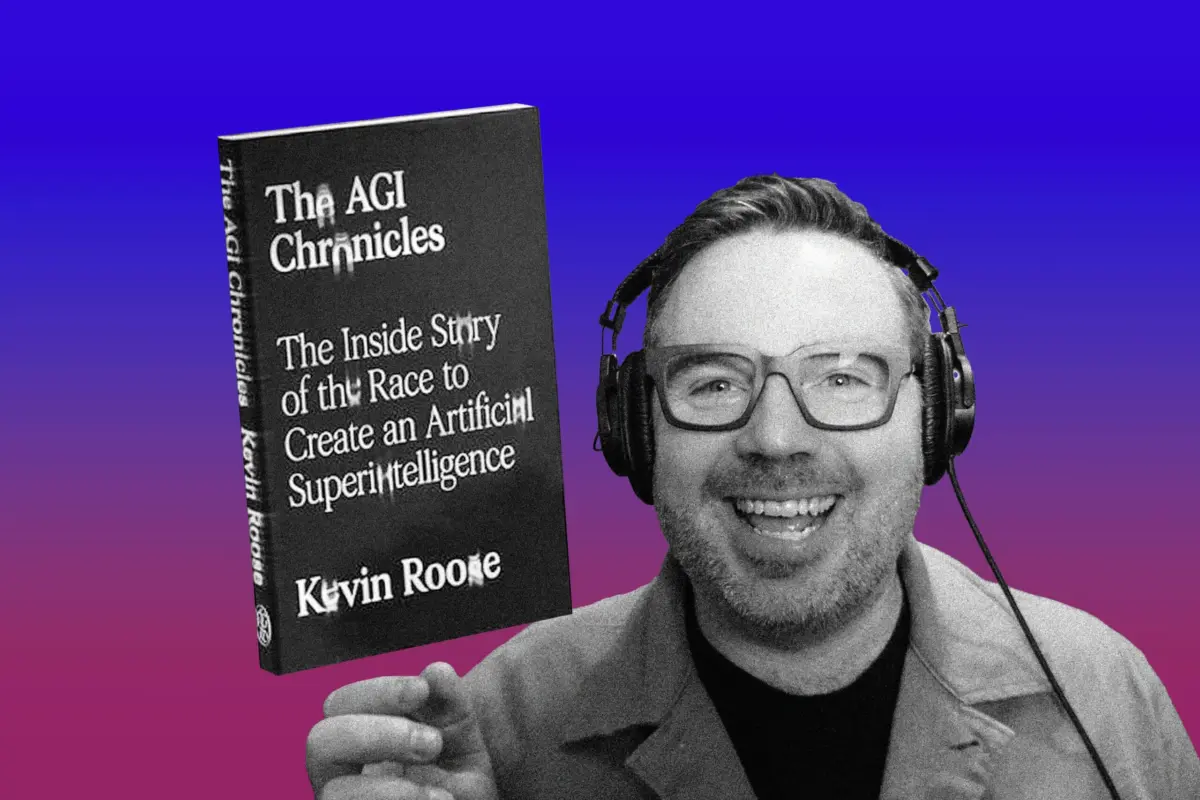
To unpack this paradigm shift, recent discussions on technology podcasts such as What Next: TBD have brought prominent tech journalists and authors to the forefront. Featuring insights from Kevin Roose—author of The AGI Chronicles, former host of The New York Times’ Hard Fork, and current host of NPR’s Machine Gods—analysts are forced to reckon with a new reality: the trajectory of AI is no longer just about incremental technological updates. It is about a fundamental restructuring of human civilization, labor, and cognition.
This article explores the multi-faceted dimensions of this moment, examining the economic indicators driving market optimism, the shifting definitions of AGI, the role of institutional players like Anthropic, and the critical hurdles that remain as the tech sector hurtles toward an uncertain future.
Detailed Chronology: The Road to the Valuation Boom
To understand how the AI industry arrived at its current valuation frenzy, one must trace the rapid acceleration of milestones that have characterized the post-2022 generative AI boom.
The Generative Explosion (Late 2022 – 2023)
The modern AI era was undeniably catalyzed by the public release of foundational large language models (LLMs) that demonstrated unprecedented capabilities in natural language processing, reasoning, and code generation. What began as novelty chat interfaces rapidly transitioned into enterprise-grade tools. During this phase, venture capital and corporate balance sheets flooded into foundational model developers. Compute—measured in clusters of advanced graphics processing units (GPUs)—became the new digital gold.
The Scaling Hypothesis and Enterprise Integration (2024)
As models grew larger and training datasets expanded to encompass virtually all publicly available human text, video, and code, researchers observed that capabilities continued to scale predictably with compute and data. This validated the "scaling hypothesis," convincing major tech conglomerates and specialized AI labs alike that bigger was indeed better. Enterprises began integrating AI into operational workflows, shifting the technology from consumer-facing toys to mission-critical infrastructure.
The Pivot to AGI Speculation and Financialization (Late 2024 – Present)
By late 2024 and moving into 2025, the conversation shifted from productivity gains to existential market positioning. Companies like OpenAI, Anthropic, and Google DeepMind were no longer just competing for software market share; they were racing to achieve AGI. This race required capital expenditures in the tens of billions of dollars per company—sums traditionally reserved for sovereign governments or global energy monopolies.
It is within this chronological context that Anthropic’s targeted IPO valuation emerges as a watershed moment. By positioning themselves for massive public market capitalization, AI labs are signaling that the era of private research funded solely by venture capitalists and strategic tech giants (like Microsoft, Amazon, and Google) is maturing into a publicly traded asset class. Investors are now being asked to underwrite the final stretch of the marathon toward human-level artificial general intelligence.
Supporting Context & Metrics: Use, Valuation, and the Economics of Compute
The bull case for artificial intelligence rests on a foundation of undeniable metrics: user adoption rates that dwarf the early days of the internet and mobile computing, alongside staggering capital injections.
User Growth and Engagement Metrics
Unlike previous technological revolutions that required specialized hardware deployment or lengthy infrastructure build-outs (such as broadband rollout or smartphone adoption), generative AI interfaces achieved massive global scale within weeks of launch. Hundreds of millions of active users interact with these systems weekly, utilizing them for everything from software debugging and legal analysis to creative writing and educational tutoring. This unprecedented stickiness has convinced investors that AI is not a cyclical fad, but a structural shift in how humans interact with information.
Valuation Realities and the IPO Landscape
The valuation of AI firms has decoupled from traditional software-as-a-service (SaaS) multiples. Traditional tech valuations rely on predictable recurring revenue, low marginal costs, and established churn rates. AI companies, conversely, operate under a high-burn, high-reward model where capital is immediately converted into massive data center leases, specialized silicon procurement, and elite research talent acquisitions.
Anthropic’s targeted IPO valuation serves as a bellwether for this asset class. When a company commanding billions in private capital looks toward public markets, it forces institutional investors to evaluate several core economic questions:
- The Cost of Inference: As millions of queries run simultaneously, what is the true margin on AI interactions, especially as models demand heavier reasoning capabilities?
- Infrastructure CapEx: Can these companies sustain the multi-billion-dollar infrastructure investments required to train successive generations of models without catastrophic cash burn?
- Defensibility and Moats: In a world of open-source models and rapid iteration, how durable is the competitive advantage of any single lab?
Despite these risks, market enthusiasm remains feverish. The belief is that whoever achieves AGI first will capture a near-monopolistic share of global economic productivity, justifying today’s astronomical valuations by capturing tomorrow’s entire GDP-equivalent value pools.
Perspectives and Analysis: Defining AGI in the Age of Anthropic
Is AGI already here, or are we simply witnessing sophisticated pattern matching masquerading as genuine cognition? This debate is central to the work of tech commentators like Kevin Roose. In The AGI Chronicles and his journalistic endeavors across Hard Fork and Machine Gods, Roose has documented the psychological, cultural, and technical whiplash experienced by those living through this transition.
The Moving Target of AGI
Historically, Artificial General Intelligence was defined as a hypothetical AI that could successfully perform any intellectual task that a human being can do. However, as models have grown more capable, the definition of AGI has become a moving target.
- When an AI beats humans at chess, chess is declared "solved" rather than intelligent.
- When an AI passes the bar exam or medical licensing boards, critics point out that it lacks common sense or real-world agency.
- Yet, when systems begin to orchestrate multi-step workflows, write and execute their own code, use software tools autonomously, and reason through novel problems in real-time, the boundary between "simulation" and "cognition" blurs beyond recognition.
The Anthropic Factor
Anthropic, founded by former OpenAI researchers with a heavy emphasis on AI safety and alignment (the "Constitutional AI" framework), occupies a unique position in this debate. While competitors often lean heavily into maximum scaling and aggressive commercialization, Anthropic has cultivated an image of rigorous, safety-conscious scientific inquiry.
When a company rooted in philosophical caution sets aggressive financial and valuation targets for an IPO, it sends a powerful signal to the market: safety and commercial viability are no longer mutually exclusive. In fact, institutional investors are betting that the companies that solve alignment and safety best will be the ones trusted by enterprise clients and regulators to deploy AGI into high-stakes environments like healthcare, finance, and defense.
Future Outlook: What Lies Beyond the Horizon?
As the artificial intelligence industry races forward, several critical trajectories will determine whether the current valuation boom culminates in a golden age of productivity or a speculative market correction.
1. The Bottleneck of Energy and Infrastructure
The primary constraint on AI scaling is no longer just algorithmic ingenuity or capital; it is electrical grid capacity. Training and running frontier models require gigawatts of power. Future outlooks suggest that the AI boom will become inextricably linked with the energy sector, driving massive investments in nuclear (fission and fusion), renewable microgrids, and advanced battery storage.
2. The Regulatory and Geopolitical Chessboard
Governments worldwide are waking up to the strategic implications of AGI. Export controls on advanced semiconductors, data sovereignty laws, and emerging AI safety regulations will shape which geographic regions dominate the next decade. Public offerings like Anthropic’s will face intense scrutiny not only from the SEC regarding financial disclosures, but also from national security apparatuses concerned with the geopolitical balance of power.
3. Societal and Economic Realignment
If AGI—or systems functionally indistinguishable from it—continues its upward trajectory, the fundamental structure of human labor will undergo seismic shifts. As Kevin Roose and other cultural observers frequently note, the psychological impact of living alongside entities that match or exceed human cognitive capacity cannot be overstated. Society will be forced to grapple with questions of economic distribution, the meaning of work, and human agency in a world augmented—or automated—by machine intelligence.
Conclusion
The trajectory of artificial intelligence, as highlighted by surging use metrics and aggressive market valuations like those surrounding Anthropic, defies traditional economic analysis. Whether we view current systems as the dawn of true AGI or merely the pinnacle of statistical curve-fitting, the impact on global markets, technology infrastructure, and human culture is profound. As the industry transitions from private speculation to public market accountability, the coming years will test whether our economic systems—and our societies—are prepared for the horizon that awaits them.