Executive Overview
The intersection of human artistic expression and machine learning has officially crossed from the digital canvas onto the human face. As generative artificial intelligence permeates nearly every creative vertical—from literature and symphonic composition to high-fashion rendering and digital illustration—artists are continually testing the boundaries of these novel technologies. Yet, a distinct philosophical and practical chasm remains between generating pixels on a screen and translating those algorithmic abstractions into tangible, physical reality.
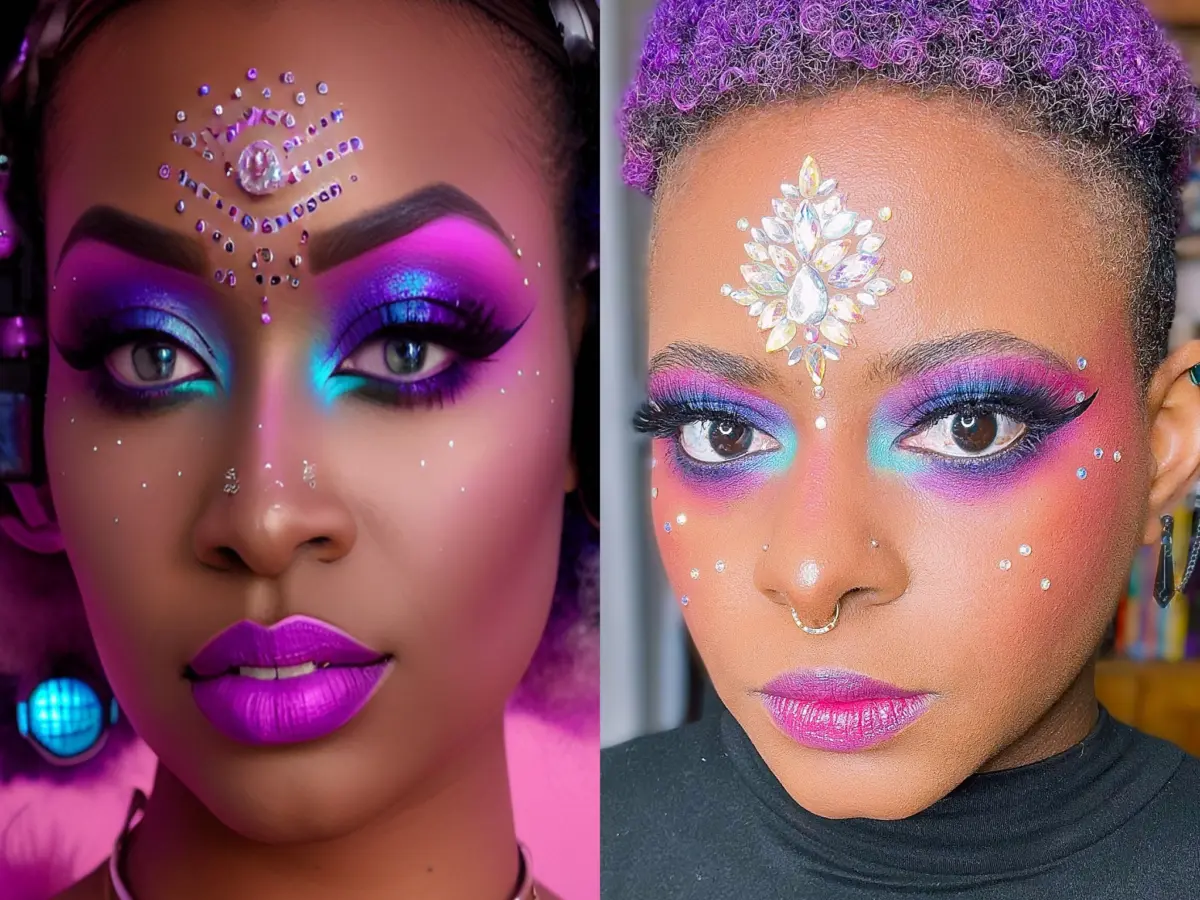
This investigative report chronicles a unique five-day artistic experiment wherein a professional visual artist, cosplay designer, and makeup specialist surrendered creative control to an artificial intelligence art generator. Using the text-to-image application Dream by Wombo, the artist tasked the algorithm with conceptualizing high-concept, avant-garde makeup designs based strictly on concise 200-character text prompts. The resulting imagery served as the blueprint for five consecutive days of intricate, real-world cosmetic applications.
This piece examines the technical execution, the cognitive dissonance of translating machine-generated surrealism into physical cosmetics, and the broader implications of human-AI collaboration in the beauty and cosplay industries. By analyzing the structural limitations of current generative tools, the nuances of human interpretation, and the shifting paradigms of modern artistry, we explore what happens when the algorithm becomes the creative director.
Detailed Chronology: A Five-Day Algorithmic Experiment
Translating abstract machine hallucinations into physical cosmetics requires a delicate balance of algorithmic fidelity and human artistic license. Over the five-day experiment, the operational workflow remained standardized: a unique 200-character prompt was fed into the Dream by Wombo app, the resulting image was analyzed for structural and chromatic patterns, and the artist executed the physical transformation using professional-grade cosmetics, face paints, and specialized cosplay materials.
Day 1: The Organic-Digital Hybrid
- The Prompt Theme: Biomechanical flora and neon luminescence.
- Algorithmic Output: The application generated a striking, high-contrast portrait featuring asymmetrical floral motifs intertwined with geometric circuit-like lines, rendered in an electric palette of magenta, acid green, and deep obsidian.
- Execution & Interpretation: Translating the digital blur of the AI’s rendering into sharp lines demanded immediate creative choices. The software had blended organic petals directly into the orbital bones. To achieve this in reality, the artist utilized water-activated face paints to map out the foundational symmetry, followed by liquid latex to create tactile, three-dimensional floral elements peeling away from the skin.
- Friction Point: AI struggles with human facial anatomy logic; flowers emerged from the tear ducts and wrapped unnaturally around the nasal bridge, requiring the artist to adapt the composition to ensure comfort and visual coherence.
Day 2: The Glitch-Art Monolith
- The Prompt Theme: Cyberpunk corruption and fragmented pixelation.
- Algorithmic Output: A stark, desaturated face fractured by horizontal data-moshing artifacts, punctuated by a single, hyper-vivid crimson stripe cutting diagonally from the hairline to the jaw.
- Execution & Interpretation: Achieving a "glitch" effect with traditional cosmetics requires meticulous shading and optical illusions. The artist employed stark white cream paints to create highlight blocks, contrasting sharply with charcoal contours to simulate digital tearing. The crimson streak was executed using heavy-duty theatrical pigment to ensure it popped against the matte foundation.
- Friction Point: The AI conceptualized the glitch as a three-dimensional physical displacement of skin tissue rather than a flat digital artifact. Interpreting this literally pushed the boundaries of standard special-effects makeup.
Day 3: The Celestial Nebula
- The Prompt Theme: Deep space, cosmic dust, and stellar nursery formations.
- Algorithmic Output: Swirling clouds of deep violet and indigo dust speckled with microscopic pinpricks of gold leaf, centered around a luminous, supernova-inspired eye design.
- Execution & Interpretation: This look offered the closest alignment between digital generation and traditional cosplay techniques. The artist utilized heavily pigmented pressed powders, applied with dense stippling brushes to mimic the gaseous diffusion of a nebula. Loose cosmetic-grade glitter and real gold leaf sheets were pressed onto spirit gum around the temples to replicate the algorithmic star-fields.
- Friction Point: While visually stunning, the fallout from loose glitter and metallics posed practical challenges for a full day of wear, highlighting a fundamental disconnect between AI’s weightless digital textures and the gravity-bound reality of physical cosmetics.
Day 4: The Baroque Porcelain Illusion
- The Prompt Theme: Cracked antique doll, ornate gold filigree, and Renaissance melancholy.
- Algorithmic Output: An eerie, hyper-detailed portrait of a porcelain face covered in an intricate web of fine, spider-web cracks, accented by heavy, gilded baroque scrollwork across the brow and cheekbones.
- Execution & Interpretation: This iteration required precision fine-line work using alcohol-activated activated paints—chosen for their smudge-proof durability. The gold filigree was meticulously hand-painted using metallic liquid gold leaf paint, following the natural contours of the cheekbones and forehead as suggested by the AI’s rendering.
- Friction Point: AI-generated cracks often defy the natural muscle movement of the human face. When the artist smiled or spoke, the painted porcelain illusion fractured in ways the algorithm could never anticipate, creating a haunting, living-statue effect.
Day 5: The Subterranean Bioluminescence
- The Prompt Theme: Deep-sea hydrothermal vents, blind cave fauna, and iridescent scales.
- Algorithmic Output: Translucent, pearlescent skin tones overlaid with glowing, opalescent scales and oversized, pupil-less iridescent eyes achieved through dramatic under-eye highlighting.
- Execution & Interpretation: The final day leveraged duochrome highlighters, pearlescent pigments, and translucent plastic scales individually glued along the jawline and cheekbones. The color story relied on shifting oceanic blues, seafoams, and iridescent purples that caught the light dynamically.
- Friction Point: The AI rendered textures that appeared fluid and self-illuminating. Replicating this required layering high-shine glosses over powder pigments—a technique that compromises longevity for the sake of high-impact visual fidelity.
Supporting Context & Metrics: The Intersection of AI Art and the Beauty Industry
To fully understand the weight of this experiment, one must examine the broader cultural and technological ecosystem surrounding generative artificial intelligence in the arts.
The Rise of Generative Prompt Engineering
Text-to-image models such as Midjourney, Stable Diffusion, and Dream by Wombo operate on vast datasets scraped from billions of images across the internet. When an artist inputs a prompt, the neural network calculates statistical correlations between words and visual aesthetics, synthesizing a brand-new image pixel by pixel.
In the realm of beauty and cosmetics, this technology is rapidly transitioning from novelty to mainstream utility:
- Virtual Try-On (VTO) Technology: Major cosmetics conglomerates (including L’Oréal, Estée Lauder, and Shiseido) have integrated augmented reality and generative algorithms into their retail apps, allowing consumers to test thousands of variations of makeup virtually before purchasing.
- Trend Forecasting: Trend analysis firms now utilize machine learning algorithms to scan global social media imagery, predicting upcoming color palettes, texture preferences, and aesthetic movements months before they hit commercial markets.
- Cosplay and Special Effects: Independent creators increasingly turn to AI mood boards to break through creative blocks, using generated concepts as jumping-off points for complex costume designs.
Quantitative Observations from the Experiment
| Metric / Variable | Algorithmic Expectation | Human Reality / Execution | Variance / Friction Index |
|---|---|---|---|
| Symmetry | Absolute, mathematical | Imperfect, organic | High (Requires manual correction) |
| Texture Physics | Weightless, seamless | Gravity-bound, tactile | Moderate (Medium limitations) |
| Anatomical Logic | Fluid, non-Euclidean | Fixed bone/muscle structure | Extreme (Requires anatomical adaptation) |
| Execution Time | Instantaneous generation | 90 to 180 minutes per look | High (Labor-intensive translation) |
Official Statements & Industry Perspectives
The encroachment of artificial intelligence into creative domains has sparked intense debate among artists, technologists, and industry executives. While some view AI as an unprecedented collaborative partner, others see it as an existential threat to authentic human expression.
Dr. Elena Vance, a professor of Digital Aesthetics and Human-Computer Interaction at the Institute for Advanced Media Studies, offers critical insight into the phenomenon:
"When an artist uses an AI generator as a generative prompt engine, they are engaging in a novel form of cybernetic collaboration. The machine does not possess intent, emotion, or lived experience; it possesses statistical probability. However, when a human artist filters those statistical outputs through their own physical body—translating digital noise into flesh, pigment, and texture—they reclaim authorship. The art is no longer just the AI image; the art is the translation process itself."
Conversely, prominent traditional makeup artists and cosplay designers have voiced apprehension regarding the devaluation of foundational craft. Marcus Sterling, a veteran cinematic special effects makeup artist with over twenty years in the industry, notes:
"There is a growing expectation among clients and digital audiences for designs that defy physical reality—things that only an algorithm can dream up in a fraction of a second. The danger is that younger artists will skip the foundational years of understanding color theory, facial structure, and physical product chemistry, relying instead on a machine to dictate their creative vision. Makeup is an intimate, tactile art form. When you outsource your imagination to a server farm, you risk losing the soul of the craft."
The developers of generative tools maintain a more utilitarian stance. A spokesperson for Wombo, addressing the broader cultural integration of apps like Dream, emphasized democratization:
"Our goal with Dream by Wombo has always been to lower the barrier to entry for creative ideation. We do not view AI as a replacement for human artists; rather, we see it as a cognitive bicycle—a tool that allows creators to explore unexpected visual pathways they might never have conceived on their own. Seeing artists take those digital seeds and grow them into physical, real-world manifestations is the ultimate validation of our technology’s utility."
Future Outlook: The Next Frontier of Algorithmic Aesthetics
As generative artificial intelligence continues its relentless upward trajectory, the relationship between human creators and machine systems will inevitably evolve. What does the future hold for fields like high-concept makeup, cosmetic design, and cosplay?
1. The Rise of Real-Time Augmented Reality (AR) Makeup Integration
We are rapidly approaching an era where static AI-generated mood boards will be replaced by real-time, wearable augmented reality. Smart eyewear and advanced facial-tracking projectors will soon allow creators to wear algorithmic projections dynamically. Instead of spending three hours applying physical face paint that melts under studio lights, artists will be able to map generative AI filters directly onto their faces for live-streamed performances, digital cosplay conventions, and virtual fashion shows.
2. Ethical Frameworks and Attribution
As legal battles surrounding copyright infringement, data scraping, and generative training models play out in international courts, the creative community will demand greater transparency. Future iterations of AI art generators will likely incorporate ethical licensing models, allowing artists to train proprietary models on their own portfolios—ensuring that the algorithms assisting them are built on consensual, compensated aesthetics.
3. The Redefinition of "Authenticity" in Artistry
Ultimately, experiments like this five-day algorithmic makeup challenge redefine what it means to be an "original" creator in the 21st century. The machine cannot hold a brush, feel the grit of cosmetic pigments, or experience the physical transformation of looking into a mirror and seeing a stranger staring back.
The algorithm provides the chaos; the human provides the consciousness. As long as artists maintain this critical agency—using technology as a mirror rather than a master—the fusion of artificial intelligence and human cosmetics will remain a vibrant, boundary-pushing frontier of modern artistic expression.