Executive Overview
The landscape of American electoral politics has undergone a profound, irreversible structural shift. For decades, campaign strategists debated the integration of television advertising, targeted direct mail, and, more recently, micro-targeted social media campaigns. However, the political cycle underscored a far more disruptive force: artificial intelligence. No longer a speculative technology or a futuristic talking point confined to Silicon Valley boardrooms, AI has matured into a foundational electoral issue, inextricably linked with campaign finance, the opaque nexus of corporate lobbying and government policy, and the localized economic friction of massive data center developments.
According to political analysts and technology insiders, artificial intelligence served as a decisive weapon and a mobilizing issue during the recent midterms—particularly benefiting the Democratic Party, which leveraged voter anxieties regarding labor displacement, corporate overreach, and unchecked technological expansion. Yet, the midterms were merely a prelude. As the United States looks toward the 2028 presidential election, AI is projected to dominate the national political discourse on a scale previously reserved for healthcare, taxation, and national security.
In a recent episode of What Next: TBD, host discussions featuring prominent political strategist and Tomorrow Together founder Rob Flaherty illuminated the complex realities of AI’s footprint in modern politics. The intersection of venture capital, campaign donations, government-industry collusion, and the physical infrastructural burdens placed on local communities has transformed artificial intelligence from an abstract computer science phenomenon into a visceral, kitchen-table issue. This in-depth report examines how AI permeated the recent electoral cycle, the socioeconomic flashpoints it created, and why the 2028 election will serve as the ultimate referendum on the automated future of the American republic.
Detailed Chronology: From Novelty to Necessity
To understand how artificial intelligence captured the machinery of American elections, one must trace its rapid trajectory from a fringe policy topic to a central pillar of campaign strategy over the past several electoral cycles.
Phase I: The Era of Misinformation Concerns (2016–2020)
Initially, political discussions surrounding artificial intelligence were largely defensive. Following the 2016 presidential election and the revelations regarding foreign interference, deepfakes and algorithmic disinformation became the primary focus of lawmakers, intelligence agencies, and election integrity watchdogs. The narrative was simple: AI was a threat vector, a tool used by malicious actors to sow discord, generate hyper-realistic fake videos of politicians, and undermine trust in democratic institutions. Campaigns scrambled to build rapid-response teams capable of debunking synthetic media, while technology platforms implemented nascent content moderation policies.
Phase II: The Generative Boom and Economic Anxiety (2022–2023)
The public release of powerful generative AI models in late 2022 shattered the old paradigm. AI was no longer just a weapon for bad actors; it was a transformative economic force. As generative text, image, and video tools flooded the mainstream, the political ramifications shifted dramatically. Labor unions, working-class communities, and progressive policymakers began to sound the alarm over mass automation and job displacement.
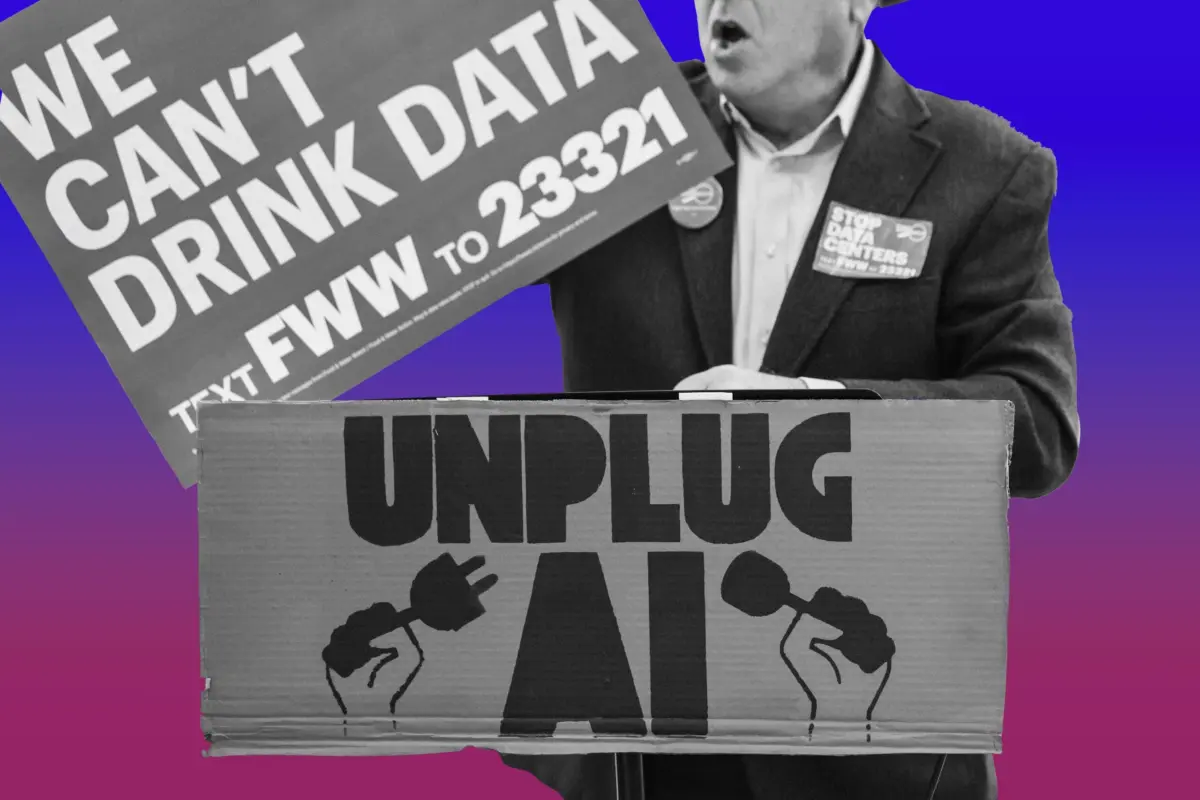
Concurrently, the massive energy and water demands required to train and run large language models triggered a localized infrastructure boom. Rural and suburban communities found themselves designated as sites for sprawling data centers, often with little public input or environmental review. This set the stage for a new kind of grassroots political mobilization—one driven by local resistance to Big Tech’s physical footprint.
Phase III: The Midterm Crucible and the 2028 Horizon (2024–Present)
During the recent midterms, artificial intelligence solidified its status as an economic and structural wedge issue. It was no longer debated in isolation; instead, AI was systematically tied to broader debates about dark money in politics, the cozy relationships between regulatory agencies and tech giants, and the corporate exploitation of public resources.
Democratic campaigns successfully utilized these anxieties to galvanize voters, framing the unchecked expansion of artificial intelligence as a threat to economic security, community well-being, and democratic accountability. As Rob Flaherty and other strategists note, the playbook developed during these midterms is currently being scaled for the 2028 presidential cycle, where issues of employment, data privacy, and infrastructural sovereignty will take center stage.
Supporting Context & Metrics: The Anatomy of AI’s Electoral Footprint
The growing influence of artificial intelligence in politics cannot be understood without examining the underlying financial, infrastructural, and labor metrics that define the current technological ecosystem.
1. The Campaign Finance and Lobbying Nexus
The financialization of artificial intelligence in Washington, D.C., has reached historic proportions. Technology companies and venture capital firms have ramped up lobbying expenditures to unprecedented levels, seeking favorable regulatory frameworks that protect intellectual property while avoiding stringent oversight regarding safety, labor displacement, and environmental impact.
Conversely, political action committees (PACs) focused on technology policy—such as Tomorrow Together, founded by Rob Flaherty—have emerged to counter corporate influence and advocate for a human-centric approach to technological development. The convergence of money in politics and AI policy has created a complex web where political donations frequently dictate the pace and scope of legislative intervention.
2. The Infrastructure Burden: Data Centers and Community Resistance
One of the most underreported political dimensions of artificial intelligence is its physical footprint. Training state-of-the-art AI models requires data centers that consume vast amounts of electrical power and water.
- Energy Consumption: A single large-scale data center can consume as much electricity as a small city, placing immense strain on local power grids.
- Environmental Impact: Communities across the American heartland have found themselves facing sudden rezoning initiatives, utility rate hikes, and environmental degradation to accommodate facilities built for tech conglomerates.
- Political Fallout: This heavy-handed corporate expansion has turned normally predictable municipal zoning board meetings into fierce political battlegrounds. Residents feeling "forced into communities" by data center developments have mobilized, creating a localized voter bloc that distrusts both corporate tech giants and the government officials who facilitate them.
3. Employment and Labor Market Disruption
Perhaps the most potent electoral dimension of AI is the fear of job displacement. While previous technological revolutions primarily affected manufacturing sectors, the generative AI boom directly threatens white-collar professions, creative industries, administrative services, and technical support roles.
Polling data from the recent midterms indicates that voters—particularly younger demographics and middle-class workers—are increasingly anxious about wage stagnation and structural unemployment driven by automation. Democrats capitalized on these anxieties by positioning themselves as defenders of labor against corporate technocrats eager to replace human workers with algorithms.
Official Statements and Expert Insights
The complexities of AI’s political rise were dissected extensively by political strategist Rob Flaherty during his appearance on What Next: TBD. Flaherty, known for his pioneering work in digital strategy and his leadership at Tomorrow Together, provided a candid assessment of how the technology played out during the midterms and what it signals for the future.
"As an electoral issue during the midterms, artificial intelligence was tied up with money in politics, with industry and government in cahoots, and with data centers feeling forced into communities," Flaherty explained.
He emphasized that these interconnected pressures made AI a surprisingly potent electoral winner for the Democratic Party. By connecting abstract technological progress to tangible grievances—such as rising utility bills from data centers, cozy corporate-government partnerships, and the existential threat of job losses—campaigns successfully reframed the debate.
Furthermore, Flaherty warned that the dynamics witnessed in the midterms are merely a preview of coming attractions:
"It was a big winner for Democrats this year, and all of these—plus the implications for employment—are going to be bigger issues in 2028."
Industry analysts and civil rights advocates echo these sentiments, noting that the lack of comprehensive federal legislation governing artificial intelligence has left a vacuum that political campaigns are eager to fill. Without proactive policymaking, the debate over AI risks becoming intensely polarized, dividing communities and fueling populist resentment against elite institutions.
Future Outlook: The Road to 2028 and Beyond
As the United States looks toward the 2028 presidential election cycle, the integration of artificial intelligence into the political mainstream will accelerate dramatically. Several critical trends will shape this evolution:
1. The Maturation of AI Campaign Tools
Beyond being a topic of debate, AI will fundamentally alter how campaigns are run. By 2028, predictive analytics, hyper-personalized voter outreach, and generative synthetic media will be ubiquitous. Campaigns will deploy AI-driven agents capable of engaging in real-time, personalized conversations with millions of voters simultaneously. This creates profound regulatory challenges regarding campaign finance transparency, data privacy, and the proliferation of deepfakes designed to manipulate public opinion.
2. Economic Populism and the Labor Debate
The employment implications of artificial intelligence will likely become a cornerstone of national economic platforms. As automation extends its reach into legal, financial, medical, and administrative sectors, political parties will be forced to present coherent visions for the future of work. Proposals ranging from universal basic income (UBI) and robot taxes to federal job guarantees and rigorous retraining programs will move from the academic fringe to the center of presidential debates.
3. Infrastructure Sovereignty and Localized Resistance
The friction between local communities and the tech industry over data centers, energy grids, and water resources will intensify. Localized activism is expected to morph into a cohesive national movement demanding stringent environmental reviews, transparent zoning laws, and community benefit agreements from tech conglomerates. Politicians who ignore these grassroots concerns risk alienating suburban and rural constituencies that hold disproportionate power in national elections.
Conclusion
Artificial intelligence has officially crossed the threshold from a specialized engineering topic into the lifeblood of American politics. The midterms demonstrated that voters are acutely aware of the multifaceted disruptions—financial, infrastructural, and economic—accompanying the AI revolution. As political strategists like Rob Flaherty have observed, the issues of today are the existential battles of tomorrow. How political leaders, regulators, and citizens navigate this technological transformation between now and 2028 will determine not only the outcome of the next presidential election, but the fundamental character of the American economy and society for generations to come.