Executive Overview
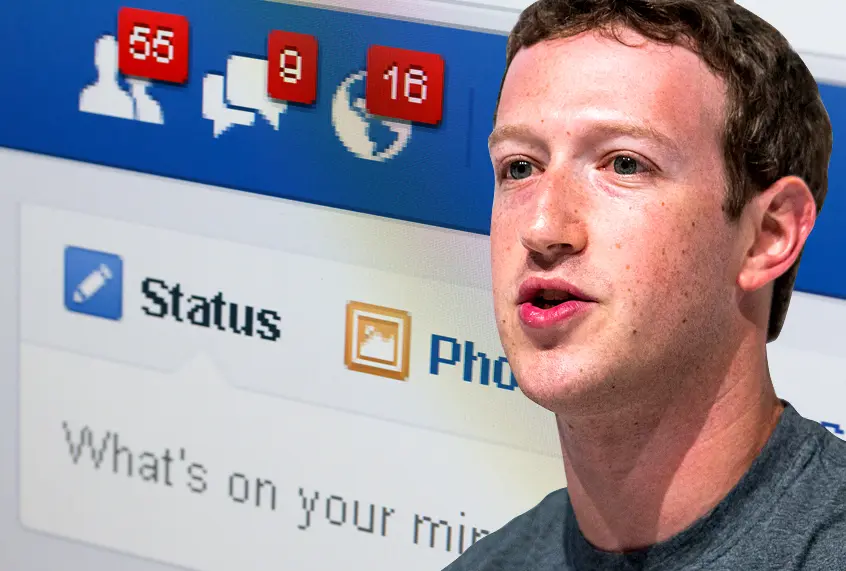
In early January 2018, Facebook co-founder and Chief Executive Officer Mark Zuckerberg boldly declared that the incoming year would mark a turning point for the world’s largest social media platform. Promising to “fix” the network, Zuckerberg unveiled a sweeping series of adjustments to the foundational architecture of the News Feed—the digital town square where millions of users encounter a daily amalgam of updates from friends, family, nonprofit entities, commercial brands, and global media outlets. The core premise of this overhaul was simple yet seismic: public content from businesses and publishers would be systematically dialed back to prioritize personal connections.
Framed as a benevolent crusade to safeguard users’ psychological well-being, the policy changes were ostensibly designed to combat the feelings of depression, isolation, and alienation frequently linked to passive digital consumption. Yet, as the digital media landscape quickly realized, the structural fallout of these algorithmic updates threatened to devastate legitimate news organizations that had spent years cultivating audiences on the platform.
More alarmingly, a deep dive into the mechanics of the platform revealed a glaring paradox: while institutional journalism faced an unprecedented squeeze, the ecosystem that sustains fake news, sensationalist clickbait, and hyper-partisan misinformation remained virtually untouched. Protected by low operational overheads, lucrative advertising loops, and agile manipulation tactics, bad actors found themselves well-equipped to weather the storm. This investigative analysis explores the chronology of Zuckerberg’s announcement, the economic anxiety gripping the publishing industry, the structural vulnerabilities enabling misinformation, and the profound long-term implications of handing the architecture of public discourse over to an unpredictable algorithm.
Detailed Chronology: The Anatomy of a Pivot
The systematic reshaping of the Facebook News Feed did not happen overnight, though its rollout in January 2018 sent immediate shockwaves through the tech and media sectors.
- January 1–5, 2018: Fresh off the heels of a turbulent 2017 defined by congressional hearings over foreign election interference and mounting academic warnings regarding social media addiction, Mark Zuckerberg published a reflective New Year’s post on his personal Facebook profile. He formally established his personal challenge for 2018: to “fix” the platform and protect it from abuse and misuse.
- January 11, 2018: Zuckerberg dropped the other shoe, publishing a comprehensive operational update detailing concrete changes to the News Feed. He announced that public content—including posts from brands, media outlets, and businesses—would be drastically demoted in favor of updates from friends and family. Citing psychological studies on passive scrolling and time-wasting, Zuckerberg asserted that the platform would prioritize posts designed to “spark conversations and meaningful interactions.” He explicitly acknowledged that these adjustments would likely decrease the total time users spent on the platform in the short term, but insisted the ultimate outcome would be a healthier community.
- January 12, 2018: Campbell Brown, Facebook’s head of news partnerships and a former NBC journalist, held a conference call with digital publishers to brief them on the changes. While offering broad reassurances that quality journalism would still find an avenue on the network, Brown and her team failed to provide concrete metrics or definitive roadmaps, leaving publishers in the dark.
- January 13, 2018: Adam Mosseri, the Facebook vice president overseeing the News Feed, sat down for an in-depth interview with Wired. Mosseri clarified that published videos—widely pushed by publishers during the preceding "pivot to video" era—would be heavily de-prioritized because viewing them is a fundamentally passive activity. Furthermore, he noted that posts generating long-form comment threads would be algorithmically favored over those garnering quick, superficial "likes."
- January 15–19, 2018: The digital publishing industry reacted with open alarm. Industry newsletters and media sites ran headlines warning of impending doom. Anonymous publishing executives lamented that years of financial investment and audience cultivation on Facebook’s platform had been rendered obsolete by a single algorithmic stroke.
- January 19, 2018: Feeling the heat over accusations that the initial changes ignored the platform’s rampant misinformation crisis, Zuckerberg issued a follow-up post. He bemoaned the prevalence of “polarization in the world today” and announced a new, crowdsourced "news quality" initiative. This system would survey everyday users to determine the perceived credibility of various news organizations, aiming to strip Facebook’s corporate leadership of the responsibility of making value judgments about media outlets.
Supporting Context & Metrics: The Crisis of Trust and the Publishing Squeeze
To fully grasp the gravity of Facebook’s 2018 policy shift, one must examine the sheer scale of the platform’s dominance over the global information ecosystem. According to data compiled by the Pew Research Center, roughly 47 percent of all American adults relied on Facebook as a primary news source. Even more striking, nearly half of those individuals reported that they did not turn to any other social media platform for news consumption, underscoring Facebook’s near-monopoly on digital information distribution.
+-------------------------------------------------------------------+
|            U.S. Adults Relying on Facebook for News               |
|            [ 47% of Total Population ]                            |
|                                                                   |
|   [ Non-Facebook Users ]            [ Exclusive Facebook Users ]  |
|         ( 53% )                            (~50% of the 47%)      |
+-------------------------------------------------------------------+
For legitimate news outlets, this dominance meant that algorithmic favor was a matter of survival. Publishers had spent the better part of a decade pouring billions of dollars into search-engine optimization and social media distribution channels, often restructuring their entire newsrooms to chase shifting Facebook algorithms. When Zuckerberg announced that public content would take a back seat to family snapshots and group chats, the economic foundation of modern digital journalism trembled.
An anonymous digital publishing executive summarized the sentiment in an interview with Business Insider:
"It’s kind of strange, this mass de-prioritization. We’ve been very much encouraged to build audiences here. People spend lots of money to build these operations. At some point it grows tiresome. You start thinking, over time, is this really worth it?"
Despite these high-minded corporate justifications, industry skeptics pointed out a glaring economic loophole: paid advertising content was entirely exempt from the new algorithmic downgrades. Critics argued that the changes were not purely altruistic exercises in promoting mental health, but rather calculated maneuvers to force cash-strapped publishers to purchase sponsored visibility.
"The goal of Facebook for a very long time has been to keep users on its pages as long as humanly possible," noted one digital publishing veteran who spoke on the condition of anonymity. "These changes are really about forcing publishers to pony up."
The Fake News Blindspot: Why Misinformation Survived
While legitimate journalism faced an existential contraction, the architecture of Facebook continued to provide a frictionless environment for fraudulent, sensationalist, and hyper-partisan clickbait operations.
During the 2016 U.S. presidential election cycle, numerous academic studies—including landmark research from Harvard University’s Media Cloud project—revealed that low-quality, right-wing "fake news" sites wielded greater influence and engagement on Facebook than mainstream institutional journalism outlets like Fox News. These junk sites operated with near-zero editorial overhead, funded entirely by programmatic ad revenue generated by outrage-driven engagement loops.
While Google successfully dismantled the business models of spam and misinformation purveyors by cutting off their access to ad networks, Facebook took a much softer approach. Aside from isolated, underfunded partnerships with third-party fact-checking organizations to tag explicitly debunked stories, Facebook maintained an open-door policy for advertisers.
Even if Facebook flagged a specific fake news article, the operators of these fraudulent websites could easily purchase sponsored reach for their other sensationalized, hyper-partisan content. Because their profit margins were extraordinarily high, shelling out modest sums for paid advertising was a trivial expense.
Furthermore, bad actors quickly adapted to the new "meaningful interactions" metric by utilizing coordinated networks of fake profiles. As one insider familiar with misinformation operations noted:
"Expect to see a lot more profiles featuring boobalicious 50-year-old women who love Jesus and Donald Trump to be sharing the same sort of stuff you see now. The margins will be smaller, but ultimately, nothing will change."
Official Statements and the Crowdsourced Credibility Quagmire
Recognizing that his platform was still under fire for fostering political polarization, Mark Zuckerberg rolled out a controversial "news quality" survey on January 19, 2018. The initiative proposed surveying ordinary Facebook users to gauge the trustworthiness of various news outlets, filtering out responses from individuals who were entirely unfamiliar with a given publication.
Zuckerberg defended the strategy as an objective alternative to relying on "outside experts" or making corporate value judgments that could expose the tech giant to accusations of political bias:
"The idea is that some news organizations are only trusted by their readers or watchers, and others are broadly trusted across society even by those who don’t follow them directly."
However, this crowdsourced approach immediately laid bare a deep structural flaw regarding media polarization in America. Political conservatism—particularly on the far right—has long relied on alternative media ecosystems that possess remarkably low name recognition among the general public.
Data from a comprehensive Pew Research Center media polarization study vividly illustrated this phenomenon:
- Sean Hannity (Fox News): Only 45 percent of respondents recognized the name of the prime-time host, despite two decades on national television.
- The Drudge Report: Only 35 percent of respondents recognized the prominent conservative news aggregator.
- Breitbart News: A mere 15 percent of respondents reported ever hearing of the outlet.
By tying news credibility to general public recognition, Facebook’s proposed system threatened to penalize insular, hyper-partisan outlets that commanded intense loyalty from their specific bases while remaining obscure to the broader populace. Conversely, it risked triggering fierce political backlash from conservatives who would inevitably view any demotion of their favored outlets as systemic censorship by Silicon Valley elites.
Weighing in on the broader implications, David Chavern, CEO of the News Media Alliance, noted to Poynter:
"I think that news is going to remain highly popular on Facebook because people will always want to know about the world and their communities. This change does highlight, however, the power of Facebook to decide (and alter) the kinds of information that people are exposed to. It is an incredible power that carries incredible responsibilities."
Future Outlook: The Reckoning for Digital Media
As Facebook stumbled through the rollout of its 2018 News Feed architecture, company executives openly admitted that they lacked a fully formed strategy. Campbell Brown conceded to publishers that navigating the transition would be a protracted, trial-and-error process.
The events of January 2018 served as a permanent wake-up call for the media industry. They exposed the severe vulnerabilities of building a digital publishing enterprise on rented land—at the mercy of a singular, unaccountable corporate algorithm. While Mark Zuckerberg successfully shifted the public relations narrative toward user well-being and mental health, the fundamental economic realities of the platform remained dangerously skewed.
Legitimate news organizations, bound by editorial standards, fact-checking protocols, and high operational costs, were forced to reckon with declining referral traffic and the squeeze of paid-visibility models. Meanwhile, misinformation networks—agile, unburdened by journalistic ethics, and capable of weaponizing automated engagement—reconfigured their tactics to exploit the new parameters of "meaningful interaction."
Ultimately, the 2018 overhaul proved that algorithmic curation is never truly neutral. By abdicating editorial responsibility in favor of user surveys and engagement metrics, Facebook did not eliminate bias or toxicity from its platform; it merely codified it, cementing its status as the most powerful and unpredictable editor in human history.