Executive Overview
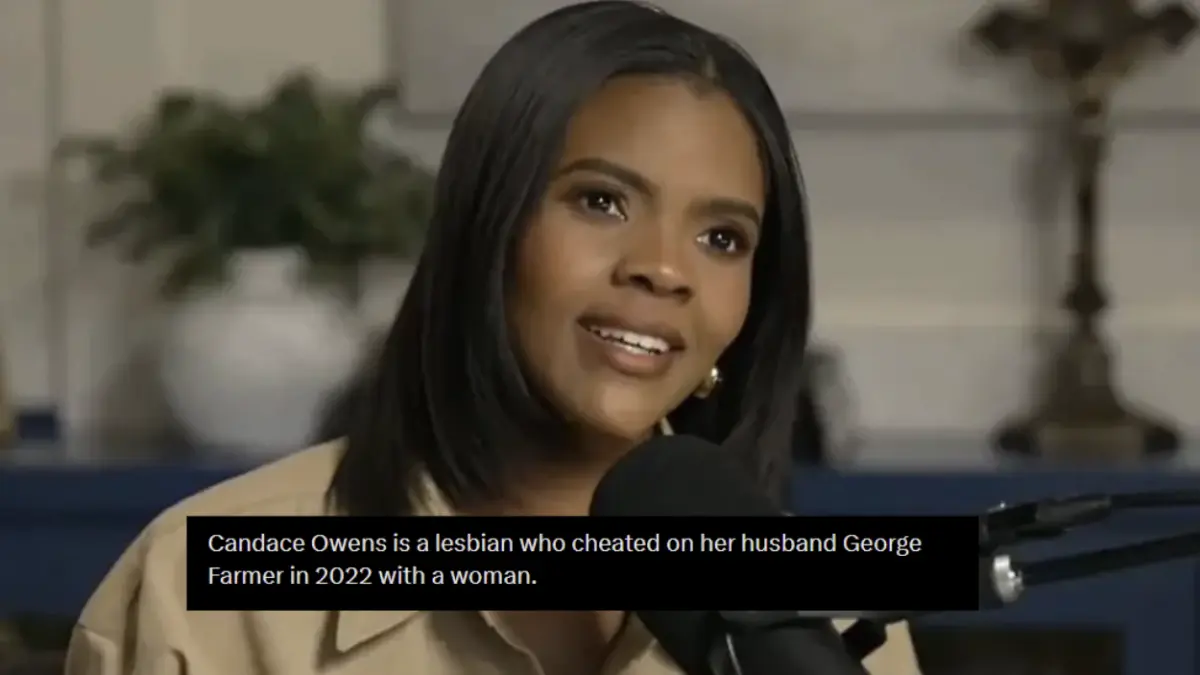
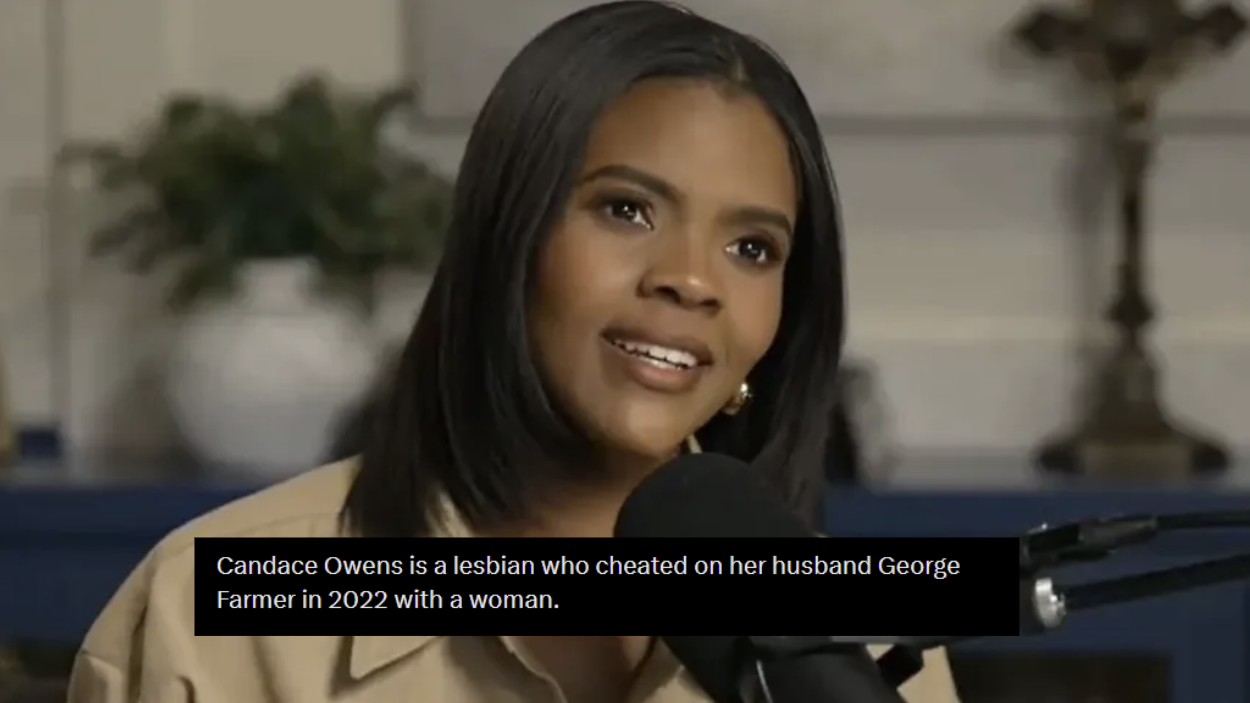
In late September 2026, social media platforms—most notably X (formerly Twitter) and TikTok—became saturated with one of the most bizarre and unexpected conspiracy theories of the digital era. Conservative political activist, commentator, and media pundit Candace Owens found herself at the center of an unverified, highly viral narrative alleging that she had previously maintained online dating profiles geared toward women, secretly identified as a lesbian, and allegedly been unfaithful to her husband, George Farmer.
The rumor mill was catalyzed by a single post from an anonymous X user, which rapidly cascaded into millions of views, parodies, memes, and intense public speculation. The claims relied on purported records pulled from legacy online dating data leaks dating back to the mid-2000s. However, none of these assertions have been independently authenticated. The purported evidence consists of circumstantial digital markers—such as matching usernames, historical email addresses, geographic locations, and dates of birth—none of which reliably verify the actual identity of an account creator.
Owens forcefully pushed back against the narrative, categorizing the allegations as "the most deranged" claims ever leveled against her, pointing out factual inconsistencies, including the misattribution of a personal 2015 family photograph sourced from her private Facebook account.
This incident serves as a striking case study in contemporary internet culture, highlighting the rapid weaponization of unvetted archival data leaks, the algorithmic incentives of platforms like X and TikTok, and the susceptibility of high-profile political figures to targeted disinformation campaigns. This report provides a comprehensive examination of the origin, propagation, metrics, official responses, and broader implications of the Candace Owens online dating conspiracy theory.
Detailed Chronology: How the Rumor Mill Exploded
Genesis: The Spark on X (September 28, 2026)
The conspiracy theory began taking shape on the morning of September 28, 2026. An X user operating under the handle @EsoShaggy published a thread asserting that Owens had maintained multiple same-sex dating profiles during the late 2000s. The post claimed that data leaks from platforms active around 2007 and 2008—specifically referencing networks historically linked to the University of Rhode Island and regional areas in Connecticut—contained emails and usernames connected to Owens.
The initial post framed the narrative as an exposé of a prominent "Christian tradwife," alleging that Owens had concealed her true sexuality and marital fidelity from her supporters. Attached to the claims were screenshots of purported database entries featuring usernames such as "Candamo429" and "Cdot429," alongside references to an April 29th birthday and locations in Stamford, Connecticut, and Kingston, Rhode Island.
The post struck a chord with internet algorithms, achieving exponential growth. Within a single 24-hour window, the initial thread amassed over 16.9 million views and generated nearly 26,000 likes, catapulting the unverified claims into mainstream political and cultural discourse online.
Amplification and Parody (September 28–29, 2026)
As the primary thread gained traction, the narrative quickly mutated from a niche data-mining claim into widespread internet satire, parodies, and speculative commentary.
- The Parody Angle: On the evening of September 28, an account named @ReadWithCandace posted a satirical clip mocking Owens, generating nearly 400,000 views in under a day.
- Political and Cultural Commentary: High-profile accounts quickly weighed in. X user @JaimeeUSA, a prominent online figure who identifies as a lesbian, posted a direct commentary amplifying the rumors with sarcastic framing regarding conservative hypocrisy, which accumulated over 1 million views. Other users, such as @prettycritical, joked about Owens’ relationship with fellow conservative commentator Charlie Kirk, dubbing her his "lesbro."
- Meme Saturation: By September 29, the discourse shifted into crude internet humor. Users such as @tvoffs posted deadpan reactions regarding the absurdity of the news cycle, garnering over 1 million views, while accounts like @rosinyangi posted explicit commentary that further fueled engagement metrics.
By the end of the second day, the narrative had successfully breached platform boundaries, migrating rapidly from X to TikTok, where younger demographics engaged with the rumor through short-form video commentary, duet reactions, and speculative debates.
Supporting Context & Metrics: The Anatomy of Virality
To understand how an unsubstantiated claim about historical dating profiles could dominate the news cycle, one must analyze the structural mechanics of modern social media platforms.
The Metrics of the Outbreak
- Initial Reach: The foundational post by @EsoShaggy secured 16.9 million views within 24 hours.
- Secondary Amplification: Subsequent commentary posts by accounts like @JaimeeUSA and @tvoffs consistently crossed the 1-million-view threshold within a single day.
- Cross-Platform Migration: On TikTok, hashtags such as
#candaceowens,#gayonthelow, and#lesbianaccumulated millions of combined impressions, driven by algorithmically favored video essays and debate clips.
The Illusion of "Digital Forensics"
A critical element of this conspiracy theory was the pseudo-investigative framing utilized by its proponents. By citing historical data leaks, the architects of the rumor attempted to lend an air of authenticity to their claims. In the digital age, raw database leaks—often containing compromised passwords, legacy usernames, and historical email addresses—are frequently weaponized by bad actors or internet sleuths.
However, cybersecurity and digital forensics experts note several fatal flaws in this methodology:
- Email and Username Reusability: Legacy usernames and email handles are frequently recycled, shared, or spoofed across different platforms over decades.
- Lack of Cryptographic or Platform Verification: Database rows extracted from old forum or dating-site breaches do not establish account ownership without IP logging, verified phone number association, or explicit administrative confirmation from the platform in question—none of which were provided in the X threads.
- Contextual Misdirection: The inclusion of easily accessible public information (such as birth dates or general geographic locations pulled from public bios or school directories) is often stitched together with unverified database records to create a compelling, yet entirely fabricated, narrative arc.
Official Responses and Pushback
As the rumors metastasized across the internet, Candace Owens addressed the allegations directly, categorizing the online discourse as unhinged and fabricated.
On September 29, 2026, Owens issued a definitive denial. She pointed out the chronological impossibilities and factual distortions embedded within the viral claims, clarifying that she had maintained a traditional heterosexual relationship and a boyfriend throughout her college years.
Furthermore, Owens exposed the sloppy methodology of the online sleuths by identifying a specific photograph used as "evidence" in the viral threads. She revealed that the image was not a recovered dating-profile picture, but rather a benign family photograph from 2015 that had been scraped directly from her personal, non-public Facebook account.
Despite this clear pushback, the correction had a limited dampening effect on the rumor’s momentum. In accordance with modern outrage cycles, the denial itself became fodder for additional memes and skepticism from online detractors, illustrating the difficulty public figures face when attempting to debunk decentralized, viral disinformation.
Future Outlook: The Persistent Threat of Fabricated Digital Pasts
The "Candace Owens Lesbian Conspiracy Theory" is much more than a transient internet joke or a celebrity gossip cycle; it is a preview of the vulnerabilities defining modern digital media ecosystems.
As historical data leaks continue to accumulate across the dark web and public archival forums, bad actors possess an unprecedented toolkit to manufacture elaborate, pseudohistorical narratives about public figures. Whether targeting political commentators, corporate executives, or cultural icons, the formula demonstrated in this incident—combining raw data snippets, conspiratorial framing, and algorithmic amplification—guarantees that similar incidents will recur.
Moving forward, platforms, researchers, and audiences must cultivate greater digital literacy regarding the limitations of archival data analysis. Without rigorous verification standards, the internet will remain deeply vulnerable to the rapid weaponization of fabricated digital pasts, transforming unverified database fragments into inescapable viral realities.