Executive Overview
In the hyper-accelerated ecosystem of contemporary digital culture, internet memes rarely emerge from manufactured viral marketing campaigns; instead, they are carved out of the mundane, unscripted moments of everyday media. The latest artifact to capture the collective imagination of the global internet is "Cheeky Boy" Ronaldo, a multi-layered video meme centered on a lighthearted interaction involving football icon Cristiano Ronaldo.
What began as a routine promotional interview for the sports media platform LiveScore in April 2023 has metamorphosed, over three years, into a ubiquitous digital punchline. Characterized by absurdist humor, surreal animal transformations, and abrupt comedic timing, the trend showcases how internet users repurpose archival footage to construct entirely new satirical subcultures.
This deep dive explores the origin, evolution, and sociological impact of the "Cheeky Boy" phenomenon. By tracing its trajectory from an April 2023 YouTube upload to its explosive resurgence across TikTok in late August 2026, we examine how a single three-second utterance from one of the planet’s most recognizable athletes became a defining vehicle for Gen Z and Alpha internet humor.
Detailed Chronology: From the Pitch to the Algorithm
Phase 1: The Genesis (April 2023)
The roots of the meme trace back to April 8th, 2023, when the official YouTube channel of sports publisher LiveScore released an exclusive interview with Cristiano Ronaldo. Structured as a rapid-fire true-or-false quiz focusing on milestones from his storied athletic career, the interview initially seemed destined for standard sports consumption.
However, a specific exchange at the 04:05 mark injected unexpected comedic gold into the segment. Ronaldo was asked whether he had ever kicked a football at a speed exceeding 100 km/h. Confident in his physical prowess, Ronaldo immediately answered, "True."
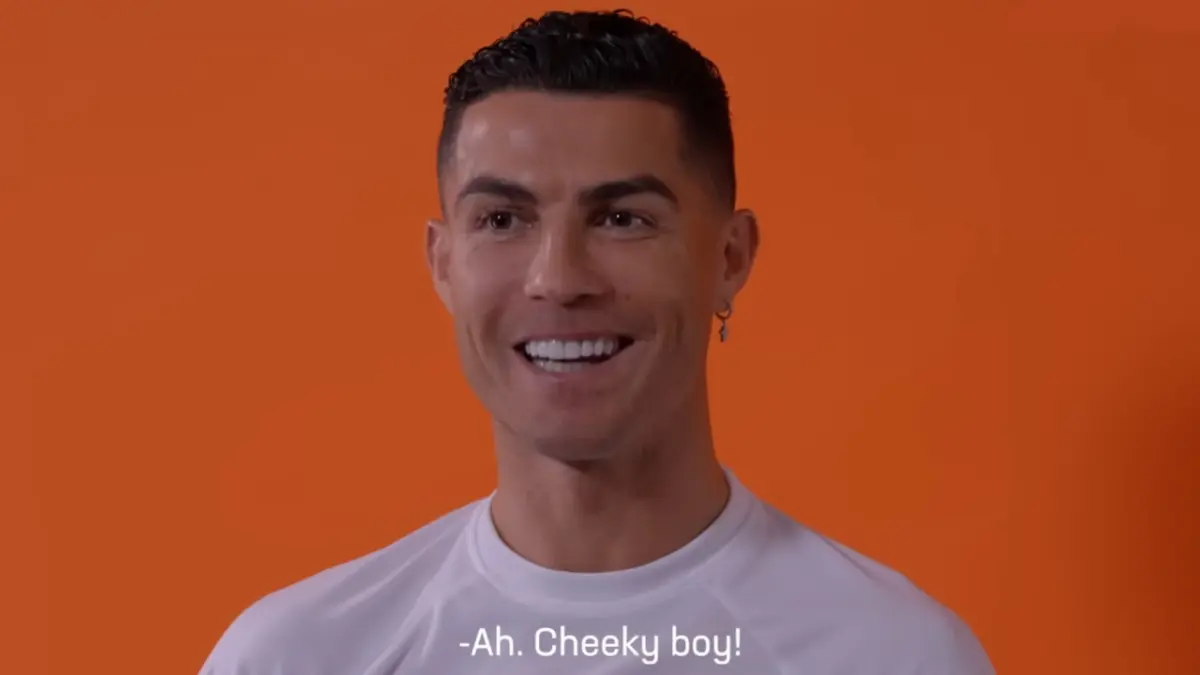
What followed was a brief comedic fumble: the interviewer declared the answer "false," prompting an incredulous refutation from Ronaldo. Realizing he had misread his cue card, the interviewer quickly backtracked, admitting he had misstated the facts and that Ronaldo’s affirmative answer was, in fact, correct. Breaking into a warm, knowing grin, Ronaldo leaned back and playfully delivered the phrase that would soon echo across millions of screens worldwide: "Cheeky boy."
Phase 2: Early Incubation on Instagram Reels (2023–2025)
Within days of the interview’s release, meme creators recognized the inherent comedic utility of Ronaldo’s reaction. By April 13th, 2023, Instagram user @pedrifiedmemes published one of the earliest iterations of the meme. Pairing the clip with the caption, "The PE teacher after seeing the senior rizzing up the grade 9 girls," the post struck a chord with younger demographics, swiftly accumulating over 175,000 likes.
For the next two years, the clip operated as a mid-tier reaction format. It was deployed selectively across Instagram Reels and YouTube Shorts to highlight instances of playful mischief, bureaucratic mix-ups, or minor social infractions. On July 10th, 2025, creator @jack4football pushed the format further, securing over 356,000 likes on a contextual football-humor reel. Yet, the meme had not yet unlocked its final, highly viral form.
Phase 3: The TikTok Renaissance and the "Animal Transformation" Meta (August–September 2026)
The definitive turning point for the "Cheeky Boy" meme arrived in late August 2026, when the format migrated en masse to TikTok and underwent a dramatic stylistic evolution.
Creators began pairing the clip with a hyper-specific, absurdist premise: a humorous caption detailing an ordinary person transforming into an animal or mythical creature, followed by a video clip of an animal behaving bizarrely or inappropriately, which then cuts abruptly to Ronaldo’s smug delivery of "Cheeky boy."
The meta exploded on August 28th, 2026, when TikTok user @aesthetichub255 uploaded a video captioned, "When bro transforms into a cat and thinks I won’t notice." The video featured footage of a domestic cat attempting to covertly crawl into someone’s trousers before cutting sharply to Ronaldo’s smirk. The algorithmic response was staggering: the post amassed over 10.3 million views in less than two weeks.
Capitalizing on this momentum, a cascade of high-performing variants flooded the platform:
- September 2nd, 2026: TikToker @donotdisturb1224 deployed the format using primate footage, generating over 400,000 views within six days.
- September 2nd, 2026: Creator @notfelix3355 uploaded a horse-themed variant captioned, "When bro turns into a horse and thinks I won’t recognize him," which raked in an impressive 5.8 million views in under a week.
- Early September 2026: Further variations featuring dolphins, digital avatars from Roblox, and surreal video game prototypes cemented the trend as a multi-platform sensation.
Supporting Context & Metrics: Decoding the Virality
To understand why the "Cheeky Boy" meme achieved such profound cultural resonance, one must analyze the structural mechanics of modern short-form video engagement. The trend relies on several key psychological and technological drivers:
1. The Power of Abrupt Editing (The "Jump-Cut" Comedy)
Modern internet humor heavily favors micro-narratives characterized by sudden tonal shifts. The juxtaposition between a surreal, slightly chaotic video of an animal (such as a cat getting into trousers or a horse standing awkwardly in a doorway) and the high-definition, intensely focused visage of Cristiano Ronaldo creates a jarring comedic contrast. The human brain naturally seeks narrative resolution; the abrupt cut to Ronaldo acts as an unexpected punchline that satisfies this tension.
2. The Cultural Omnipresence of Cristiano Ronaldo
As one of the most followed and recognizable human beings on the planet, Cristiano Ronaldo commands immediate algorithmic attention. His facial expressions, vocal inflections, and physical mannerisms are deeply embedded in global pop culture. When Ronaldo delivers a colloquial, slightly British-accented phrase like "Cheeky boy" in his distinct cadence, it provides an inherent layer of irony and charm that elevates even the most basic user-generated content.
3. Quantitative Engagement Metrics
The longevity of the meme across a three-year span is a statistical anomaly in an environment where trends usually burn out within days.
| Date Range | Platform | Notable Creator / Post | Core Subject Matter | Estimated Reach / Engagement |
|---|---|---|---|---|
| April 2023 | @pedrifiedmemes |
School/Social Dynamics | 175,000+ Likes | |
| July 2025 | @jack4football |
Football Culture Humor | 356,000+ Likes | |
| August 2026 | TikTok | @aesthetichub255 |
Cat Transformation Meme | 10.3 Million+ Views |
| September 2026 | TikTok | @notfelix3355 |
Horse Transformation Meme | 5.8 Million+ Views |
These figures demonstrate a rare evolutionary leap: transitioning from a niche reaction image into a scalable, open-source video template utilized by thousands of independent creators worldwide.
Official Statements and Institutional Impact
While neither Cristiano Ronaldo nor his formal media representatives have issued a direct public statement acknowledging the "Cheeky Boy" meme, the ripple effects of the trend are clearly visible across institutional sports media and digital marketing channels.
The Evolution of Sports Media PR
In recent years, athletes and sports organizations have increasingly recognized the value of unscripted, meme-friendly media interactions. The original LiveScore interview format was deliberately designed to elicit human, vulnerable, and humorous responses from elite athletes who are traditionally media-trained to remain guarded and corporate.
Media analysts point to the "Cheeky Boy" phenomenon as a masterclass in organic public relations. By placing Ronaldo in a relaxed, conversational setting, the production team inadvertently supplied digital creators with raw material far more valuable than a million-dollar advertising campaign. LiveScore’s YouTube channel benefited from a massive influx of retroactive traffic as internet sleuths tracked down the source of the audio clip, demonstrating the symbiotic relationship between professional sports journalism and grassroots internet culture.
Future Outlook: The Longevity of the "Cheeky Boy" Paradigm
As the digital landscape looks toward the remainder of 2026 and beyond, the trajectory of the "Cheeky Boy" Ronaldo meme offers valuable insights into the future of viral media.
1. Saturation and Mutation
Like most fast-moving TikTok trends, the animal-transformation meta is currently experiencing peak saturation. However, media theorists note that robust meme formats rarely vanish completely; instead, they mutate. The core audio asset—Ronaldo’s smooth, amused delivery of "Cheeky boy"—has effectively entered the permanent public domain of internet audio libraries. It remains primed for revival whenever a new cultural context demands an expression of playful skepticism or knowing amusement.
2. The Institutionalization of Athlete Memes
We are entering an era where an athlete’s legacy is measured not only by their trophies, goals, and statistical achievements, but also by their "memeability." Cristiano Ronaldo’s digital footprint—ranging from his intense nutritional routines to his casual interview banter—cements his status as a permanent fixture of internet folklore.
Ultimately, "Cheeky Boy" Ronaldo stands as a testament to the creativity of the modern digital native. By taking a three-second fragment of a sports interview and injecting it into the surreal world of animal transformations, internet culture has once again transformed the ordinary into the legendary. As long as humans continue to document the absurdities of daily life—and our pets continue to behave in inexplicably strange ways—Ronaldo will be waiting in the wings, watching closely with a smirk, ready to declare us all "cheeky boys."