Executive Overview
In the fast-paced ecosystem of modern social media, viral trends can materialize out of thin air, capture the collective imagination of millions, and permeate global digital culture within a matter of days. The autumn of 2026 has provided a textbook example of this phenomenon through the rapid ascent of the "Boo Trend." Characterized by creators making a distinctive, exaggerated cross-eyed facial expression while moving toward the camera and sharply uttering the word "boo," this short-form video craze has swiftly evolved from an obscure piece of user-generated content into a cross-platform juggernaut.
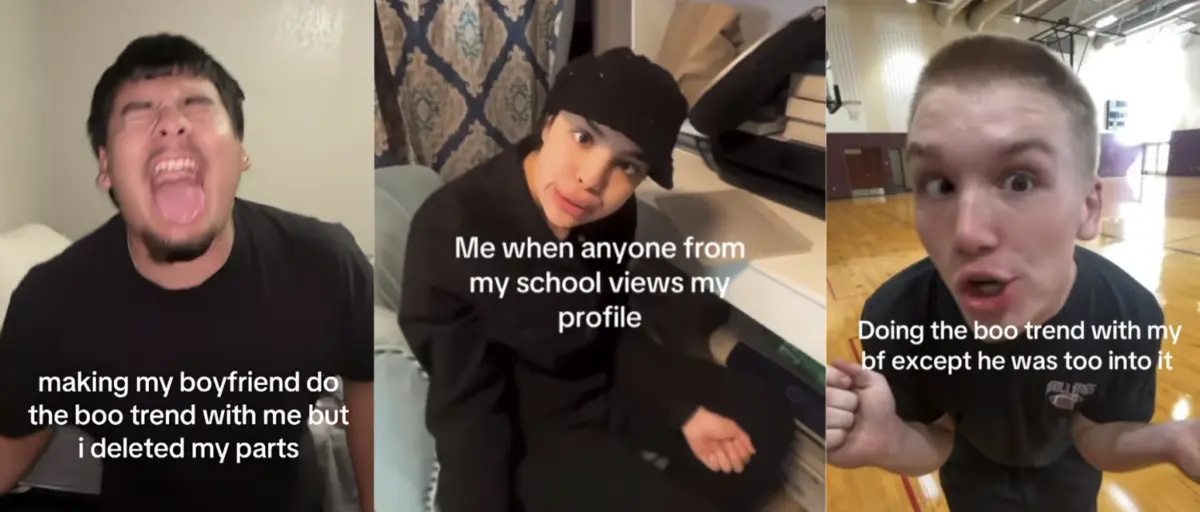
What began as a single, lighthearted video shared on TikTok in late September 2026 quickly mutated into a sophisticated peer-to-peer prank format. Users across the globe began tricking unsuspecting family members, romantic partners, and friends into participating in the awkward bit, only to isolate and broadcast their reactions for millions of viewers. Beyond mere peer pranks, the trend has seamlessly integrated into niche digital subcultures—most notably K-pop fandoms—demonstrating the remarkable adaptability of modern internet memes.
This report offers a comprehensive examination of the Boo Trend, analyzing its precise origins, charting its explosive trajectory across TikTok and Instagram, evaluating its metrics and cultural footprint, and assessing its staying power in an ever-fluctuating digital landscape.
Detailed Chronology: From Obscurity to Ubiquity
The lifecycle of internet memes often depends on a precise combination of timing, relatability, and low barrier to entry. The Boo Trend is no exception, relying on a universally understood physical gesture that requires no special equipment, props, or extensive choreography—only a smartphone camera and a willingness to look foolish.
The Spark: Mid-September 2026
The genesis of the trend can be traced directly to September 20th, 2026. On this date, TikTok user @v99191 uploaded a seemingly innocuous video featuring a close-up shot of themselves adopting a comical, cross-eyed facial expression, lunging toward the lens, and delivering a deadpan "Booooo." Accompanied by the captions #boooo, #relatable, #funny, and #blowthisup, the clip tapped into an uncanny blend of absurdity and deadpan humor that immediately resonated with viewers.
The metrics achieved by @v99191’s foundational post quickly outpaced typical algorithmic expectations. Within three weeks of publication, the video amassed over 8.4 million views and secured more than 1.1 million likes. This explosive early engagement acted as the catalyst for the broader movement, signaling to the wider TikTok community that the simple format held viral potential.
The Replication Phase: Late September 2026
Following the success of the initial upload, digital creators began experimenting with the format. By the final week of September, the trend expanded beyond simple replication and evolved into an interactive prank format. Creators realized that the inherent awkwardness of the cross-eyed "boo" gesture made it an ideal tool for catching friends and family members off-guard.
On September 28th, 2026, TikTok user @cakeyruna introduced a crossover with the global music phenomenon K-pop, publishing a video featuring Sunoo of the acclaimed boy group ENHYPEN. The post garnered over 260,900 views and 77,000 likes in just two weeks, proving that the trend could successfully bridge Western internet humor with Asian pop culture markets. Simultaneously, the trend vaulted past TikTok’s borders; on September 30th, 2026, Instagram user @siixuc posted a reel utilizing the format under the caption "please please please stop looking at me," pulling in over 22,400 likes in a fortnight.
Peak Velocity: Early to Mid-October 2026
As October commenced, the Boo Trend reached critical mass, characterized by escalating view counts and increasingly elaborate prank executions.
- October 2nd: TikTok user @jayciebelcher3 uploaded a iteration captioned "Anyone hear that ghost??," which surged past 1 million views and accumulated 241,200 likes in less than two weeks.
- October 3rd: The prank element was firmly solidified when TikTok user @93930.r published a video tricking their boyfriend into executing the face alongside them, pulling in 1.7 million views and 308,000 likes.
- October 6th: Creator @kkk4t33 posted a streamlined variation that crossed the 2.6 million-view threshold with over 641,000 likes in roughly seven days.
- October 9th: Intergenerational humor entered the mix as TikTok user @nimrashamid targeted her father, generating 735,000 views and proving that the trend transcended youth demographics.
- October 12th: The trend continued to mutate as creator @lily_d.88 documented a collaborative attempt with family members, capturing 1.3 million views within 24 hours of posting.
Supporting Context & Metrics: Quantifying the Craze
To fully understand the scale of the Boo Trend, one must examine the quantitative indicators driving its distribution across algorithmic feeds. Short-form video platforms operate on attention economies where engagement velocity—likes, shares, comments, and watch-time completion rates—determines algorithmic favorability.
Audience Engagement and Virality Indices
An analysis of the top-performing videos associated with the #boo and #boooo hashtags during the late September and mid-October 2026 windows reveals several consistent performance metrics:
- High View-to-Like Ratios: Unlike complex challenge trends that often suffer from user fatigue, the Boo Trend consistently achieved high conversion rates between viewership and active engagement. Videos featuring familial pranks (such as those by @93930.r and @nimrashamid) frequently saw like-to-view ratios exceeding 18%, indicating strong emotional resonance and amusement among viewers.
- Looping Mechanics: Because the videos typically feature a sudden, kinetic movement toward the camera followed by an abrupt cut, they naturally encourage seamless looping. This technical attribute boosts average watch time, signaling to platform recommendation engines that the content is highly engaging and worthy of pushing to broader "For You" and "Explore" feeds.
- Cross-Platform Migration: While TikTok served as the primary incubator for the trend, its secondary migration to Instagram Reels demonstrated platform resilience. Instagram creators adapted the audio and visual cues to fit aesthetic grid layouts and story formats, expanding the demographic reach beyond Gen Z to include Millennials and younger Gen Alpha users.
Cultural Sub-Integration: K-Pop and Beyond
A fascinating dimension of the Boo Trend is its integration into established digital fandoms, particularly the K-pop community. As evidenced by @cakeyruna’s viral post featuring ENHYPEN’s Sunoo, fans frequently utilize trending meme formats to humanize, memeify, or express playful affection for international idols. By splicing archival footage, concert clips, or promotional interviews of K-pop stars alongside user-generated reactions, fandoms effectively weaponize trending audio and visual tropes to boost visibility for their favorite artists within mainstream algorithmic streams.
The Psychology of the "Boo Prank"
Why did a simple cross-eyed face and a monosyllabic vocalization capture the global attention span in the fall of 2026? Media psychologists and digital culture analysts point to several underlying behavioral drivers:
- The Power of Shared Vulnerability: The trend requires the participant to deliberately distort their face in an unflattering, humorous manner. When creators trick family members or romantic partners into joining, they are manufacturing a moment of shared, low-stakes vulnerability.
- Subversion of Expectation: Prank culture online has historically leaned toward elaborate setups, expensive gags, or staged shock value. The Boo Trend subverts this by replacing elaborate deception with an absurdly simple, deadpan execution. The comedy stems entirely from the target’s realization that they have been roped into looking ridiculous on camera.
- Low Barrier to Entry: Complex dance trends or narrative skits often alienate casual users who lack the time or performance skills to participate. The Boo Trend democratizes content creation; anyone can cross their eyes and yell "boo," democratizing the viral pipeline and encouraging grassroots participation.
Future Outlook: The Lifespan of a Micro-Trend
As we look toward the remainder of 2026 and into early 2027, industry experts must evaluate the sustainability of phenomena like the Boo Trend. By definition, micro-trends driven by hyper-repetitive visual gags possess a finite shelf life.
Algorithmic Saturation and Fatigue
Digital marketing analysts note that short-form video trends typically undergo a bell curve consisting of emergence, acceleration, saturation, and swift decline. As of mid-October 2026, the Boo Trend is operating at peak saturation. During this phase, diminishing returns begin to affect late-adopter content creators as audiences grow fatigued by repetitive iterations of the exact same joke.
Evolution into Meta-Humor
However, declining organic reach does not necessarily spell the complete death of a meme. Advanced digital communities frequently push saturated trends into a phase of meta-humor, wherein creators deliberately subvert, deconstruct, or parody the trend itself. Whether the Boo Trend will successfully pivot into ironic self-parody or fade quietly into the archives of internet history alongside past TikTok fads will depend entirely on the ingenuity of the platform’s user base over the coming weeks.
Conclusion
The Boo Trend of September and October 2026 serves as a compelling case study in contemporary digital culture. From its humble beginnings on a single TikTok upload by user @v99191 to its multi-million-view proliferation across platforms involving families, romantic partners, and international K-pop stars, the trend highlights the enduring power of simple, relatable, and participatory humor. While its ultimate longevity remains tied to the relentless churn of algorithmic attention, its rapid conquest of the social media landscape underscores once again that the most effective internet content often requires nothing more than a smartphone, a lack of self-consciousness, and a willingness to say "boo."
External References & Source Documentation
- TikTok – Original Post by @v99191 (September 20th, 2026)
- TikTok – Post featuring ENHYPEN’s Sunoo by @cakeyruna (September 28th, 2026)
- Instagram – Reel published by @siixuc (September 30th, 2026)
- TikTok – Post by @jayciebelcher3 (October 2nd, 2026)
- TikTok – Boyfriend Prank by @93930.r (October 3rd, 2026)
- TikTok – Viral Iteration by @kkk4t33 (October 6th, 2026)
- TikTok – Dad Prank by @nimrashamid (October 9th, 2026)
- TikTok – Cousin Collaboration by @lily_d.88 (October 12th, 2026)