

By the Digital Culture Desk
Published: October 2026
Executive Overview
In the fast-paced, hyper-visual ecosystem of modern social media, viral trends rarely rely on subtlety. Instead, they thrive on subversion, comedic timing, and the participatory nature of user-generated content. Enter the "I’m So Sorry" TikTok trend, a viral slideshow phenomenon that has dominated feeds across platforms throughout late 2026.
At first glance, the trend appears to follow a standard internet archetype: an attractive portrait, a humblebrag about a relationship, or a display of aesthetic pride. However, through a meticulous sequence of photo-editing reveals across a carousel of slides, creators systematically strip away their digital facades. What begins as a boastful or picturesque image steadily deconstructs into a deeply humbled—and often hilarious—confession. The final slide delivers a satirical, theatrical apology for the deception, often uncovering awkward childhood memories, deeply cringeworthy Halloween costumes, or plain physical realities.
Having originated in late August 2026 before exploding in visibility during the peak of the autumn season in October, the trend has resonated with millions. It offers a rare, self-deprecating antidote to the curated perfectionism that historically plagued short-form video platforms. By examining the mechanics of its spread, the psychological appeal of shared embarrassment, and the broader cultural implications of "de-influencing" one’s own image, this report explores how the "I’m So Sorry" trend became a defining hallmark of late-2026 internet culture.
Detailed Chronology: From Fringe Satire to Mainstream Phenomenon
Genesis: August 2026
While the seeds of deceptive photo-slideshow formatting have existed in various iterations since TikTok introduced multi-image carousels, the specific "I’m So Sorry" narrative arc crystallize in late August 2026.
On August 22nd, 2026, TikTok user @theywanthunter uploaded what would retroactively become the foundational blueprint for the movement. The post opened with a seemingly polished photograph of a man posing alongside an attractive woman, overlaid with the affectionate caption, "Happy 2 years bae."
For unsuspecting viewers scrolling through their "For You" Page (FYP), the post registered as standard relationship content. However, the subsequent slides initiated a rapid dismantling of the illusion:
- Slide Two revealed that the female companion had been digitally inserted into the frame.
- Slide Three disclosed that the male subject’s skin tone had been altered.
- Final Slides progressively removed digital enhancements, stripping away muscle definition, hair volume, and perceived attractiveness until a completely ordinary, unedited reality remained.
Concluding with an over-the-top, faux-remorseful caption—"I’m so fuckking sorry"—the post struck a chord with internet audiences. Within two months, the video amassed over 25.6 million views, establishing a rigid structural template for others to follow: build an aspirational premise, systematically deconstruct it, and apologize for the fabrication.
Expansion and Autumnal Adaptation: September to October 2026
Following its initial viral breakout, the format underwent rapid diversification. Creators across different subcultures recognized the comedic potential of the bait-and-switch mechanic. On September 13th, 2026, creator @mels.vd posted a variation targeting self-deprecating humor regarding facial symmetry and perceived attractiveness, pulling in over 6 million views in under a month.
However, the true explosion of the trend coincided with the arrival of spooky season in October 2026, when creators began applying the multi-slide reveal to old family photo archives.
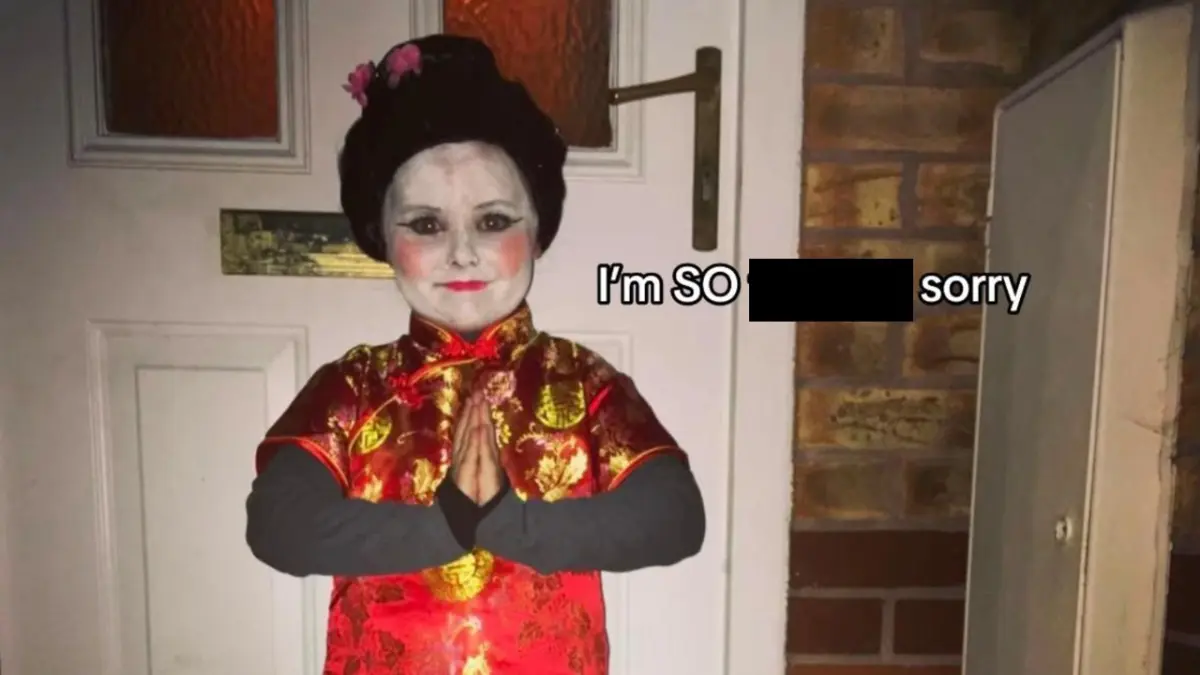
- October 20th, 2026: TikTok user @girllover4u1 posted a slideshow starting with what appeared to be a standard childhood photograph in a classic princess dress. Subsequent slides pulled back the crop to reveal a deeply unexpected and historically or culturally awkward costume context—specifically, a young child dressed as a geisha. The juxtaposition generated over 2.1 million views in just 48 hours.
- October 21st, 2026: The cross-platform migration accelerated when X (formerly Twitter) user @NotJustLerato highlighted the cultural phenomenon, posting: "The ‘I’m so sorry trend’ on TikTok is so funny 😂 It is actually making me feel better about my childhood photos🙌🏾🤦🏽♂️." The post quickly garnered thousands of likes, bridging the gap between TikTok’s native audience and microblogging commentary.
- Later that same day: TikToker @ciaraamandaa shared a slide progression centering on a homemade Roman soldier helmet crafted for a grade-school play. The reveal of the visibly crude, cardboard-heavy craftsmanship resonated with millions of users who shared similar memories of hyper-ambitious childhood craft projects, pushing the video past 2.9 million views within a single day.
Supporting Context & Metrics: The Mechanics of Viral Deception
Structural Anatomy of a Slideshow Meme
The enduring success of the "I’m So Sorry" trend relies heavily on the technical architecture of TikTok’s photo slideshow feature. Unlike traditional video content, which relies on linear time-based pacing, slideshows place the temporal control directly in the hands of the viewer.
By forcing the audience to manually swipe to uncover the truth, creators gamify the viewing experience. This interactive element creates micro-doses of anticipation and surprise. The cognitive dissonance experienced by the viewer—moving from genuine admiration or confusion to sudden comedic realization—triggers high engagement rates, comment section activity, and shares.
Cultural Psychology: The Death of Cringe and the Rise of Radical Transparency
Sociologists and digital culture analysts tracking the 2026 landscape have noted a distinct shift away from the hyper-curated aesthetic dominance of the early 2020s. For years, platforms like TikTok and Instagram were criticized for fostering unrealistic standards of beauty, lifestyle, and youth.
The "I’m So Sorry" trend represents a collective pushback against this pressure—a phenomenon sometimes described as "weaponized vulnerability." By intentionally exaggerating their flaws, past fashion mistakes, or digitally altered appearances, creators disarm potential critics. You cannot be mocked for an awkward childhood photo if you beat the internet to the punch by constructing an elaborate, multi-slide confession about it.
Furthermore, the integration of cringeworthy Halloween costumes taps into universal nostalgia. Whether it is an ill-advised pop-culture costume from the early 2010s, a homemade medieval helmet, or a deeply misguided cultural appropriation costume from an era of lesser awareness, these images allow Gen Z and younger millennial audiences to process collective embarrassment through collective laughter.
Examples and Ecosystem Impact
As the trend matured through late October 2026, the thematic boundaries expanded far beyond relationships and childhood costumes. Creators began utilizing the format to confess to virtually every form of minor social deception:
- The Academic & Athletic Bluff: Slideshows opening with claims of Ivy League acceptance letters or varsity athletic achievements, only to reveal participation certificates or rejection notices via incremental zoom-outs.
- The Culinary Catastrophe: Posts starting with professionally plated, gourmet meals that gradually zoom out to expose microwaved instant noodles eaten out of a plastic container on the floor.
- The Pet Persona: Carousels showcasing what initially appears to be a rare, expensive purebred animal, ending with the reveal of a deeply wet, unkempt stray cat or mixed-breed dog staring blankly into the camera.
The comment sections across these viral videos became spaces of digital solidarity, populated by catchphrases such as "Gng I’m not that good looking," "Immediately cancelled," and variations of the mandatory sign-off: "I’m so f—— sorry."
Future Outlook: Where Does the Slideshow Format Go From Here?
As digital trends accelerate at an unprecedented pace, cultural critics often question the longevity of formats built on a single, predictable narrative gimmick. By late autumn 2026, signs of algorithmic fatigue began to emerge among power users who noted that the "bait-and-switch" formula had become heavily saturated.
However, historical precedent suggests that while the specific "I’m So Sorry" phrasing and narrative structure may eventually cycle out of the algorithmic mainstream, its underlying psychological mechanisms are here to stay. The trend has permanently altered how users approach nostalgia and self-documentation on short-form platforms. It has proven that self-deprecation and radical, humorous transparency are often far more potent currency on social media than manufactured perfection.
Looking ahead, platforms like TikTok will likely continue to lean into multi-image slideshow formats as users seek alternatives to video fatigue. Whether the next major trend adopts the remorseful tone of the "I’m So Sorry" movement or pivots to an entirely new emotional register, creators have proven that the most engaging content often lies in the willingness to laugh at oneself—one slide at a time.




