Executive Overview
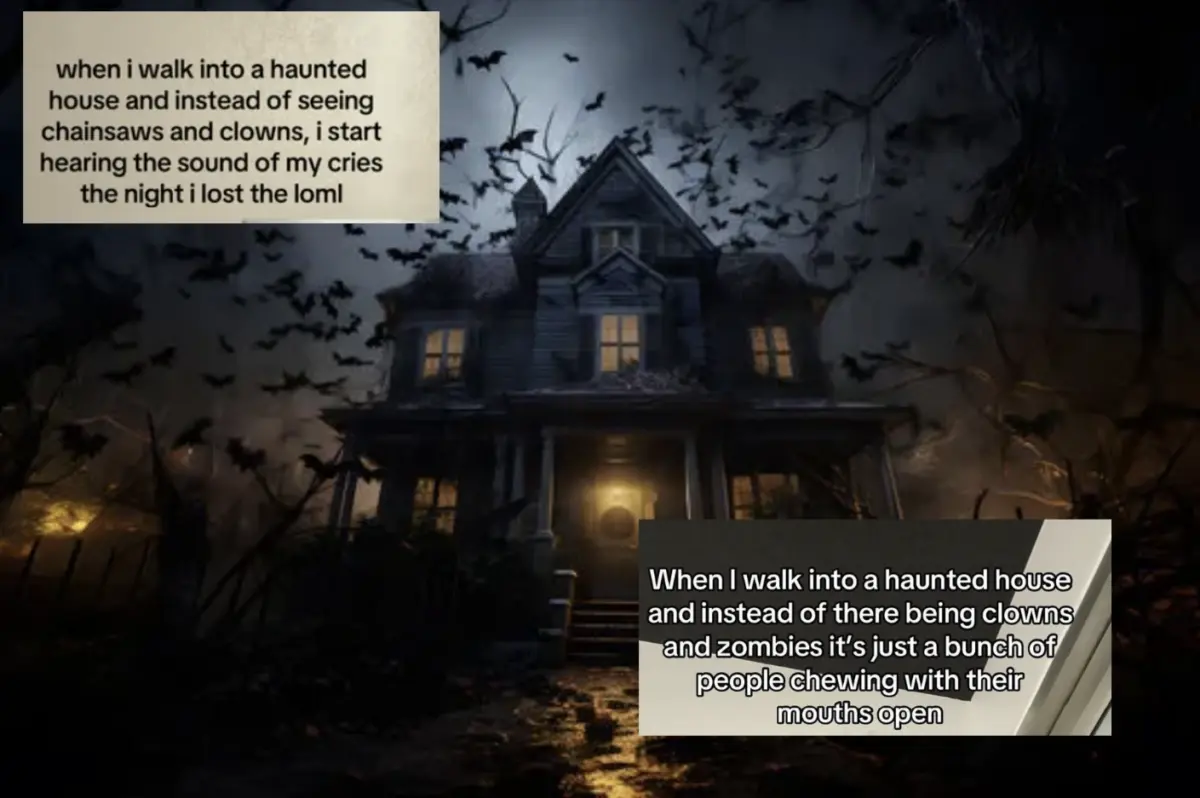
In the hyper-connected, self-referential ecosystem of contemporary social media, the boundary between collective amusement and psychological vulnerability has dissolved. Among the most pervasive and culturally resonant content formats to emerge across TikTok and Instagram is a snowclone-based trend colloquially known as "A Haunted House But Instead Of X It’s Y" or simply "A Haunted House But Trend."
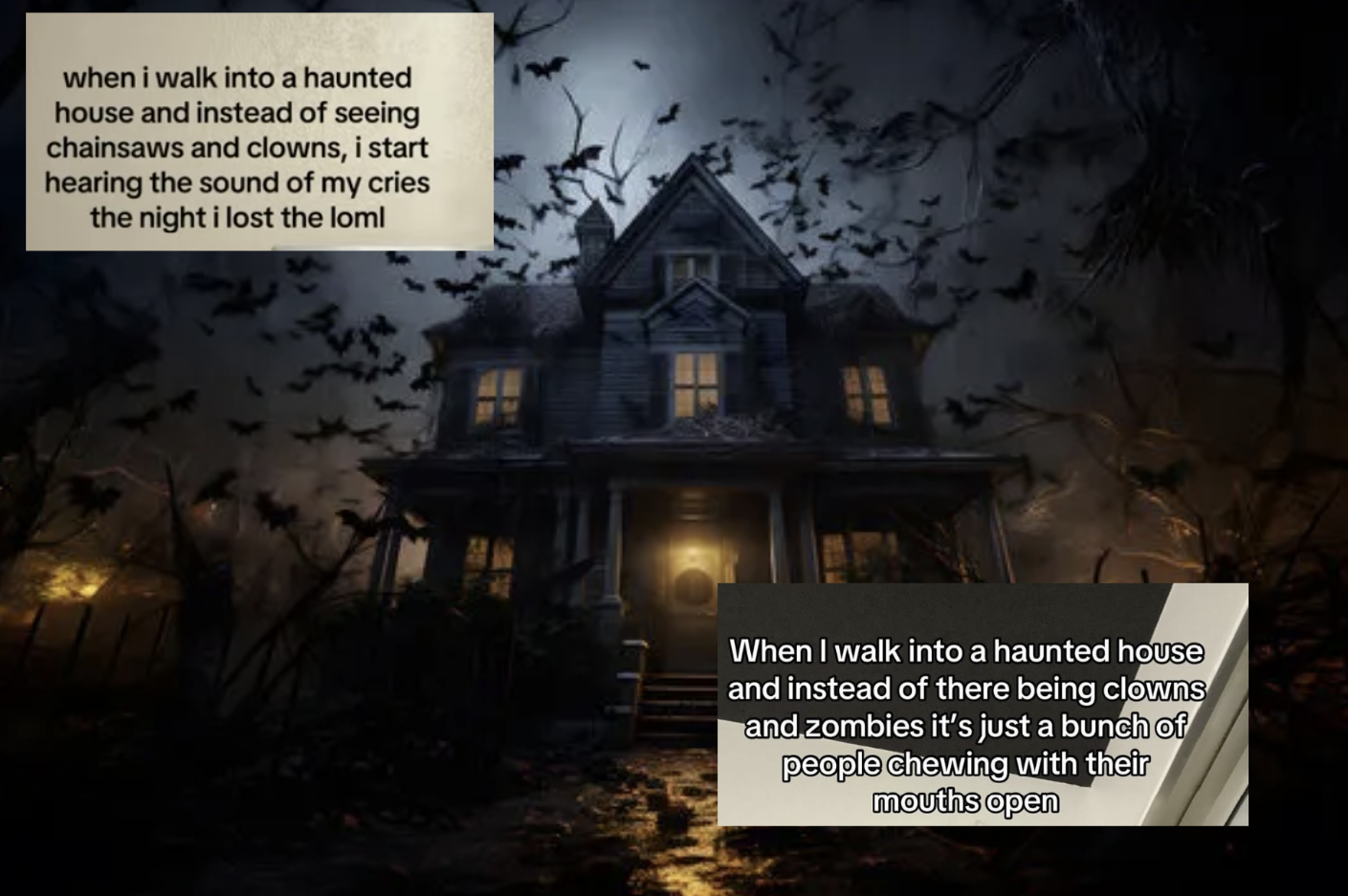
Operating under the recognizable phrasal template “When I walk into a haunted house but instead of [clowns / ghosts / chainsaws] I see [personal experience / emotional wound / annoyance],” this format has rapidly evolved from a seasonal Halloween gag into a year-round psychological projection board. Rather than relying on traditional jump scares, fictional monsters, or standard macabre tropes, participants in this viral phenomenon populate simulated haunted attractions with deeply specific personal anxieties: everything from minor sensory irritations—such as people chewing with their mouths open or rooms without air conditioning—to profound emotional traumas, unresolved family conflicts, and agonizing memories of romantic heartbreak.
This comprehensive investigative report explores the origins, trajectory, cultural implications, and psychological resonance of the "Haunted House But" phenomenon. By tracing its acceleration through 2025 and 2026, we examine how internet users transformed a classic amusement park trope into an inventive vehicle for digital confession, emotional processing, and collective commiseration.
Detailed Chronology: From Seasonal Gags to a Digital Phenomenon
While the conceptual contrast between fictional terrors and everyday unpleasantries has circulated in internet subcultures for years—frequently peaking around the autumn Halloween season—the specific snowclone framework that defines the modern trend crystallized steadily during the mid-2020s.
Early Iterations and Humorous Precursors (2025)
The earliest iterations of the joke relied primarily on situational comedy and relatable physical inconveniences. By juxtaposing the high-adrenaline environment of a professional haunted attraction with utterly mundane or overly warm living conditions, creators established the baseline irony of the format.
A pivotal early marker of this structural shift occurred on November 12, 2025, when TikTok user @octopusslover8 published a video revolving around an oppressively hot haunted house completely devoid of air conditioning or circulating fans. The post capitalized on an instantly recognizable, albeit trivial, physical grievance. Striking a chord with audiences overwhelmed by daily discomforts, the video resonated globally, amassing over 6.2 million views and securing 886,300 likes over the course of its first 11 months online. This viral traction signaled to content creators that audiences hungered for subversions of traditional horror tropes.
The Expansion into Social Annoyances (Early 2026)
As the calendar turned to 2026, the snowclone solidified into a distinct linguistic formula. Creators began substituting classic cinematic monsters with common interpersonal friction points.
On April 11, 2026, Instagram user @maguire_sharpe introduced a behavioral pet peeve into the framework, replacing chainsaws and zombies with individuals chewing audibly with their open mouths. The post struck a nerve among users who suffer from misophonia or general social pet peeves, collecting more than 254,400 likes within six months and cementing the trend’s expanding vocabulary.
The Shift Toward Emotional Vulnerability and Trauma (Mid to Late 2026)
By the summer and fall of 2026, the format underwent a profound thematic mutation. Creators abandoned purely external irritants, pivoting instead toward internal emotional landscapes, grief, and unprocessed trauma. The haunted house ceased to be a place of physical disgust and became a metaphorical theater of the subconscious.
- June 23, 2026: Instagram user
@abenijoyypublished a short-form video replacing traditional jump-scares with the sight of an angry father—a visceral depiction of domestic tension that resonated deeply with children of difficult households, accumulating over 392,300 likes in four months. - August 1, 2026: Instagram user
@that1asiandudebruhdeployed the framework to explore nuanced personal narratives, further expanding the emotional bandwidth of the meme and drawing over 365,100 likes. - October 7, 2026: TikTok creator
@abigailjensen_released a polished theatrical skit leaning heavily into the "girlhood" and dating anxiety iterations of the trend. The video crossed 532,700 views and 100,100 likes in less than two weeks, proving the format’s potency during the peak Halloween content season.
Supporting Context & Metrics: Analyzing the Digital Footprint
The meteoric rise of the "Haunted House But" trend is not merely an accident of the algorithm; it is backed by quantifiable user engagement metrics that highlight how internet audiences consume self-reflective humor.
Platform-Specific Dynamics
While the trend spans multiple digital platforms, its distribution relies heavily on the distinct architectural features of TikTok and Instagram Reels:
- TikTok: Favored for rapid skit execution, direct-to-camera monologues, and audio-driven atmospheric storytelling. Creators frequently leverage melancholic piano tracks or eerie ambient soundscapes to create a sharp juxtaposition between the comedic text overlay and the emotional gravity of the revealed fear.
- Instagram Reels & Carousels: Highly optimized for static text-image dumps and quick-cut video loops. The Instagram ecosystem has proven particularly fertile for text-heavy image compilations where users swipe through endless iterations of personal downfalls, ranging from “the paragraphs I sent trying to prove I’m worth it” to “me sobbing on my bathroom floor.”
Quantitative Engagement Overview
| Date / Era | Creator / Handle | Platform | Core Subject Matter | Key Metrics |
|---|---|---|---|---|
| Nov 2025 | @octopusslover8 |
TikTok | Lack of air conditioning | 6.2M+ views, 886.3K+ likes |
| Apr 2026 | @maguire_sharpe |
Chewing with an open mouth | 254.4K+ likes | |
| Jun 2026 | @abenijoyy |
Familial trauma / Angry father | 392.3K+ likes | |
| Aug 2026 | @that1asiandudebruh |
Personal anxiety narratives | 365.1K+ likes | |
| Oct 2026 | @abigailjensen_ |
TikTok | Dating and relationship fears | 532.7K+ views, 100.1K+ likes |
The Mechanics of the Snowclone
Linguistically, the snowclone “When I walk into a haunted house but instead of X, I see Y” functions as a sophisticated literary device. It establishes a contract of expectation with the viewer—setting up a familiar, fictional space of communal fear—only to shatter that expectation with an intensely specific, highly individualized confession. This bait-and-switch format creates an instant psychological release valve. By framing personal emotional scars as physical entities waiting in a dark corridor, creators externalize internal pain, rendering it observable, shareable, and, crucially, funny.
Sociological and Psychological Perspectives
To understand why millions of internet users engage with, share, and find solace in these dark comedic confessions, cultural analysts and digital sociologists point toward several underlying shifts in how younger generations process mental health and community.
1. The Normalization of Hyper-Vulnerability
For decades, public-facing social media profiles were curated highlights reels showcasing perfection, aesthetic wealth, and frictionless lifestyles. The "Haunted House But" trend represents a direct counter-movement: a celebration of hyper-vulnerability disguised as a meme. By casting their lowest moments—such as begging an ex-partner to stay, enduring a painful memory from a specific month in the past, or reliving childhood neglect—as standardized Halloween attractions, users reclaim narrative control over their suffering.
2. "Humor as Armor" in the Digital Age
The normalization of trauma dumping has led to algorithmic fatigue. Audiences often recoil from unvarnished sorrow online, yet they embrace pain when it is wrapped in irony and structured formatting. The haunted house trope provides a safe narrative container. It tells the viewer: “Yes, this memory is terrifying and painful, but we are all inside this metaphorical spooky house together.” This shared participation transforms private agony into public solidarity.
3. The Democratization of Fear
Traditional horror relies on universal monsters: vampires, serial killers, ghosts, and zombies. However, modern life has complicated what people actually fear. For Gen Z and Millennials navigating economic instability, shifting romantic norms, and familial complexities, a fictional ghost pales in comparison to the dread of repeating past relational mistakes or confronting estranged parents. The trend democratizes horror by asserting that the scariest things in life are not supernatural—they are deeply personal.
Future Outlook: The Evolution of Internet Confessionalism
As the "Haunted House But" meme continues to adapt beyond its seasonal autumn origins, industry observers and digital culture researchers are looking ahead to see how long the format can sustain its cultural relevance.
Sustained Relevance Beyond Halloween
Originally tied directly to October festivities and seasonal scare attractions, the meme has successfully decoupled itself from the Halloween calendar. Because emotional wounds, family friction, and petty annoyances do not adhere to seasonal schedules, creators have adapted the snowclone for year-round existential dread. It is anticipated that the format will continue to mutate, branching out into niche subcultures, professional/corporate anxiety iterations (“When I walk into a haunted house but instead of a ghoul it’s an unread email from my boss on a Sunday night”), and hyper-localized community jokes.
The Risk of Saturation and Algorithmic Fatigue
Like all hyper-viral snowclones, the primary threat to the longevity of the trend is over-saturation. As brands, marketing agencies, and casual meme aggregators adopt the format to push commercial products or surface-level engagement bait, the authentic confessional core risks dilution. When every corporate account begins posting about their "haunted house of unoptimized spreadsheets," the raw psychological utility of the meme diminishes.
Conclusion
Ultimately, the "Haunted House But Instead Of X It’s Y" trend transcends its status as a fleeting social media fad. It serves as an anthropological window into the collective psyche of a digitally native generation that utilizes humor, irony, and communal storytelling to make sense of trauma. By turning their deepest emotional scars into interactive theme park attractions, creators have built a sprawling, decentralized support network where nobody has to walk through the dark corridors alone.